The wild only stays wild if travel pays for it.
We build our journeys around the work being done to protect these places — and the species fighting to hold their ground.
For us, conservation isn’t a badge at the bottom of the page. It is the reason a journey is shaped the way it is — where we take you, who you meet, and what you come away understanding.
Every landscape we travel to is being held together by someone: researchers who know the cats by name, patrols who walk the line against poaching, communities who have chosen to live alongside the wild rather than against it. We plan our journeys around that work — so a day in the field isn’t only a sighting, it’s a window into how a wild place actually survives.
In Kenya, Tanzania and India, where we run our own ground, those choices are ours to make directly. Everywhere else, we travel only with people who hold the same line — and we name them openly, so you always know whose hands you’re in.
Real places. Real work. Named openly.
The Mara’s predators
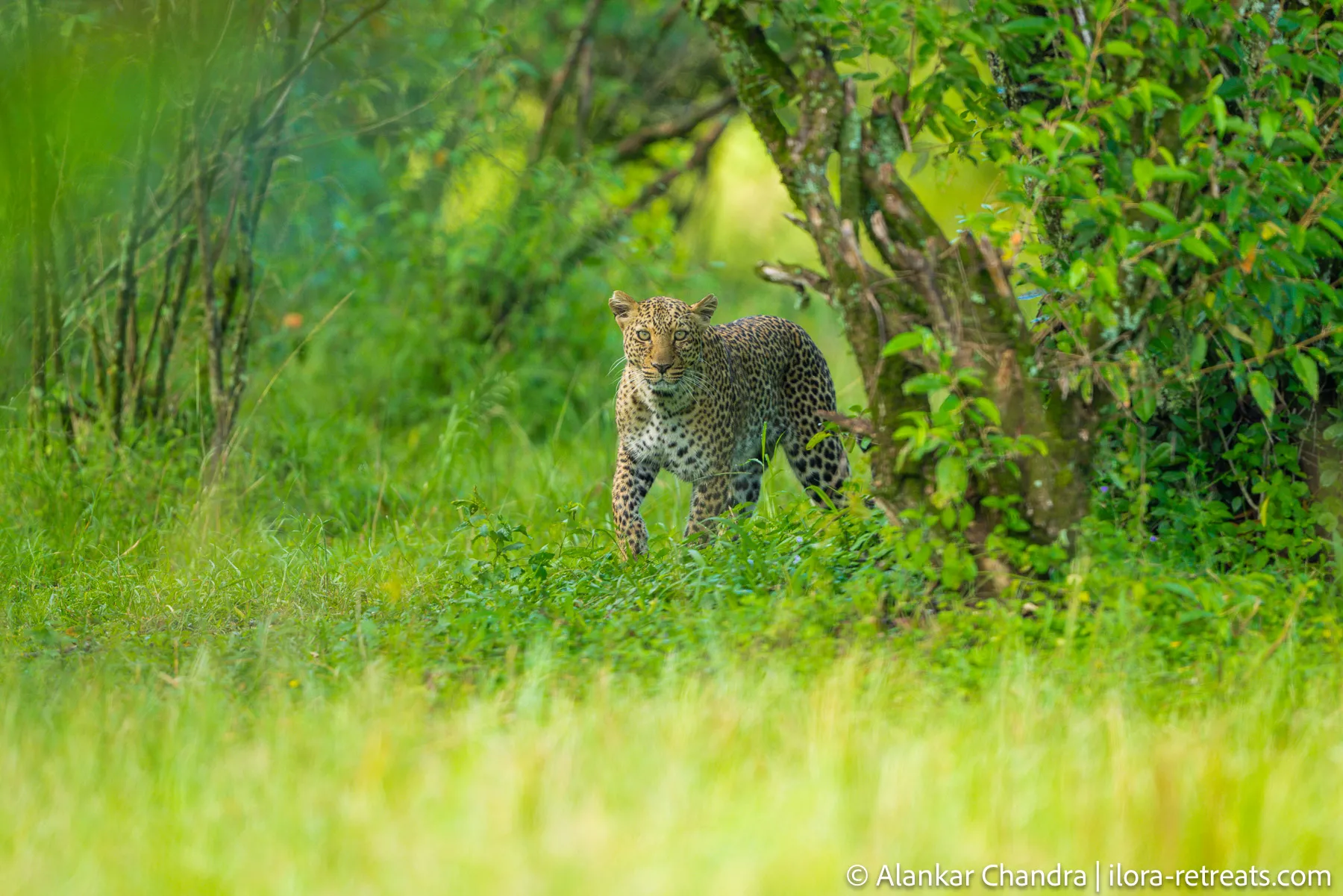
The Mara holds one of the densest gatherings of big cats left in Africa — lion, cheetah and leopard sharing a single sweep of grassland. Their world is shrinking at its edges, where the open plain meets fences, livestock and people. The cats we travel to watch are the same cats that keep this whole system honest.
The Mara–Meru Cheetah Project
The cheetah is the most fragile of Africa’s great cats — built for one explosive purpose and easily pushed out by stronger predators and a busier landscape. This long-running effort knows the Mara and Meru cheetahs as individuals, tracking who survives, who breeds and who is lost, so the population can be protected family by family.
Bringing the rhino back
Kenya’s black and white rhino survive today only because they are watched around the clock, in a handful of guarded sanctuaries, by people who never look away. Every calf born is hard-won. To stand quietly near a wild rhino now is to see the result of decades of work that most travellers never hear about.
Tigers of the mangroves
In the tidal forests of the Bengal delta lives a tiger like no other — one that swims the channels between islands and shares the mangroves with the fishing communities at their edge. It is the hardest tiger on earth to see, and one of the most important to protect, because here the line between the wild and the human is only a few metres of water.
Ranthambore & Tiger Watch
Ranthambore is one of India’s great tiger recoveries — and that recovery is held in place by patient, unglamorous work: anti-poaching patrols, and programmes that turn the people who once hunted the forest into the people who now guard it. A confident tiger walking an old fort road is the visible tip of a long, quiet effort.
A few others we follow
Elephant corridors and vulture recovery across East Africa; the leopards and hornbills of India’s Western Ghats; the snow leopard’s impossible Himalaya. Wherever we travel, we look for the work being done to keep the place wild — and we build the journey so you see it too.
A wildlife journey can be just a holiday, or it can be a small act of support for the people keeping these species alive. We build ours to be the second kind.
Four things we don’t compromise on.
We back the work
We plan journeys around the projects and the people doing the protecting — and put you in the field beside them, not at a polite distance from the cause.
A small footprint
Smaller camps, lower-impact travel, and group sizes kept deliberately low. We’d rather move quietly through a place than arrive in a convoy.
Local livelihoods
Local guides, local camps, local hands. The economics of a trip should land in the region you’re visiting, not just pass through it.
Wildlife on its own terms
We read animals, we don’t corner them. No baiting, no crowding a sighting, no chasing a photograph at the animal’s expense.
A good sighting is never worth a bad call.
The fastest way to ruin a wild place is to let the photograph come first. Our guides keep their distance, hold position, and let the animal decide how close the day gets. We don’t bait predators, block escape routes, or surround a cat for a better angle — and we’ll happily lose a frame to leave a sighting the way we found it.
It’s a slower way to travel, and it asks a little patience of you. But patience is exactly what separates a real encounter from a managed one — and it’s the only version of the wild worth handing to the next traveller.
Travel that leaves the wild better.
Tell us what you’d most want to see, and we’ll build a journey that earns its place there.
Plan your journey