Enquire
Home  /  South Africa  /  Cape Town
City, coast & winelands · Western Cape

Cape Town

One of the world's great cities — Table Mountain, penguins and whales, the winelands and the Garden Route.
Getting there
Cape Town International; the natural counterpoint to a bush safari
Best for
Scenery, marine wildlife, the winelands and the Garden Route drive
The land
A peninsula of mountain and ocean, with coast and wine country beyond
Good to know
Not a Big-Five stop — the scenic, marine and cultural half of a trip
What it is
Cape Town is the other half of a South African trip — mountain, ocean, penguins, whales and wine.
Set between Table Mountain and two oceans, Cape Town is regularly called one of the most beautiful cities on earth — and it is the natural scenic counterpoint to a bush safari. The Cape Peninsula runs from the cable car atop Table Mountain to the penguins at Boulders Beach and the cliffs of Cape Point, through the Cape Floral Kingdom, one of the planet's richest and smallest plant kingdoms. Beyond lie the winelands of Stellenbosch and Franschhoek and the Garden Route, the coastal drive of forests, lagoons and whale-watching bays. It is wildlife of a different kind — marine, floral and scenic — wrapped in a world-class city.
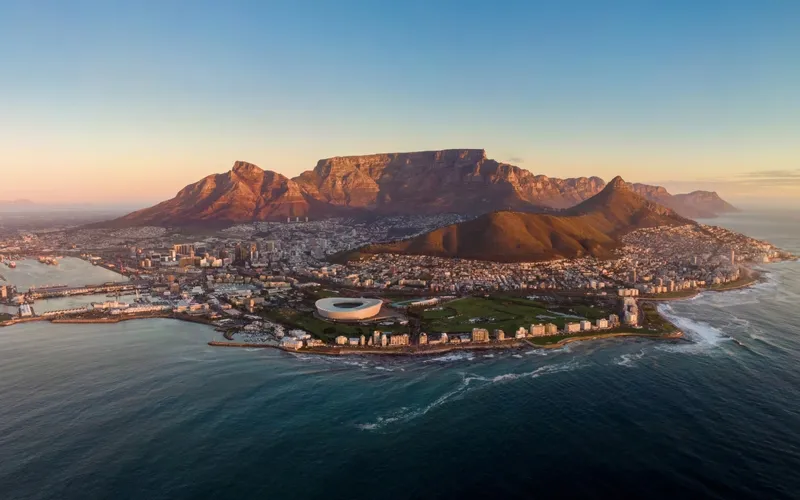
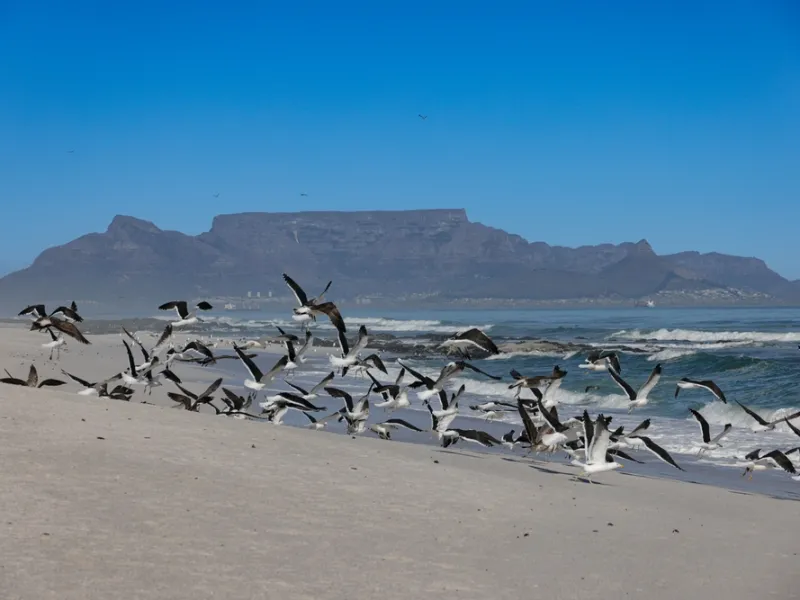
Table Mountain rising above Cape Town and the Atlantic.
The reason to come

Mountain, ocean and the Cape

Cape Town pairs a spectacular setting with real natural richness — Table Mountain and the Peninsula, the penguins and whales of the coast, the unique fynbos of the Cape Floral Kingdom, and the winelands behind. As the scenic, marine and cultural half of a trip, beside the bush, it makes South Africa feel like several holidays in one.

The Cape Peninsula

Table Mountain, Cape Point, Boulders' penguins and the Cape of Good Hope — a day of mountain-and-ocean drama.

Whales and marine life

Southern right whales off the coast (roughly June to November), seals, and the marine richness of two oceans.

Winelands & Garden Route

Stellenbosch and Franschhoek's wine country, and the coastal Garden Route of forests, lagoons and whale bays.

Worth knowing

Cape Town is not a safari — there are no Big Five here. Its wildlife is marine, floral and scenic, and its real role is as the spectacular, restful, cultural counterpoint to the bush.
The trip's other half

Why South Africa needs both.

A South African trip built only on bush misses half the country. Cape Town, the Peninsula and the Garden Route add scenery, sea, penguins, whales, fynbos and wine — a completely different register that turns a safari into a fuller, more varied journey. Pairing the two is the classic, and best, way to see the country.
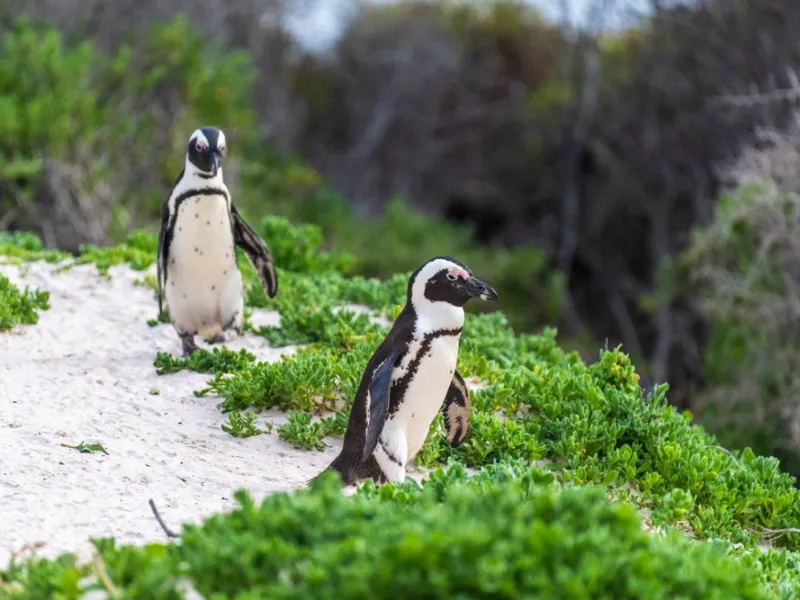
African penguins on the boulders at Boulders Beach.
When to come — honestly

Opposite to the bush.

November – March
Best
Cape summer — warm, dry and sunny, the prime season for Table Mountain, the beaches, the Peninsula and the winelands.
June – October
Good
Cape winter — cooler and wetter, but the best whale-watching season, with southern right whales close inshore, and the green, dramatic side of the Cape.
The Cape has a winter-rainfall climate, the reverse of the safari regions — its summer (the safari green season) is dry and glorious, while its winter (the prime safari months) is cooler and wetter but brings the whales inshore. Timing a combined trip means balancing the two.
A city of contrasts

Beauty and history together

Cape Town's beauty sits alongside a complex, sometimes painful history — Robben Island, where Mandela was imprisoned, lies in view of the waterfront, and the city's stark inequalities are part of an honest visit. The scenery and the history are best understood together.

The Cape Floral Kingdom, which the Peninsula protects, is a global biodiversity hotspot — the smallest and one of the richest of the world's plant kingdoms — and a reminder that the region's natural value is not only marine and scenic but botanical.

We build the Cape as a region, not a single stop — the Peninsula, the winelands and the Garden Route each given their time — as the scenic and marine counterpoint to the bush.
Beyond the obvious

Three ways to read the Cape.

The Cape Peninsula

The Cape Peninsula

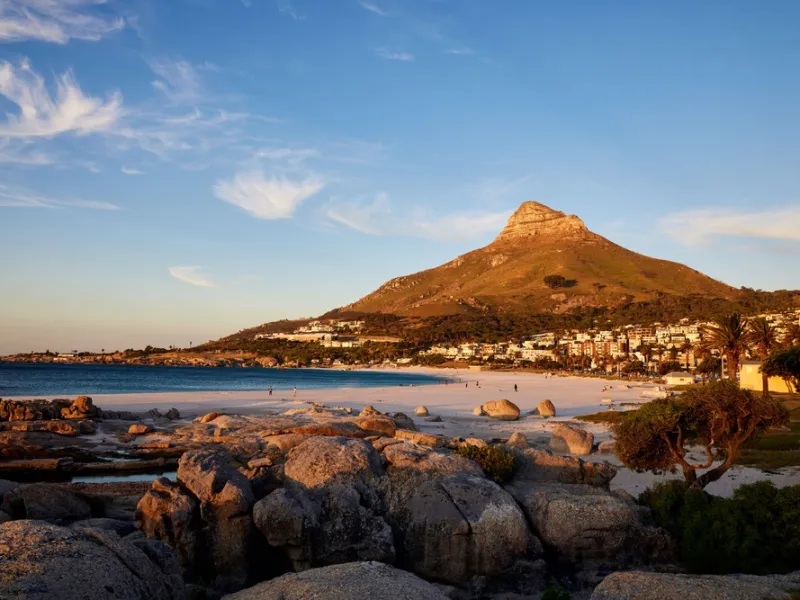
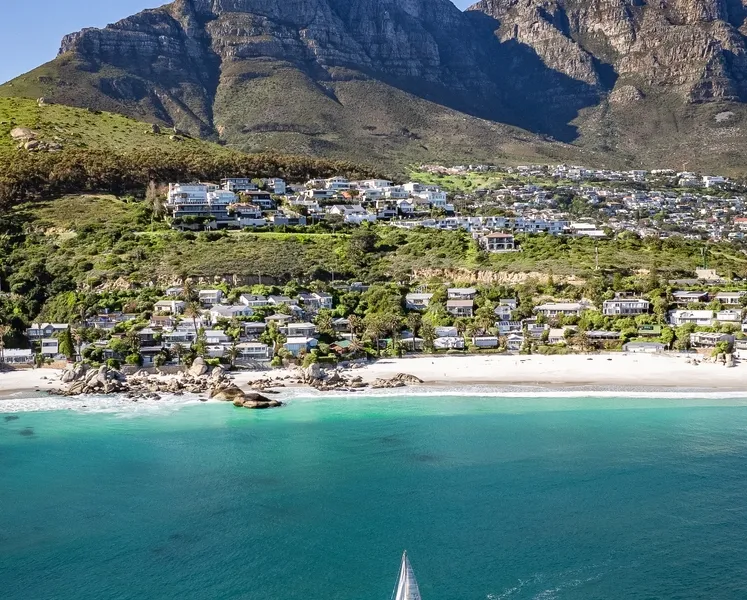
Table Mountain, Cape Point and the Boulders penguins — a day of mountain and ocean.
The winelands

The winelands

Stellenbosch and Franschhoek — the wine country behind the city.
The Garden Route

The Garden Route

The coastal drive of forests, lagoons and whale-watching bays toward Addo.

Why Wild Voyager

We match you to the right South Africa.

South Africa is the most varied safari country there is — private reserves, national parks, desert, coast and city, at wildly different prices. In Cape Town that means building the Cape as a region — the Peninsula, the winelands and the Garden Route each given their time — as the scenic and marine half of the trip.

We pick the place, not the cheapest bed

South Africa lives or dies on the choice — which reserve, which lodge, which park. We match you to the right one, with the traversing rights and guiding that matter, not whoever pays to be listed.

We base you in the right place

Cape Town is a region, not a park — the Peninsula, the winelands and the Garden Route each need their own time and base. We route and base you so the city, the coast and the wine country each get their due, and tie cleanly to a bush safari.

We guide for wildlife, not a checklist

Our guides and trackers work the terrain, the tracks and the light for real encounters — they would rather earn you one great sighting than rush a list.

Wildlife you may see
Penguin Whales

Pair the bush with
the Cape and the coast.

Cape Town, the Peninsula and the Garden Route are the scenic, marine half of a South African trip — mountain, penguins, whales and wine. We pair them with the safari.

Plan a South Africa trip

Field notes, now and then.

Where to go · When to go · Wildlife in season

A few times a year, never more. Unsubscribe anytime. See our Privacy Policy.