Enquire
Home  /  India  /  Hoollongapar Gibbon Wildlife Sanctuary
Primate sanctuary · Assam

Hoollongapar Gibbon Wildlife Sanctuary

The only home of India's only ape — the singing hoolock gibbon, in an Assam forest island.
Getting there
~45 min drive from Jorhat
Best for
The western hoolock gibbon and Assam's primate diversity
The land
An isolated patch of evergreen forest near Jorhat, upper Assam
Good to know
Small — a focused half-day or day; listen for the gibbons at dawn
What it is
Hoollongapar is a small forest with a singular claim: it holds India's only ape.
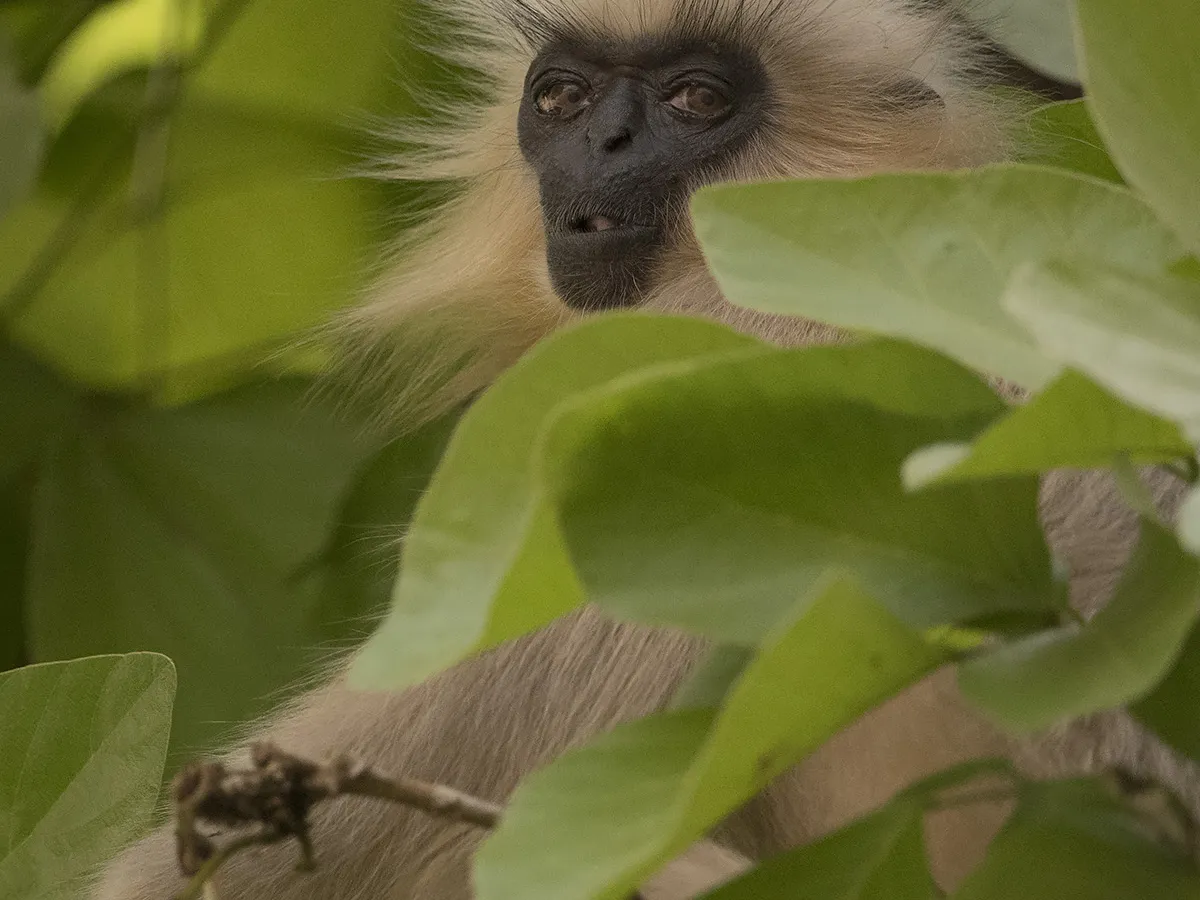
In a fragment of evergreen forest near Jorhat, Hoollongapar protects the western hoolock gibbon — the only ape found in India. The gibbons announce themselves at dawn with loud, whooping duets that carry across the canopy, swinging through the treetops in family groups. The same forest holds an unusual richness of primates — stump-tailed macaque, capped langur, slow loris and more — making this small sanctuary one of the best primate-watching sites in the country, despite its size and the railway that cuts through it.
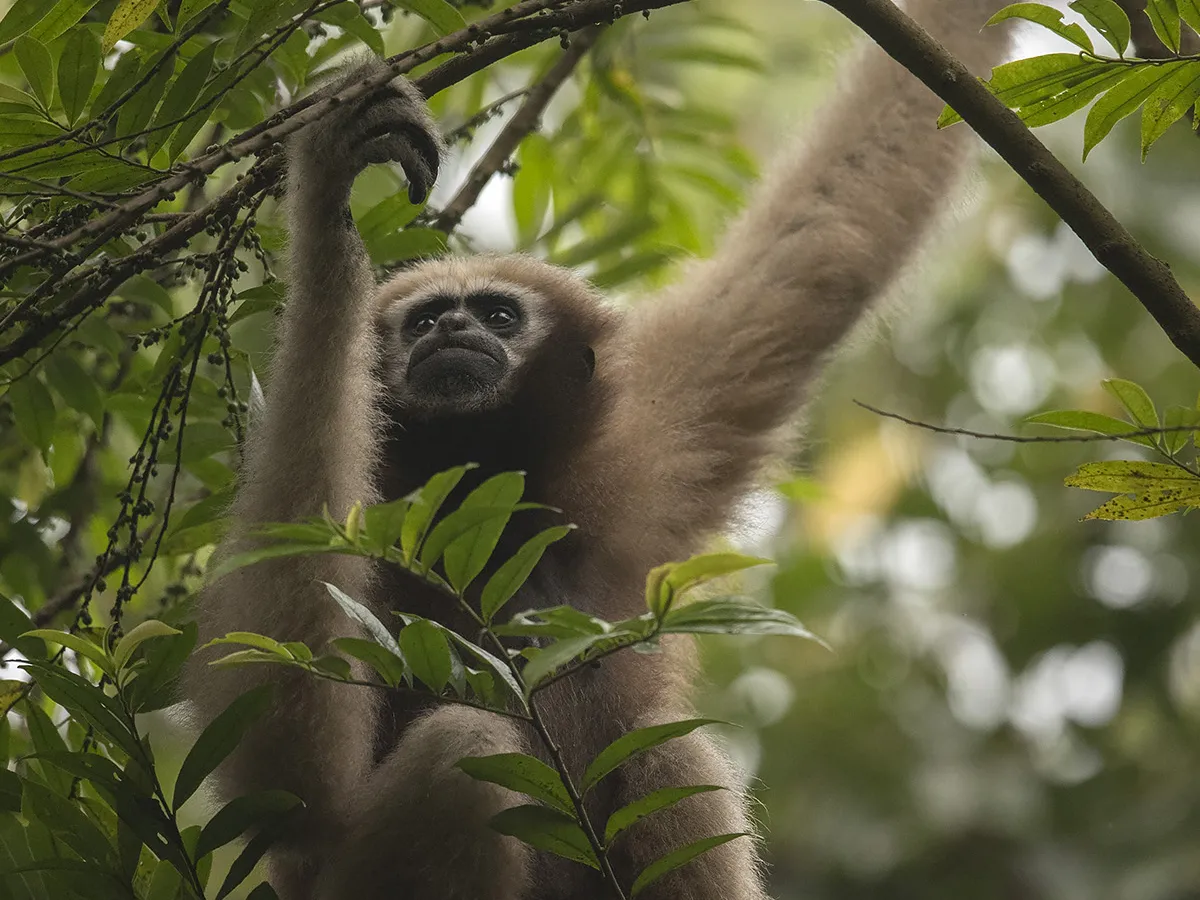
PhotoA hoolock gibbon swinging through high evergreen canopy.
The reason to come

India's only ape

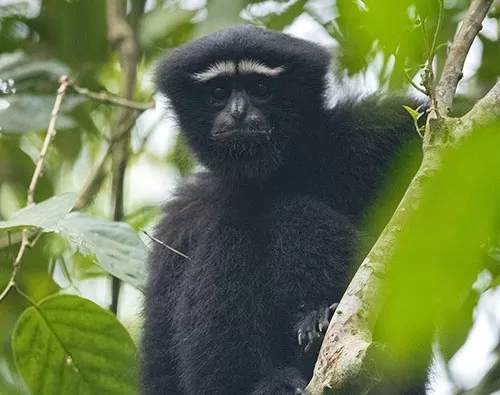
The hoolock gibbon is the one ape native to India, and Hoollongapar is the place to see it well. Hearing the family groups break into their dawn song, then watching them swing through the canopy on long arms, is a primate experience unlike any monkey sighting.

The dawn duets

Gibbon families sing at first light — loud, far-carrying calls that are the forest's signature and your cue to find them.

The brachiation

Gibbons move by swinging hand over hand through the canopy — fast, graceful, and unlike any other Indian primate.

The primate richness

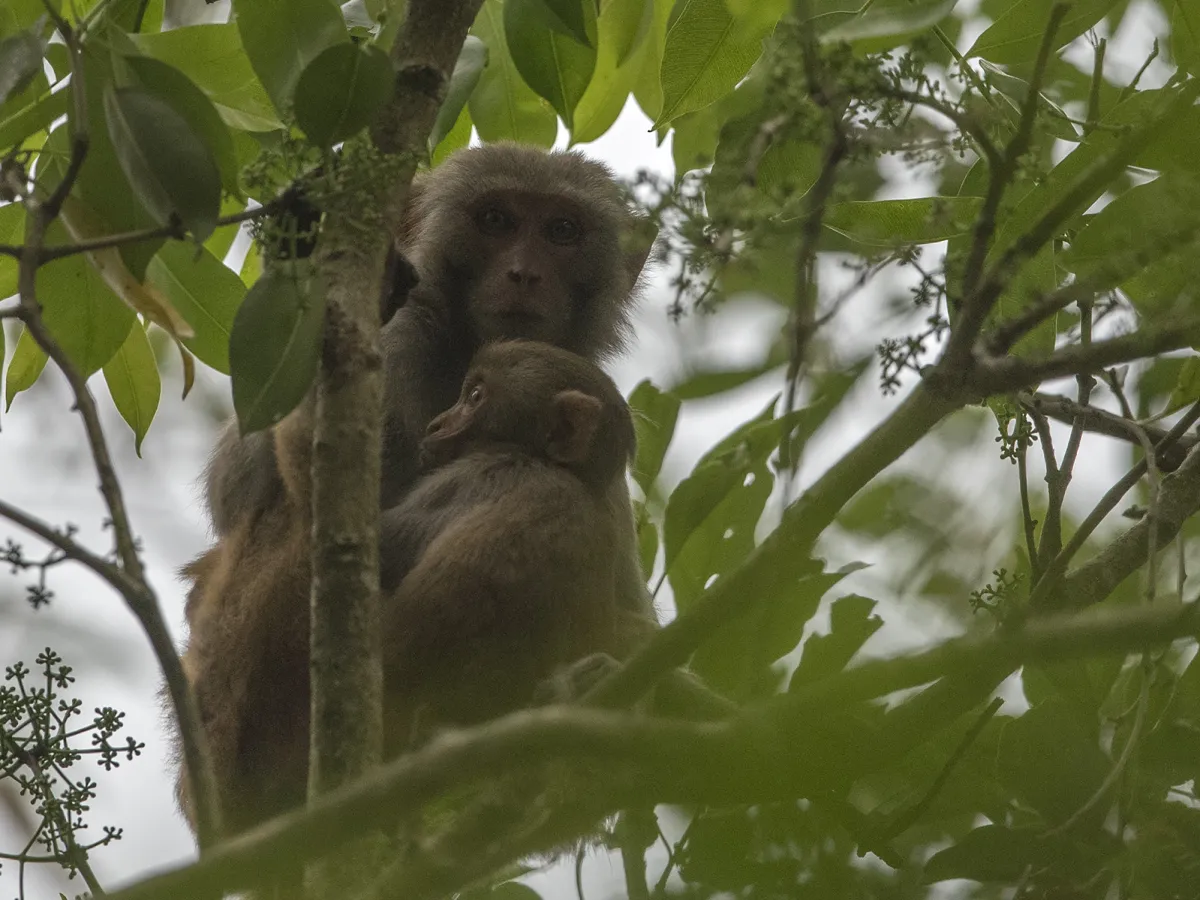
Stump-tailed macaque, capped langur, slow loris and more — a remarkable primate community in a small forest.

Why it matters

The hoolock gibbon is threatened by exactly the forest fragmentation that Hoollongapar embodies — a railway and tea estates have cut it off. Seeing the gibbon here is also seeing the problem it faces.
An island forest

Cut off, holding on.

Hoollongapar is a textbook fragment — a patch of forest isolated by tea estates and bisected by a railway line that the gibbons, who will not cross open ground, cannot easily get past. It is a living lesson in how fragmentation threatens canopy animals, and in why even small protected forests matter so much.
PhotoThe railway line cutting through the gibbon forest.
When to come — honestly

A cool-season forest.

November – March
Best
Cool, dry and comfortable, the most pleasant months for the forest and the clearest gibbon activity at dawn.
October & April
Good
Shoulder months, warmer and humid but still good for the gibbons and the wider primate community.
Assam's monsoon is heavy and humid. The cool, dry months are the time to come — comfortable conditions and active gibbons. Whatever the season, dawn is the hour, when the gibbons sing and move.
Surrounded by tea

A forest squeezed

Hoollongapar sits in a sea of tea estates near Jorhat, and its isolation — by plantations and a railway — is the central threat to its gibbons. The sanctuary's story is the story of fragmented forests across the northeast.

Efforts to reconnect the forest, including canopy bridges over the railway, show the kind of small, specific intervention that fragmented wildlife now depends on.

We frame Hoollongapar honestly: a remarkable, singular forest, and a clear illustration of the fragmentation that endangers its gibbons.
Beyond the obvious

Three ways to read Hoollongapar.

PhotoThe dawn gibbon walk

The dawn gibbon walk

First light in the forest for the gibbons' song and their canopy acrobatics.
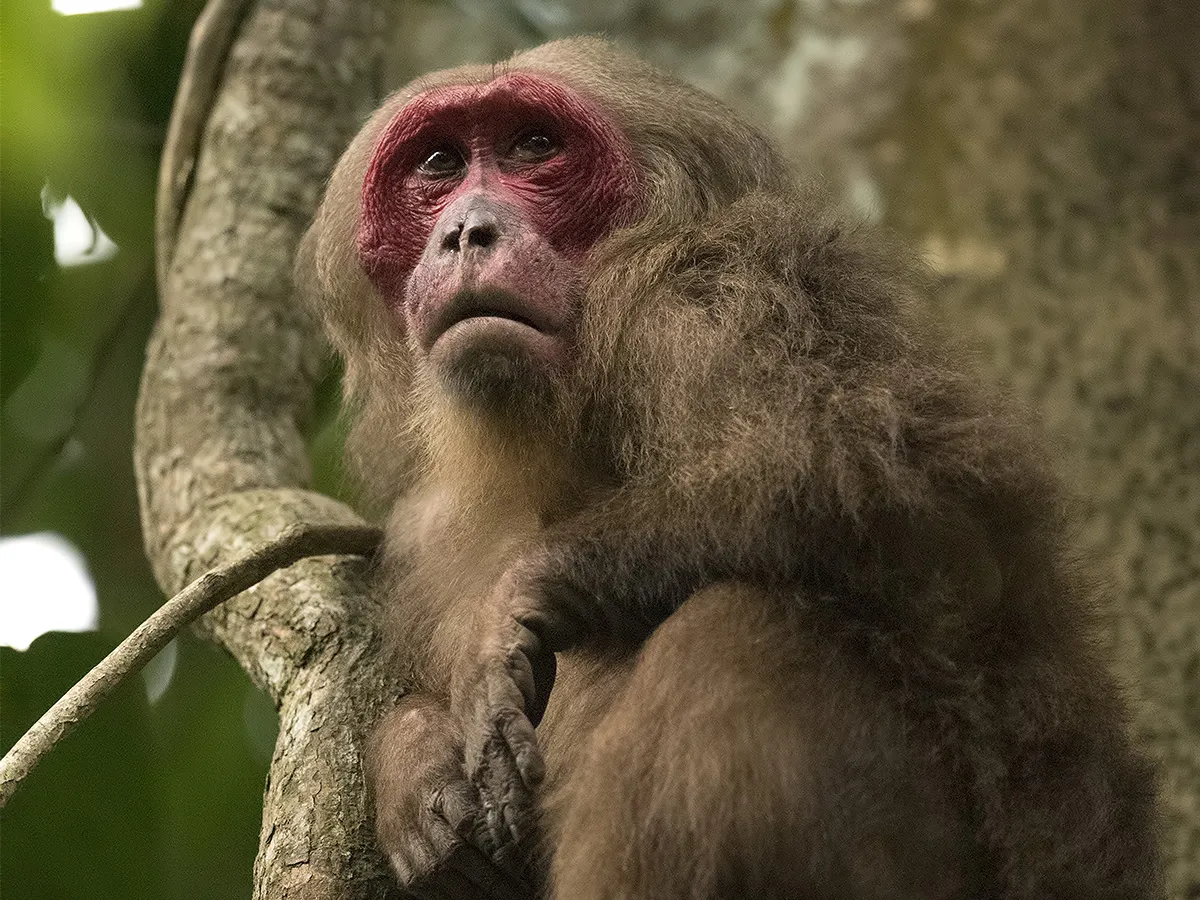
PhotoPrimate diversity

Primate diversity

The sanctuary's wider primate community — macaques, langurs and the nocturnal slow loris.
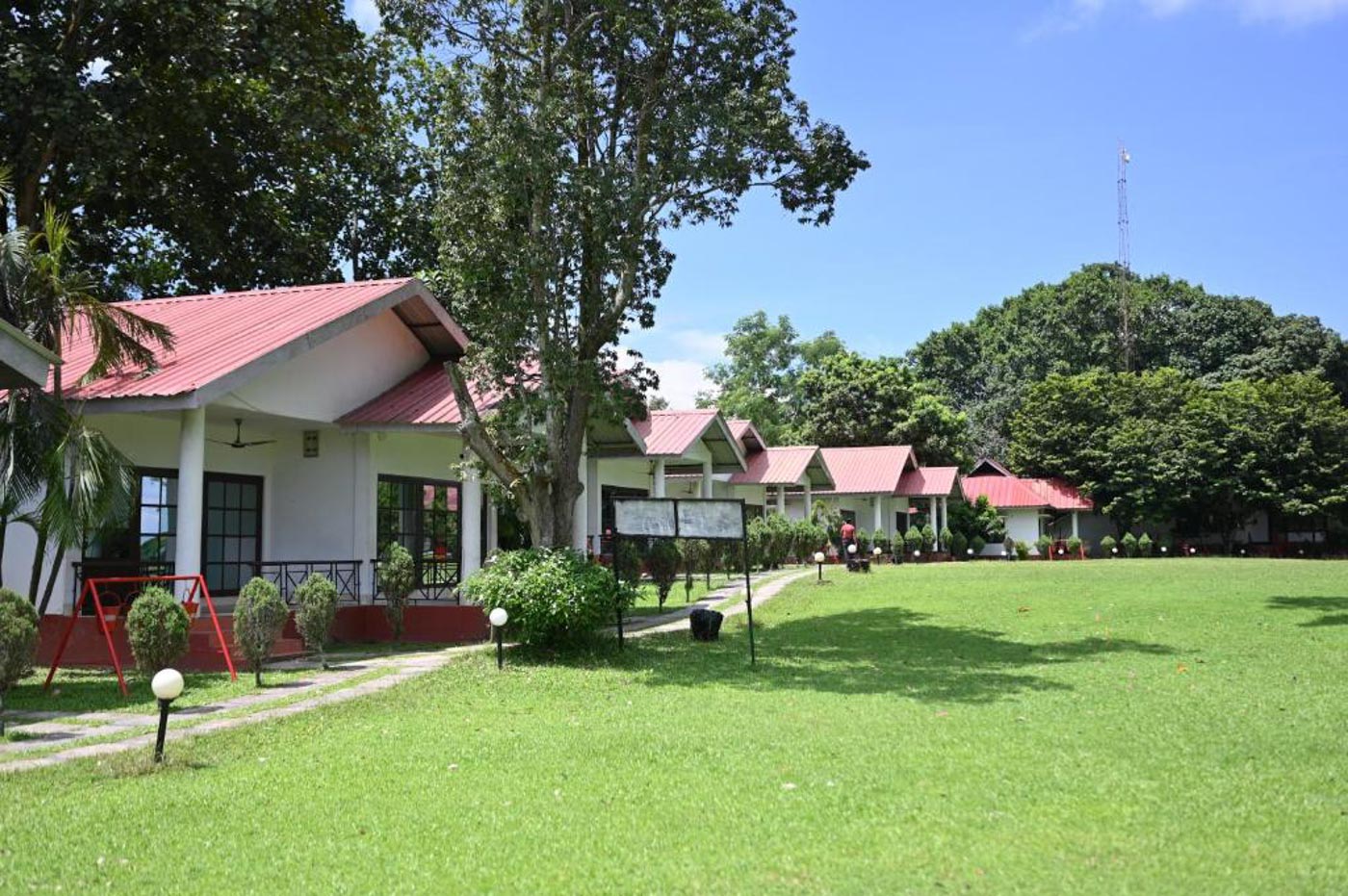
PhotoAn Assam add-on

An Assam add-on

An easy, singular stop from Jorhat on a wider Assam wildlife route.

Why Wild Voyager

We run India on our own ground.

India is one of three countries we run with our own guides and vehicles, not booked through a middleman. In Hoollongapar Gibbon Wildlife Sanctuary that means timing the dawn for the gibbons and reading the forest as the singular, fragmented place it is.

We operate it, not a middleman

Our team handles the permits, the zones and the timing, so we answer for your sightings — not a stranger hoping it works out.

We base you in the right zone

At Hoollongapar the gibbons are best at dawn, and the forest is small enough that timing and a good guide are everything. We plan the early start and pair it into a wider Assam route.

We guide for wildlife, not a checklist

Our naturalists work the alarm calls, the tracks and the light — they would rather earn you one real sighting than tick a list.

Journeys

Trips through Hoollongapar Gibbon Wildlife Sanctuary

Wildlife you may see
Primates

Pair Hoollongapar with Assam's
wider wildlife.

Hoollongapar's gibbons, with Kaziranga and the Assam plains, make a northeast trip of real range — apes, rhino and floodplain. We route them together.

Plan a Hoollongapar trip

Field notes, now and then.

Where to go · When to go · Wildlife in season

A few times a year, never more. Unsubscribe anytime. See our Privacy Policy.