The Masai Mara is Kenya’s best-known game reserve, sitting right against Tanzania‘s Serengeti. It holds a lot of wildlife in a small area: lion, cheetah, leopard and elephant among much else. The single biggest draw is the great migration, when wildebeest and zebra move up from the Serengeti into the Mara. If that is what you have come for, time a Mara safari around it.
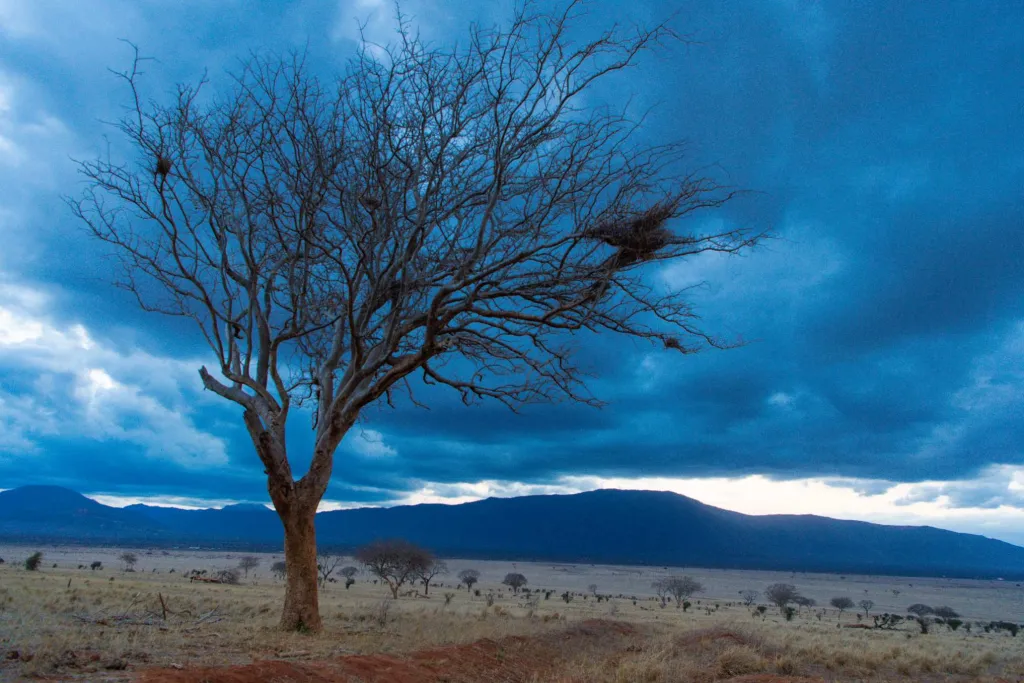
The open plains of the Masai Mara
The Mara rewards a visit at any time of year, but what you see shifts with the season. This guide runs through the weather and the wildlife through the year, so you can plan a Kenya safari around what matters most to you.
Best time to visit
The reserve and the conservancies around it hold game all year, so there is no bad time to come. But there is a best time for any one thing you want to see, whether that is the river crossings, the birding, or quiet, green, low-season plains.
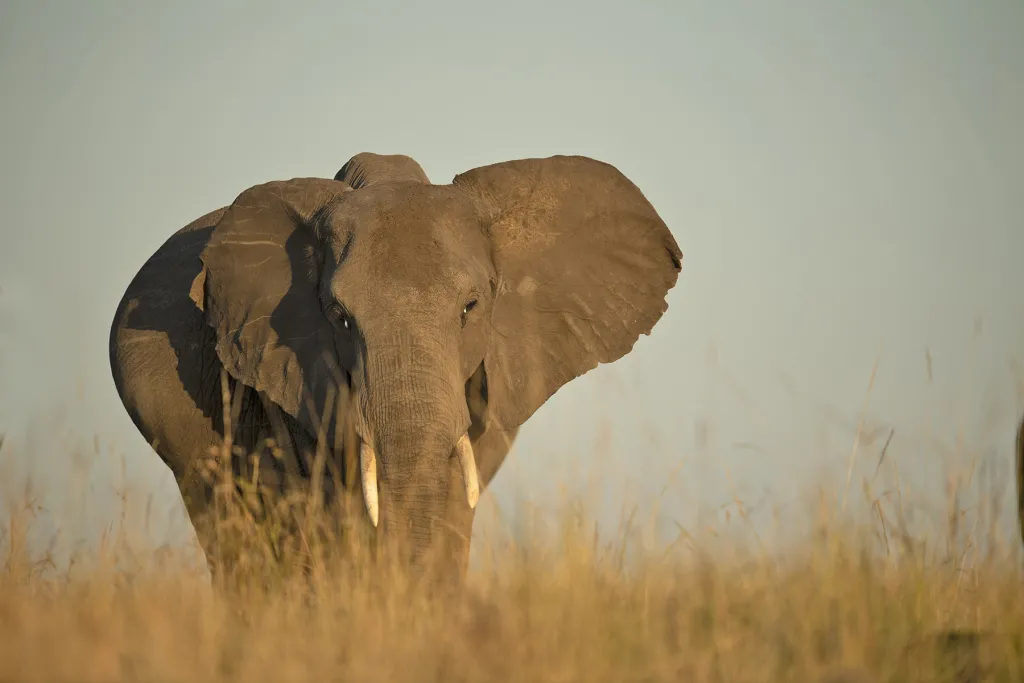
An elephant on the reserve
The Mara sits just south of the equator and stays semi-arid all year. Days are pleasantly warm and nights are cool. From October to March it runs a little warmer. From June to August the nights are cold, dropping to around 10°C, so pack a warm layer for early game drives.
The seasons, month by month
The Mara has one long dry season and one longer wet season, with a short dry spell in between. Roughly:
- Short rains: November to December — brief afternoon showers, warm days around 27°C.
- Short dry spell: January to February — drier and hot.
- Long rains: March to May — April the wettest, cool early mornings around 13°C.
- Long dry season: late June to October — the prime game-viewing months, with the migration in the reserve from July.
Wet and green season (November to May)
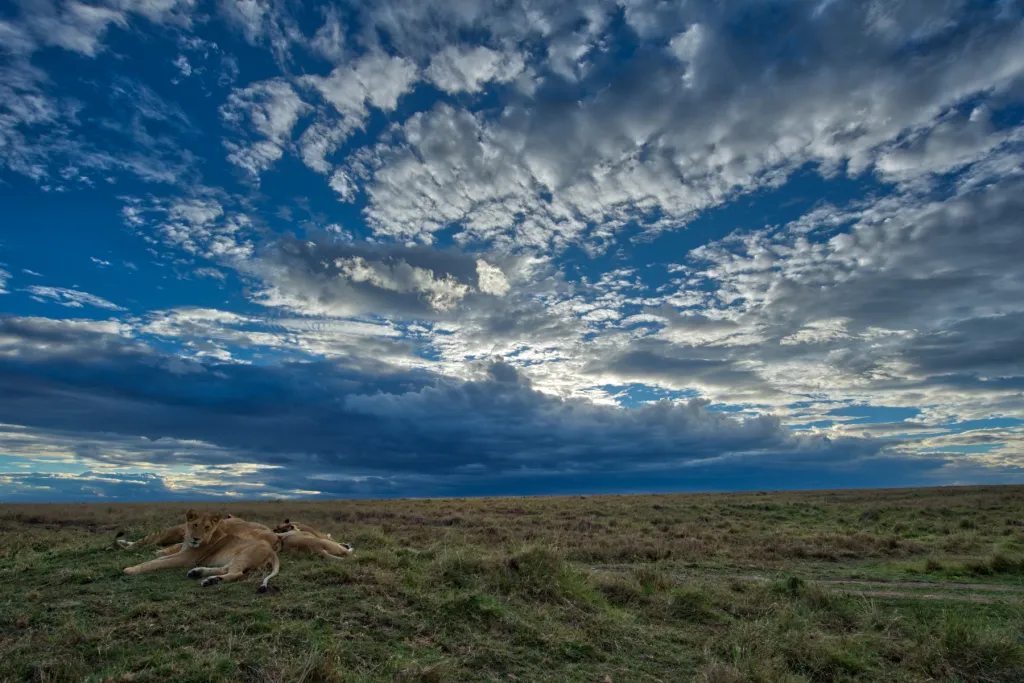
A cloudy day over the Mara
Rain can interrupt drives in the wet months, but there are real upsides. There are far fewer vehicles, the plains turn green, and the light and cloud make for good photography. Many animals give birth in this stretch, and the birding is at its best as migratory species arrive. Lion, cheetah and leopard are still out, though the taller grass can make them harder to spot.
Dry season (late June to October)
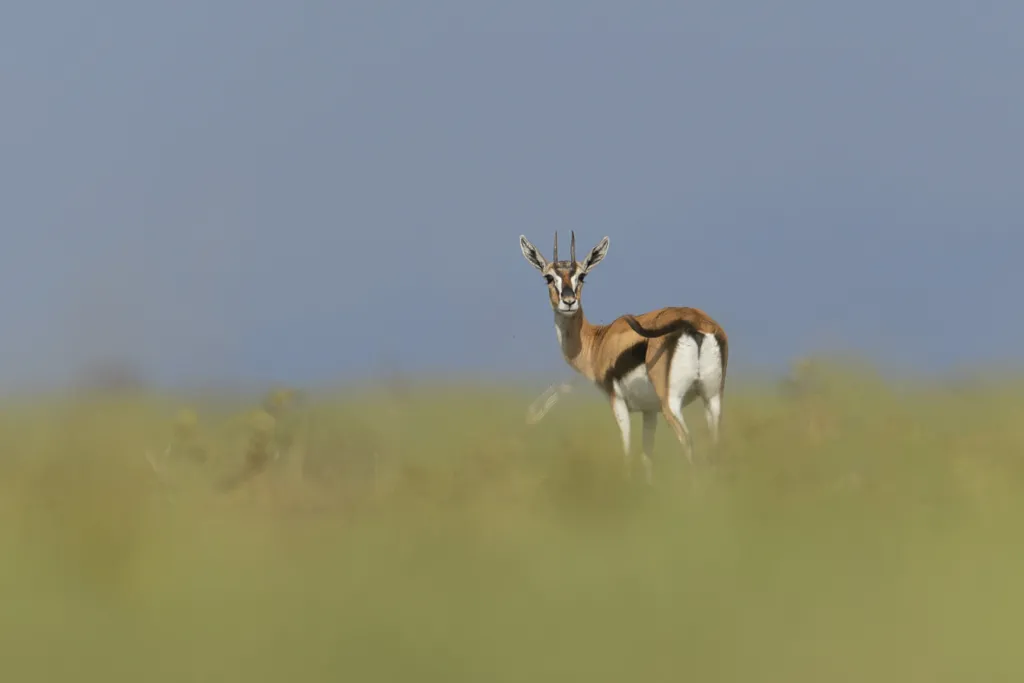
A clear day at the Mara
This is the easiest time to see game. The grass is short, the vegetation thin, and animals gather at water, so sightings come quickly. You have a strong chance at four of the Big Five — lion, leopard, elephant and buffalo — plus cheetah, zebra and giraffe. Black rhino are here too, but they are scarce and never a certainty. July to October is also when the migration is in the reserve, and the busiest time: expect clear skies and a lot of other vehicles at the crossings.
What each season is best for
Birding (November to April)
More than 500 bird species have been recorded in the Mara, and it is especially good for raptors, waders and migrants. From November to April, migratory birds arrive from Europe, overlapping with the wettest months and their quick showers.
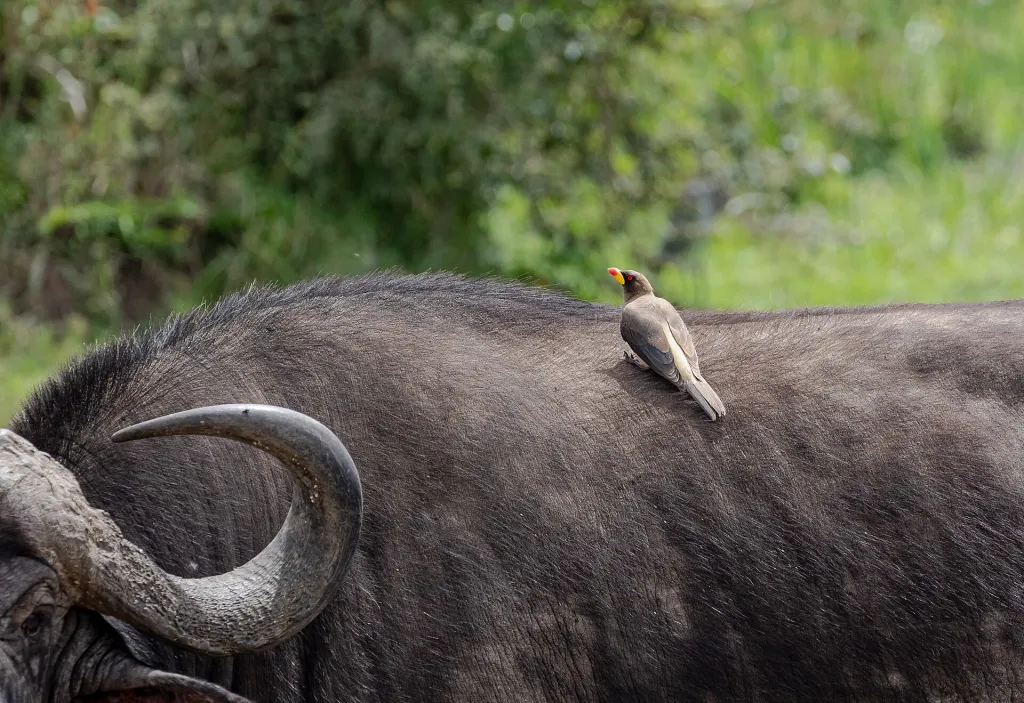
Yellow-billed oxpeckers on a buffalo
Calving (January to March, in the southern Serengeti)
The Mara has resident wildebeest that drop a few calves, but the great calving happens across the border, on the southern Serengeti plains around Ndutu, from late January into March. If newborns and the predator action around them are your priority, that is where and when to be, rather than the Mara.
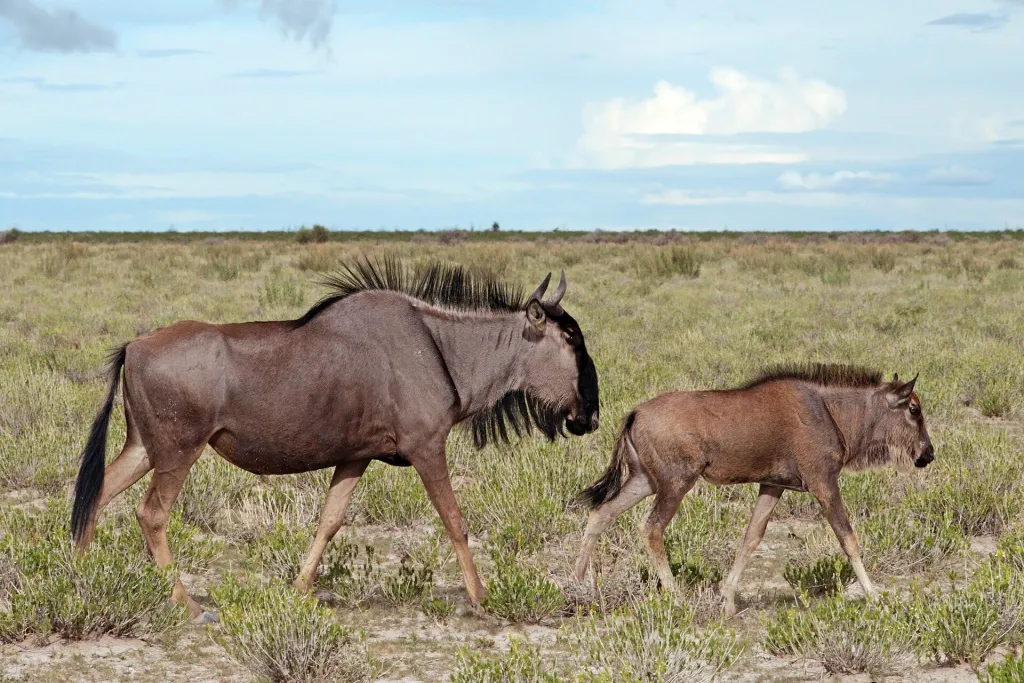
A wildebeest with its calf
Green season (April to June)
The green season, roughly April to June, brings heavy rain that clears the dust and haze, and the savannah looks its best. Migratory birds arrive in numbers and flowering trees add colour. It is a quiet, good-value time to visit.
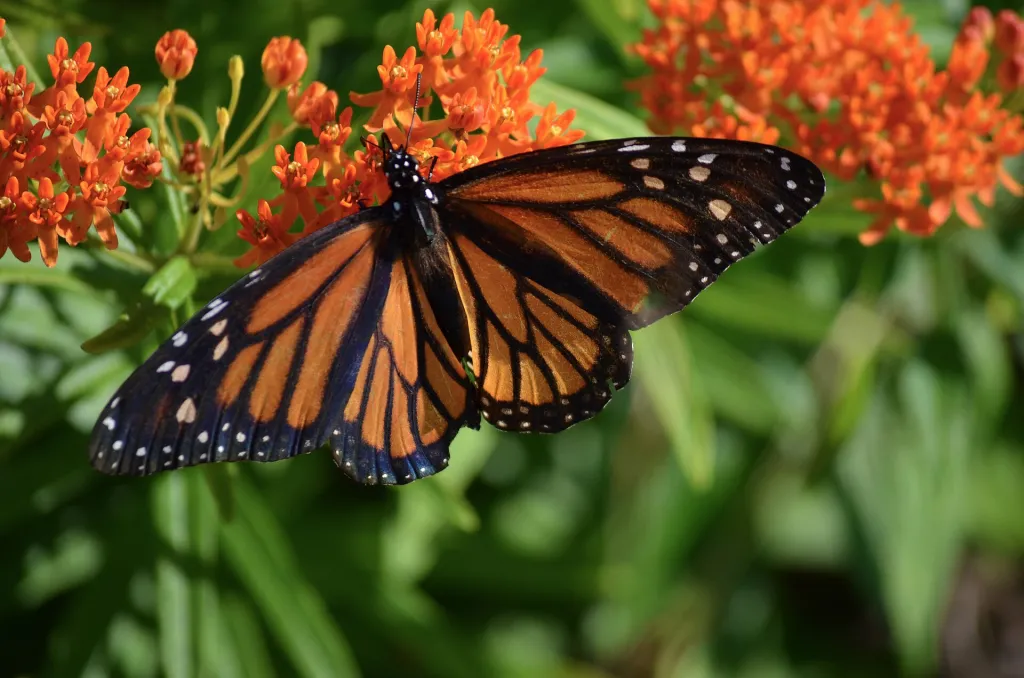
A milkweed butterfly in the Mara
Migration and river crossings (July to October)
The best months to catch the migration in the Mara are July to October, in the dry season. More than a million wildebeest, along with zebra and antelope, cross crocodile-filled rivers while lion wait on the banks.
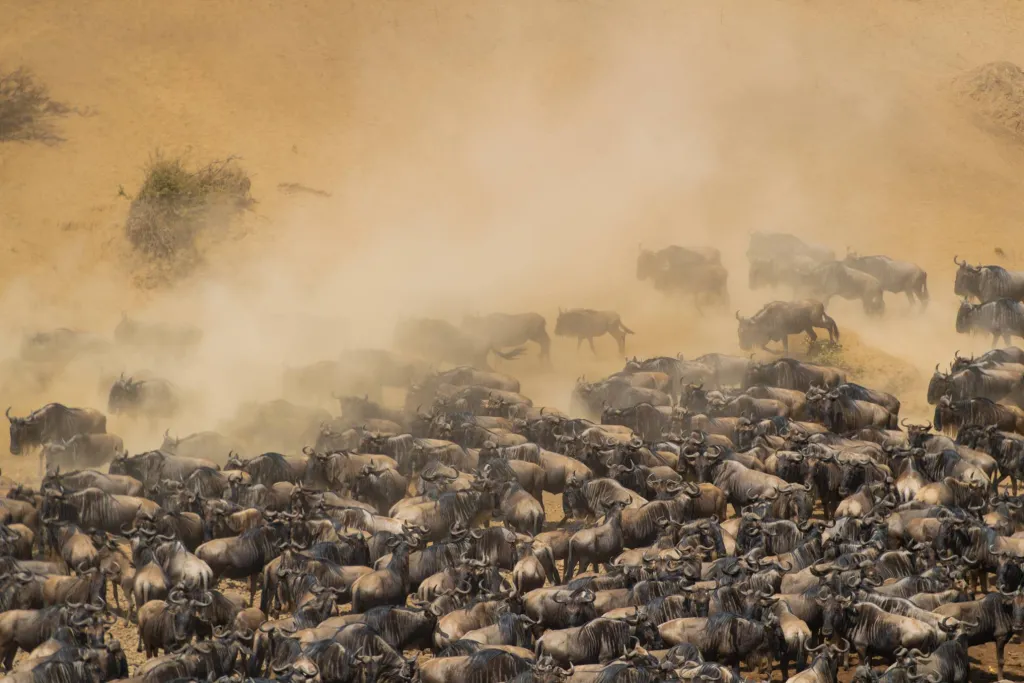
The wildebeest migration
The Mara River crossing is the moment most people come for. Nile crocodiles lie hidden in the water and predators wait on the far side. But a crossing is never guaranteed on a given day: the herds may gather for hours and not move, or cross somewhere else entirely. A good local guide and a few days’ patience give you the best odds.
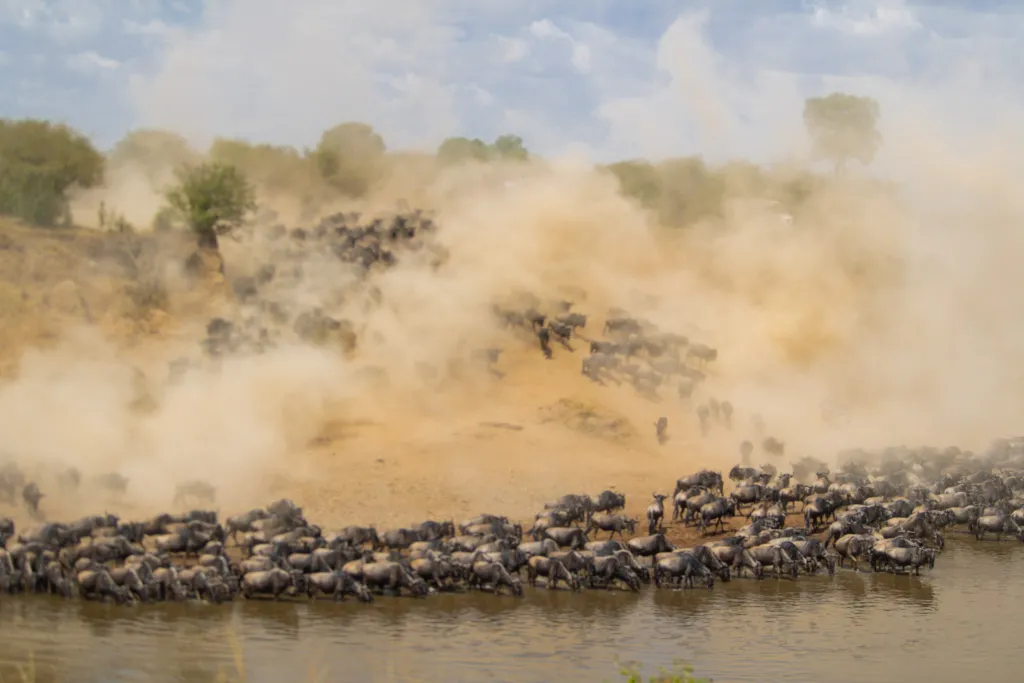
Wildebeest crossing the Mara River
Whichever season you choose, the Mara delivers strong wildlife viewing. The season mainly changes the character of the trip.
Frequently asked questions
Are there any travel restrictions in the Masai Mara?
Rules can change. There may be visa requirements, park fees and wildlife regulations to account for. Check official sources and a reputable operator for the current position before you travel.
Which is the best month to visit the Masai Mara?
For most visitors it is the cool, dry season from July to October, which lines up with the migration.
How do you reach the Masai Mara?
The usual route is a flight into Nairobi, then a short domestic hop to one of the airstrips near the reserve. Road transfers are possible but take much longer.
What should you pack for a safari?
Comfortable clothes in layers, sturdy footwear, a wide-brimmed hat, sunscreen, binoculars, a camera, and any personal medication. Mornings and evenings are cold, so bring a warm layer.
Photo gallery
For a visual preview, see our Kenya and Masai Mara gallery.
Pick the season that fits what you want to see, and the Mara will do the rest.
A beautiful scenery of Masai Mara