Enquire
Home  /  India  /  Gir National Park
Lion sanctuary · Gujarat

Gir National Park

The only place on earth with wild Asiatic lions.
Getting there
~2 hr drive from Junagadh or Diu; ~5.5 hr from Ahmedabad
Best for
Wild Asiatic lions — found nowhere else
The land
Dry teak forest and scrub in the Saurashtra hills of Gujarat
Good to know
Permits are limited and book out; core closes in the monsoon
What it is
Every wild Asiatic lion on the planet lives in and around this one forest.
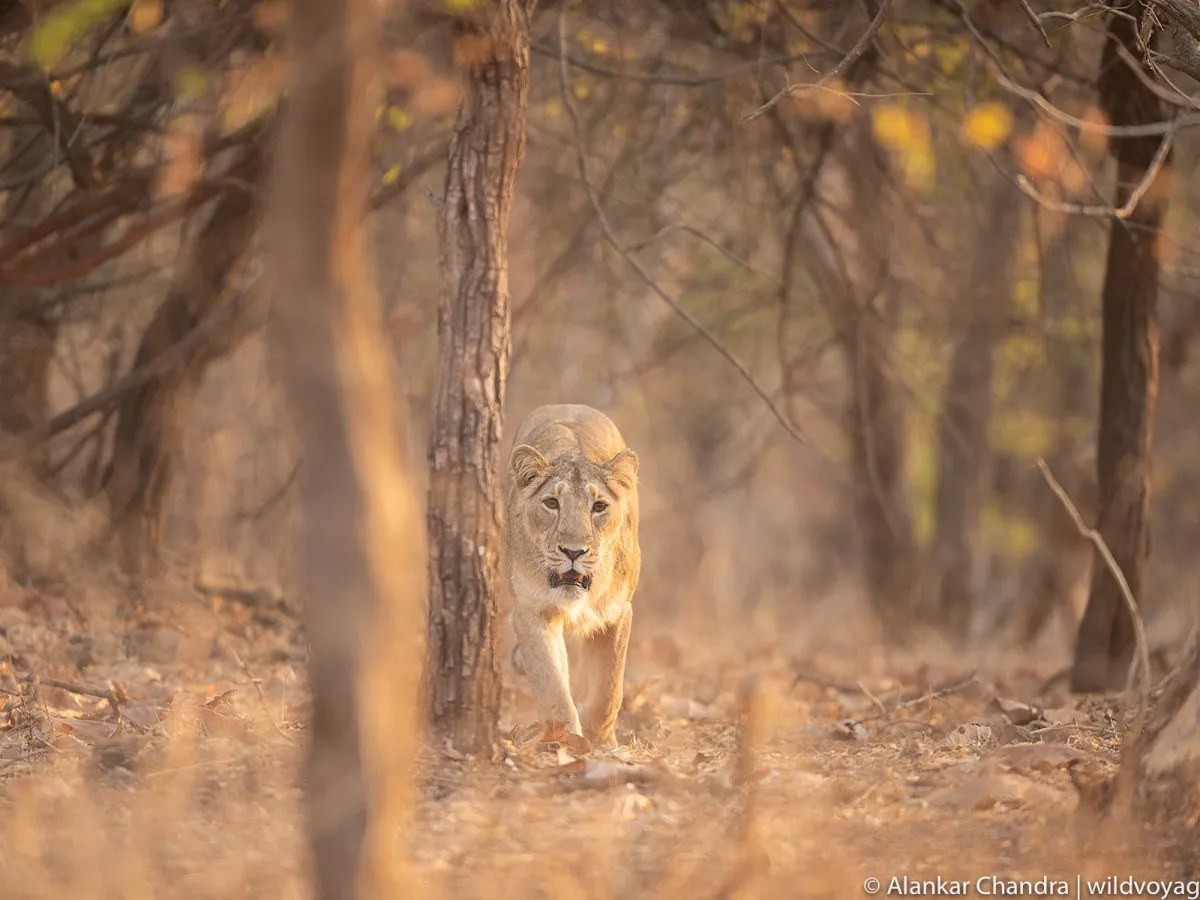
Gir is the last refuge of the Asiatic lion, a subspecies that once ranged from the Mediterranean to India and now survives only here, in the dry teak forest and scrub of Saurashtra. Brought back from perhaps a few dozen animals a century ago to a recovering population today, the Gir lion is one of conservation's great rescues. The forest also holds leopard, marsh crocodile at the Kamleshwar dam, and large numbers of deer and antelope — but the lion is why you come.
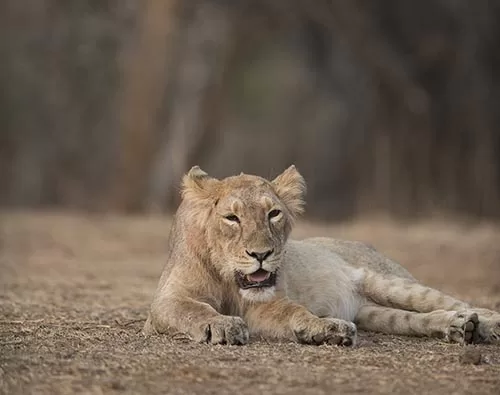
PhotoAn Asiatic lioness resting in dry teak forest, Saurashtra scrub behind.
The reason to come

The last Asiatic lions

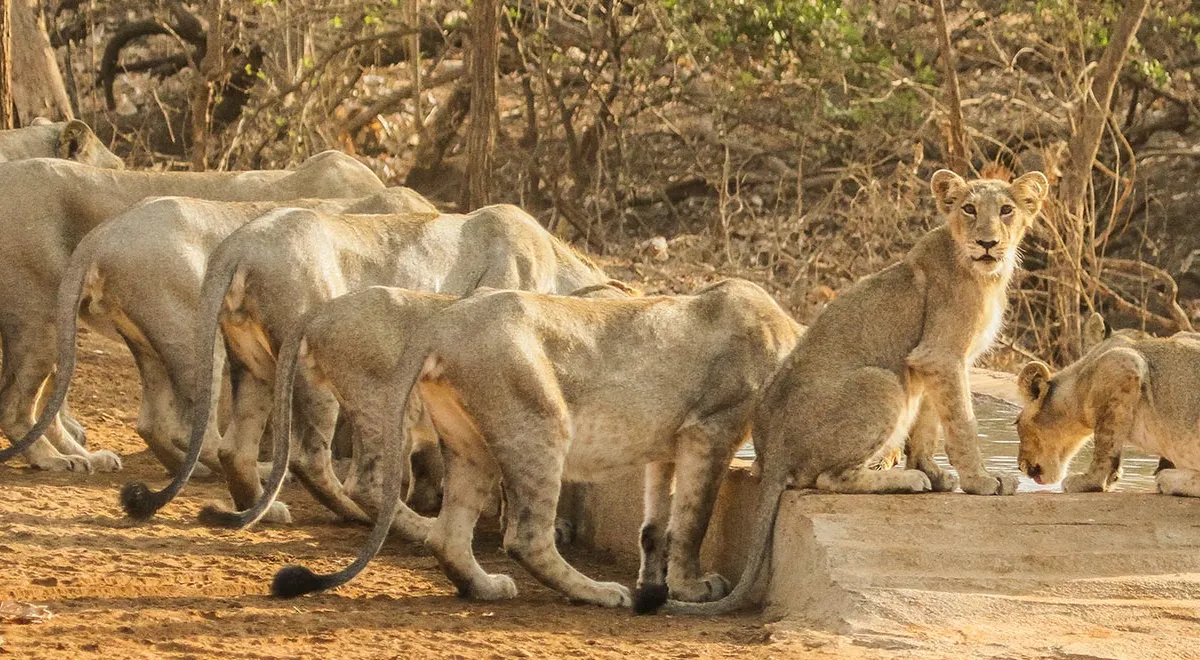
To see a wild lion outside Africa, there is one place: Gir. The Asiatic lion is slightly smaller than its African cousin, with a distinctive belly fold and a less full mane, and it survives because a maharaja's hunting ban and decades of protection pulled it back from the edge.

The recovery

From near-extinction a century ago to a growing population — the lion's comeback is one of India's signal conservation wins.

The one-population risk

Because they live in a single area, the lions are vulnerable to disease or disaster — the reason there are long-running plans to establish a second home.

The wider forest

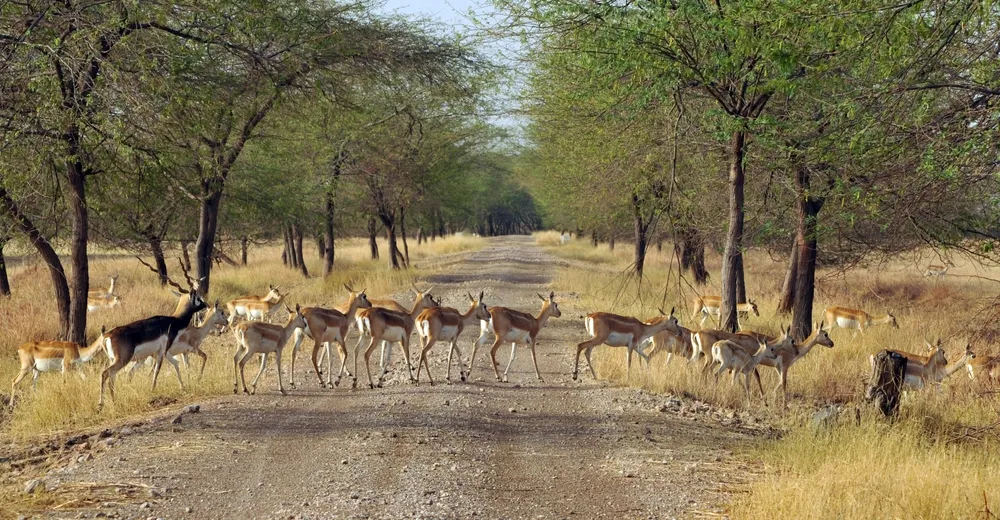
Leopard, crocodile, and large herds of chital, sambar and nilgai share the teak forest with the lions.

Why it matters

A single forest holds an entire subspecies. That fragility is part of what makes standing in front of a wild Asiatic lion feel like a privilege rather than a given.
People in lion country

The Maldhari who share the forest.

The Maldhari, traditional herders, still live inside Gir with their cattle, and the lions live alongside them — a coexistence that is central to how the population recovered. Gir is not wilderness emptied of people; it is wildlife and pastoralists sharing one forest, which is a large part of its story.
PhotoA Maldhari herder and cattle on a forest track inside Gir.
When to come — honestly

Plan permits early.

December – May
Best
Cool early, then hot and dry; lions and game concentrate at water and are most readily seen. The core viewing season.
October – November
Good
Just after the rains, green and pleasant, with the forest lush and lions active in the cooler mornings.
The core closes roughly mid-June to mid-October for the monsoon, and permits are limited and in high demand — Gir is not a park you can turn up to. Booking ahead is essential.
A maharaja's legacy

How the lion survived

The Asiatic lion survives because the Nawab of Junagadh banned hunting them in the early 20th century, when only a tiny number remained, and the protection held. It is a rare case where one decision, early enough, saved a species.

Today the lions increasingly spill out of Gir into the surrounding farmland and coast, raising new questions about coexistence and a second home — success bringing its own challenges.

We are straight that Gir is about one animal in one place. The permit limits and the single-population risk are part of understanding why it matters.
Beyond the obvious

Three ways to read Gir.

PhotoLion drives

Lion drives

Core forest drives for the Asiatic lion, Gir's singular draw.
PhotoCrocodile and birds

Crocodile and birds

The Kamleshwar dam for marsh crocodile and waterbirds, a different side of the park.
PhotoMaldhari country

Maldhari country

Reading the coexistence of herders and lions that defines this forest.

Why Wild Voyager

We run India on our own ground.

India is one of three countries we run with our own guides and vehicles, not booked through a middleman. In Gir National Park that means securing the limited lion permits and working the core for the one animal you cannot see anywhere else on earth.

We operate it, not a middleman

Our team handles the permits, the zones and the timing, so we answer for your sightings — not a stranger hoping it works out.

We base you in the right zone

Gir runs on a tight, in-demand permit system, and the lions are the whole point. We book the access early and work the core so the trip delivers what it exists for.

We guide for wildlife, not a checklist

Our naturalists work the alarm calls, the tracks and the light — they would rather earn you one real sighting than tick a list.
Wildlife you may see
Leopard Lion

Pair Gir's lions
with the Rann of Kutch.

Gir for the only wild Asiatic lions, the Rann of Kutch for the salt desert and its birds, make a distinctive Gujarat wildlife trip. We route them together.

Plan a Gir safari
Field notes, now and then.

Where to go · When to go · Wildlife in season

A few times a year, never more. Unsubscribe anytime. See our Privacy Policy.