A Manyara note
Manyara is small and often done as a half-day on the way to the Crater. The flamingos and the tree-lions both depend on conditions and luck — go for the variety and the forest, and treat the specialities as a bonus.
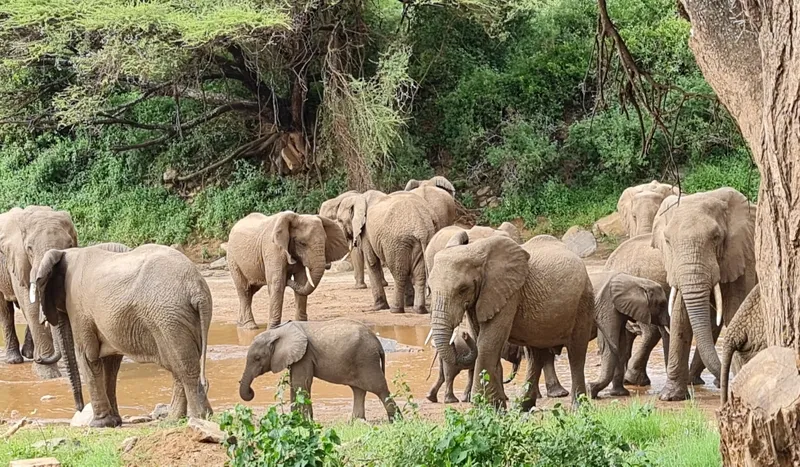
Manyara's lions have an unusual habit of lounging in the acacias — not guaranteed, but a local speciality.
The shallow soda lake draws flamingos in pink drifts in the right conditions.
Spring-fed forest at the entrance, full of baboons, blue monkeys and birds.
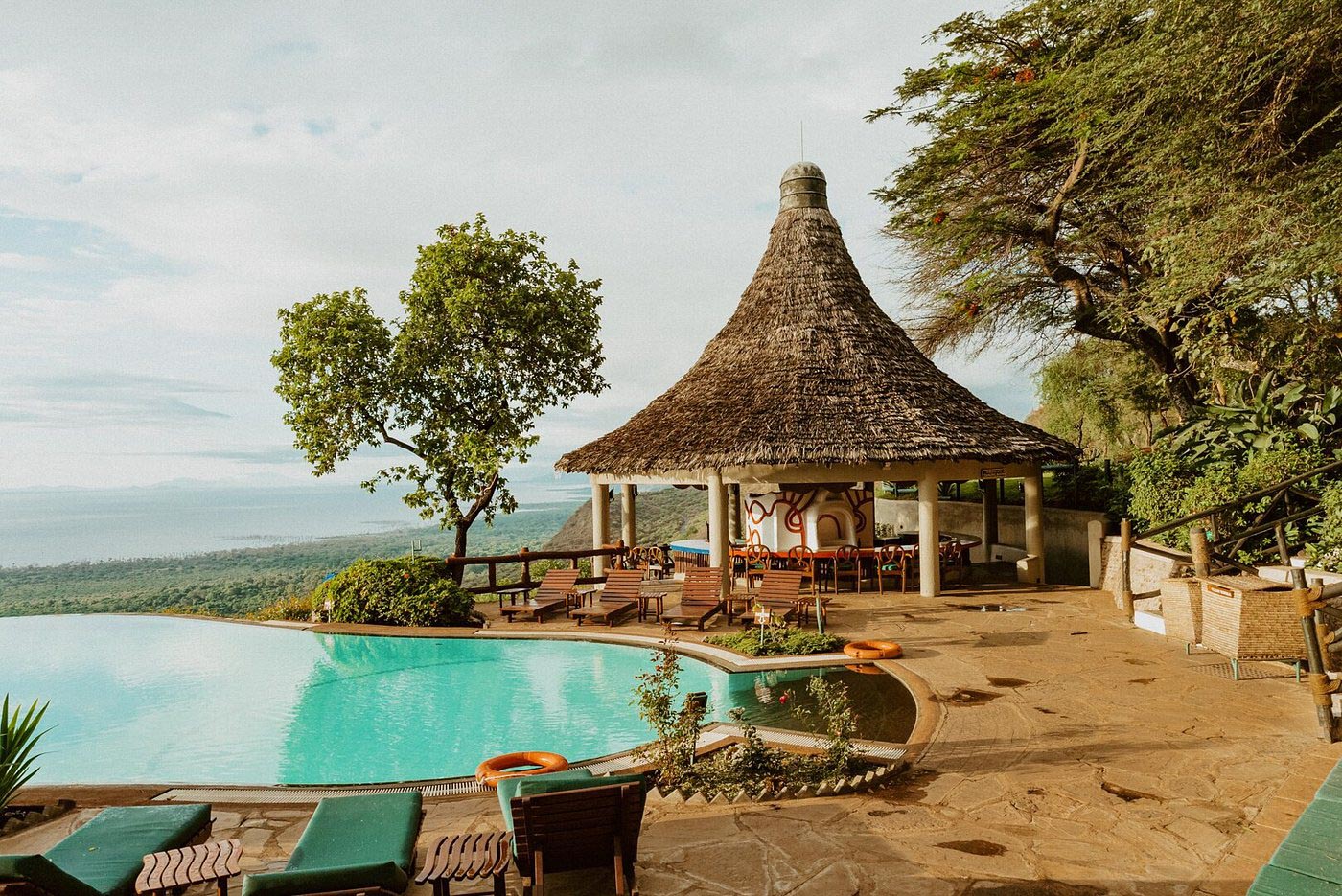
The Rift wall rises sharply behind the lake — a dramatic backdrop and a fine viewpoint.
Manyara is small and often done as a half-day on the way to the Crater. The flamingos and the tree-lions both depend on conditions and luck — go for the variety and the forest, and treat the specialities as a bonus.
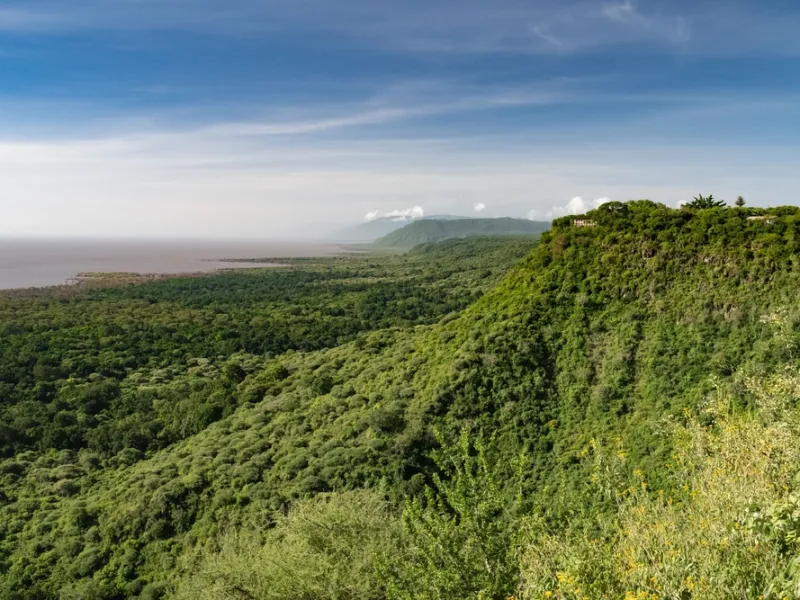
Manyara sits at the foot of the climb up to Karatu, Ngorongoro and the Serengeti, which is why it works so well as a first stop — you ease in here before the altitude and scale of the highlands.
It's also part of a wider Rift Valley system of soda lakes and escarpment that shapes the whole region's wildlife and the Maasai lands around it.
We've kept it simple: Manyara is a short, varied, scenic opener, best paired with the Crater and the Serengeti rather than visited alone.
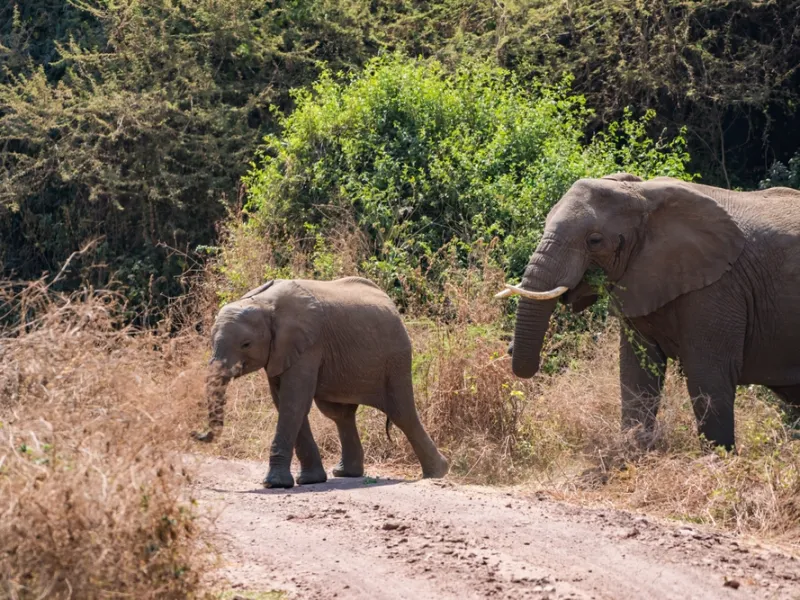
The fast change from spring forest to flamingo lake in one short circuit.
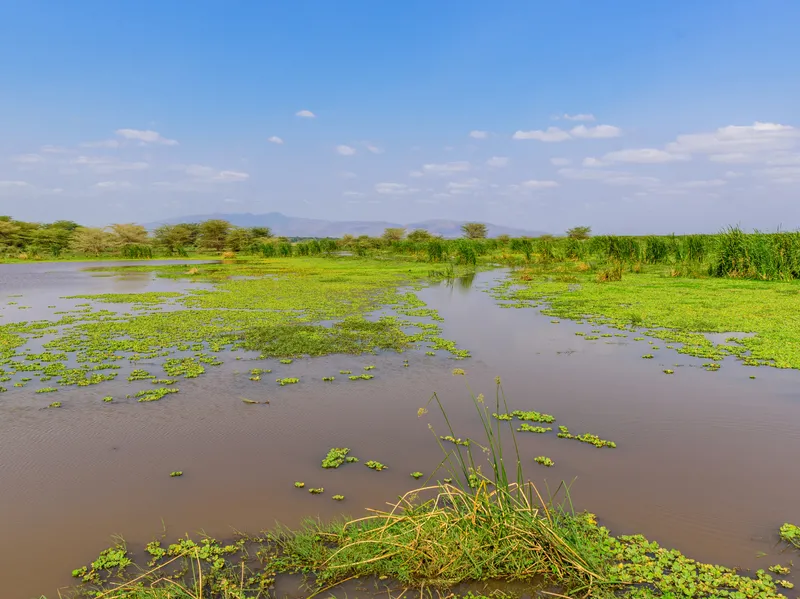
Over 400 bird species, plus baboons and blue monkeys in the forest.
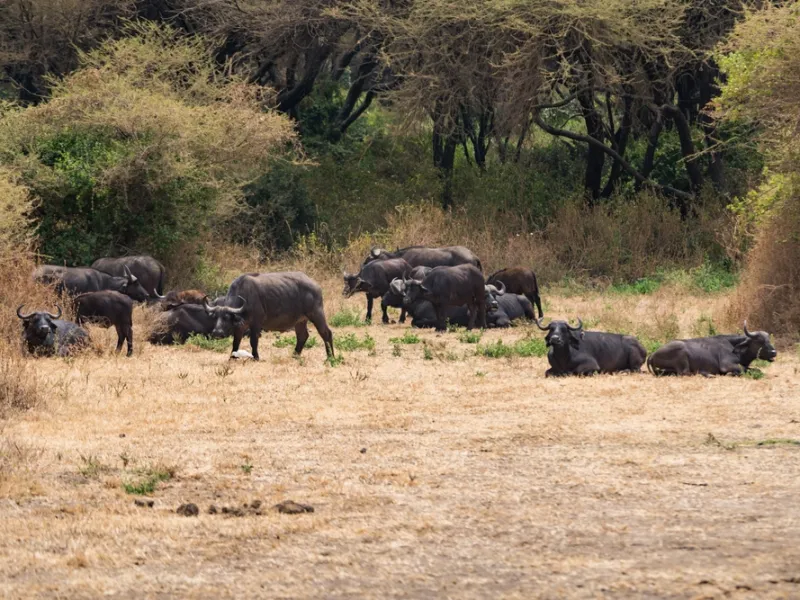
A high canopy walkway (where operating) over the forest floor.
Guides who know Manyara's forest and the lions' favoured trees — not a rushed pass-through.
We use Manyara as a scenic opener, sized to a half or full day, not stretched to fill a trip.
It slots cleanly with Ngorongoro and the Serengeti for a well-paced northern route.
Manyara opens a northern trip — forest, flamingos and escarpment before the Crater and the Serengeti.
Plan a northern-circuit safari