Enquire
Home  /  Namibia  /  Skeleton Coast
Desert coast · Namibia

Skeleton Coast

A fog-bound shore of shipwrecks and seals where the desert drowns in the Atlantic — wild and unforgiving.
Getting there
Fly-in to the remote north; the south is reachable by road from Swakopmund
Best for
Stark desert-meets-ocean scenery, shipwrecks, seal colonies and true remoteness
The land
A fog-bound Atlantic coast where the Namib desert meets the sea
Good to know
Scenery and atmosphere over big game; the far north is fly-in wilderness
What it is
The Skeleton Coast is where the desert and the ocean collide — foggy, bleak, and unforgettable.
Named for the whale bones and shipwrecks that litter its shore, the Skeleton Coast is one of the most desolate and dramatic coastlines on earth — a place where the Namib desert runs straight into the cold Atlantic, wrapped in fog where the sea air meets the burning sand. Vast Cape fur seal colonies crowd its rocks, desert-adapted wildlife ventures down the dry riverbeds, and the far north is a fly-in wilderness of roaring dunes and total solitude. It is not a big-game safari — it is scenery, atmosphere and remoteness at their most extreme, a coast that feels like the edge of the world.
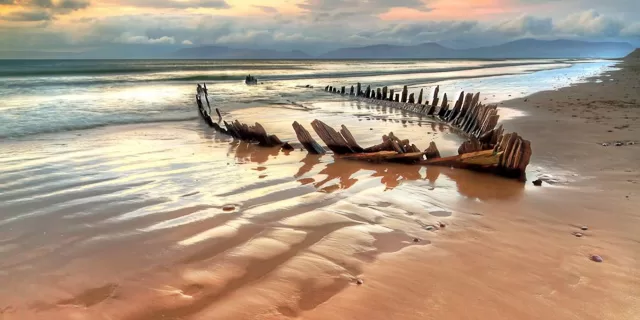
PhotoA rusting shipwreck half-buried on the foggy Skeleton Coast.
The reason to come

The end of the world

The Skeleton Coast delivers a feeling more than a checklist — the eerie collision of fog, dune and ocean, the rusting wrecks, the roar of the seal colonies, the sense of standing somewhere genuinely beyond the reach of the world. For atmosphere, desolation and raw scenery, almost nowhere compares.

The shipwrecks

Rusting hulks half-buried in sand and surf — the relics that gave the coast its name.

The seal colonies

Vast Cape fur seal colonies, tens of thousands strong, crowding the rocks at places like Cape Cross.

The fly-in wilderness

The remote far north — roaring dunes, dry rivers and total solitude, reached only by light aircraft.

An honest note

The Skeleton Coast is about scenery and atmosphere, not big game — come for the desolation, the wrecks, the seals and the sheer remoteness, with desert-adapted wildlife as an occasional bonus along the rivers.
Where desert drowns

Why the collision compels.

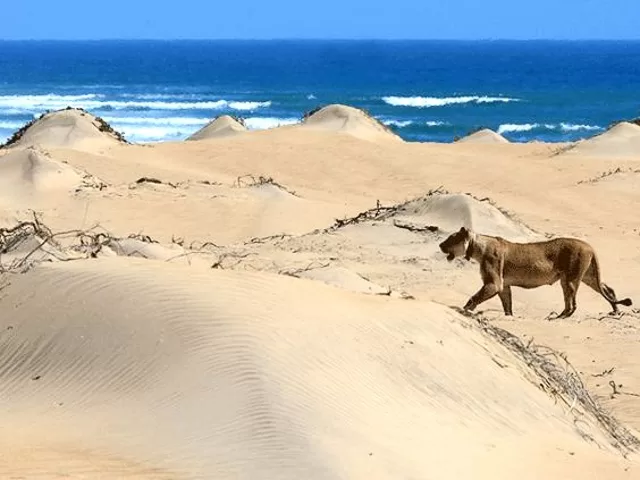
Two extremes meet here — the oldest desert and the cold Atlantic — and the result is a coast of fog, wreck and bone unlike anywhere on earth. It is scenery as raw emotion, the landscape of survival and shipwreck, and the far north, fly-in only, is among the last truly empty places left.
PhotoTens of thousands of Cape fur seals crowding the shore.
When to come — honestly

Foggy year-round, best in the cool months.

May – October
Best
Dry, cool winter — the most comfortable months, with clearer conditions between the fog and good access to the coast.
November – April
Good
Warmer summer — still foggy and atmospheric, with the desert-adapted wildlife following the rivers when rains come inland.
The Skeleton Coast's defining fog is a year-round feature, born where cold ocean meets hot desert. The cool dry months are the most comfortable and accessible; the coast's stark atmosphere holds in any season.
A coast of survival

Bone, wreck and water

The Skeleton Coast earned its name from the whale and seal bones of the old whaling era and the ships wrecked on its fog-blind shore — a coast that has always been about survival and its failure. The same fog that doomed sailors sustains the desert's life, condensing into the moisture that desert creatures depend on.

The far north is a protected wilderness of extreme remoteness, accessible only by fly-in and kept deliberately pristine — one of the last great empty coasts on the planet.

We match the coast to you — the accessible southern shore from Swakopmund, or the fly-in far north for true wilderness — and fold it into the desert route.
Beyond the obvious

Three ways to read the Skeleton Coast.

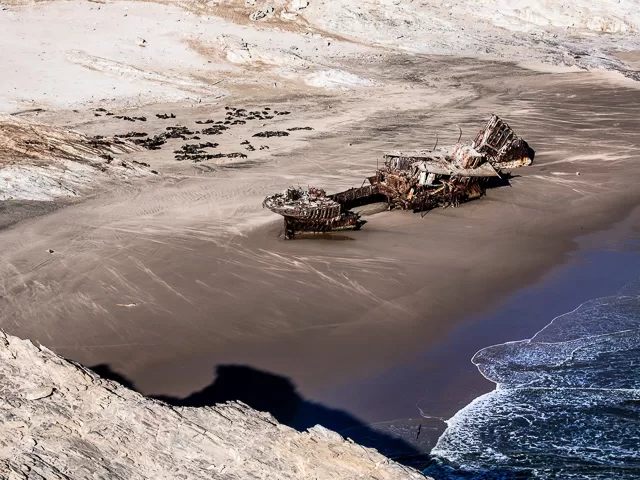
PhotoShipwrecks and shore

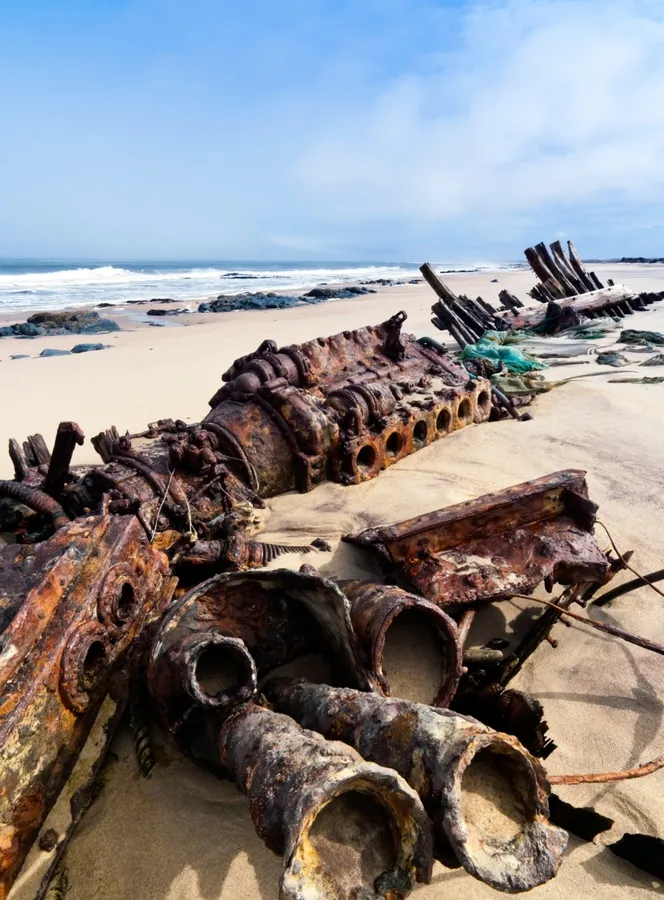
Shipwrecks and shore

The rusting wrecks and bleak, foggy coastline that name the place.
PhotoSeal colonies

Seal colonies

The vast Cape fur seal colonies at Cape Cross and beyond.
PhotoFly-in far north

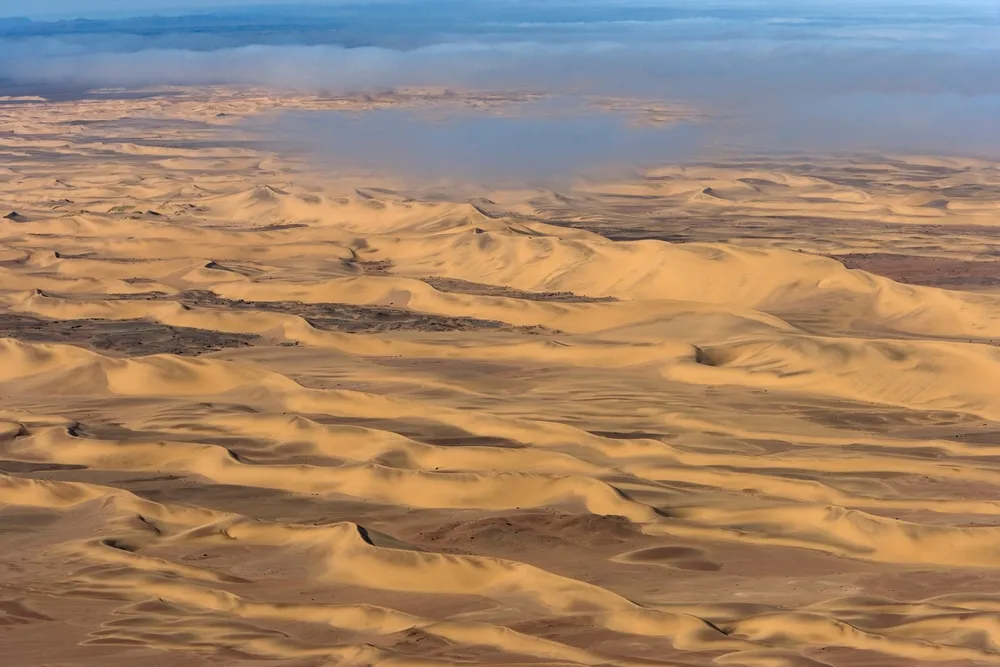
Fly-in far north

The remote northern wilderness of roaring dunes and total solitude.

Why Wild Voyager

We get the Namibia route right.

Namibia is a country of vast distances and dramatic landscapes — self-drive or fly-in, desert and wildlife in sequence. In Skeleton Coast that means matching the accessible southern shore or the fly-in far north to you, and folding the coast into the wider desert route.

We plan the route, not just the beds

Namibia is about distance and landscape — the wrong route is days lost on gravel. We plan the self-drive or fly-in logistics so the desert and the wildlife actually connect.

We base you in the right place

The Skeleton Coast splits into the road-accessible south and the fly-in far north, which are very different experiences. We match you to the right one and sequence it into the desert route so the coast lands at its most dramatic.

We guide for wildlife, not a checklist

Our guides and trackers work the terrain, the tracks and the light for real encounters — they would rather earn you one great sighting than rush a list.

Wildlife you may see
Marine Mammals

Stand at the edge
of the world.

The Skeleton Coast is desert-meets-ocean at its most extreme — wrecks, seals and fog-bound solitude. We fold it into a Namibia route of dunes, wildlife and coast.

Plan a Namibia trip

Field notes, now and then.

Where to go · When to go · Wildlife in season

A few times a year, never more. Unsubscribe anytime. See our Privacy Policy.