Enquire
Home  /  Namibia  /  Sossusvlei
Dune desert · Namibia

Sossusvlei

The towering red dunes of the Namib — and the ghostly white pan of Deadvlei. Namibia's signature image.
Getting there
~5 hr drive south-west of Windhoek, or fly to a Sesriem-area airstrip
Best for
The world's most photogenic dunes, Deadvlei, and pure desert landscape
The land
A sea of giant red dunes in the heart of the ancient Namib
Good to know
Scenery, not big game; go at dawn for the light and the climb
What it is
Sossusvlei is the picture you have seen of Namibia — giant red dunes and a white pan of dead trees.
Deep in the oldest desert on earth, Sossusvlei is a sea of towering red dunes — some of the highest in the world — rising in sculpted, rust-coloured waves from a pale clay pan. At their heart lies Deadvlei, a cracked white pan studded with the blackened skeletons of camelthorn trees, dead for centuries yet still standing against the red dunes and blue sky — one of the most surreal and photographed scenes in Africa. You come to climb the dunes at dawn, walk the eerie pan, and absorb a landscape of pure, austere, overwhelming beauty. It is not a wildlife stop; it is the soul of the Namib.
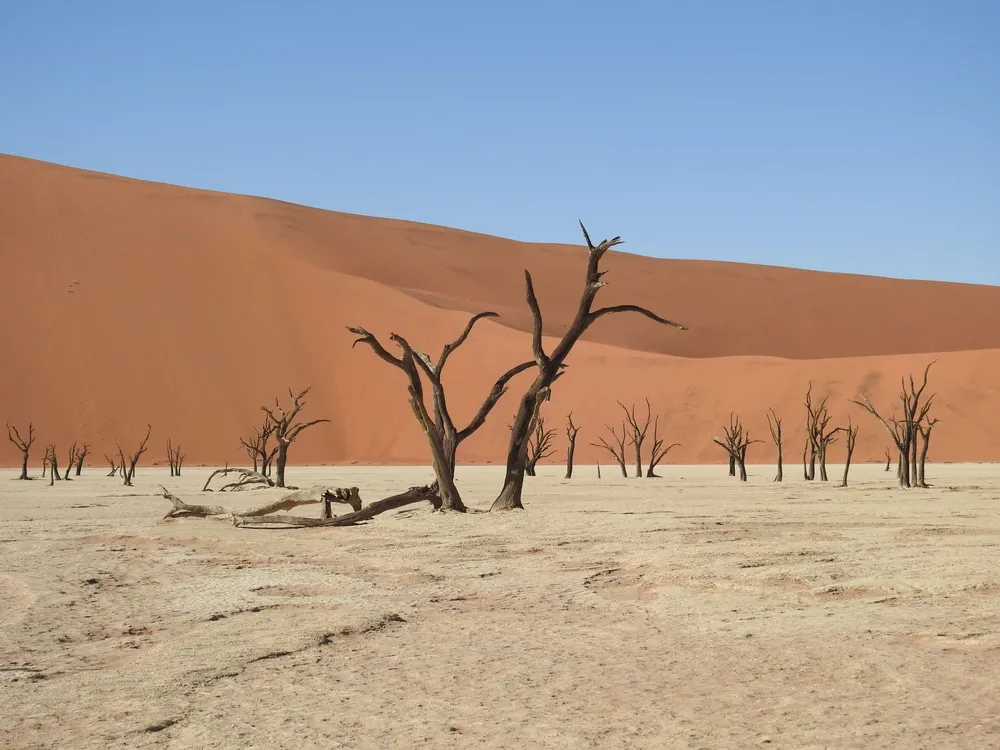
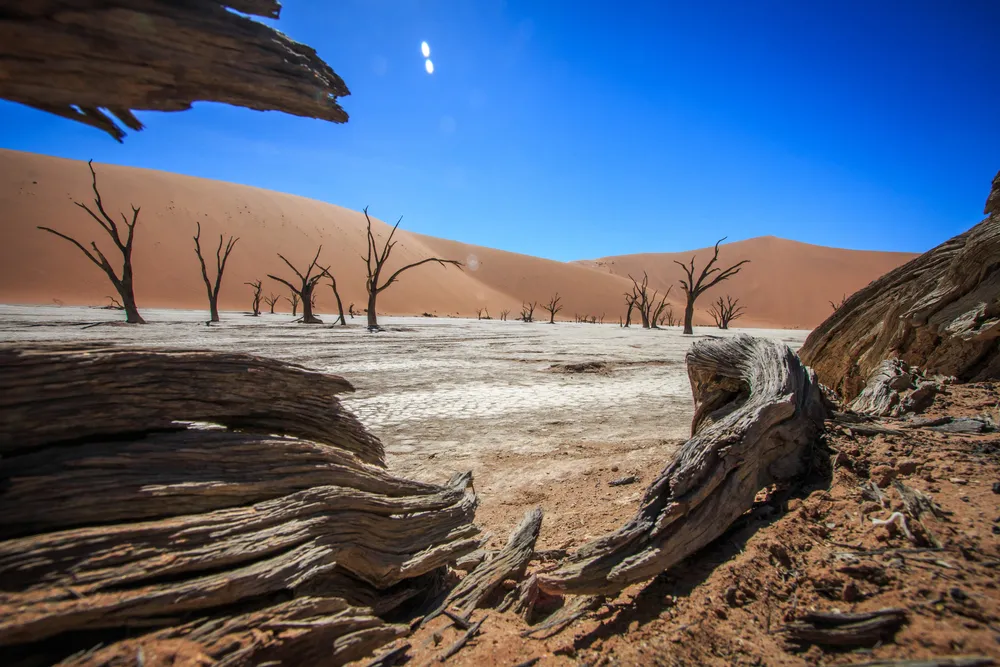
PhotoDead camelthorn trees on the white pan of Deadvlei, red dunes behind.
The reason to come

The dunes and Deadvlei

Sossusvlei is landscape as pure spectacle — the scale and colour of the dunes, the otherworldly stillness of Deadvlei, the way dawn light turns the sand to fire. It is the defining image of Namibia and one of the great desert sights on earth, best met at first light when the dunes glow and the heat has yet to build.

The red dunes

Among the highest dunes in the world, sculpted and rust-red — climb one at dawn for the light and the view.

Deadvlei

A white clay pan of centuries-dead camelthorn trees against red dunes and blue sky — surreal and unforgettable.

The ancient Namib

The heart of the oldest desert on earth — silence, scale and austere, overwhelming beauty.

Worth knowing

Sossusvlei is about landscape, not wildlife — the desert holds oryx, springbok and little else visible. Go at dawn: the light is best, the dunes climbable before the heat, and the pans at their most magical.
Landscape as spectacle

Why the dunes overwhelm.

Some places are about animals; Sossusvlei is about the earth itself. The scale of the dunes and the strangeness of Deadvlei are simply overwhelming — a desert so old, so vast and so sculpted it feels like another planet. For pure landscape, it is among the most extraordinary sights in Africa.
PhotoDawn light igniting the crest of a giant Sossusvlei dune.
When to come — honestly

Best in the cool months, always at dawn.

May – October
Best
Dry, cool winter — the prime months, with comfortable daytime temperatures for climbing the dunes and clear, crisp desert light.
November – April
Good
Hot summer — fierce midday heat makes a dawn start essential, but the light can be dramatic and rare rains briefly transform the desert.
Sossusvlei is most comfortable in the cool dry season, but it is the time of day that matters most: go at dawn, when the light sets the dunes alight, the air is cool enough to climb, and the pans are at their most magical. Midday is harsh in any season.
The oldest desert

Sand, time and stillness

The Namib is reckoned the oldest desert on earth, and Sossusvlei sits at its heart — the red of its sand the slow work of iron oxidising over millions of years, the dunes shaped by millennia of wind. Deadvlei's trees, killed when the climate shifted and the river that fed them dried, have stood blackened in the dry air for centuries.

It is a landscape that runs on deep time and near-total silence — a place to feel the age and scale of the desert as nowhere else.

We time Sossusvlei for the dawn light and base you close to the gate, so you are on the dunes as the sun rises, not stuck behind it.

Beyond the obvious

Three ways to read Sossusvlei.

PhotoThe dunes at dawn

The dunes at dawn

Climbing a great red dune as the sunrise sets the sand alight.

PhotoDeadvlei

Deadvlei

Walking the surreal white pan of centuries-dead trees against the dunes.

PhotoDesert stillness

Desert stillness

The silence, scale and deep time of the oldest desert on earth.

Why Wild Voyager

We get the Namibia route right.

Namibia is a country of vast distances and dramatic landscapes — self-drive or fly-in, desert and wildlife in sequence. In Sossusvlei that means timing it for the dawn light and basing you close to the gate, so you are on the dunes as the sun rises, not stuck behind it.

We plan the route, not just the beds

Namibia is about distance and landscape — the wrong route is days lost on gravel. We plan the self-drive or fly-in logistics so the desert and the wildlife actually connect.

We base you in the right place

Sossusvlei's magic is at dawn, and the gate timing decides everything. We base you close enough to be on the dunes at first light, and sequence it cleanly with the coast and the wildlife regions.

We guide for wildlife, not a checklist

Our guides and trackers work the terrain, the tracks and the light for real encounters — they would rather earn you one great sighting than rush a list.

Climb the dunes
at dawn.

Sossusvlei is the soul of the Namib — giant red dunes and the surreal pan of Deadvlei. We time it for the dawn light and build the desert route around it.

Plan a Namibia trip

Field notes, now and then.

Where to go · When to go · Wildlife in season

A few times a year, never more. Unsubscribe anytime. See our Privacy Policy.