The brown bear, Ursus arctos, can grow to about 6 feet long and weigh up to 700 pounds. It is found across the mountains and forests of Europe, North America and Asia. Alaska is home to some of the largest brown bears, and Russia holds the biggest share of all: well over 100,000, a large part of the world’s population. The brown bear is one of the most widespread and most often seen bears in the world.
Characteristics and behaviour
Newborn brown bears are tiny and helpless. They are born blind and weigh no more than about 680 grams. But they grow fast, reaching at least 25 kilograms within six months and learning to eat a wide range of food. Cubs usually stay with their mother until they are four or five years old. They reach breeding age at about six, and keep growing until around ten or eleven.
Brown bears usually mate between May and July, produce two to four cubs at a time, and breed again about every two years.
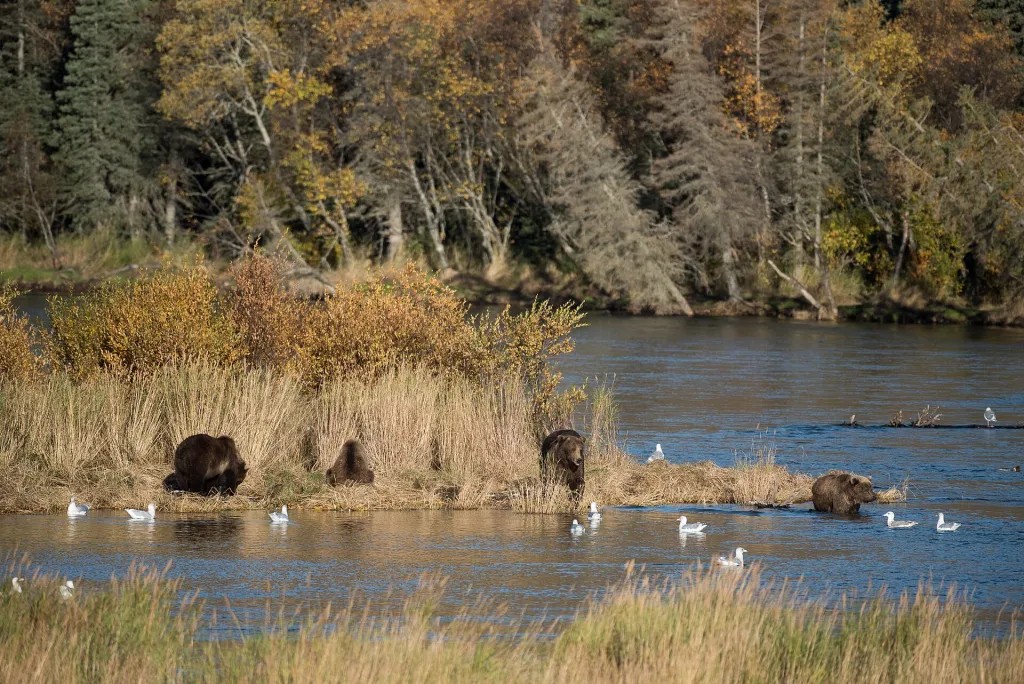
Brown bear family
Diet
Brown bears are omnivores and will eat almost anything. Their diet shifts with the season and the place, ranging from grass and shoots to meat. Roots and insects are among the most common foods, and they also take moose, elk and any reptiles they find. In Alaska, salmon is a staple during the migration months.
Hibernation
Hibernation is the deep sleep some animals enter in cold conditions. It slows the heart and breathing, which saves energy. Brown bears usually begin hibernating in November and December as the cold sets in, and they can stay under for up to six months, conserving energy through the lean season. They prepare in the weeks before by eating as much as 40 kilograms of food a day.
During hibernation the bear’s body changes markedly: its heart rate can drop from around 40 beats a minute to fewer than ten, and its body temperature falls. Females often wake during this time to give birth. Spring is when the bears emerge, and it is the best time to visit a bear area. The first thing they look for is food, which is especially rich in nutrients after winter.
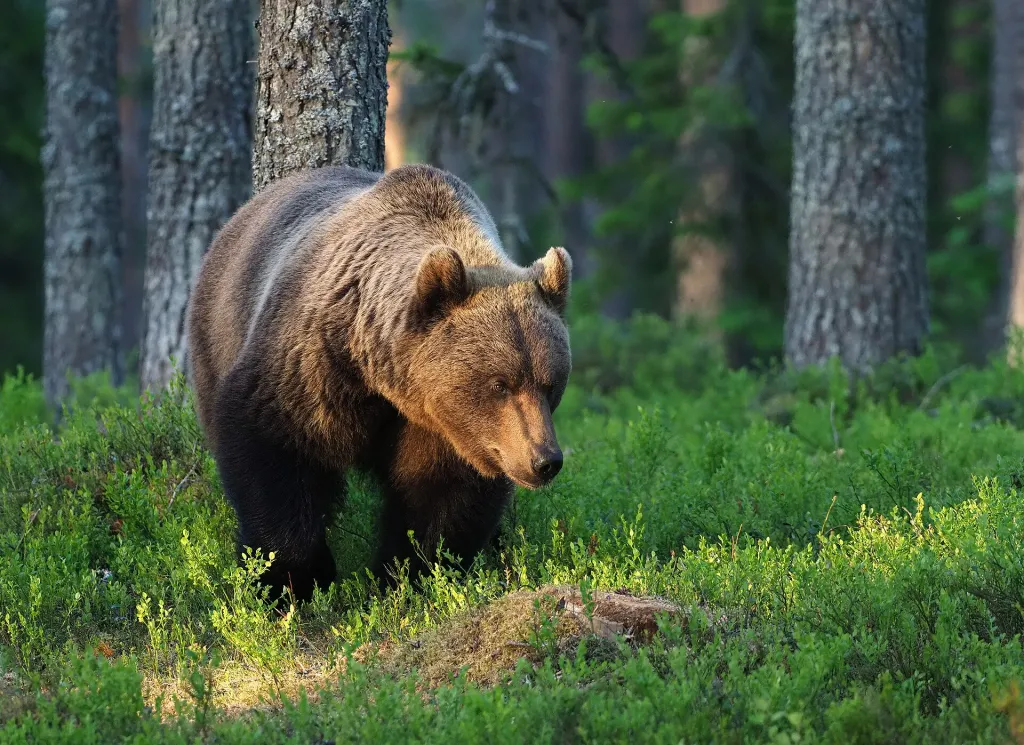
Brown bear in Finland
Tips for watching bears in the wild
- Always respect a bear’s space. If it changes its behaviour because of you, you are too close.
- Use binoculars so you can watch closely from a safe distance.
- Never crowd or push bears out of an area.
- Stay in a group and keep noise to a minimum.
- Leave sick or young bears alone; there is usually a larger bear nearby.
- Do not run from a bear. Give it room and stay calm.
- Always pay attention to your surroundings.
Threats
Brown bears were once widely hunted for their meat and hides, and the gall bladder fetched high prices in some Asian markets, though there is no solid evidence that bear parts have any medical value. The other major threat is habitat loss through deforestation, climate change and the spread of mining, logging and roads. Land that was once home to many animals, the black bear among them, is increasingly taken over by people, and industrial growth continues to erode wild habitat.
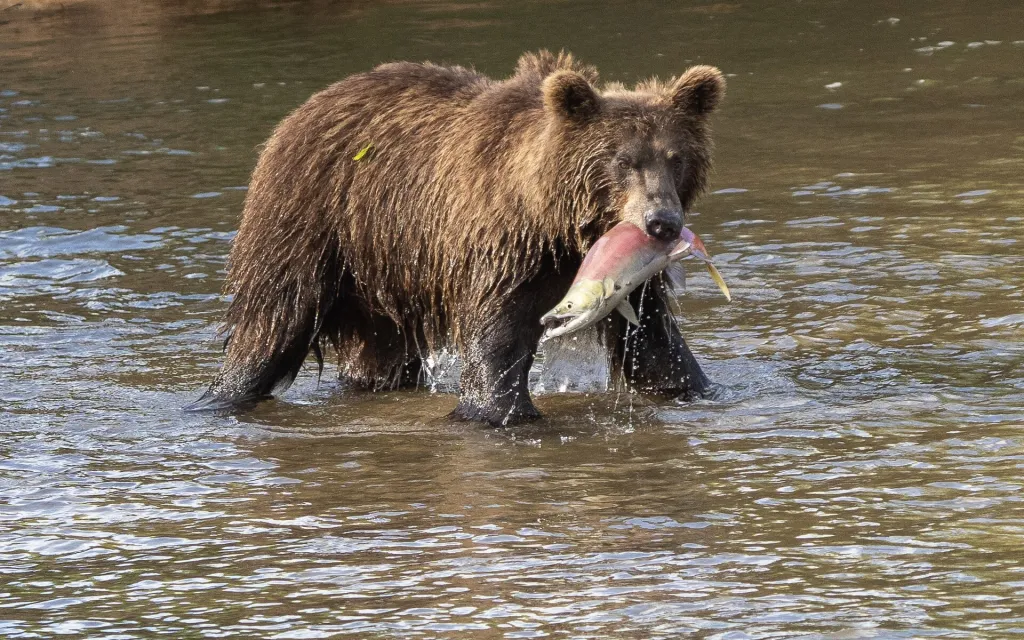
Brown bear of Kamchatka
A few facts
- One of the largest land carnivores in Europe.
- Cubs are born blind.
- Mostly active at dusk and at night.
- Live for about 20 to 30 years in the wild.
- Spend up to 16 hours a day looking for food.
- Seek a mate only for short periods.
- Despite their size, they can run at about 50 kilometres per hour.