The caracal is a medium-sized wildcat found across much of the Middle East, Central Asia and Africa. It lives in savannah, desert and forest, though it is absent from the dense equatorial rainforest belt of western and central Africa. This blog covers all about the caracal.
The name comes from the Turkish for “black-eared,” while in Swahili it has been linked to the idea of a secretive cat.

A caracal in the wild
Caracals were prized in ancient Egypt and figured in Chinese culture too, sometimes given as gifts to nobles and guests, and their leaping and hunting skills were shown off in competitions.
Here is what to know about this handsome cat.
What they look like
A caracal has a reddish-golden coat with a white throat, chin and underside. Its most striking feature is its large, pointed ears, topped with long black tufts, which almost give it a crown. It is powerfully built, with long, strong legs.
The coat colour varies from cat to cat, with females usually paler. Like the African golden cat, caracals have faint spots on the underside, and the face carries black markings around and above the eyes and on the whisker pads.
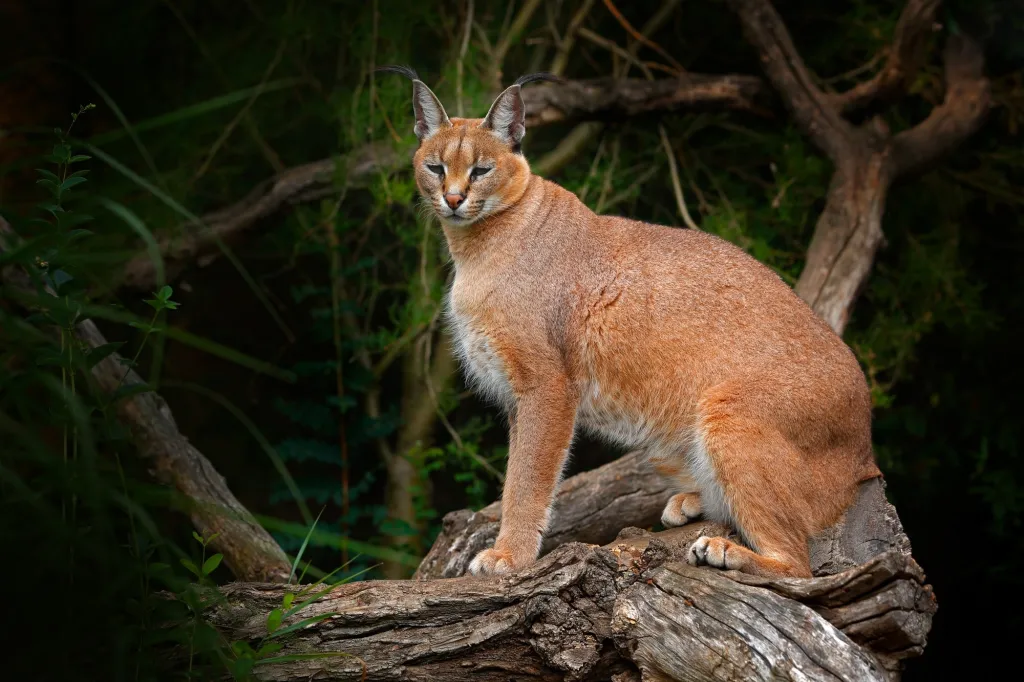
An adult caracal
The purpose of the black ear tufts is still not fully known. Some suggest they shade the face from the sun or keep insects away, help camouflage the cat in tall grass, or serve to signal to other caracals through twitches and movements. Either way, the ears are remarkable, with around 20 muscles that swivel them to pick up the sound of prey.
Adult females are smaller, at around 8 to 13 kg, while males can reach about 20 kg.
How they hunt
Caracals are the fastest of the smaller wildcats and are excellent hunters. Along with their ears, their sandy coat gives good camouflage, and the stiff fur around their footpads lets them stalk in near silence.
They are mostly active and hunting at night. That nocturnal habit, together with their stealth and agility, makes them very effective.
They are opportunists, taking whatever prey comes their way, including birds, rodents, hyrax and even monkeys. Their strong hind legs let them leap up to about 3 metres to pluck birds from the air, which they seize with thick, hooked claws. Though it is less common, caracals are also good climbers and will go up trees after prey, like leopards, and they can take prey twice their size, such as small antelope.
Behaviour
Caracals are solitary except when mating and raising kittens. Both sexes are territorial and hold an active home range, which they mark with urine and claw scratches.
They rarely meet other caracals, but they keep track of, and recognise, the scent of each one in the area.
Mating and young
Caracals reach breeding age at around 7 to 16 months and can mate at any time of year. A female shows she is ready by scent-marking with urine, and a distinctive cough has also been reported as part of attracting a mate.
Where several males court one female, they may fight over her, or she may choose for herself, usually favouring a larger male. Males stay with a female for a few days and mate several times. Once she settles on a mate, the pair move together and mate more than once.
Pregnancy lasts about two and a half months, and the female uses another animal’s abandoned burrow as a birthing den. Litters run from three to six kittens.
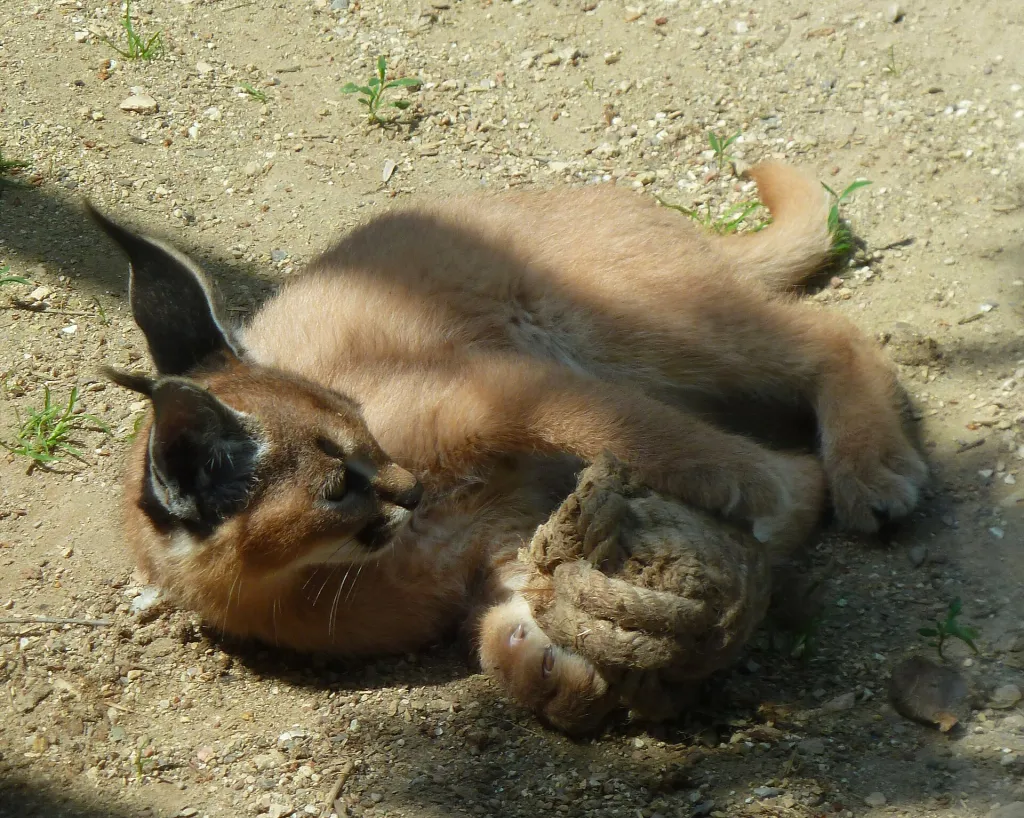
A caracal kitten
Caracal kittens are born deaf and blind, opening their eyes at around ten days old, and it takes about three weeks for their trademark ears to unfurl.
The female puts a great deal of time and energy into raising the litter, while the male plays no part. She nurses the kittens for four to six months, though they start on meat at about a month old.
Kittens leave their mother at around nine to ten months. In the wild, a caracal lives up to about 12 years.
Home range
Caracals hold a large home range for their size, and a male’s is much bigger than a female’s. The size also depends on how much water is available.
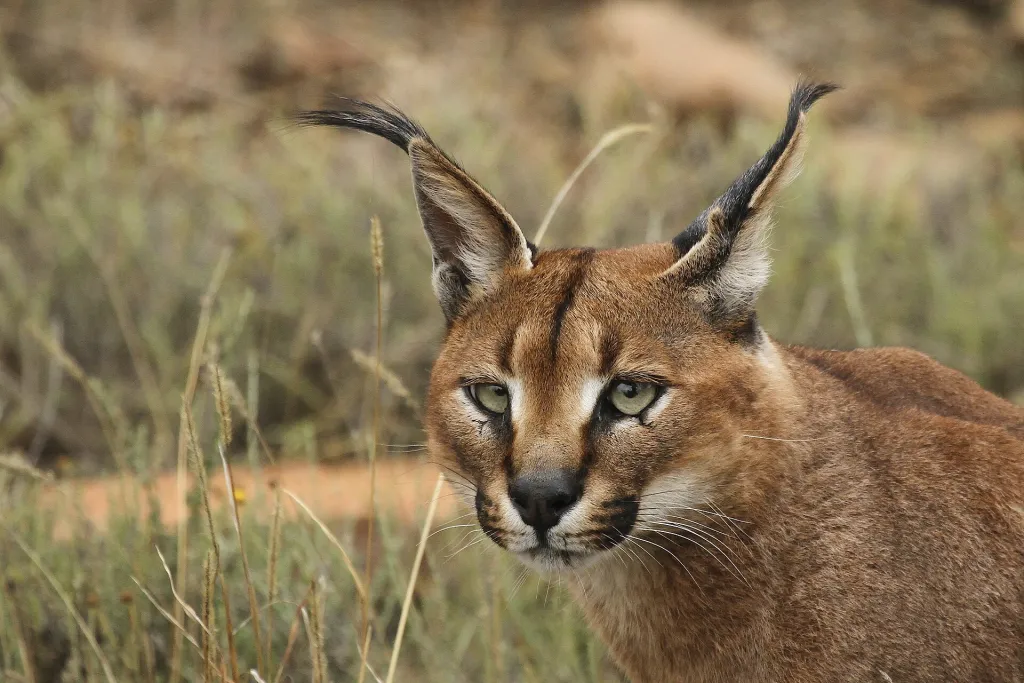
A caracal in South Africa
A male’s territory overlaps with those of other males, while a female defends hers for her own use.
Conservation
Caracals are not declining across most of their range, but they still face threats, mainly habitat loss and killing in retaliation for taking small livestock, along with the spread of farming. In South Africa and Namibia they are often seen as a nuisance for preying on small stock.
The caracal is legally protected across much of its range, though in parts of Africa landowners are allowed to kill them if they threaten property.
The caracal is one of the notable members of the small-cat family. Which fact interested you the most?
If you loved reading this story, then subscribe to our blog here (it will ask to verify your email) to get inspiring travel stories and trivia delivered to your email. Stories about wildlife trivia, cultural experiences, curated luxury hotel lists, underrated places to travel, polar journeys and much more.