Nine ways a saving of four hundred dollars turns into a wasted week
A safari is one of the few holidays where the cheapest version and the good version look almost identical on paper.
Same number of nights. Same parks. Same vehicle, more or less. Same itinerary, often word for word. One quote says $2,400 and another says $3,600, and there is nothing in either document that explains the difference.
So people take the cheaper one. Of course they do. Nobody sets out to overpay.
Then they come home with four hundred photographs of animals at a distance, a vague sense that it was fine, and a suspicion they missed something. They did. Here is what.
1. You get a driver, not a guide
This is the single largest thing you lose, and it is worth more than everything else on this list combined.
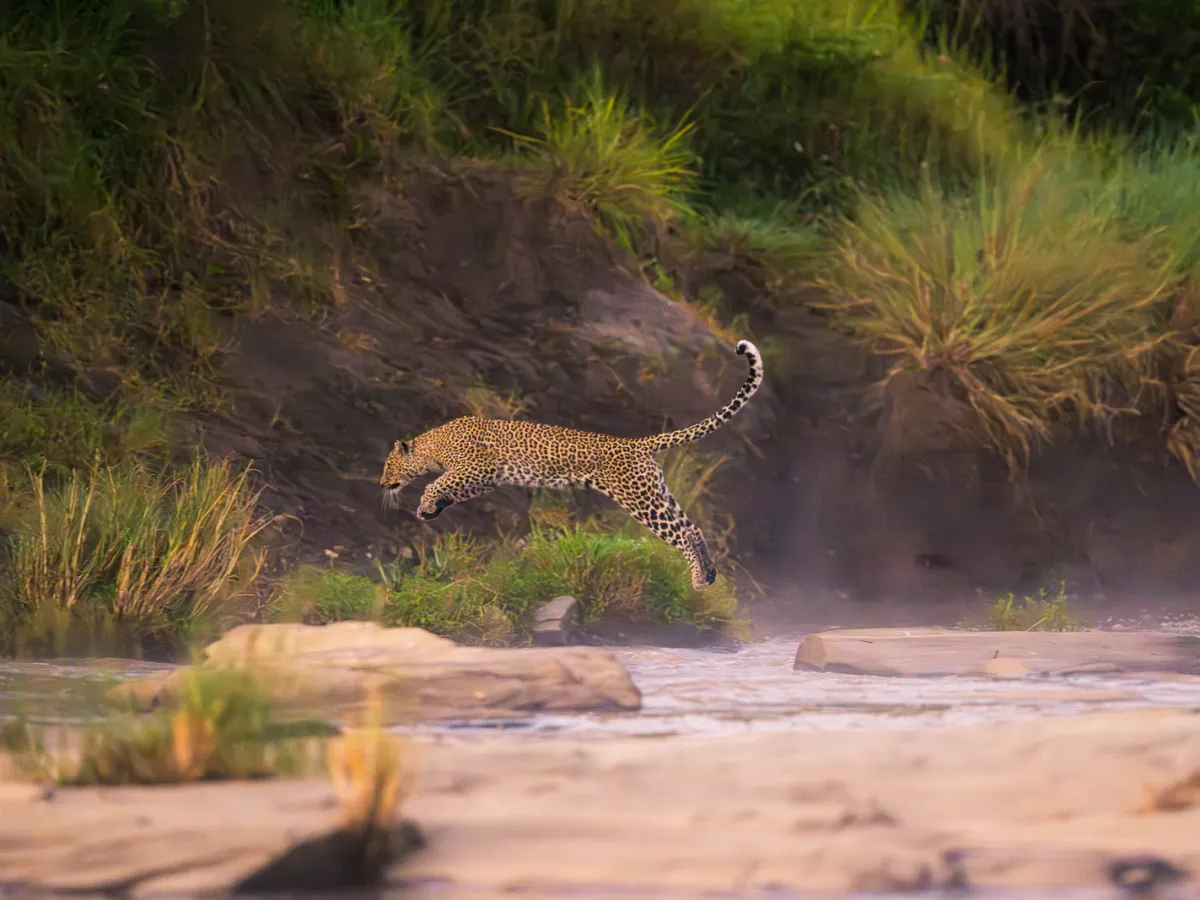
A safari is not a bus tour. The wildlife does not stand at fixed points waiting to be visited. Finding it is an act of skill, reading tracks, reading alarm calls, knowing which pride holds which stretch of ground, knowing that the vultures circling two kilometres away mean something, and knowing where a leopard is likely to be at four in the afternoon in November as opposed to June.
A good guide does all of this while you are looking out of the window at grass.
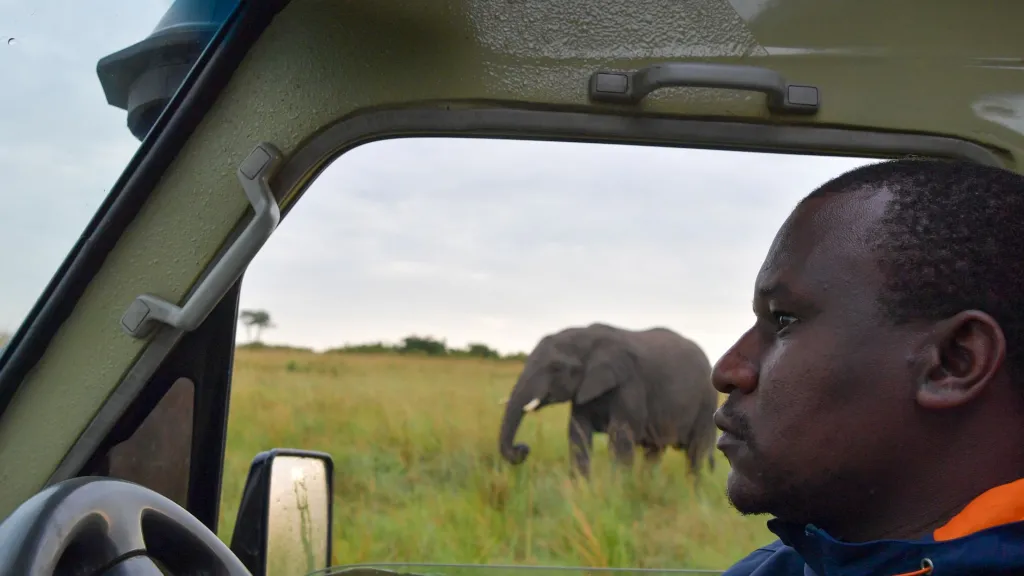
A cheap operator cannot pay for that. Senior guides with KPSGA Silver or Gold grades, ten or fifteen years in a specific reserve, command real salaries. So the budget operator hires someone who holds a licence, drives safely, and knows where the main road goes. He will take you to whatever other vehicles have already found.
You will still see animals. You will see them from the back of a queue of nine vehicles, twenty minutes after the interesting part finished.
The difference between a driver and a guide is not comfort. It is whether you see anything at all.
Everything else in a safari is a container for the guiding. Get that wrong and the whole week is wasted, regardless of how good the sheets are.
2. The vehicle you spend forty hours in
You will spend more time in the vehicle than anywhere else. On a five-day safari that is thirty-five to forty-five hours.
A budget operator runs an older Land Cruiser because a new one costs what a small house costs. So you get a vehicle with tired suspension on roads that are corrugated murram at best. Seats that do not recline. A roof hatch that rattles. Dust coming in where the seals have gone. No power sockets, so your camera battery dies at eleven in the morning. Torn upholstery. Often no fridge, so your water is warm by ten.
Add to that the thing nobody mentions: a shared vehicle means shared decisions. Seven strangers, one of whom wants to go back for lunch, one of whom has seen enough lions, one of whom is on the phone. Your sighting lasts as long as the least patient person in the car.
Forty hours is a long time to be uncomfortable and outvoted.
3. The camp is outside the park, and that costs you the day
This one is entirely invisible in a quote and it is the second biggest loss after the guiding.
Land outside a reserve is a fraction of the cost of a concession inside it. So the cheap itinerary puts you in a lodge thirty minutes to two hours from the gate. The quote still says “Masai Mara.” Technically it is true.
What it means in practice is this.
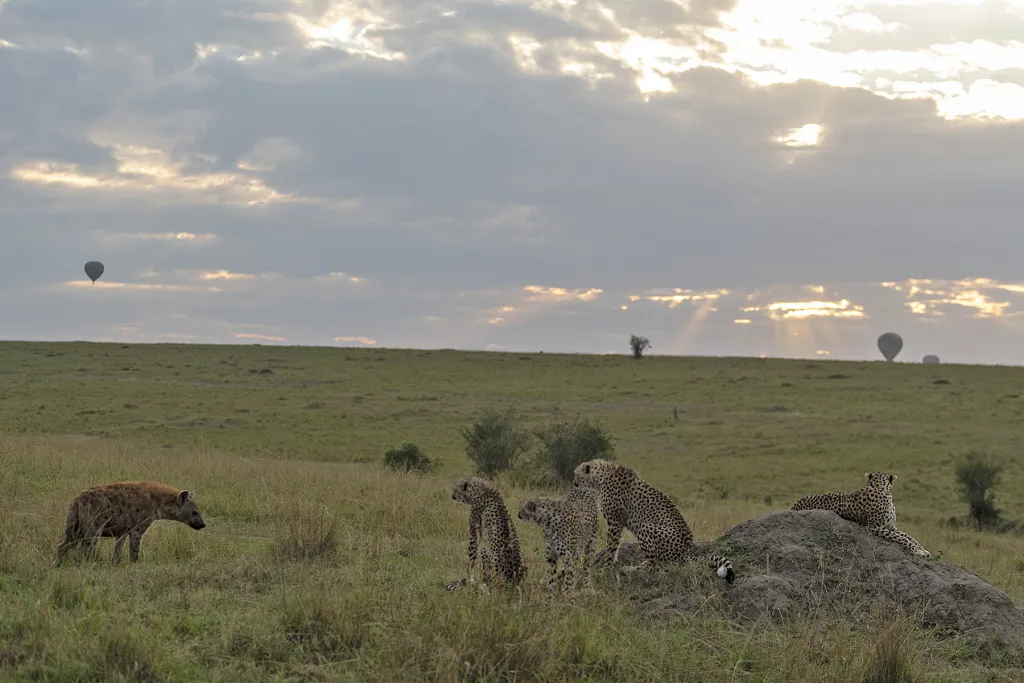
You cannot be in the park at first light. Gates open at six. If you are ninety minutes away, you leave at four-thirty and arrive after the light has gone flat, or you leave at six and arrive at seven-thirty, by which time the cats have finished hunting and gone to lie under a bush for nine hours.
You cannot be there at last light either. You have to leave before the gate closes to make the drive back.
Dawn and dusk are not merely the prettiest hours. They are the only hours when the big cats are active. Everything you came to see happens in those two windows, and a lodge outside the park removes both of them.
Then there is the driving itself. Three hours a day on the transfer, every day, on bad road. Over five days that is fifteen hours of your holiday spent commuting, and it comes out of exactly the time you would otherwise be watching something.
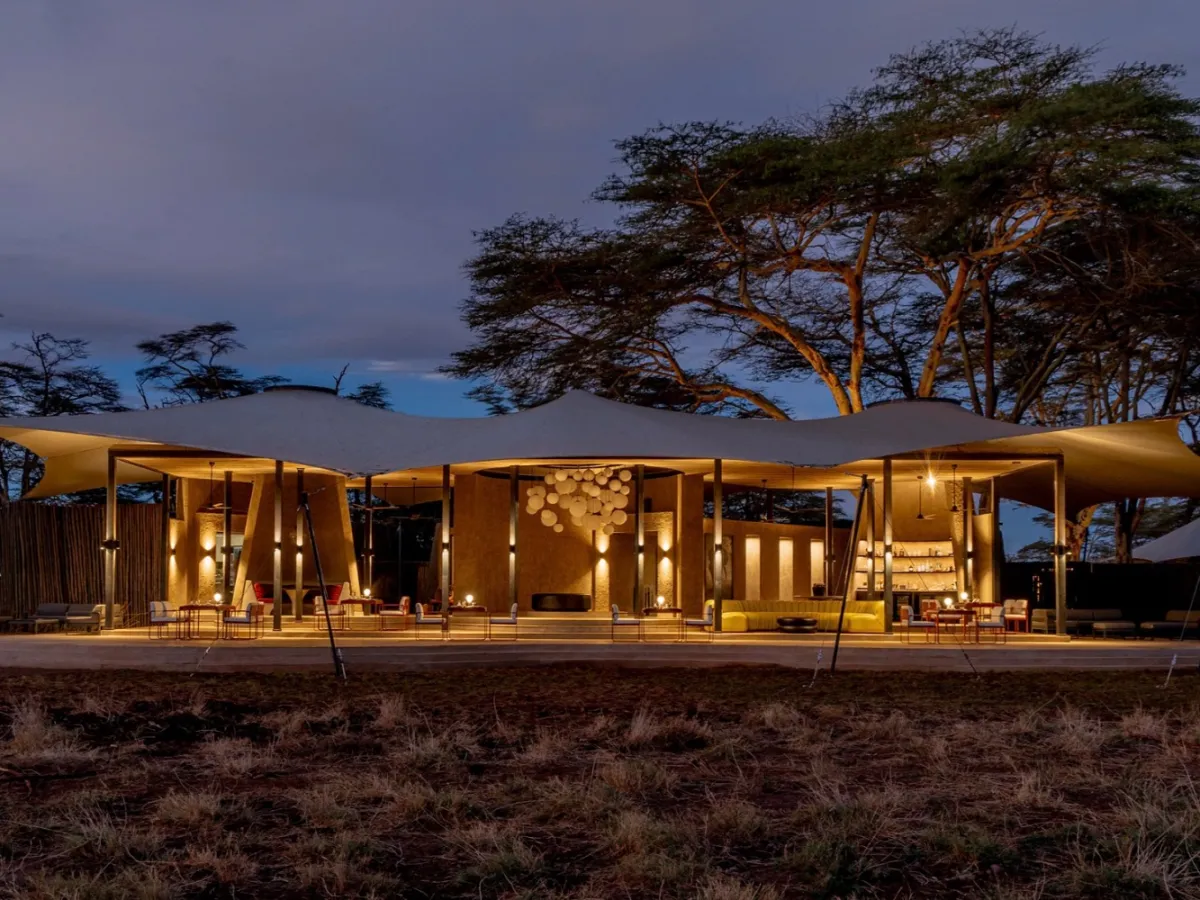
A camp inside the reserve costs more per night. It also gives you back two of the best hours of every single day, and the wildlife is outside the tent rather than an hour away.
4. Vehicle density, which nobody warns you about
Cheap operators cluster. They use the same few gates, the same main tracks, the same handful of well-known sightings, because that is the low-risk way to guarantee a tourist sees a lion.
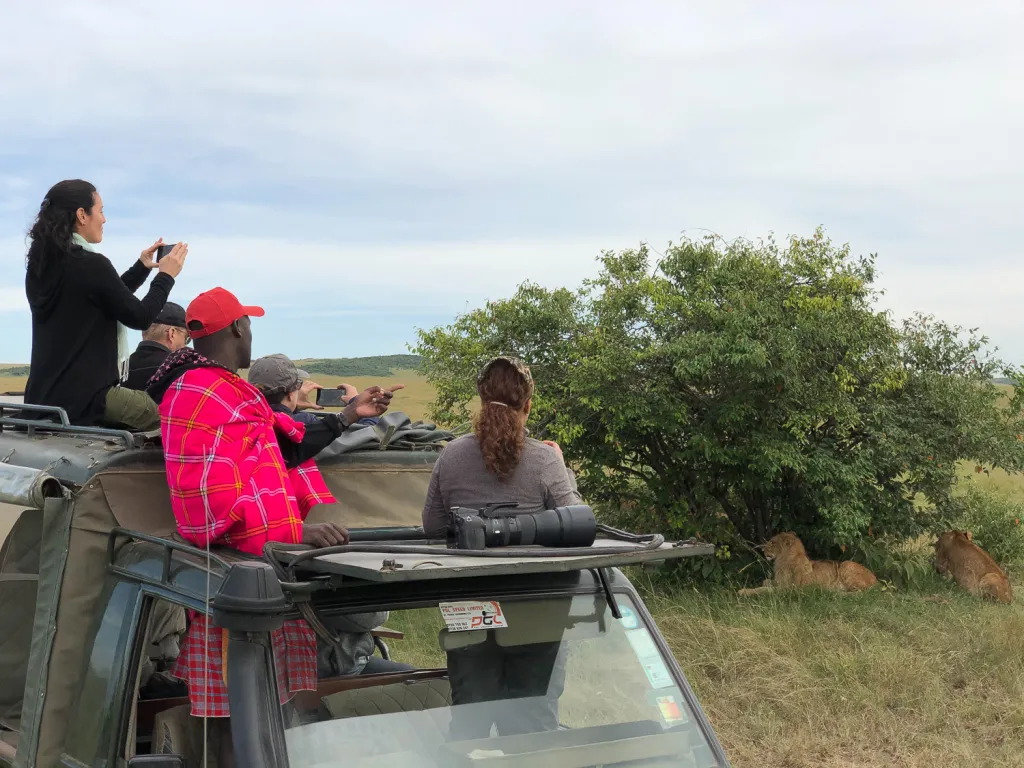
So you arrive at a leopard and there are fourteen vehicles already there. You get a view over someone’s roof hatch. The animal, sensibly, moves off.
An operator with its own vehicles, its own guides and camps in the right locations goes where the others are not, because it can afford to spend two hours finding something rather than joining a queue.
5. The food, and the fact that you are on holiday
There is a version of this argument that says food does not matter because you came for the animals. It is wrong, and anyone who has eaten a buffet of lukewarm pasta on the fourth consecutive evening knows it is wrong.
You are awake at five. You are out until nine at night. You are in dust and sun for two weeks. What you eat, where you sleep, and whether anyone thought about your comfort is not decoration, it is the difference between coming home rested and coming home wrecked.
Budget lodges run buffets at fixed hours for large groups, because that is how the economics work. You eat at seven whether you want to or not, from a tray that has been standing since six-thirty.
This matters more than people expect on a trip where you are physically tired every single day.
6. Nobody knows your name
At a small camp you are one of twenty-eight people. Your coffee arrives the way you take it by day two. Somebody notices you were cold last night and adds a blanket. The chef asks what you would like rather than showing you what is available.
At a hundred-room lodge you are a room number and a dietary code. Neither is anyone’s fault — it is arithmetic.
Over a week, this is the difference between having been looked after and having been processed.
7. What happens when something goes wrong
It will. A vehicle breaks down, a flight is cancelled, a child gets a fever, rain closes a road.
A well-capitalised operator with its own fleet and its own ground team sends another vehicle. A cheap one, subcontracting to whoever was available, spends the afternoon making phone calls while your day disappears.
You are not paying for the days that go well. You are paying for the one that does not.
8. The arithmetic
Here is the part worth sitting with.
A safari is not a weekend. Most people do this once, flights, visas, vaccinations, a fortnight of leave, and $8,000 to $15,000 all in by the time everything is counted.
The difference between a poor safari and a very good one is often twenty to thirty percent of the land cost. On a typical trip that is $600 to $1,200.
You are protecting a five-figure investment and a year of anticipation, and the only time many people will ever do this, for the price of a business-class upgrade on one leg.
Saving that money does not get you eighty percent of the experience. It frequently gets you thirty, because the guiding was wrong, and the guiding is the experience.
9. A word about negotiating
We are asked to discount more often than any other question, so it is worth explaining honestly what a safari quote is actually made of.
It is not a price we invented. It is a sum.
Park fees are set by the government and published. Kenya Wildlife Service and TANAPA charge what they charge. There is no version of a Masai Mara itinerary where those are lower, and no operator anywhere gets a discount on them.
Camp and lodge rates are contracted annually, in advance, for the whole year. We sign rates with each property before the season starts and we hold them. We do not ring a camp and haggle over one couple’s four nights, and if we did, the camp would say no. Every serious operator in East Africa works this way.
Vehicle and guide are a daily rate. A Land Cruiser costs what it costs to own, insure, fuel and maintain. A senior guide with fifteen years in the reserve is paid a salary he can live on.
And our own margin is a fixed percentage. Twelve to fifteen percent, on every booking, every year. That is not an opening position. It is what a tour operating business runs on: offices in three countries, staff, insurance, the cost of carrying a booking for nine months before anyone pays, and the reserves to put things right when a flight is cancelled or a vehicle fails at six in the morning.
So when someone asks us to take fifteen percent off the quote, we are being asked to work for nothing. We are not going to do that, and you should be wary of anyone who agrees.
Because the money has to come from somewhere. If an operator cuts a price meaningfully, one of four things is happening.
They have moved you to a cheaper camp, usually outside the park, and hoped you would not notice the address.
They have put you in a shared vehicle rather than a private one.
They have given you a cheaper guide, which is the most expensive saving on this entire list.
Or they have taken it out of their own margin, which means they are undercapitalised, and you will find that out on the day something goes wrong.
What you are actually being charged
Here is the part most people do not know, and it is worth knowing before you decide the quote is high.
We do not pay retail, and neither do you. The rates we hold with camps and lodges are contracted for volume across a whole year, and they typically sit at fifty to sixty percent of the published rate a member of the public would be quoted directly. The same is true of vehicles, guides, and transfers.
So when our margin is added back on, the total is usually still below what you would pay to assemble the identical trip yourself, camp by camp, on your own. You are not paying a premium for the convenience of an operator. In most cases, you are paying less and getting somebody to carry the risk.
That surprises people. It should not. It is how contracted travel has always worked, and it is why a good operator is not a middleman taking a cut; they are the reason the cut exists at all.
But you will still find a cheaper quote somewhere
You will. Almost certainly from a small local operator working from a phone, with no office, no fleet, no insurance, and no balance sheet. Their price is genuinely lower, and they are not lying about it.
What they are not showing you is what they have removed.
Safety and accountability. No registered company, no liability cover, no licensing, nobody to call from a roadside at dusk. If something happens, you have a phone number and a name.
The guide. Almost always the first cost cut, and almost always the one that decides whether the week worked.
The camp. Chosen on price rather than on anyone having stayed there. The photographs will look fine. The location, the beds, and the food frequently will not.
And the itinerary itself. This is the one nobody checks. Badly built routings put you outside the park, add two-hour transfers to every game drive, or send you back the way you came because it was cheaper than a one-way flight. You lose whole days to the road, and the quote never mentions it.
None of that appears in a comparison of two numbers. It appears on day three.
What experience actually buys you
There is a version of this argument that sounds like an operator defending its fee. So let me put it in terms of what is genuinely different about a company that has been doing this for years.
We have slept in the camps we sell. All of them. Not on a familiarisation trip where you are shown the best suite and given dinner, properly, as a paying guest would experience it, at the hour a guest arrives, in the room a guest gets. If we have not stayed, it does not go on an itinerary. That single rule removes most of what goes wrong on a safari.
The vehicles are ours, or they have been earned. In Kenya and Tanzania, we run our own fleet. Where we contract, it is with operators we have tested over years and whose vehicles have carried our guests, not ones found on a list.
The guides are people, not a resource pool. We know their grades, their strengths, which of them is best with children and which is the one to send when a guest is serious about photography. They have worked with us for years. They are not dispatched by whoever picks up the phone that morning.
Which means there is no surprise left in it. Every camp, every vehicle, every guide, every road, and every transfer time on your itinerary has already been done, by us, repeatedly, and by hundreds of guests before you.
That is the real difference between a trip built by an established operator and one assembled either by yourself from a browser, or by somebody with no track record and nothing to lose. It is not that we are better at negotiating. It is that we have already made the mistakes, years ago, with our own money, so that you do not make them with a fortnight of your life.
What we can do, and will, is change the trip. Fewer nights. A different season, where the same camp costs thirty percent less. A camp at a lower rate that we would still put our own family in. Road transfer rather than a flight. Two parks instead of three. Those are real savings and they are yours to choose.
What we will not do is charge you the same for less and say nothing about it. That is the only way a safari quote can come down without something being removed, and something always is.
What we would actually tell you
If your budget is genuinely fixed, cut the number of days rather than the quality of them.
Four nights done properly, inside the park, with a guide who knows the ground and a vehicle that is yours, will give you more than eight nights of being driven to the back of a queue. The animals do not care how long you stayed. They care whether you were in the right place at the right hour with somebody who knew where to look.
That is the whole thing, really. A safari is not a list of places you went. It is a small number of moments where you happened to be present, quiet, and close enough, and every one of those moments is bought by the decisions you made before you left home.
Wild Voyager builds wildlife journeys across 34 countries, with our own guides, vehicles and ground teams in Kenya, Tanzania and India. Nothing goes on an itinerary until somebody on this team has travelled it.