Known as the gateway to northern Kenya, the Laikipia Plateau stretches from the slopes of Mount Kenya to the rim of the Great Rift Valley. It is a lesser-visited area of conservancies and traditional ranches, and an important wildlife region where farms and cattle ranches support large numbers of game.
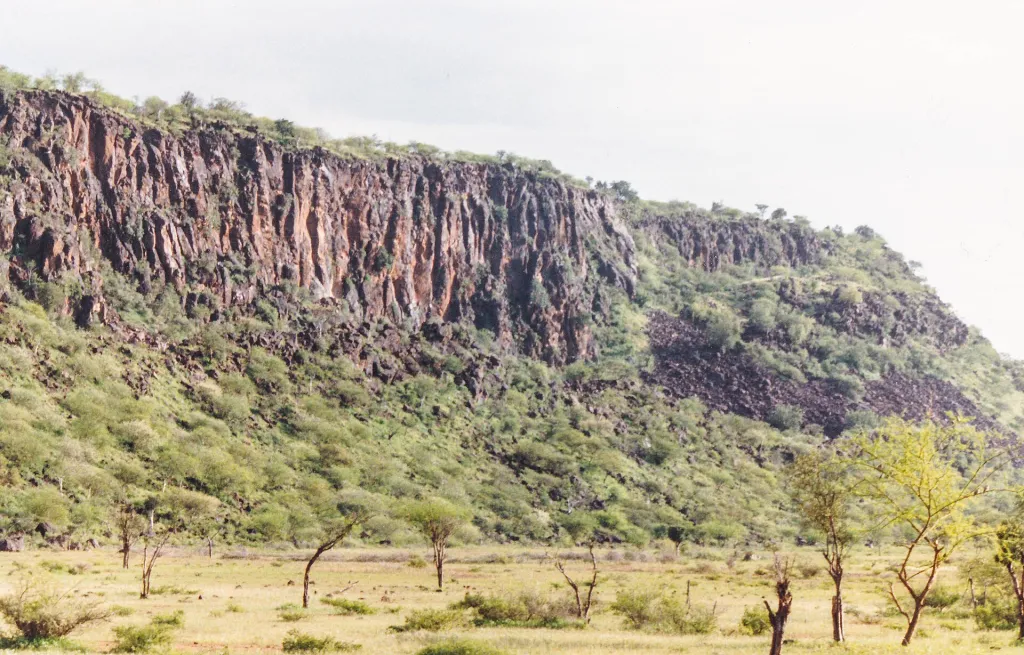
The scenic Laikipia Plateau
The landscape is unusual: wide arid plains, distant snow-capped mountains and rolling hills. Over the years, many of the old livestock ranches have become safari lodges. With its colonial history, Laikipia is now a significant area both for conservation and for safaris.
Laikipia covers around two million acres of wilderness and is home to the Boran, Samburu and Kikuyu peoples. Today it is a mix of community land, private sanctuaries and conservation projects, all working to protect the region’s wildlife, and it holds an unusual range of cultural and natural diversity.
For anyone keen to explore Kenya’s wild country, Laikipia has a great deal to offer, with wildlife areas, ranches and conservancies to suit different interests. Here is what to know about it.
Wildlife of the Laikipia Plateau
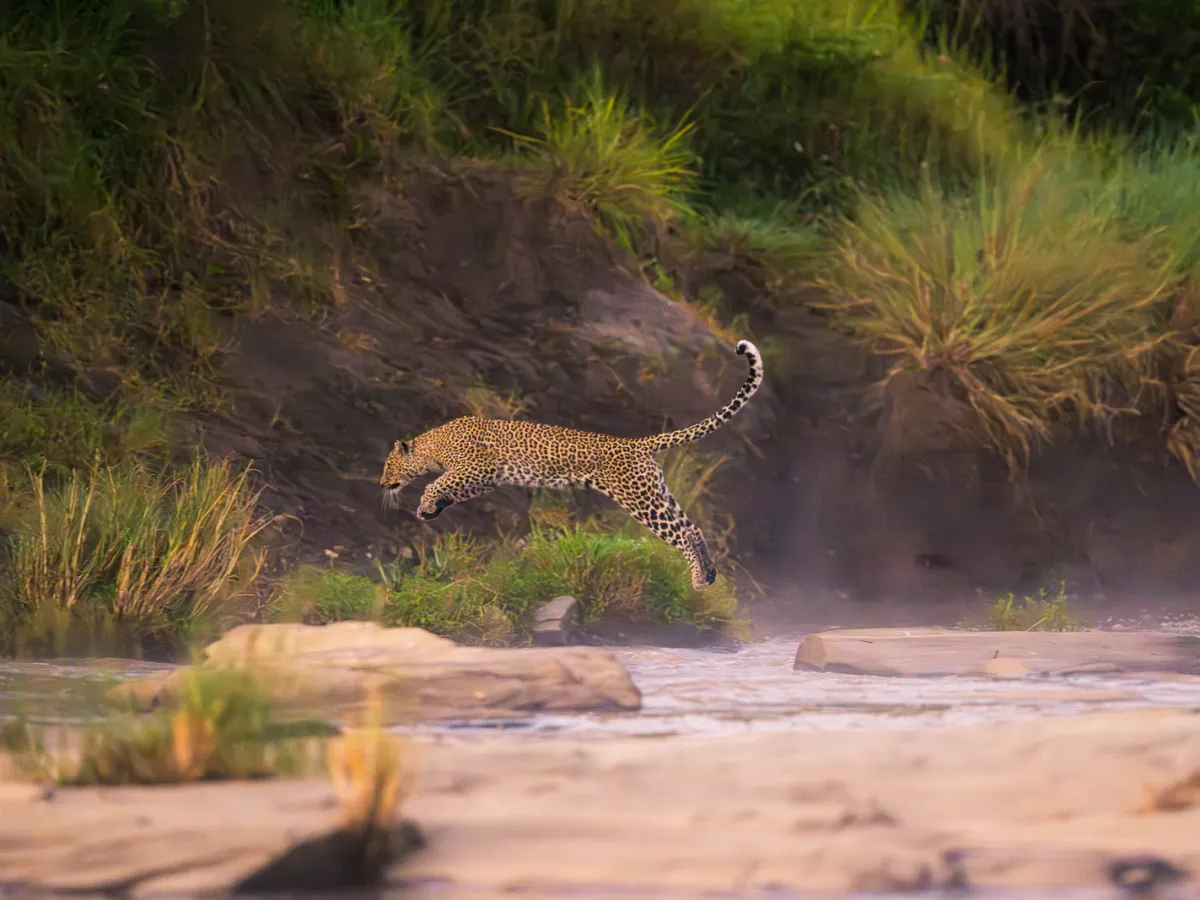
Reaching from the Aberdare foothills across the open plains to the Northern Frontier District, Laikipia holds many northern game species in good numbers. It has one of the highest concentrations of endangered species in Africa. Grevy’s zebra, the reticulated giraffe and Jackson’s hartebeest all range here, and it is one of the few areas with a growing population of wild dogs, along with leopards, lions, cheetahs, elephants and other big game.
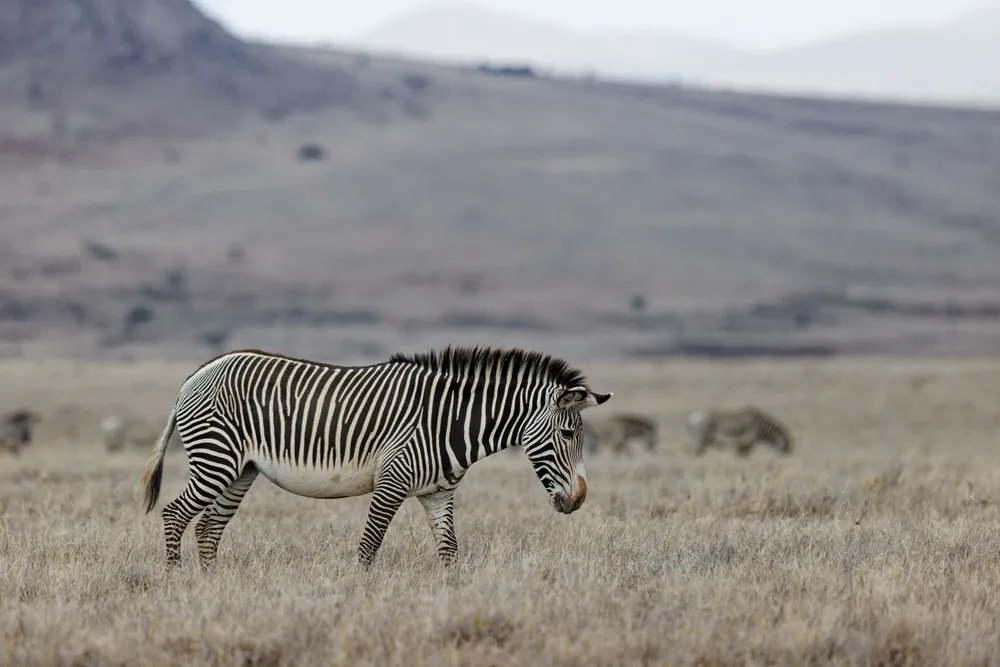
A Grevy’s Zebra
The white and black rhino, among the most endangered of all, live on the plateau around the thick acacia bush. Laikipia has some of the most important rhino sanctuaries in East Africa, and much of Kenya’s black rhino population lives here.
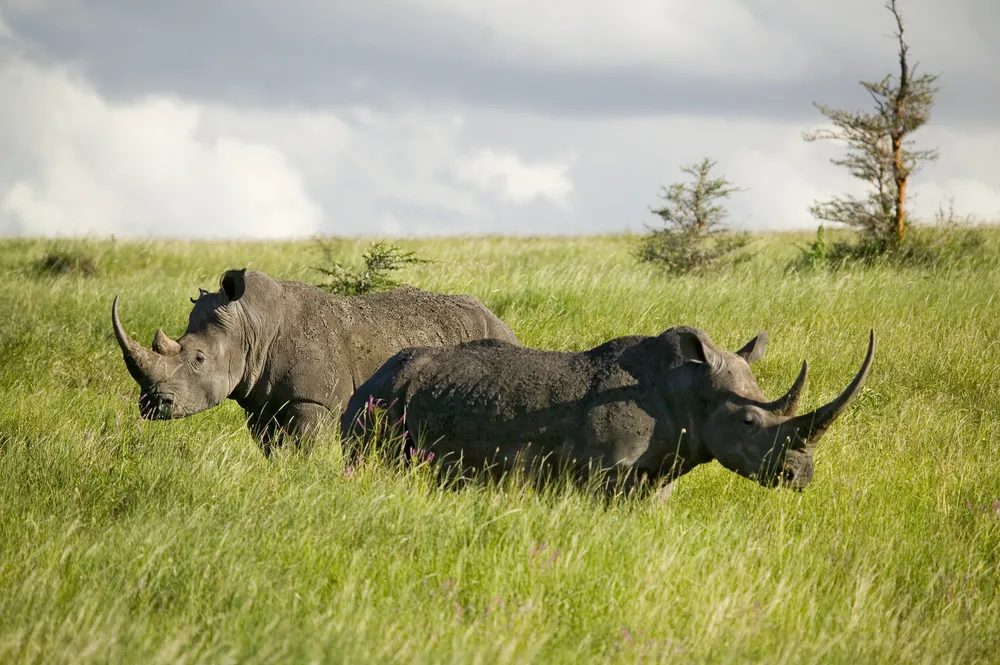
Black rhinos in the wild
You can watch more than 2,000 elephants moving between Mount Kenya and Samburu, crossing Laikipia on the way. Other animals here include the greater kudu, cape buffalo, impala, gazelle, eland, dik-dik, klipspringer, zebra and waterbuck. It is good for birds too, with more than 500 species, among them the African finfoot, Abyssinian nightjar, red-footed falcon and ostrich.
Laikipia offers a fine safari, with game drives, walking safaris and other activities.
Ol Pejeta Conservancy
Among the many conservancies in Laikipia, Ol Pejeta is a leader in conservation. This 90,000-acre conservancy sits in the foothills of Mount Kenya. It was a cattle ranch through the colonial era, but as the elephant population grew, ranching became impractical, and in 2004 Fauna & Flora International, a UK conservation body, bought the reserve and turned it into a conservancy.
Ol Pejeta is home to two of the world’s last northern white rhinos, Najin and Fatu, along with more than 100 critically endangered black rhinos.
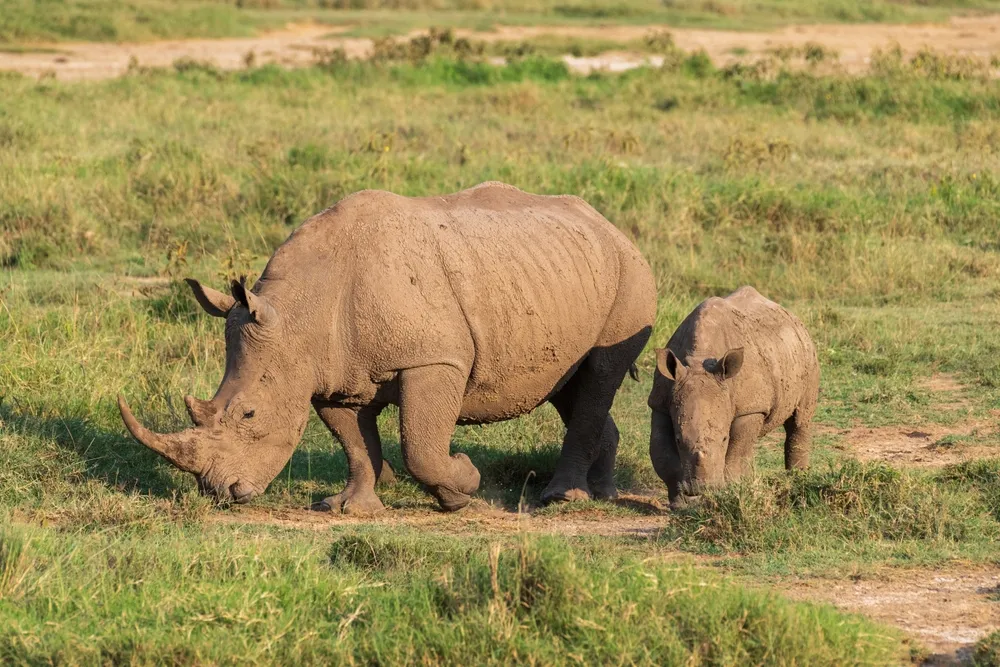
A white rhino with her calf
It is also home to the Sweetwaters Chimpanzee Sanctuary, a haven for orphaned and rescued chimpanzees and the only place to see chimpanzees in Kenya. The sanctuary nurses them back to health and keeps them in a large natural enclosure, with the chimpanzees in two groups separated by the Ewaso Nyiro River.
The conservancy has a healthy population of the Big Five and much else besides. You may see lions, giraffes, leopards, elephants, cheetahs and the elusive wild dog, along with rarer animals such as oryx, serval and bat-eared fox. The endangered Grevy’s zebra, Jackson’s hartebeest and northern white rhino are kept in a 283-hectare endangered species enclosure. Common sightings include vervet monkeys, baboons, impala, hippos, eland, silver-backed jackals and hyenas.
Ol Pejeta has folded cattle farming into its conservation plan, using managed grazing to benefit the wildlife while providing local jobs.
A visit to Ol Pejeta offers a good range of activities, from game drives to horseback riding and walking safaris. With only three camps, it makes for a private, unhurried safari.
Ol Pejeta is one of several conservancies on the plateau, alongside the Lewa, Borana Wildlife and Ol Lentille conservancies.
Rhino conservation
The IUCN lists the black rhino as critically endangered and the white rhino as near threatened. Across Africa, poaching and habitat loss are cutting rhino numbers. Because rhino horn is wrongly believed to have medicinal value in parts of Asia, and is used for traditional daggers in Yemen, the trade in it puts these animals in grave danger.
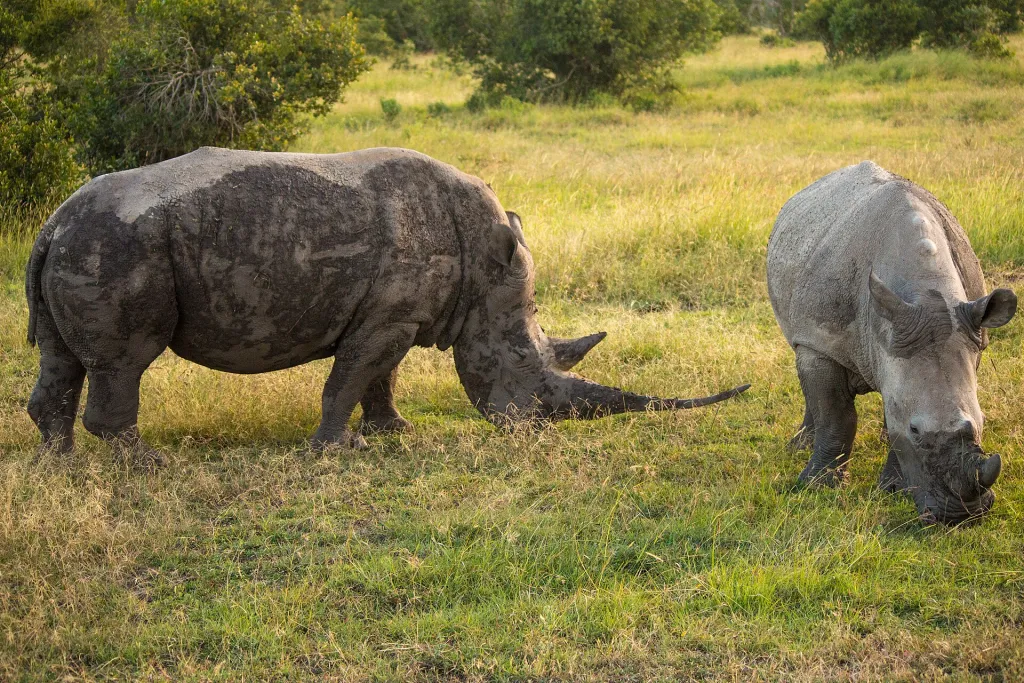
A White rhinos grazes peacefully
To protect their rhinos, Ol Pejeta and Lewa run a range of anti-poaching and security measures, including:
- a tracker-dog team of trained bloodhounds,
- aircraft for surveillance, game counts and rhino monitoring,
- drones with thermal imaging and real-time video,
- trained armed teams and rangers,
- dedicated rhino patrols,
- general security,
- support from neighbouring communities,
- a fully electrified perimeter fence to limit human-wildlife contact.
For its range of wildlife and its quiet, personal service, the Laikipia Plateau is well worth a visit on a Kenyan safari.
If you loved reading this story, then subscribe to our blog here (it will ask to verify your email) to get inspiring travel stories and trivia delivered to your email. Stories about wildlife trivia, cultural experiences, curated luxury hotel lists, underrated places to travel, polar journeys and much more.