The rainforests, savannahs and grasslands of Africa are home to many antelope species, each with its own character, and the continent has more antelopes than anywhere else on Earth. Here are some of the more common ones.
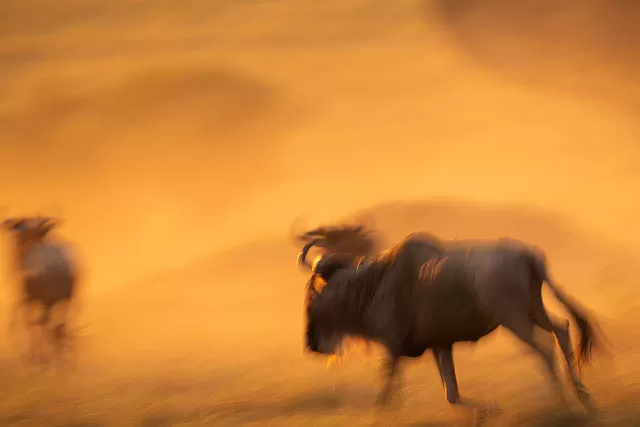
Wildebeest
These large antelopes belong to the Bovidae family. They have high shoulders, striped bodies, curved horns, dark beards and shaggy manes. Each year, millions take part in the great migration between the Serengeti and Masai Mara in search of fresh grazing. There are two kinds in Africa.
Blue wildebeest: dark grey with a black tail and dark beard, favouring woodland, semi-desert and open grassland.
Black wildebeest: smaller, with a brownish-black body and a distinctive white tail, favouring the open grasslands of South Africa.
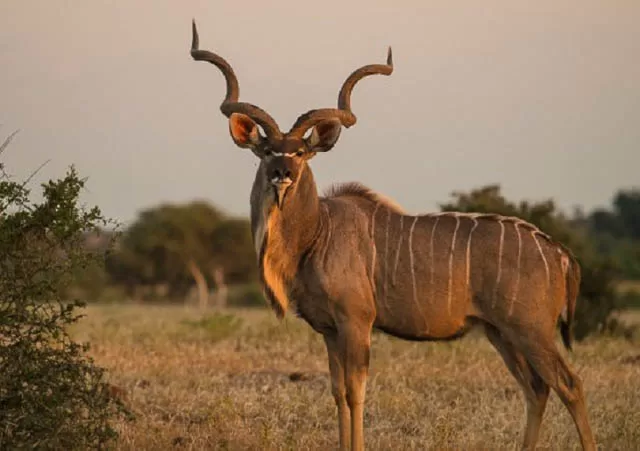
Kudu
These large antelopes stand up to about 1.6 metres at the shoulder and can weigh as much as 300 kg. Even so, they are slender and can clear high obstacles. They are known for their spiralled horns, which the males use in defence.
Kudus live in riverine forest, lowland, woodland, hills and mountains. There are two kinds in Africa, the greater and the lesser kudu, told apart by the stripes: the greater kudu has 6 or 7, the lesser up to 14. The greater kudu is the more widespread, while the lesser is confined to East Africa.
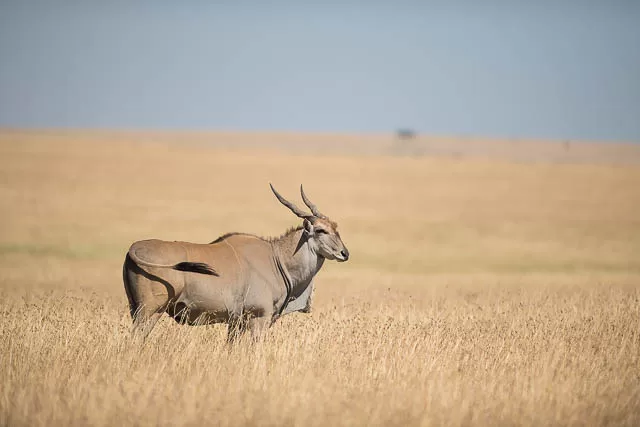
Eland
The eland is the largest antelope in the world, weighing as much as 900 kilograms, almost as much as a Cape buffalo. It has a large shoulder hump and tightly spiralled horns, and despite its size it has great stamina and can clear obstacles up to 1.5 metres high.
Elands favour open plains, savannah, woodland and semi-arid country. Africa has two kinds, the common eland and the giant (Greater) eland. They are calm, gentle animals that will not even charge when cornered, which may be why they fall easy prey to hunting; along with habitat loss, this has seen their numbers decline.
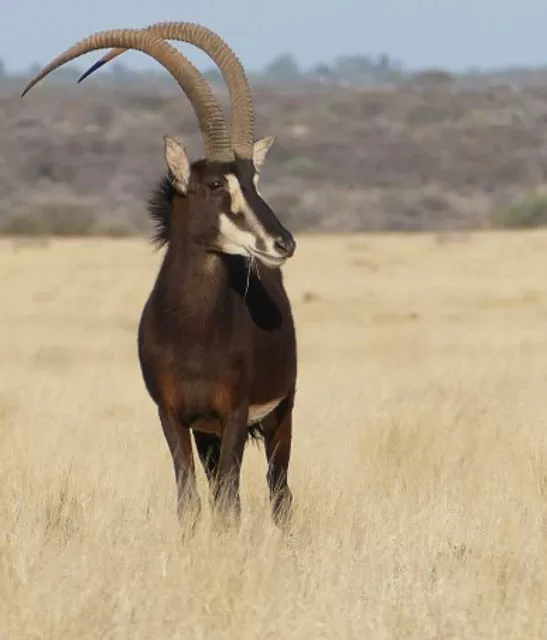
Sable
The sable, one of the horse antelopes, is powerfully built, compact and sturdy, with a thick neck and an erect mane; standing with head high and tail out, it looks almost like a horse. A social animal, it lives in the savannah woodlands of Africa, and both sexes have sharp horns and bold black-and-white markings on the face.
Sables live mainly in the more enclosed parts of the Kruger National Park and in other protected areas where they have been reintroduced. Their striking horns and markings have made them a target for trophy hunters, and poaching has cut their numbers in recent years.
Impala
The impala is one of the commonest antelopes in Africa. It weighs between 40 and 75 kg and grows up to a metre long, ranging across the savannah and light woodland of southern and eastern Africa.
It has reddish-brown hair, with white under the chin, ears, eyes, lips and belly. Impalas are among the most agile of antelopes, able to leap as high as 3 metres and as far as 10, which helps them escape predators. They are active mostly in the early morning and around sunset.
Nyala
The nyala is a slender, spiral-horned antelope. Males and females look very different: males stand about a metre tall and weigh up to 125 kg, while females are smaller, at about 58 kg. Mature males are charcoal grey and shaggy, with a long fringe from throat to hindquarters.
Females have short, bright chestnut coats with a striped body and spotted chest, cheeks and legs. These cover-loving antelopes keep to dense woodland near water, feeding on grass, broad-leaved plants and bark. Neither fast nor strong, they rely on camouflage and stay hidden in the forest.
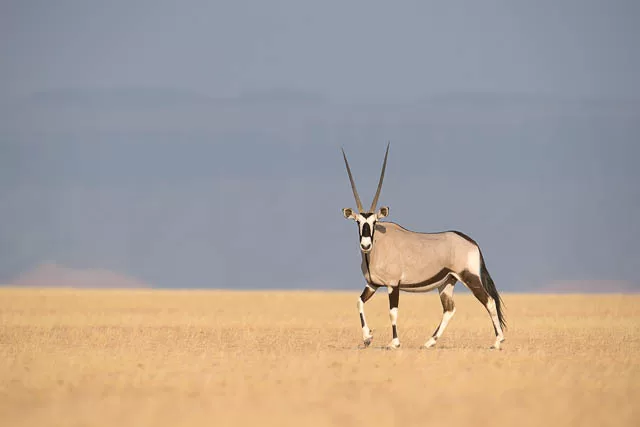
Gemsbok
Also called the oryx, the gemsbok lives in the deserts of southern Africa. It has a compact, muscular body with a thick, horse-like neck and short mane. Built like a pony, with real stamina, it lives on the sparse vegetation and little water of its range, well suited to the harsh conditions of the Namib.
Its low metabolism lets it go long periods without drinking. The gemsbok stands about 1.2 metres at the shoulder; males can weigh up to 300 kg, females between 100 and 200 kg. They gather in herds, sometimes large ones.
Roan
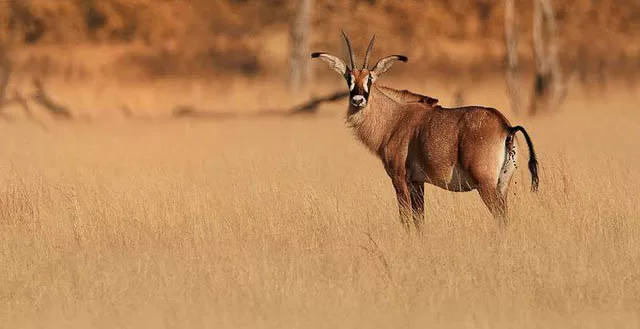
One of the largest African antelopes, the roan is another of the horse antelopes, named for its reddish-brown colour, with distinctive black-and-white facial markings. It is powerfully built, with sturdy legs, a thick neck, a long head and long, tasselled ears.
Males weigh about 280 kg, females around 260 kg. Roans live in the deciduous woodlands of the northern savannah and across much of the southern savannah. Semi-social, and active mainly morning and evening, they usually move in herds of 6 to 15, sometimes up to 35, and can run at up to 55 kilometres an hour.
If you loved reading this story, then subscribe to our blog here (it will ask to verify your email) to get inspiring travel stories and trivia delivered to your email. Stories about wildlife trivia, cultural experiences, curated luxury hotel lists, underrated places to travel, polar journeys and much more.