Powerful and imposing, brown bears are found across North America and Eurasia. Known as grizzlies in North America, they live in a wide range of habitats, from high mountains and alpine meadows to coastlines, tundra and semi-desert.
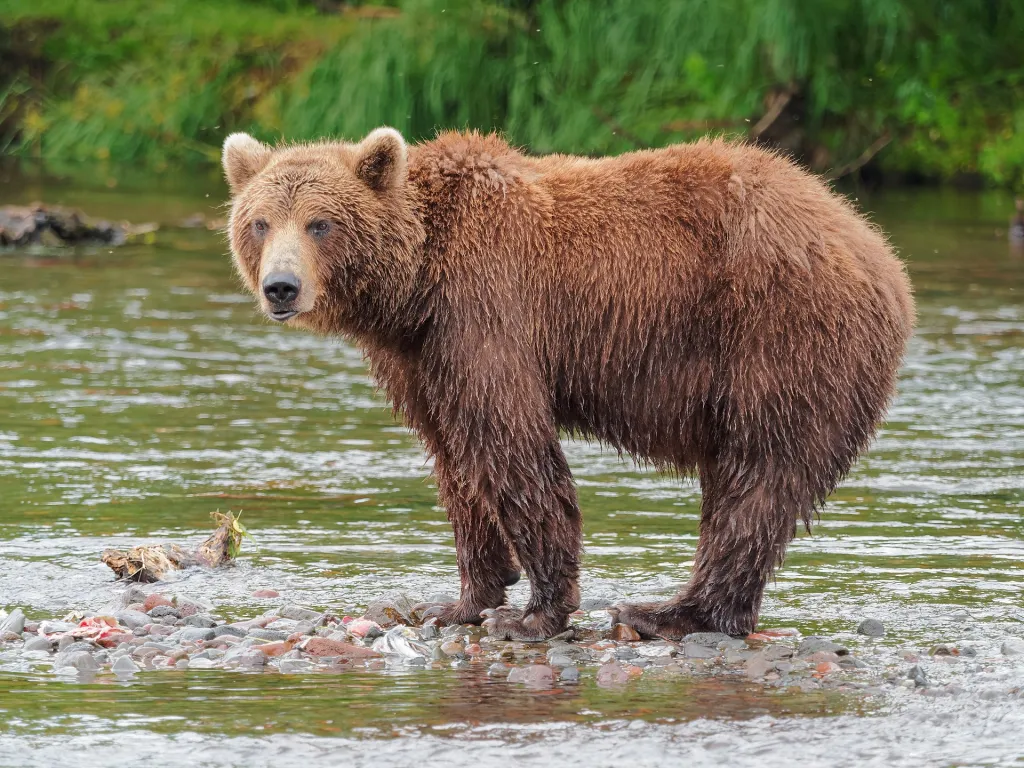
A fuzzy brown bear
Watching a brown bear in the wild is a thrill. For all their fearsome look, bears are among the most misunderstood of animals: far from the savage beasts of story, they are shy and retiring, and want little to do with people.
There is always something to watch, whether a bear is denning, climbing a tree or fishing for salmon. For all the old tales that paint them as fearsome, bear-watching is enjoyable and fascinating. Here are some of the best places to see brown bears in the wild.
Finland
Home to around 2,000 bears, Finland is one of the best places in Europe for a bear-watching trip. In the far north, the taiga forest along the Russian border gives the finest views of brown bears, and the eastern and central forests of the Lakeland region are good too.
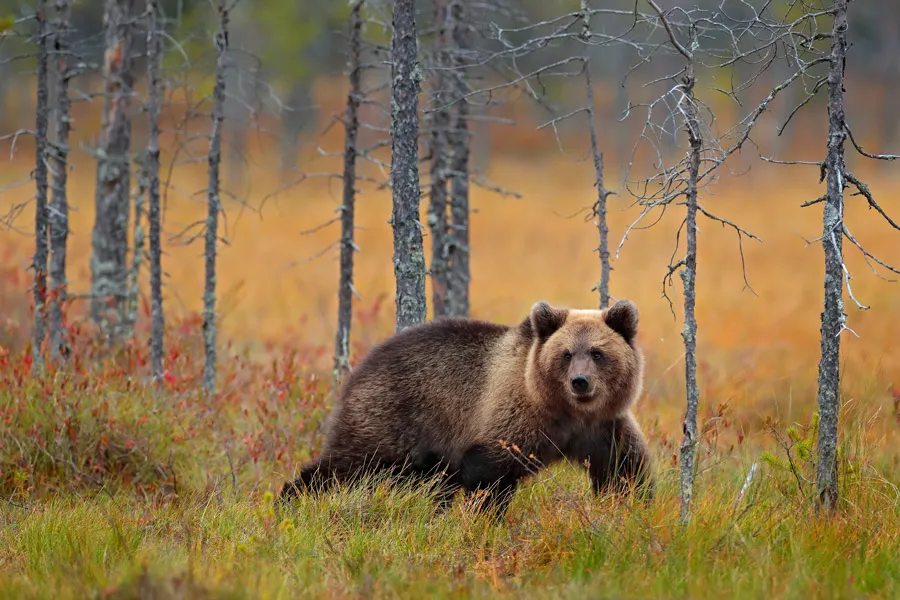
Brown bear in Martinselkonen Nature Reserve
The Martinselkonen Nature Reserve is one of the best places to photograph bears in Europe, sometimes seen as close as five metres away in the open coniferous forest. Another good spot is Viiksimo, between the Iso-Palonen and Elimyssalo reserves, an area of small lakes, pine forest and ponds where you may also see wolverines and wolves.
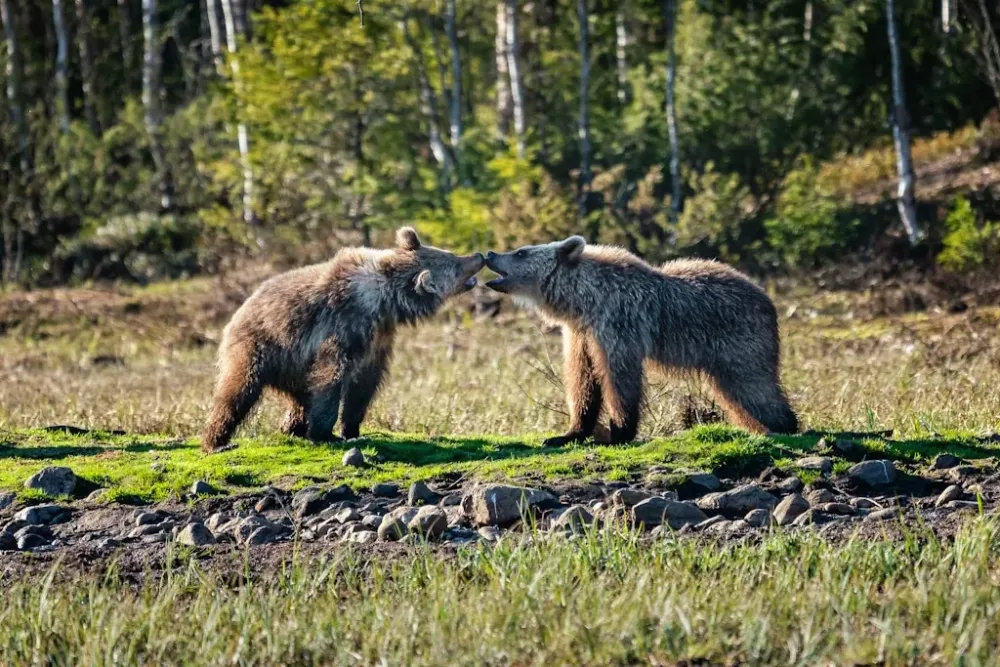
Two brown bears in the Kumho region, Finland
In the Kuhmo region, Kuikka Lake is ringed by boreal forest, a typical bear habitat, and its open grassland and wetland give good visibility for wildlife. Further north-east, Kainuu, on the Russian border, is a haven for some of Europe’s finest wildlife, with golden eagles, Ural owls and wolverines alongside the bears.
- The best time to go: bear-watching in Finland runs through summer, from May to September, when the bears are out of hibernation and feeding again.
Slovenia
Slovenia is rich in wildlife, with almost 60 per cent of the country under forest, and it has a large brown bear population, estimated at between 2,100 and 2,500.
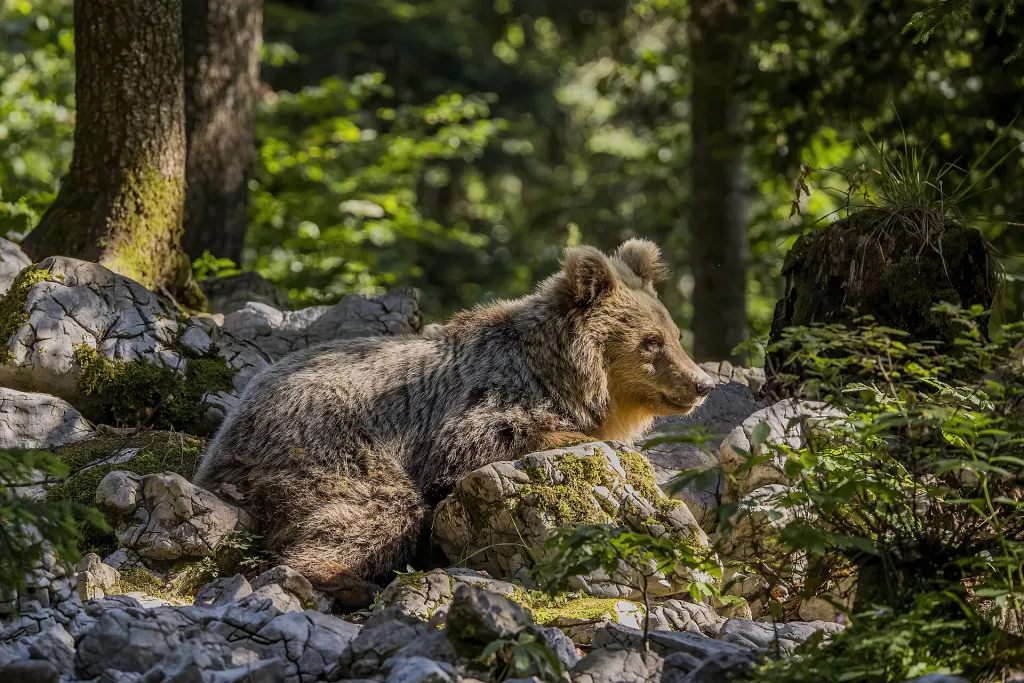
A brown bear resting on a log
The bears are found mainly in the natural forests of the Kočevsko and Notranjska regions, which hold around 500 of them, so your chances of a sighting are good.
The Loz Valley, in Notranjska in southern Slovenia, is also bear country, taking in one of the largest stretches of uninhabited forest in Central Europe, with fine landscapes and only about an hour from the capital, Ljubljana.
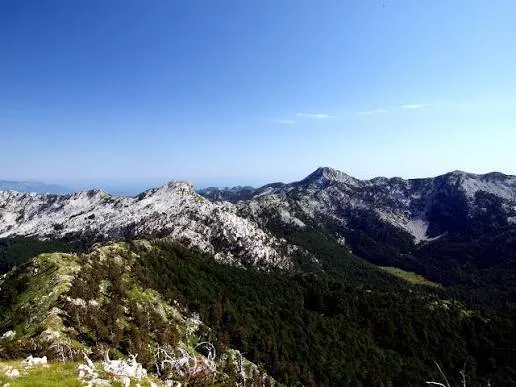
The towering Dinaric Alps
The Dinaric Alps run through southern Slovenia, stretching from Italy across Slovenia, Croatia, Serbia, Bosnia and Herzegovina and Montenegro before ending in Albania. Their rugged terrain and thick forest make them excellent for seeing brown bears.
- The best time to go: bear-watching in Slovenia usually runs from April to September, and into the autumn; if the warm weather holds, you may see them into October.
Alaska
Alaska holds about 98 per cent of the United States’ brown bears and nearly 70 per cent of the North American population. With an estimated 30,000 bears, you can find them across most of the state.
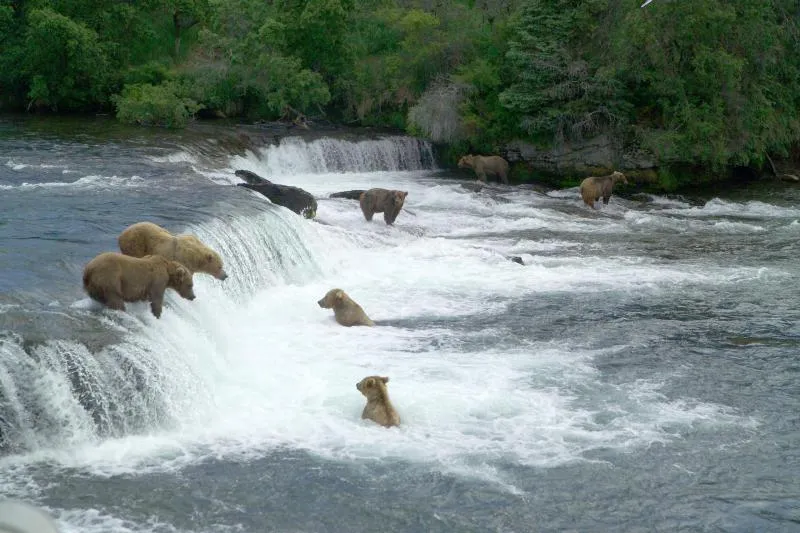
A group of brown bear baths in a river in Katmai National Park
The best place to see them is the famous Katmai National Park, where you can watch Kodiak bears, the largest brown bear subspecies, fishing for migrating salmon in the Brooks River.
Baranof Island, in the northern Alexander Archipelago, has about 1,000 km of shoreline and is known for its brown bears and Sitka deer. In south-east Alaska, the Tongass National Forest, about 17 million acres (6.9 million hectares), holds a healthy bear population and is the largest remaining temperate rainforest on Earth.
In the Gulf of Alaska, Kodiak Island is the largest island and rich in wildlife. Kodiak bears have lived here for 12,000 years and are seen easily at the Kodiak National Wildlife Refuge. And at Denali National Park, below North America’s highest peak, you can see bears emerging from hibernation in spring and feeding on salmon in summer.
- The best time to go: in Alaska, brown bears are most often seen in early spring and summer, best from June to September.
Kamchatka, Russia
The Kamchatka peninsula, in the Russian Far East, is about 1,250 km long, with the Sea of Okhotsk on its western coast and the Pacific on its eastern.
Kamchatka has abundant wildlife and is famous for its bears, the Kamchatka brown bear. A large subspecies, it can weigh up to 700 kg, and in the Kronotsky Nature Reserve there are about four bears per 100 square kilometres.
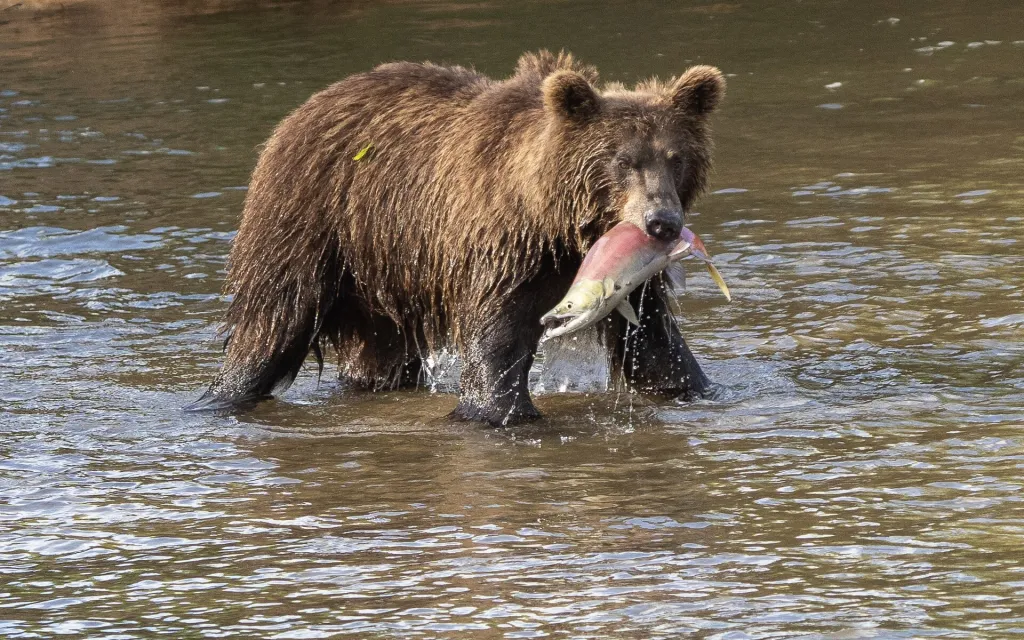
A Kamchatka bear catches its meal
Kamchatka brown bears are especially numerous on the Govena Peninsula. You may also see Eurasian forest reindeer, northern fur seals, sea otters, and mountain sheep and elk at higher elevations.
- The best time to go: in Kamchatka, the best time is the salmon-spawning season, from August to September, when the bears come out to feed.
Seeing brown bears in the wild is a memorable experience. Consider these places the next time you plan a trip to watch them.
If you loved reading this story, then subscribe to our blog here (it will ask to verify your email) to get inspiring travel stories and trivia delivered to your email. Stories about wildlife trivia, cultural experiences, curated luxury hotel lists, underrated places to travel, polar journeys and much more.