Raja Ampat lies in eastern Indonesia, in West Papua province. Its name means “four kings,” after the four main islands of Batanta, Misool, Salawati and Waigeo. Many scientists consider this remote archipelago the richest place for marine life on Earth. It is part of the Bird’s Head Seascape and takes in Cenderawasih Bay, the largest marine national park in Indonesia. With more than 1,300 species of reef fish, 600 species of hard coral and 57 species of mantis shrimp, few places anywhere match its diversity.
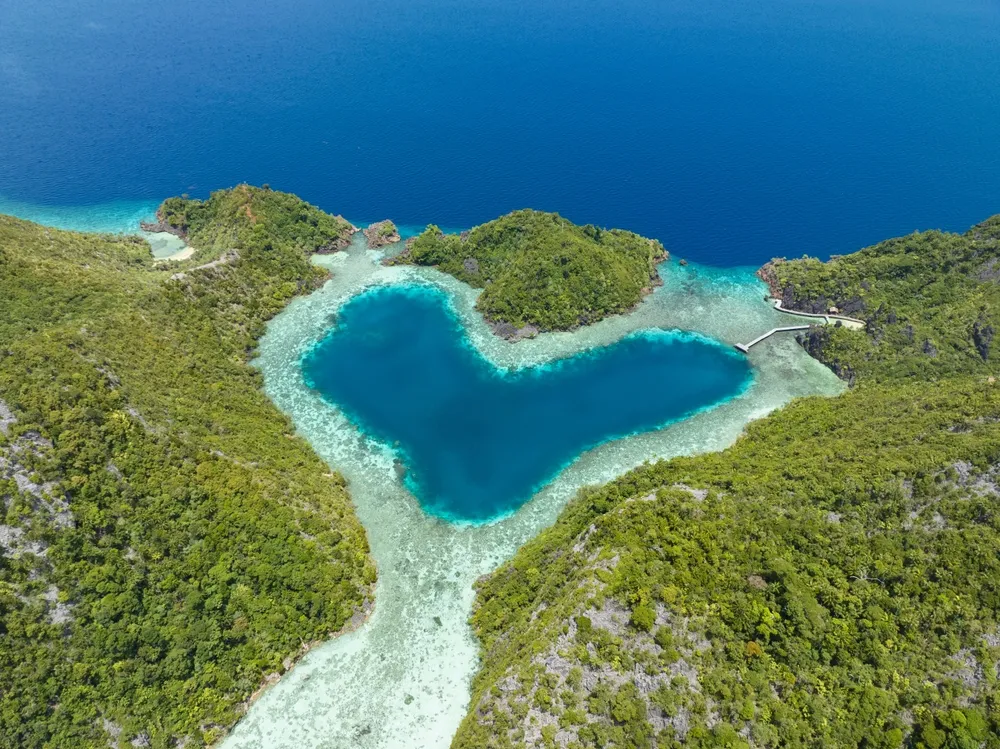
Aerial View of Raja Ampat
There are so many dive sites in Raja Ampat that you are spoilt for choice. Here are some of the best.
Mioskon
With a coral column dropping to about 25 metres, this site suits beginners and intermediate divers. The currents are usually light, though they can pick up. There is a good range of species, including garden eels, black snappers, barracudas, whitetip sharks and butterflyfish, along with more unusual finds such as pygmy seahorses, sponge crabs, harlequin shrimp and walking sharks.
Blue Magic
One of the best-known dives in Raja Ampat, Blue Magic often follows Mioskon as a second dive. The currents are stronger here, and the depth runs from about 7 to 30 metres. It is a prime spot for schooling fish, which gather when the current is running. You may see giant trevally, Spanish mackerel, dogtooth tuna, barracuda, bumphead parrotfish and rainbow runners, and, with luck, mantas.
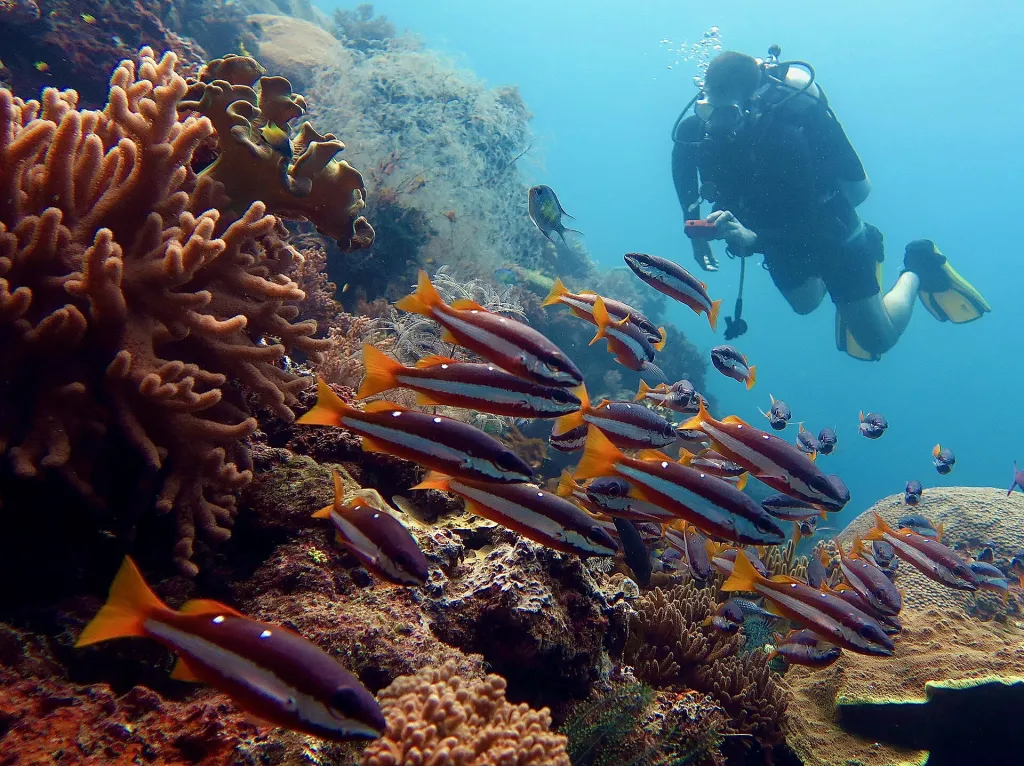
Diver in Raja Ampat
Sardine Reef
An offshore reef always teeming with fish — jacks, surgeonfish, fusiliers, batfish and trevally — this large oval pinnacle runs about 200 metres long. You can also see less common species such as bumphead parrotfish, oceanic triggerfish and Napoleon wrasse. Depths run from about 5 to 30 metres, and the currents are strong. Many liveaboards dive this reef.
Boo Island / Boo Window
Named for the two swim-through holes in the rock, this is one of Raja Ampat’s most photographed sites. The two large rocks shelter a wide range of life. The reef slopes gently from about 5 to 10 metres, then drops suddenly to 35 metres. Currents are moderate, and the little islet is small enough to cover in a single dive. Soft corals and barrel sponges give the water its colour, and you can find unicornfish, surgeonfish, blue-dash fusiliers and octopuses here. Both liveaboards and day boats run to the site.
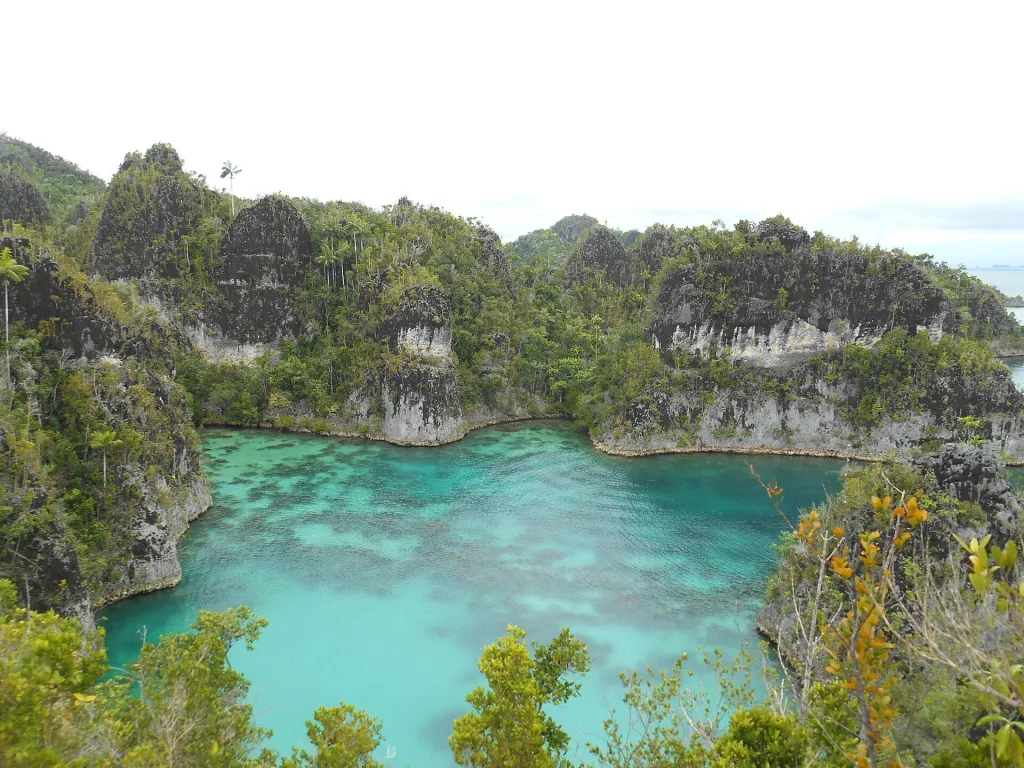
Photography in Raja Ampat
Cape Kri
Cape Kri holds the world record for the most fish species counted on a single dive: 374. Its reef is full of soft and hard corals, and it has everything from schools of small fish to blacktip and whitetip sharks. With depths of about 5 to 25 metres and mild to strong currents, it suits intermediate to advanced divers. Common species include grey reef and blacktip reef sharks, dogtooth tuna, damsels and anthias. Liveaboards are easy to arrange from the nearby resorts.
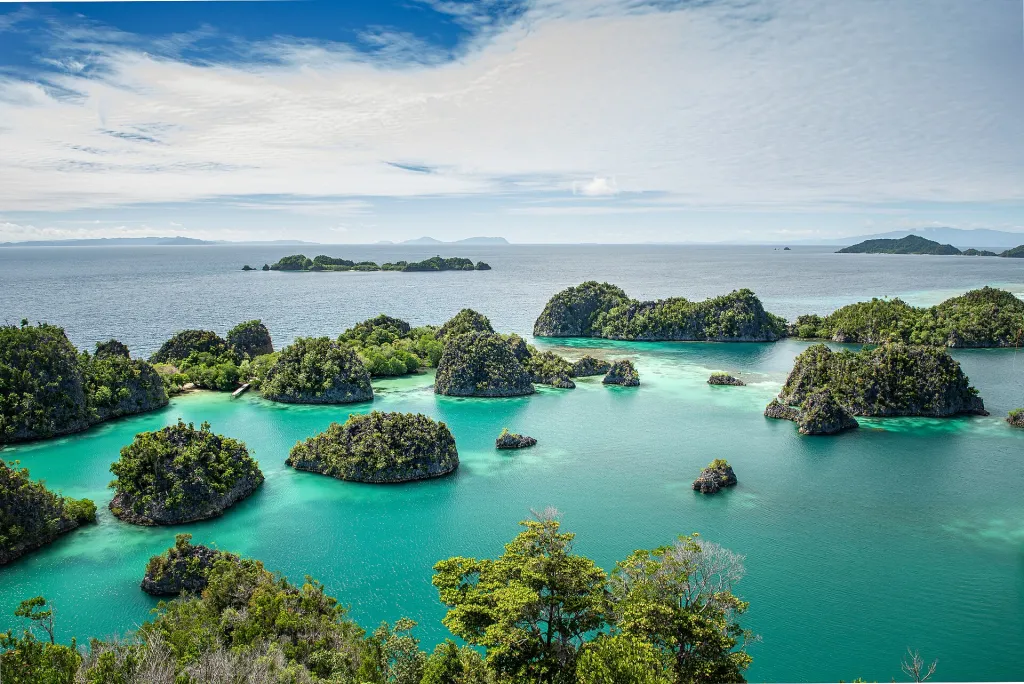
Raja Rampat from the sky
Melissa’s Garden
Between the Fam islands and Batanta, this oval reef has bright coral gardens, rich with sponges, crinoids and coral outcrops. You can see maroon clownfish, manta rays, great barracudas and the unusual wobbegong. For more action, head to the ridges surrounded by thousands of fusiliers. With an average depth of about 10 metres and mild currents, it suits beginners. It is reached by boat, with plenty of liveaboard options.
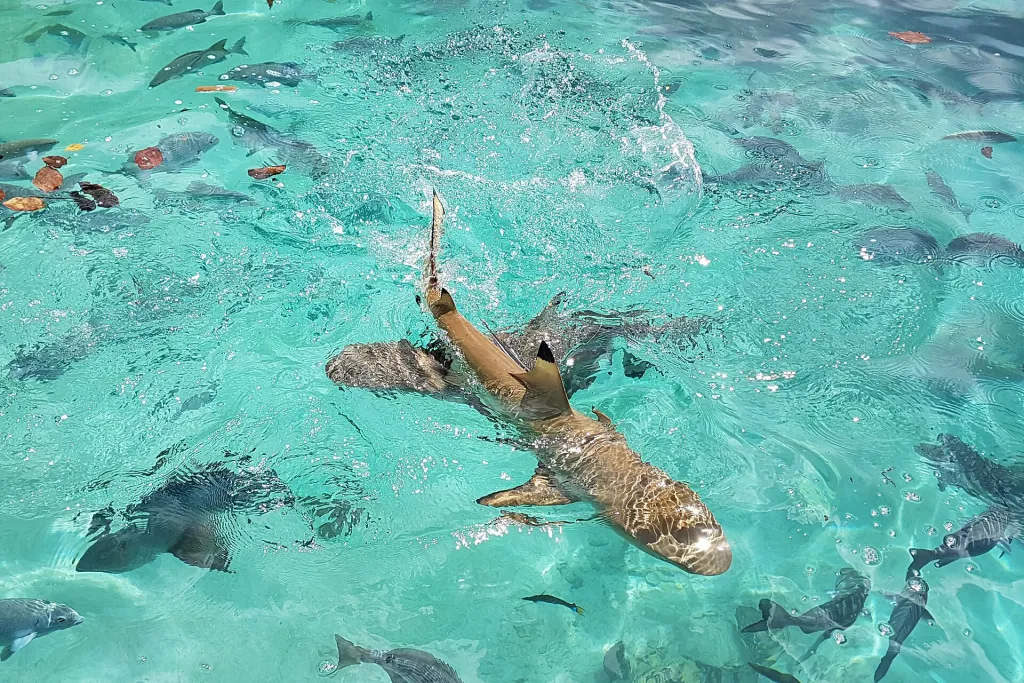
Fishes in Raja Ampat
The Passage
One of Raja Ampat’s most striking sites, the Passage has an ecology found almost nowhere else. This shallow channel separates the islands of Waigeo and Gam and narrows to just 20 metres at its tightest point. The mangrove roots make it feel like diving through a jungle river, and the nutrient-rich water supports life such as bumphead parrotfish and nudibranchs. Limestone cliffs and colourful coral finish the picture. The currents are strong, so it is for experienced divers only.
Raja Ampat is one of the best dive destinations in the world, and regulars swear by the diversity of its marine life. See our customised diving trip to Raja Ampat and Sulawesi here.
If you loved reading this story, then subscribe to our blog here (it will ask to verify your email) to get inspiring travel stories and trivia delivered to your email. Stories about wildlife trivia, cultural experiences, curated luxury hotel lists, underrated places to travel, polar journeys and much more.