The Masai Mara National Reserve in Kenya offers some of the finest wildlife-watching in Africa, and its game drives are among the best known anywhere.
The wildebeest migration and the big cats can be seen from an open jeep, but there is another way to do it. Rather than the usual 4WD, horseback safaris are becoming more popular with visitors.

A horseback safari is one of the best ways to feel the African wilderness on a game drive. Riding was how explorers once travelled, and today the Mara is one of the few reserves in Africa to offer it to visitors.

Why take a horse-riding safari in the Masai Mara?
These off-beat safaris offer more than an ordinary ride. Here is why they are worth choosing.
1. A real experience
The Masai Mara is one of the few reserves to offer horse safaris, and they bring you close to nature. On the open plains, the riding gives a different feel from a game drive.
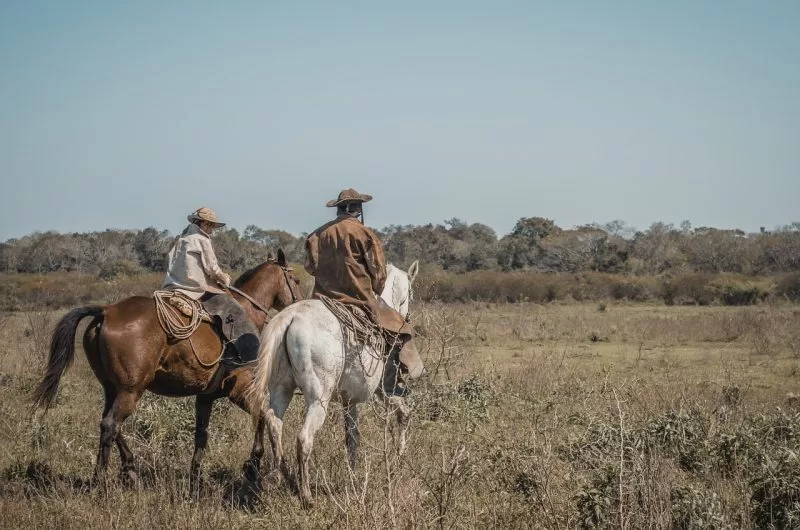
Authenticity
You can find yourself riding behind elephants and zebras, which is far more intimate than watching from a jeep.
2. The horses and stables
The stables sit along the edge of the Olare Motorogi Conservancy at the Masai Mara. The horses are of fine stock, including Thoroughbreds and Boerperds.
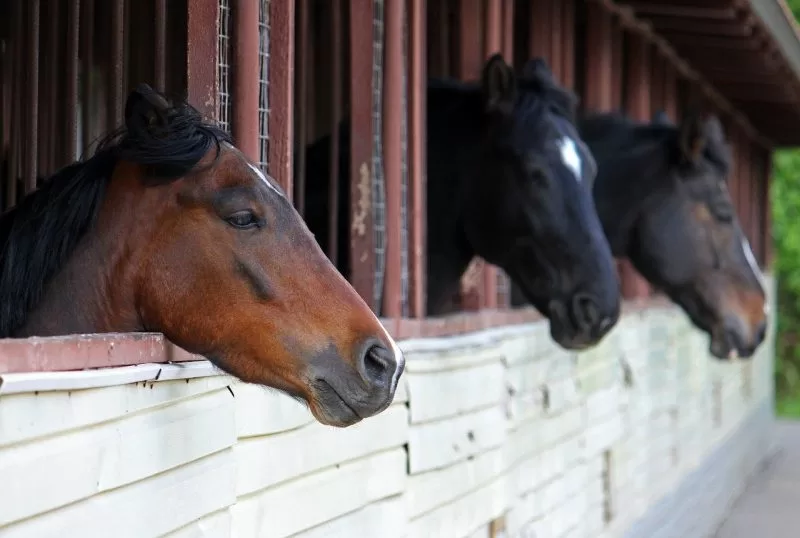
Horses in their stable
Boerperds are known for their intelligence, courage and gentle temperament, which sets them apart. The stables carry saddles in English, Western and South African styles, and, as full-service stables, they also have safety stirrups, hats, riding boots and gloves for guests who need them.
3. Expert guides
The guide who rides with you knows the area well, pointing out details of the plants and insects that are easy to miss from a jeep.

A Masai guide sharing his knowledge with a rider
The guides help you get closer to the animals while keeping a safe distance. On a multi-day ride there is a whole team, including a park ranger, to move you from camp to camp, and on many trips a mobile camp travels with you.
4. A sense of achievement
Riding through thick forest and across deep rivers brings a real sense of achievement by the end of a horse safari.
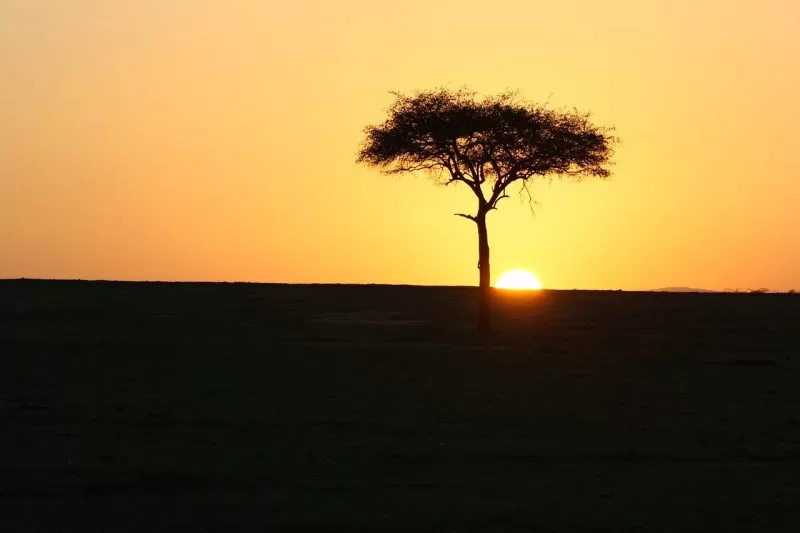
A Masai Mara sunset
The sunsets and the close animal encounters leave you feeling alive after a good ride.
Horseback safaris in the Masai Mara
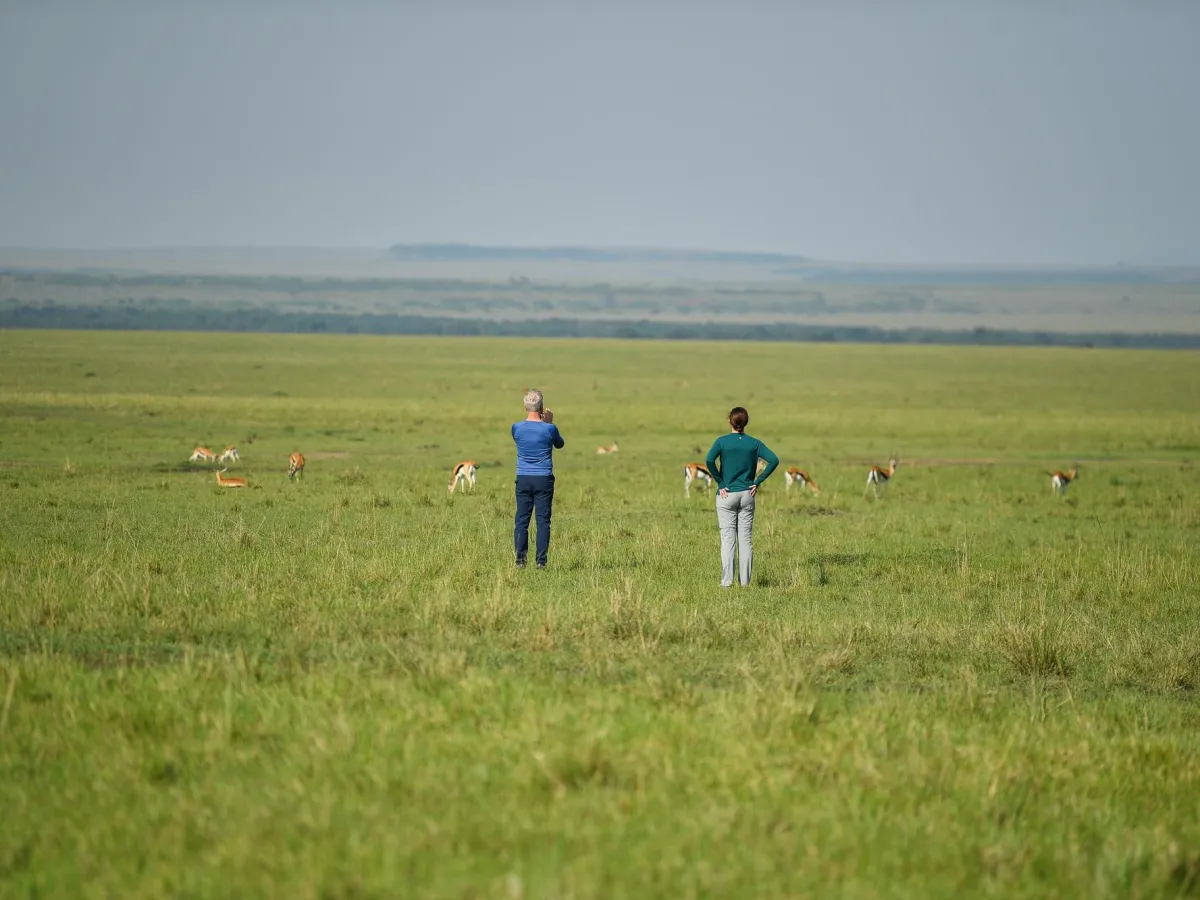
Several operators run horse safaris in the Masai Mara. They take place in certain conservancies, with wide views and good chances of seeing wildlife. On a ride, three highlights stand out.
- Big cats: lions, leopards and cheetahs are seen in many conservancies, and you can watch them from close by.

A lion resting with its cub in the Masai Mara
- The migration: in June and July you can ride alongside the great migration, as wildebeest, zebra and gazelle pour into the Mara from the Serengeti in Tanzania.
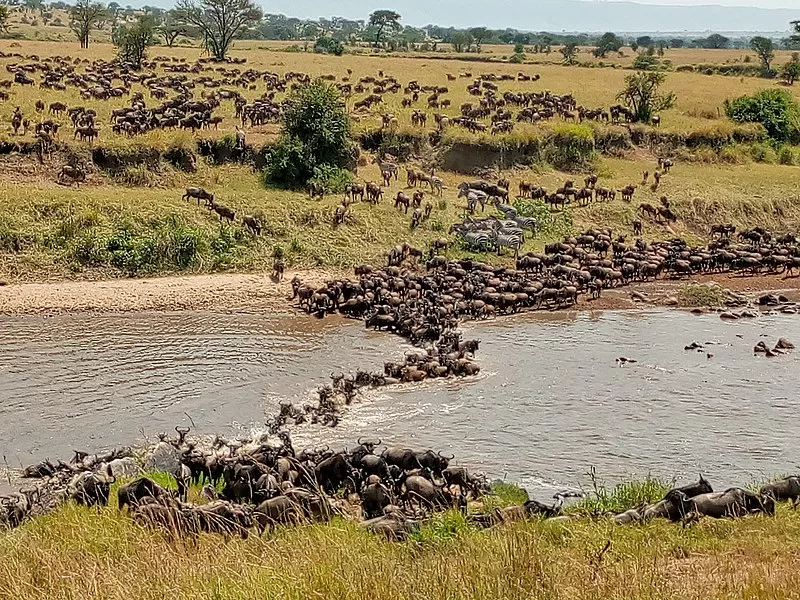
Wildebeest crossing the Mara River
- River crossings: crossing a river with your horse, swimming to the far bank, is a real experience, and one that walking safaris and 4WDs cannot manage.
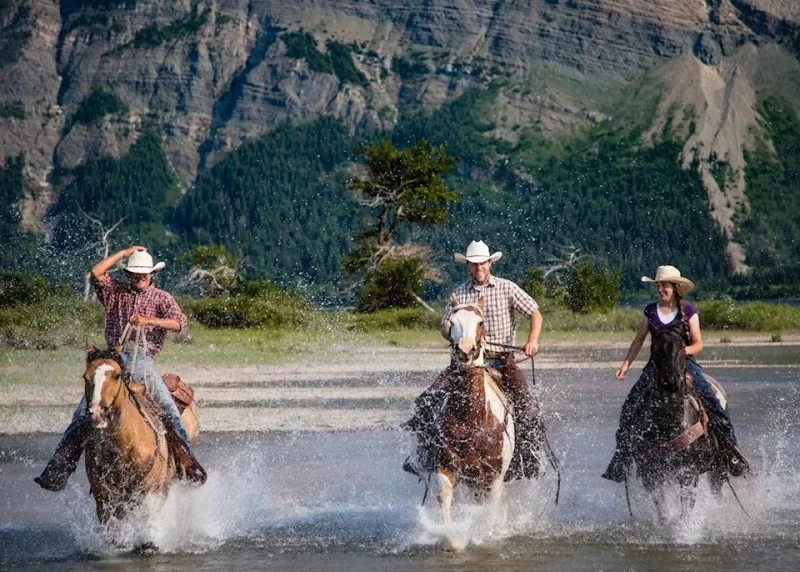
Horses crossing the river
Best places for horse safaris in the Masai Mara
Olare Motorogi Conservancy
This conservancy runs along the northern edge of the reserve and holds valuable habitats, including the lower Olare Orok River and its riverine forest.
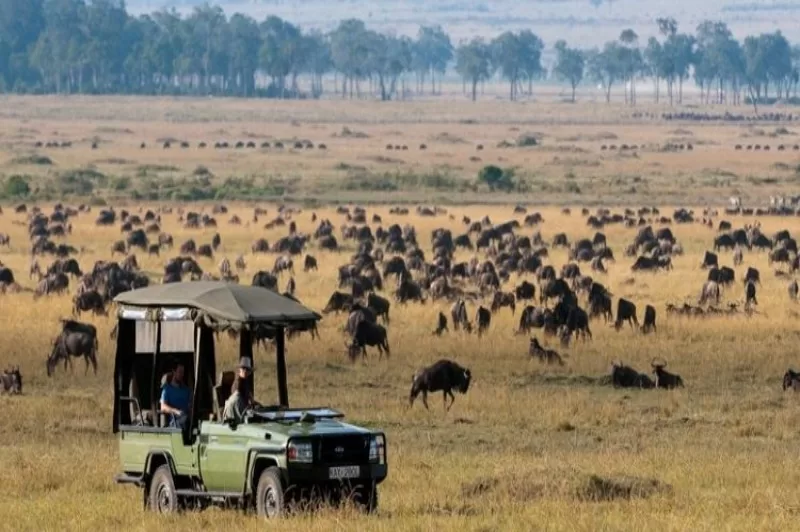
Wildebeest in the Olare Motorogi Conservancy
Wildlife is plentiful in Olare Motorogi, with a good balance of predators and grazers, and even sightings of the rare African wild dog and rhino.
Accommodation: the conservancy has 52 rooms across luxury camps, including the Mara Expedition Camp, Mara Plains Camp and Porini Lion Camp.
Naboisho Conservancy
The Mara Naboisho Conservancy, on the north-eastern side of the reserve, offers a fine wilderness experience and is the second-largest conservancy in the Mara ecosystem.
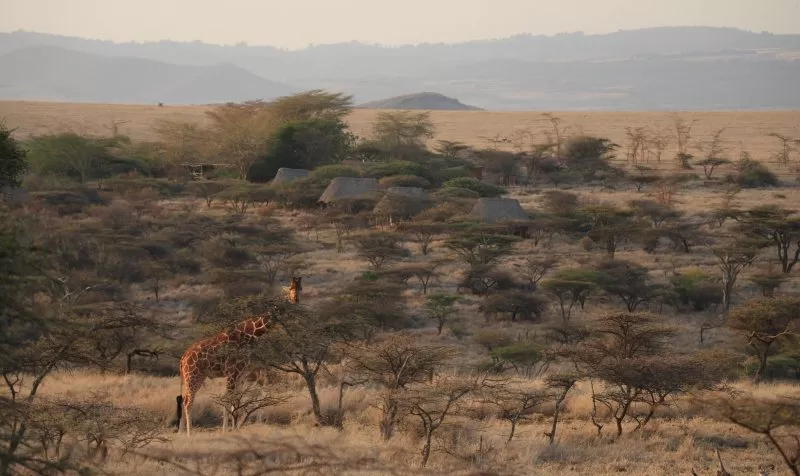
A giraffe in the Naboisho Conservancy
On a ride you may see elephants, giraffes, lions, leopards and other animals, along with elusive species such as aardvark, honey badger and serval.
Accommodation: the conservancy has 50 rooms across camps such as Kicheche Valley Camp, Naboisho Camp and Ol Seki Mara Camp.
Mara North Conservancy
The Mara North Conservancy protects the wildlife of the north-western zone, on the northern edge of the Mara, safeguarding the species that take part in the great migration.
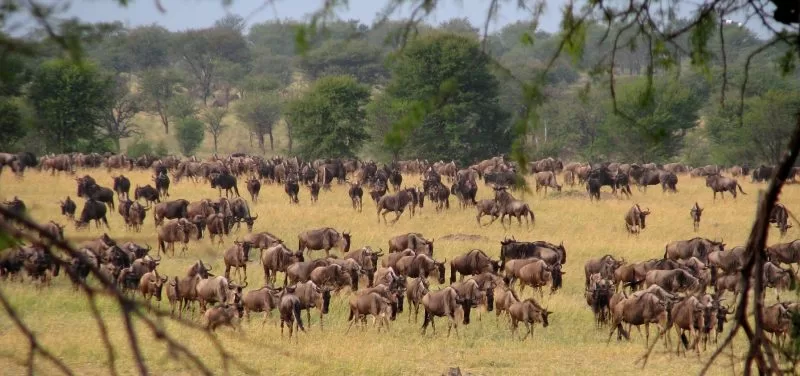
Wildebeest in the Mara North Conservancy
Its habitats support many predators and grazers, including the big cats and some critically endangered species.
Accommodation: the Mara North Conservancy has 100 rooms across camps such as Offbeat Mara Camp, Mara Rianta Camp and Royal Mara Safari Lodge.
A horse safari makes for a rewarding trip in the Masai Mara. Do give this energetic way of exploring a try on your next safari in Kenya.
If you loved reading this story, then subscribe to our blog here (it will ask to verify your email) to get inspiring travel stories and trivia delivered to your email. Stories about wildlife trivia, cultural experiences, curated luxury hotel lists, underrated places to travel, polar journeys and much more.