Cut to Feb 2016.
I have just come back from a two-week adventure in Iceland. It was about as unplanned as a trip can be: just a checklist of top places to see, no itinerary and no bookings. We had a self-drive car, and each day, depending on the weather forecast for the northern lights, we decided what to do next.
It was unusual in more ways than one. The focus was mostly on landscapes and the northern lights, and it was also the first time we used a drone for aerial footage, which is not allowed back in India.
We got the top item on the wishlist — the northern lights — and several times over. Then there were geysers, glaciers, ice beaches, mountains and waterfalls; for landscape photography it is hard to beat. The winter snow limited where we could go, so we stuck to the ring road, the Golden Circle and a few short detours.
Here are the ten things that struck me most about Iceland.
1. The sun is never overhead. Being so close to the North Pole, it always sits low, never higher than it would at about 9 am in India.
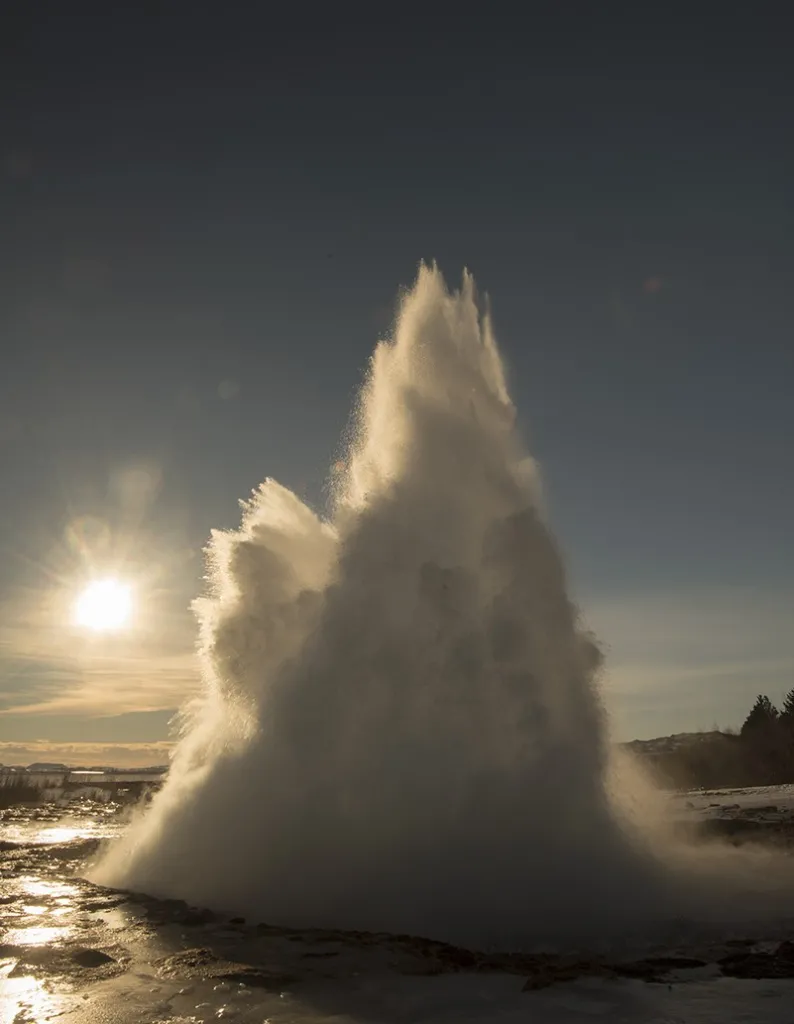
This was taken around 11am at Strokkur Geysir, see the position of the sun
2. The whole country has a population of about 300,000, roughly that of a Panipat or a Tirupati. About two-thirds of it is concentrated around the western capital, Reykjavik. On the eastern side there are stretches where you do not see a house for 100 to 200 km.
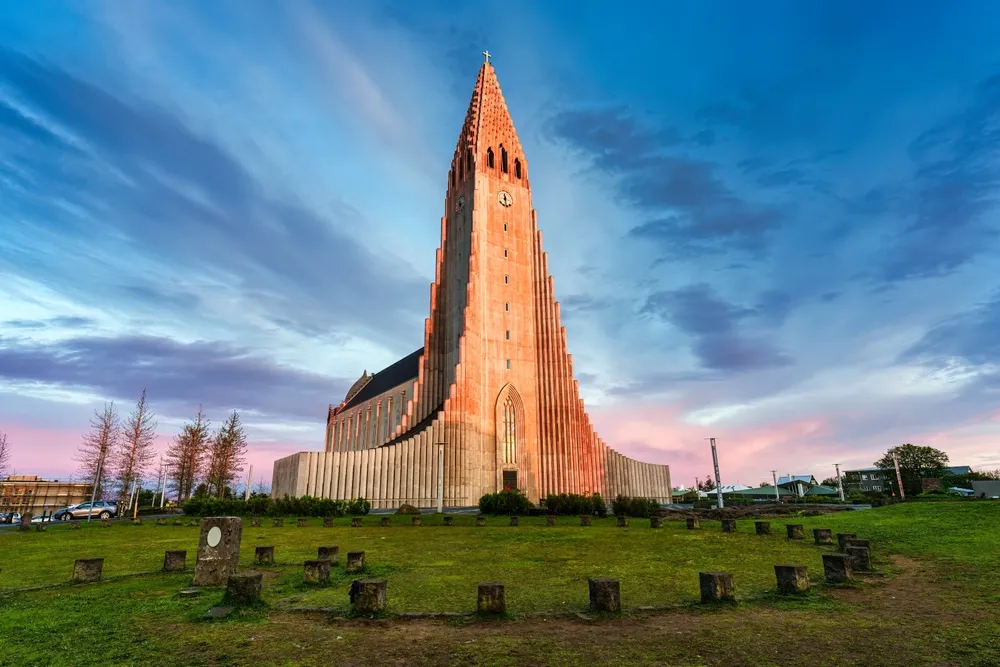
The capital city of Reykjavik with the Hallgrímskirkja Church looking over it
3. In winter the whole country is under snow, but it is not as cold as you might think. Despite being close to the Arctic Circle, the temperature drops only to around −10°C, thanks to warm air carried by the Gulf Stream.
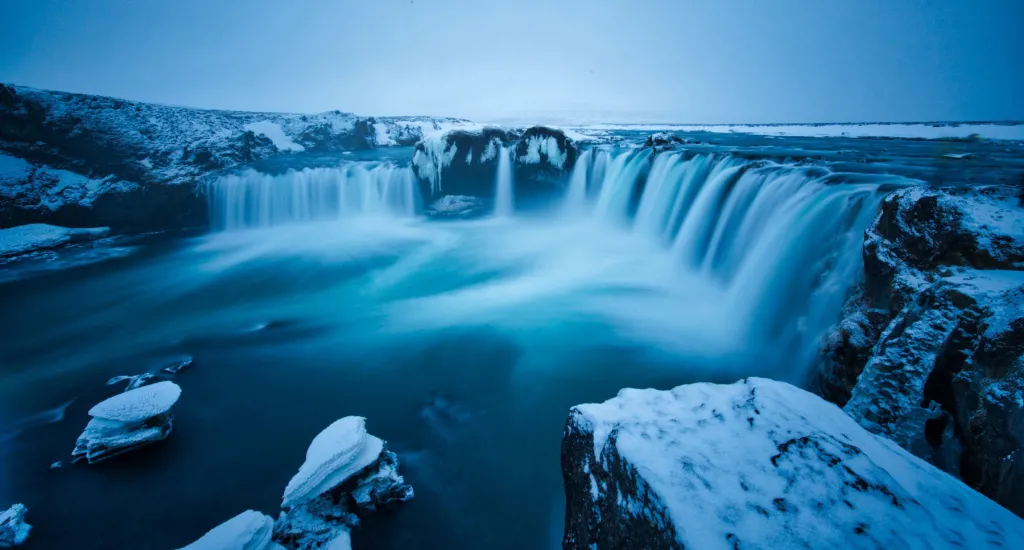
The typical winter landscape of Iceland
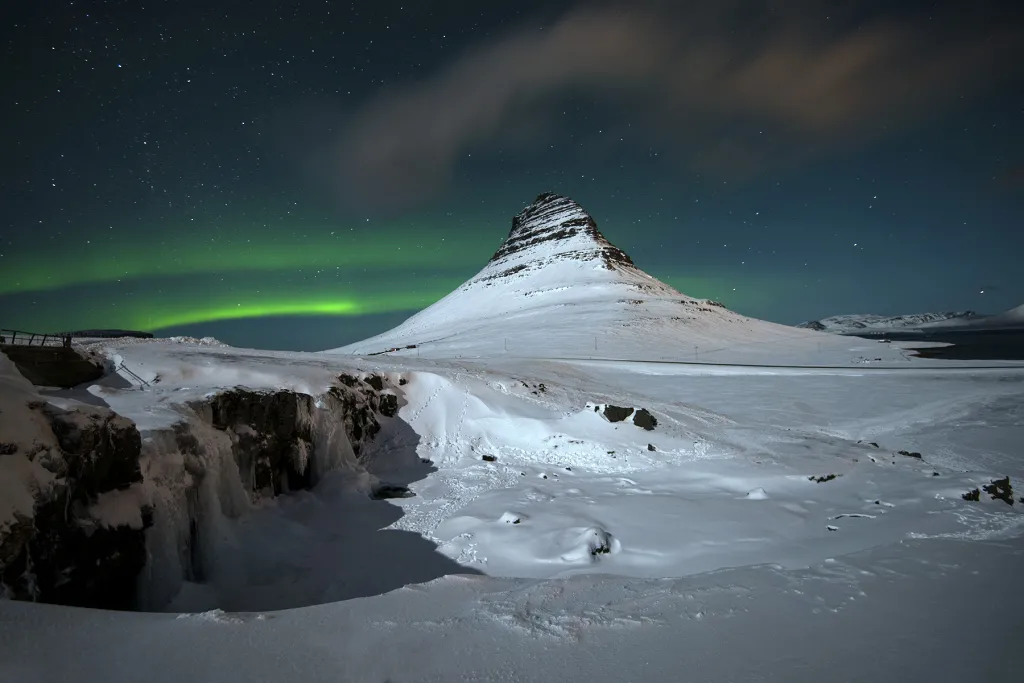
4. It is one of the best places in the world to see the northern lights, though a sighting is never guaranteed. You need a clear sky and a good KP index, the scientific forecast of the aurora’s likely strength. Even then it is not certain either way: we saw a full display, like the one below, on a day forecast for very low activity.
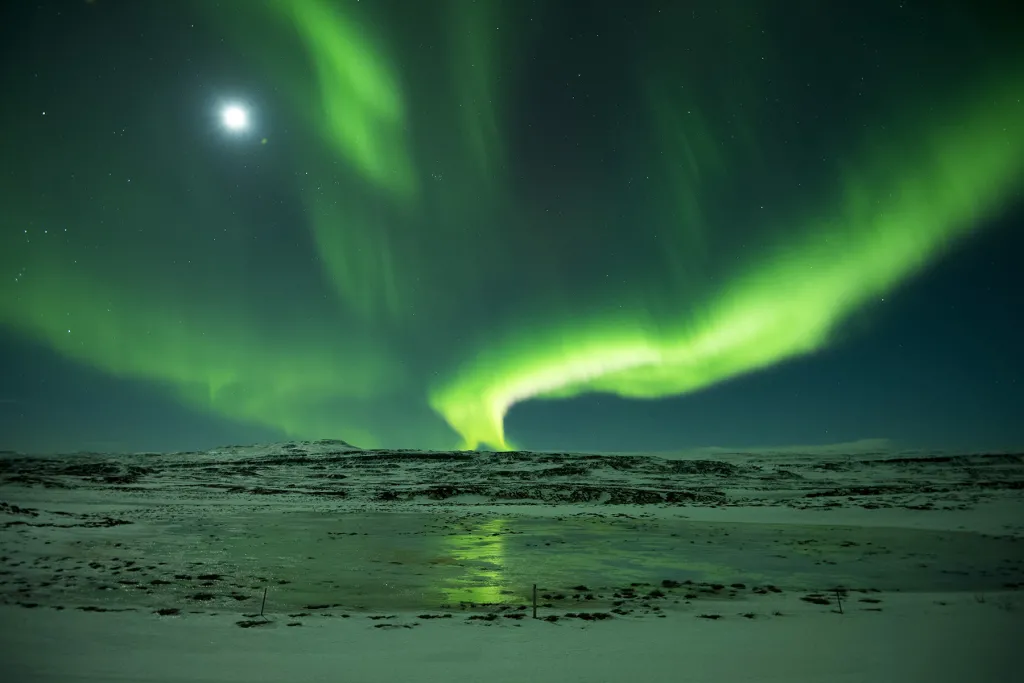
One of the better northern lights display that we had
5. Summer and winter are two different countries. In winter everything is under snow, most interior roads are closed except the ring road and a few major routes, and many waterfalls freeze; the northern lights are the big draw and are far less likely in summer. In summer the roads open, the interior highlands become accessible, the temperatures are milder, and it is peak season from July to September.
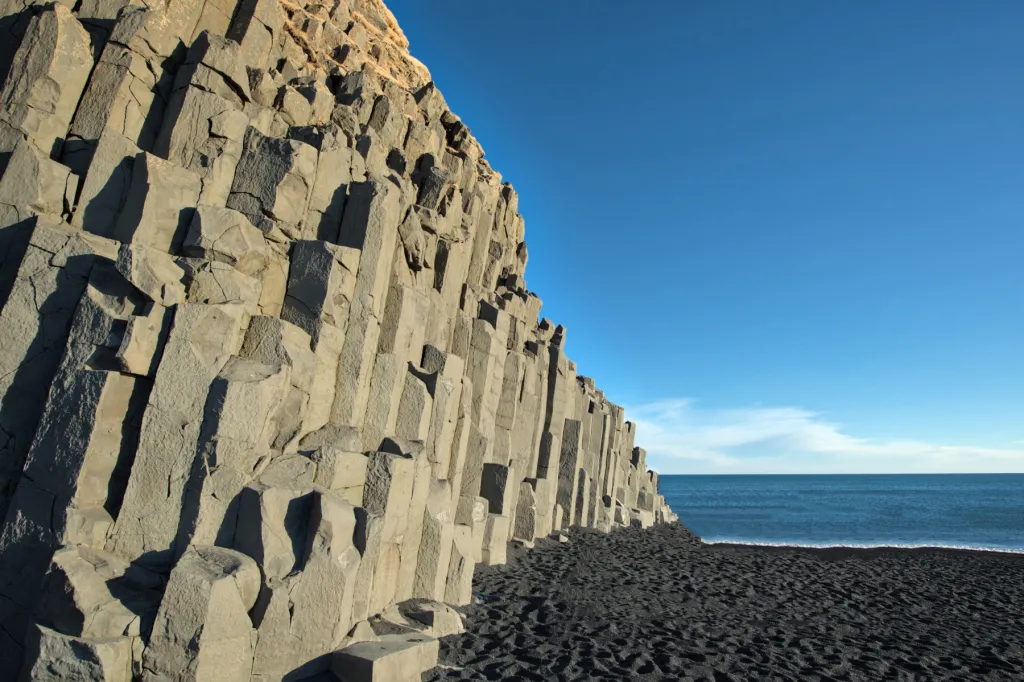
This was one of the rare places where Snow had not caught up completely, looked more like summers!
6. Iceland is said to be the second-windiest place in the world, and we can believe it. On a couple of days the wind rocked our car like a swing, and it was impossible to stand out in the open. The rental companies warn you not to open the door against the wind, or it may be torn off — which has happened to people.
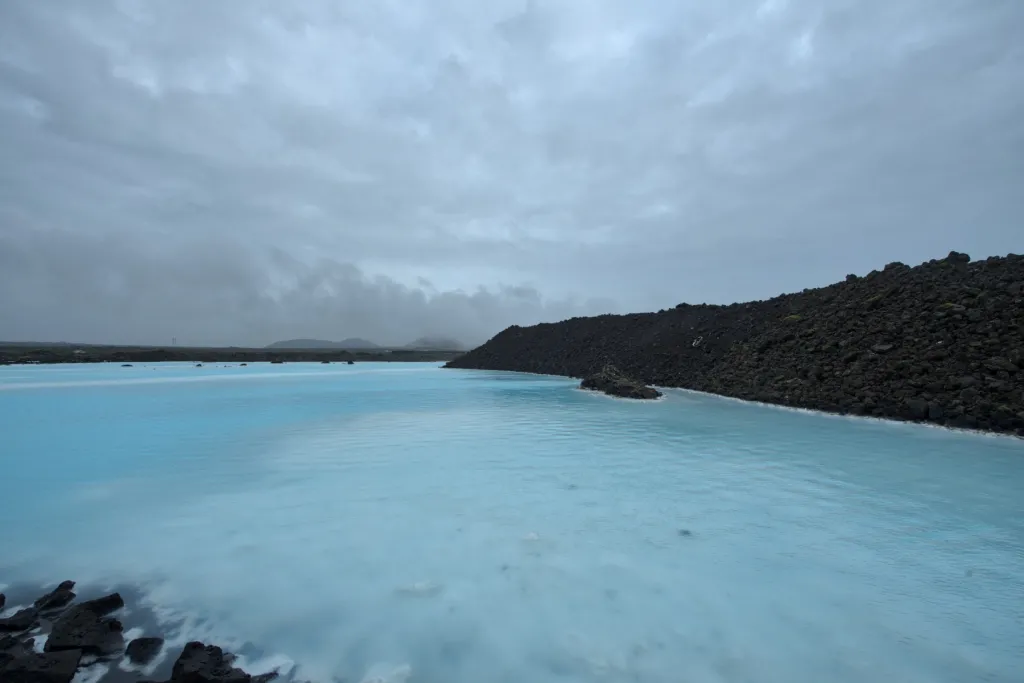
Winds blowing on a seaside in Iceland
7. Though the country is surrounded by sea, there are none of the white-sand, blue-water beaches of mainland Europe. Instead, many beaches have black sand, the result of volcanic eruptions over the years.
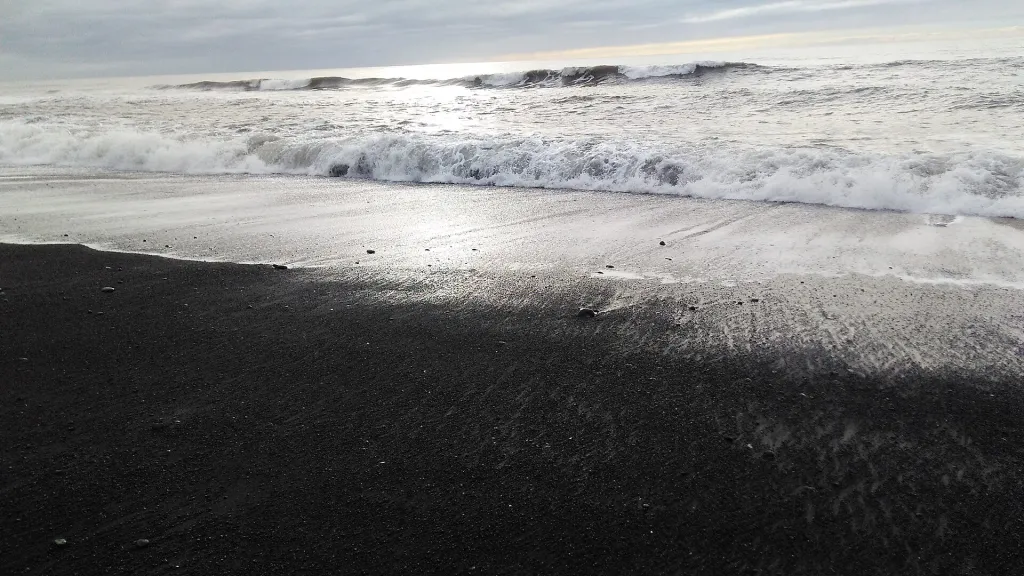
Typical black sand beach in Iceland
8. Volcanic activity is common in Iceland. The last eruption had been about a year earlier, though we did not see an active one. When a volcano erupts, the approach roads are usually closed for safety, and the only way to see it is from a helicopter; local companies start offering tours.
9. There are some big glaciers, with the Vatnajökull glacier alone covering about 8 per cent of the country. They are tricky to reach and near impossible to walk on without a trained local guide, as there are false surfaces you can fall through into freezing water. In our case the drone did the hard work, capturing close footage that would otherwise have been out of reach.
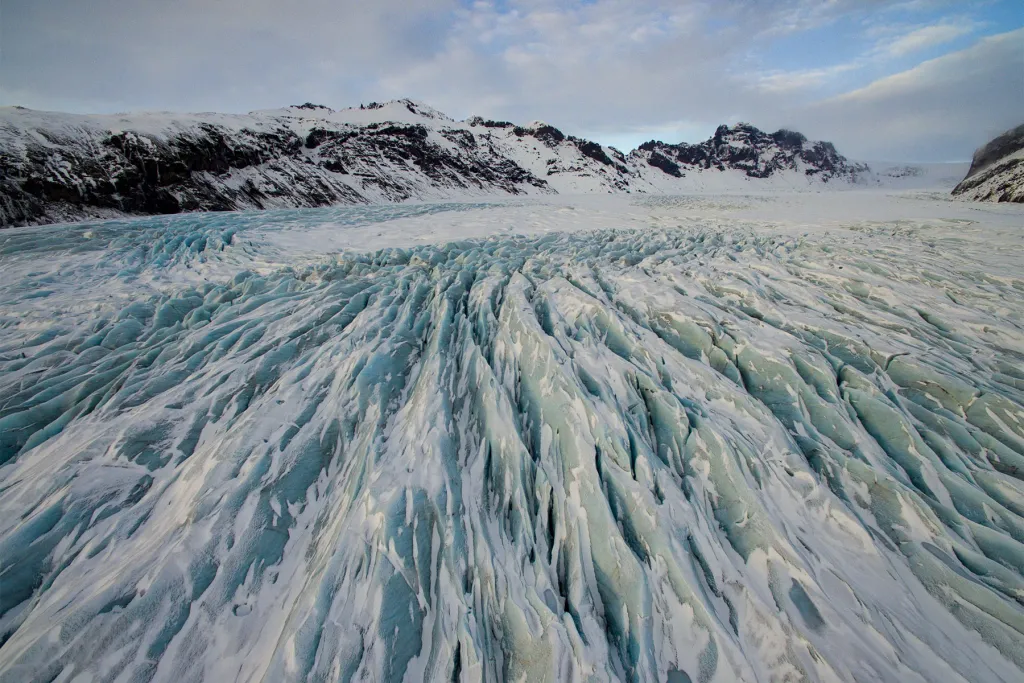
One of the many glaciers in Iceland, Svínafellsjökull
10. There is a lot of talk about fresh air being bottled and sold one day; in Iceland it already is. Many shops sell tins of “fresh Icelandic mountain air,” a small one for the equivalent of about ₹600. Perhaps we should start doing the same with Himalayan air.
Air anyone?
How did you like these? More detailed posts will follow on the northern lights, the glaciers and some of the landscapes we came across. Until then, cheers.