The Masai Mara is home to some of the finest wildlife anywhere. Its wide plains, forests, grasslands and rivers support more than 90 mammal species. Here are the ones you are most likely to see.
The Big Five
The Masai Mara is one of the few places in Africa where you have a very good chance of seeing all of the Big Five.
- Lion: the Mara is home to between 800 and 900 lions, seen easily resting in the tall grass, moving across the plains or on a hunt. They live in prides of 3 to 20, among them the well-known Marsh, Topi, Enkoyonai and Kicheche prides.
- Elephant: one of the largest land animals, social and intelligent. Numbers fell in recent years through poaching, but local conservation has helped them recover, and there is a very good chance of seeing them in the Mara.
- Rhinoceros: only black rhinos live in the Mara, while white rhinos are found at Lake Nakuru. The black rhino is the smaller and more aggressive of the two, and is the hardest of the Big Five to find here, with only 30 to 40 left after poaching.
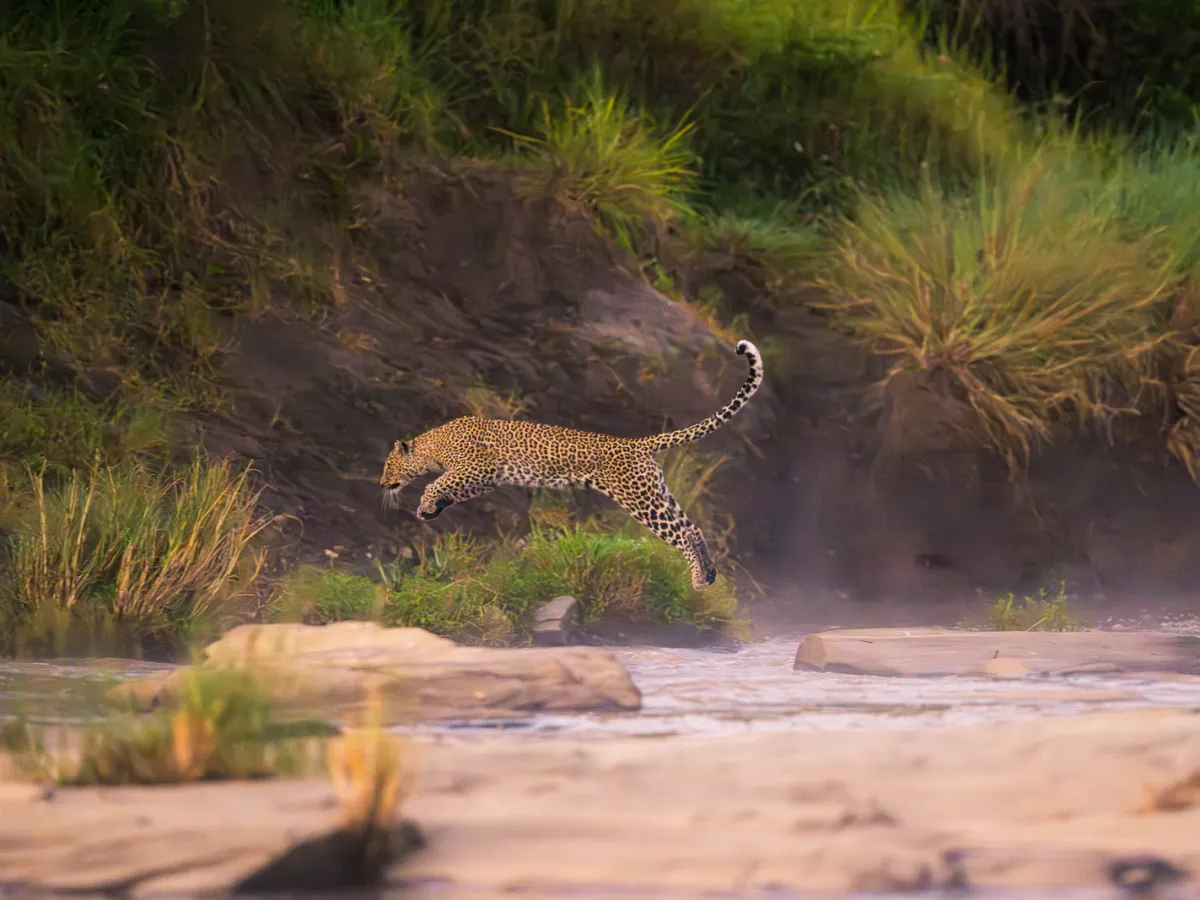
- Leopard: leopards are not too hard to see in the Mara, though the species is still under threat. Solitary and largely nocturnal, they favour rocks and woodland. Well-known individuals include Bahati, Koboso, Bella and Half Tail.
- African buffalo: territorial and aggressive, buffalo are considered among the most dangerous animals in East Africa. They gather in herds of 100 or more, usually near water, and are often seen grazing the floodplains.
Animals of the great migration
In search of fresh grazing, some of the Mara’s animals make their yearly journey between the Masai Mara and the Serengeti. This movement of more than a million animals is one of the great sights in nature.
- Wildebeest: these antelopes are herd animals, on the move and grazing around the clock. They are easy to see, especially from July to October, when more than a million roam the plains.
- Zebra: members of the horse family, present in large numbers, often grazing together or grooming one another. They travel with the wildebeest on the migration, and around 200,000 are found across the Mara.
- Thomson’s gazelle: a grassland and savannah animal, easily seen in the Mara, especially during the migration, when upwards of 500,000 make the journey.
Other animals
- Cheetah: the fastest land animal, seen readily in the Mara, often hunting. Watching one stalk and then sprint after its prey is a fine sight. Despite being relatively common here, the cheetah is endangered, its numbers falling.
- Giraffe: the tallest mammal, graceful even at a run of up to 60 kilometres an hour, using its long neck to reach leaves other animals cannot. Around 2,500 live in the Mara.
- Hippo: with males weighing as much as 1.5 tonnes, the hippo is the third-largest land mammal. Semi-aquatic, it is seen in swamps, lakes and rivers, resting together in the water but grazing alone.
- Antelope: common across the Mara, usually in scrub or bush country. They range from the dwarf antelopes (oribi, dik-dik and klipspringer) to the horse antelopes (topi, hartebeest and white-bearded wildebeest) and the spiral-horned antelopes (bushbuck and common eland).
- Honey badger: known for its taste for honey and bee larvae, it also eats reptiles, insects, birds and amphibians, finding prey by scent. Fearless, it will sometimes take on animals many times its size.
- Mongoose: several kinds live in the Mara. The banded mongoose favours open grassland, forest and savannah; the dwarf mongoose is smaller and eats insects such as grasshoppers, crickets, scorpions and spiders; and the slender mongoose, short-legged and long-bodied, is common across sub-Saharan Africa, feeding on insects, reptiles, rodents and birds.
Masai Mara mammal checklist
Here is a fuller checklist of the mammals of the Mara.
Swine
- Warthog — Phacochoerus africanus
Giraffe
- Masai giraffe — Giraffa camelopardalis tippelskirchi
Hippopotamuses
- Common hippopotamus — Hippopotamus amphibius
Dwarf antelopes
- Kirk’s dik-dik — Madoqua kirkii
- Klipspringer — Oreotragus oreotragus
- Oribi — Ourebia ourebi
Gazelles
- Thomson’s gazelle — Gazella thomsonii
- Grant’s gazelle — Gazella granti
Reedbucks and kobs
- Common reedbuck — Redunca arundinum
- Defassa waterbuck — Kobus ellipsiprymnus defassa
Horse antelopes
- Coke’s hartebeest — Alcelaphus buselaphus cokii
- Topi — Damaliscus lunatus jimela
- White-bearded wildebeest — Connochaetes taurinus
Impala
- Impala — Aepyceros melampus
Spiral-horned antelopes
- Bushbuck — Tragelaphus scriptus
- Common eland — Taurotragus oryx
Wild cattle
- African buffalo — Syncerus caffer
Rhinoceroses
- Black rhinoceros — Diceros bicornis
Zebras and asses
- Common zebra — Equus burchellii
Elephants
- African elephant — Loxodonta africana
Hyraxes
- Bush hyrax — Heterohyrax brucei
Aardvark
- Aardvark — Orycteropus afer
Pangolins
- Cape pangolin — Manis temminckii
Genets and civets
- Common genet — Genetta genetta
Mongooses
- Slender mongoose — Herpestes sanguineus
- Egyptian mongoose — Herpestes ichneumon
- Marsh mongoose — Atilax paludinosus
- White-tailed mongoose — Ichneumia albicauda
- Dwarf mongoose — Helogale parvula
- Banded mongoose — Mungos mungo
Hyenas
- Spotted hyena — Crocuta crocuta
- Aardwolf — Proteles cristata
Cats
- African wildcat — Felis lybica
- Serval — Leptailurus serval
- Caracal — Caracal caracal
- Leopard — Panthera pardus
- Lion — Panthera leo
- Cheetah — Acinonyx jubatus
Foxes, jackals and dogs
- Bat-eared fox — Otocyon megalotis
- Black-backed jackal — Canis mesomelas
- Side-striped jackal — Canis adustus
- African wild dog — Lycaon pictus
Weasels
- Striped polecat (zorilla) — Ictonyx striatus
- Honey badger (ratel) — Mellivora capensis
Bushbabies
- Lesser bushbaby — Galago senegalensis
Monkeys and baboons
- Sykes’ (blue) monkey — Cercopithecus mitis
- Red-tailed monkey — Cercopithecus ascanius
- Vervet monkey — Chlorocebus pygerythrus
- Olive baboon — Papio anubis
Bats
- Straw-coloured fruit bat — Eidolon helvum
- Yellow-winged bat — Lavia frons
Hares and rabbits
- African hare — Lepus capensis
Squirrels
- Kenyan tree squirrel — Paraxerus ochraceus
Springhare
- Springhare — Pedetes capensis
Old World porcupine
- Southern African crested porcupine — Hystrix africaeaustralis
Rats and mice
- Four-striped grass mouse — Rhabdomys pumilio
- Giant pouched rat — Cricetomys gambianus
- Greater cane rat — Thryonomys swinderianus
If you loved reading this story, then subscribe to our blog here (it will ask to verify your email) to get inspiring travel stories and trivia delivered to your email. Stories about wildlife trivia, cultural experiences, curated luxury hotel lists, underrated places to travel, polar journeys and much more.