Kenya’s Masai Mara and Tanzania’s Serengeti are the two names that come up first in any conversation about African safaris, and for good reason. They are not really two places. The Mara Reserve and the Serengeti share a border and a single continuous ecosystem; the animals cross it without noticing, and only the paperwork changes.
For a rewarding experience, look at our Masai Mara journeys, or combine the two on our Serengeti and Ngorongoro itinerary.

If you are choosing between them, here is what actually differs.
Size and landscape
The Serengeti is Tanzania’s third largest national park at 14,750 square kilometres. The name comes from the Maa word siringet, the place where the land runs on forever, and the plains earn it. Between them sit granite kopjes, riverine forest and scattered waterholes. The scale is the point: you can drive for an hour without meeting another vehicle.
The Masai Mara National Reserve covers 1,510 square kilometres — roughly a tenth of the Serengeti. Its name also comes from Maa: Maasai for the people, mara for the dappled look of the plains, spotted with acacia and croton thicket. The Mara is hillier than the Serengeti, cut by the Mara and Talek rivers and closed on its western side by the Oloololo escarpment.
Wildlife
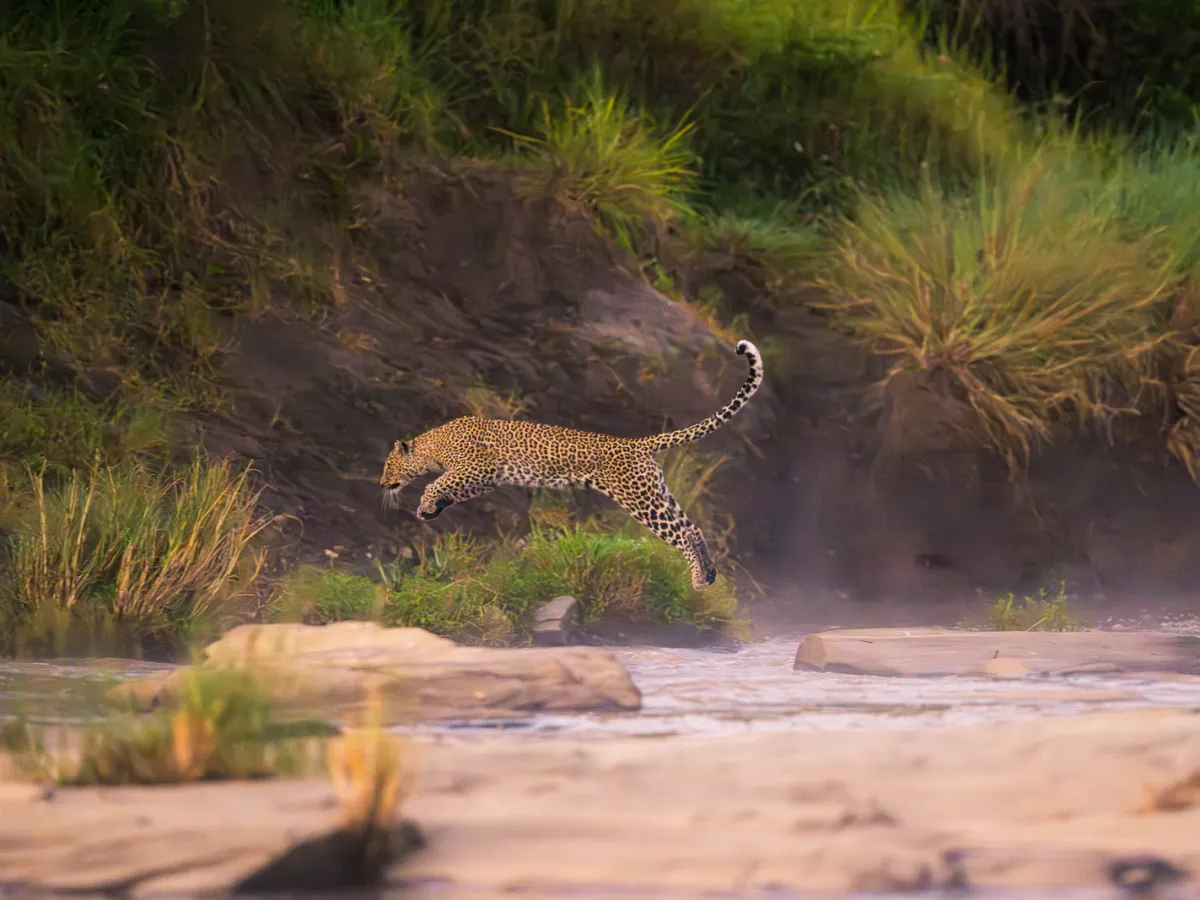
Both hold the full cast: lion, leopard, elephant, buffalo and black rhino, along with cheetah, the smaller cats, and antelope in numbers. The difference is not what lives there. It is how long it takes to find.

Serengeti wildlife is spread thin across a very large park. You need patience and you need a good guide, and in exchange you get sightings without an audience. Seronera, in the centre, is the reliable area for predators year-round. The Grumeti River draws animals together in the west.
The Mara concentrates the same animals into a tenth of the space, which makes for short, productive drives. The Mara Triangle in the west is the quietest part of the reserve and where the black rhino are most often seen. The Musiara sector is known for its lion prides, and the conservancies bordering the reserve — Mara North, Olare Motorogi, Naboisho — hold game densities that match the reserve with a fraction of the vehicles.
The Great Migration
The migration belongs to both. Around 1.5 million wildebeest, together with several hundred thousand zebra and gazelle, move in a continuous loop through the Mara–Serengeti ecosystem, following the rain and the grass. The herds are somewhere in the system every day of the year. The question is only where.
Roughly where the herds are, month by month
January to March — southern Serengeti and the Ndutu plains. Calving season. Around half a million calves are born in a window of a few weeks, most of them inside two or three days of each other. Lion, cheetah and hyena follow the herds and hunt in the open. For predator action, this is the best time of the year anywhere in the ecosystem.
April to May — central and western Serengeti. The herds move north through Seronera in long columns. The long rains fall, the crowds thin and the rates drop.
June to July — the western corridor and the Grumeti. The first river crossings, into water holding some of the largest Nile crocodile in Africa.
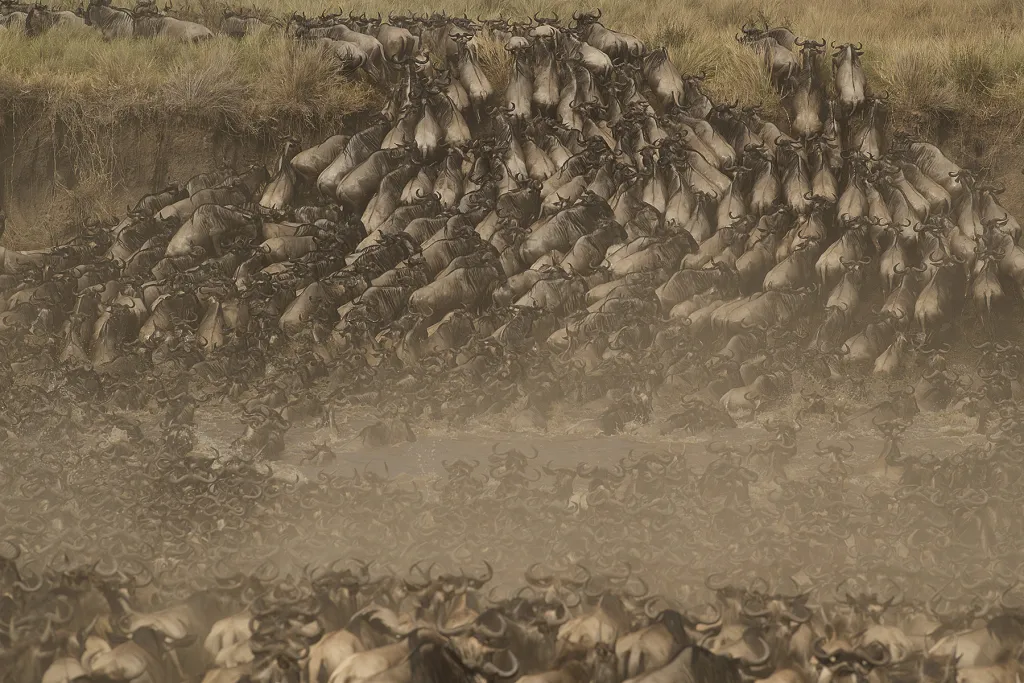
July to October — the Mara River and the Masai Mara. The crossings everyone comes for. Steeper banks, stronger current, more crocodile. Herds gather at a crossing point for hours and then turn back without entering the water. Nobody can tell you which day a crossing will happen, and any operator who says otherwise is selling you something. What can be done is to put you in the right place for several days and give you honest odds.
October to December — back south. The herds drift out of the Mara and down through the eastern Serengeti towards Ndutu, and the cycle starts again.
Put simply: the wildebeest spend more of the year in the Serengeti, but the river crossings that define the migration in most people’s minds happen in the Mara.
Crowds
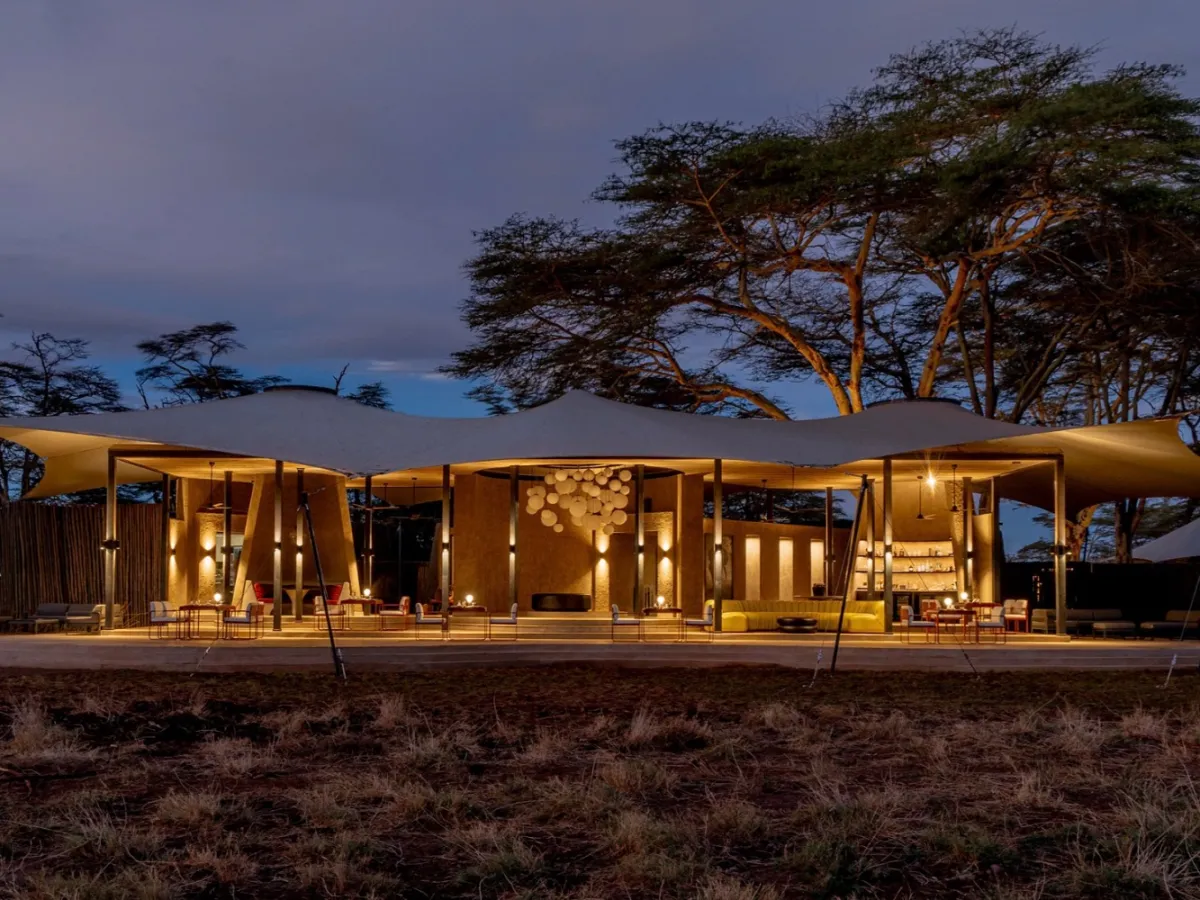
The Mara is small, famous and easy to reach, and in peak season the popular sightings in the main reserve draw vehicles. Where you stay matters more here than anywhere else in East Africa. Camps in the central reserve or in the private conservancies put you away from the gate traffic; the conservancies also permit night drives and walking safaris, which the main reserve does not.
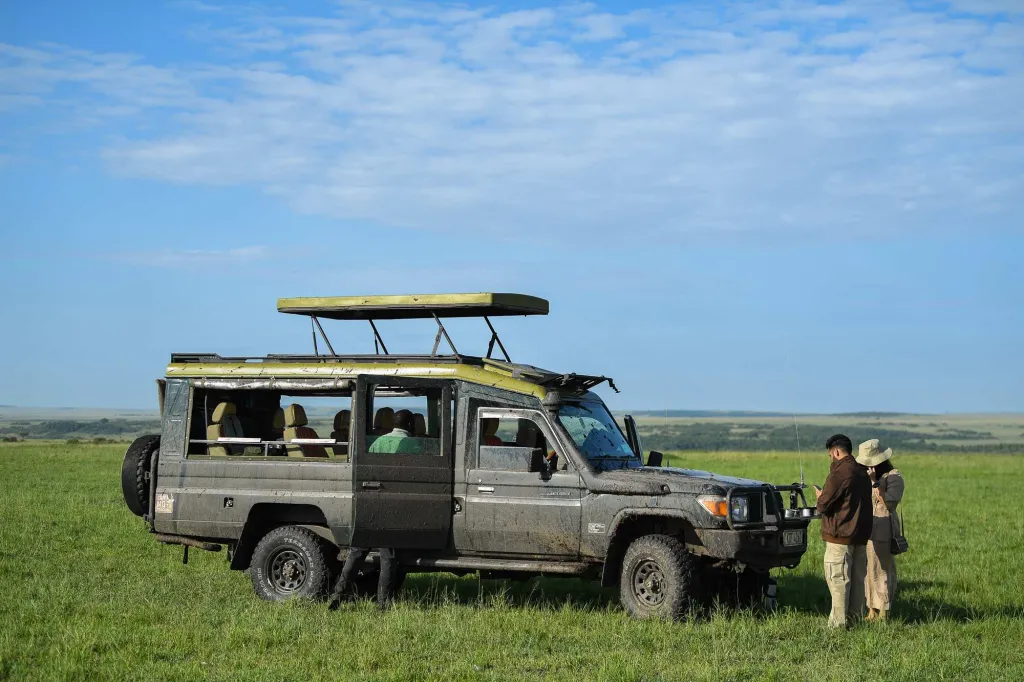
The Serengeti disperses its visitors simply by being large. Seronera in high season can be busy; the north, the west and the far south rarely are.
So which one?
Choose the Masai Mara if you have a short trip, a fixed budget, or it is your first safari. Nairobi to the Mara is a 45-minute flight, game densities are high, and a three-night stay delivers. It is also the place for the river crossings.
Choose the Serengeti if you have longer, want fewer vehicles, and are drawn to the calving season in the south between January and March — which is, for predator behaviour, the finest wildlife spectacle in Africa.
Choose both if you can. They are one ecosystem, they are a short flight apart, and seeing them together is the trip most people wish they had booked the first time.