The blue whale is the largest animal that has ever lived. It reaches lengths of up to about 30 metres (98 feet) and weighs up to around 190 tonnes, longer than a basketball court and heavier than any land animal could ever be. In fact, an animal this size could not survive on land; its own weight would crush it.
Because of its size, speed and power, the blue whale has virtually no natural predators, and despite its bulk it is harmless to people.
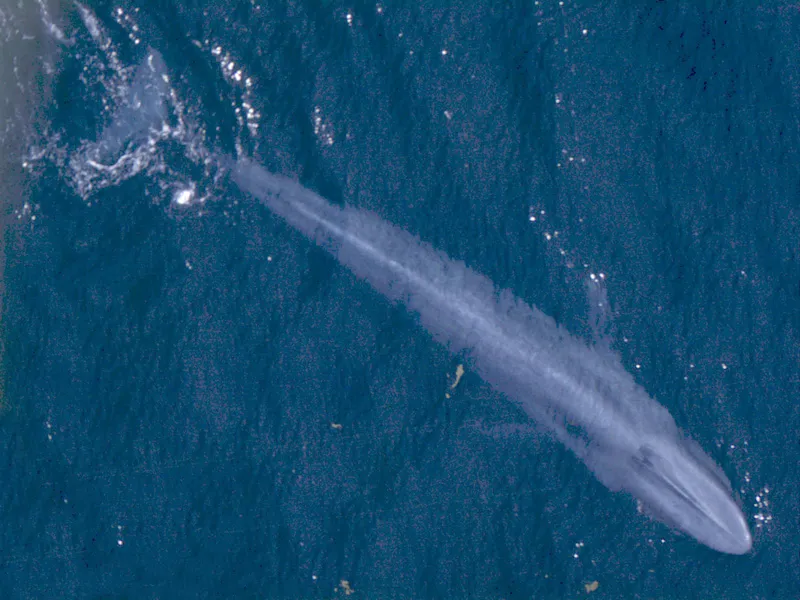
The spectacular blue whale
Blue whales are found in every ocean except the parts of the Arctic that stay ice-covered for most of the year. There are three main populations: the North Atlantic, the North Pacific and the southern hemisphere.
Blue whales were the hardest hit by commercial whaling and have been slow to recover since it was banned in 1966. They are still classed as endangered and face threats such as ship strikes and entanglement in fishing gear.
How blue whales migrate
Blue whales migrate to find food and to reach calving and nursing areas with the seasons. Even so, and despite their size, their exact travel patterns remain something of a mystery to scientists.
What is known is that they generally make long migrations towards equatorial waters in winter and feed in polar waters in summer.
Each year they cover roughly 4,000 miles. They feed on krill through the warmer months, then travel towards their breeding grounds in winter, and many females are thought to give birth on the warm-water leg of the journey.
These patterns do not hold for every blue whale, though. Some travel only short distances to feed and breed, while others make the full annual trip between polar and equatorial waters.
Blue whales swim alone, in pairs or in small groups. They cruise at about 5 miles an hour while feeding and travelling, but can put on bursts of more than 20 miles an hour.
The songs of blue whales
Blue whales are known not only for their size but for their calls. They string together low, deep trills into songs loud enough to carry far underwater. Among the loudest animals on Earth, in the right conditions they can be heard by other whales up to 1,000 miles away.
A recent study found that in the warmer summer months male blue whales sing mostly at night, but when it is time to migrate to warmer waters they switch to singing by day. Their singing also shifts with their feeding and breeding cycles.
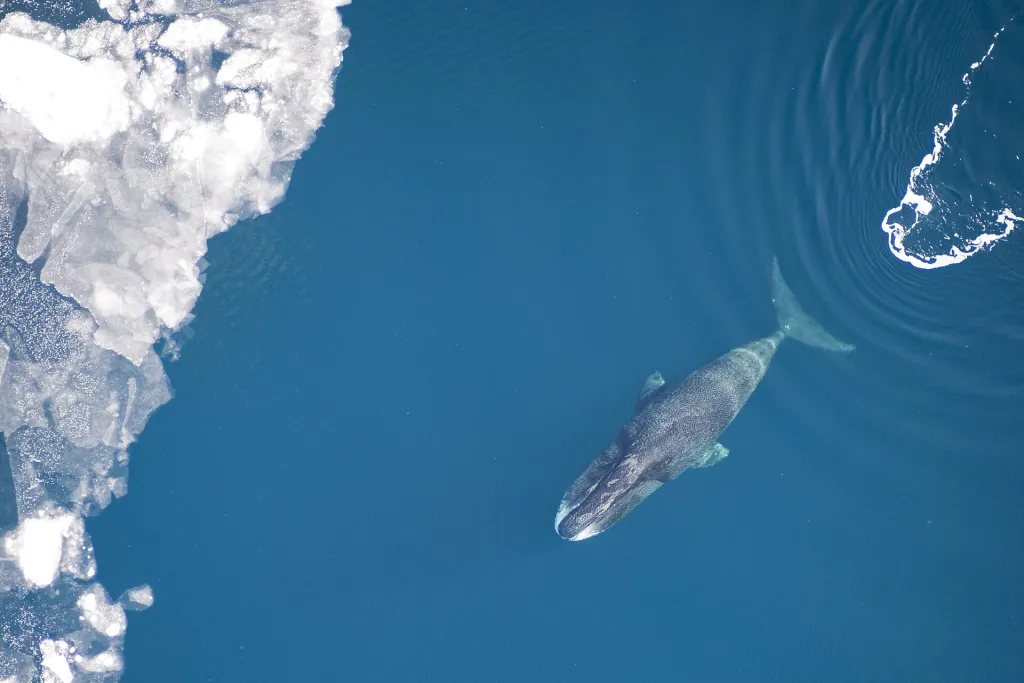
A blue whale breaching in Inside Passage, Alaska
When an underwater microphone was lowered 3,000 feet into Monterey Bay, it recorded the bay’s soundscape for more than five years. This gave William Oestreich, a biological oceanographer at Stanford University, and his team some striking patterns.
Separating the day and night songs, they found that when krill dispersed at night, the whales sang for up to 12 hours at a stretch. In all, they recorded 400 songs before the migration, sung more at night than by day; but once the whales were full of krill and heading south, they sang more by day. It is still unclear exactly why whales sing, but these studies suggest their songs may carry information about breeding, behaviour and migration.
Where blue whales range
Some blue whales may not migrate at all. Those that do are driven largely by food, moving to where krill is most concentrated.
In the southern hemisphere, Antarctic blue whales are often seen in high-latitude waters near the ice edge in summer, moving to middle and lower latitudes in winter. The pygmy blue whale, a subspecies found mostly north of the Antarctic Convergence, is common in the waters of New Zealand, Madagascar and Australia.
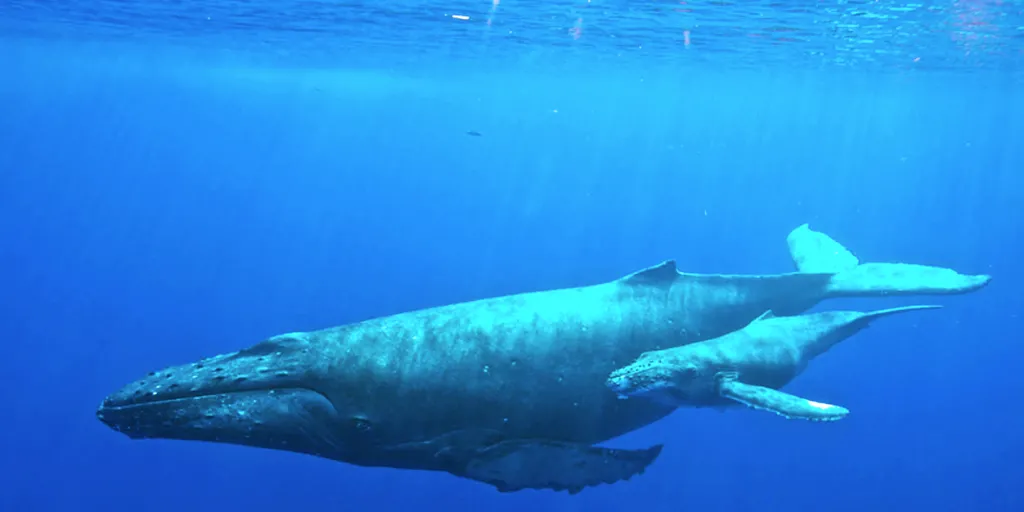
A female blue whale with a calf
In the North Atlantic, blue whales range from the subtropics up to the Greenland Sea, and are seen off the eastern United States and eastern Canada. They are thought to winter off Mexico and Central America and to feed off the US west coast in summer.
Blue whales with young calves are often seen in the Gulf of California, the Sea of Cortez, an important nursing and calving area for the species.
The best places to see blue whales
Watching a blue whale surface and breach is a remarkable thing. Here are some of the best places to take a whale-watching cruise and see the largest animal on Earth:
- Monterey Bay, California, from August to September
- Baja California, Mexico, from November to late December
- Reykjavik, Iceland, from May to August
- Saguenay, Quebec, between May and October
- Mirissa, Sri Lanka, from November to April
- Pico Island, Portugal, from February to March
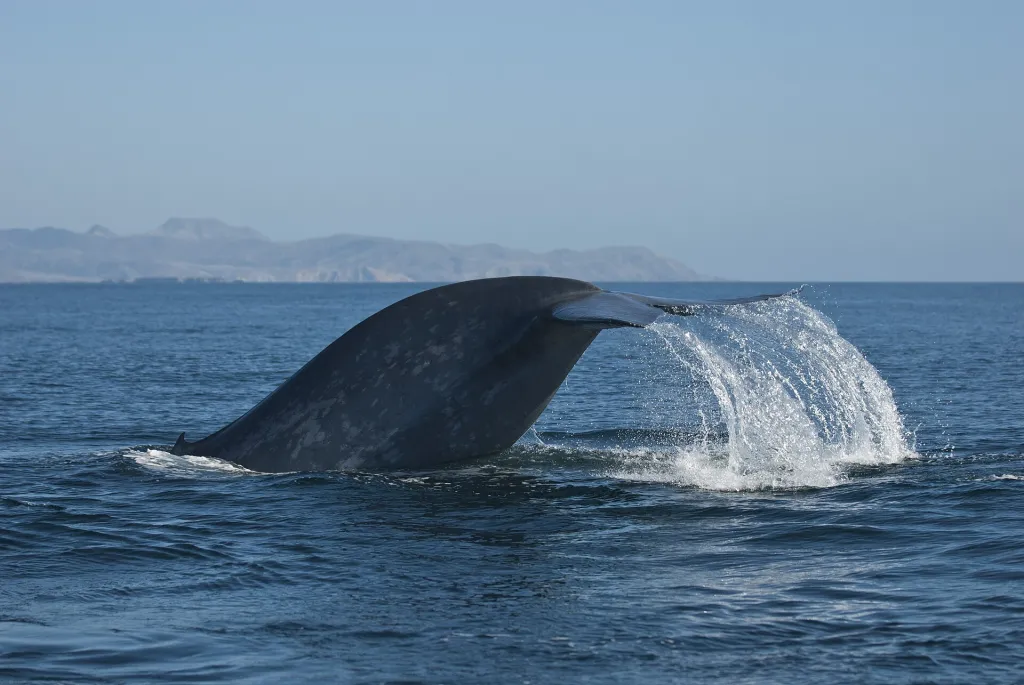
A blue whale swims through the waters of California
It is a special thing to see blue whales in the wild. As research continues, we may yet understand their migration in full. For now, a whale-watching cruise is the way to meet them.
If you loved reading this story, then subscribe to our blog here (it will ask to verify your email) to get inspiring travel stories and trivia delivered to your email. Stories about wildlife trivia, cultural experiences, curated luxury hotel lists, underrated places to travel, polar journeys and much more.