Penguins are the signature animals of the Antarctic, and a delight to watch. There are around 18 species in the world, seven of them found in Antarctica: the emperor, Adelie, gentoo, chinstrap, macaroni, rockhopper and king.
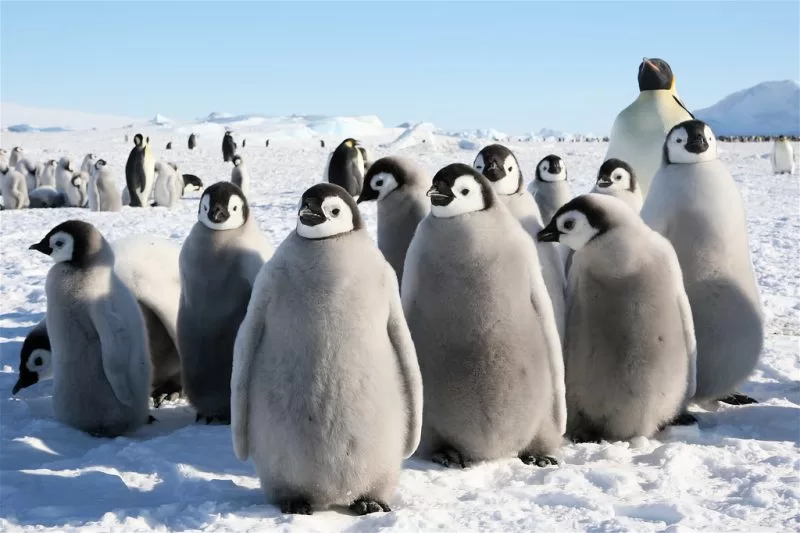
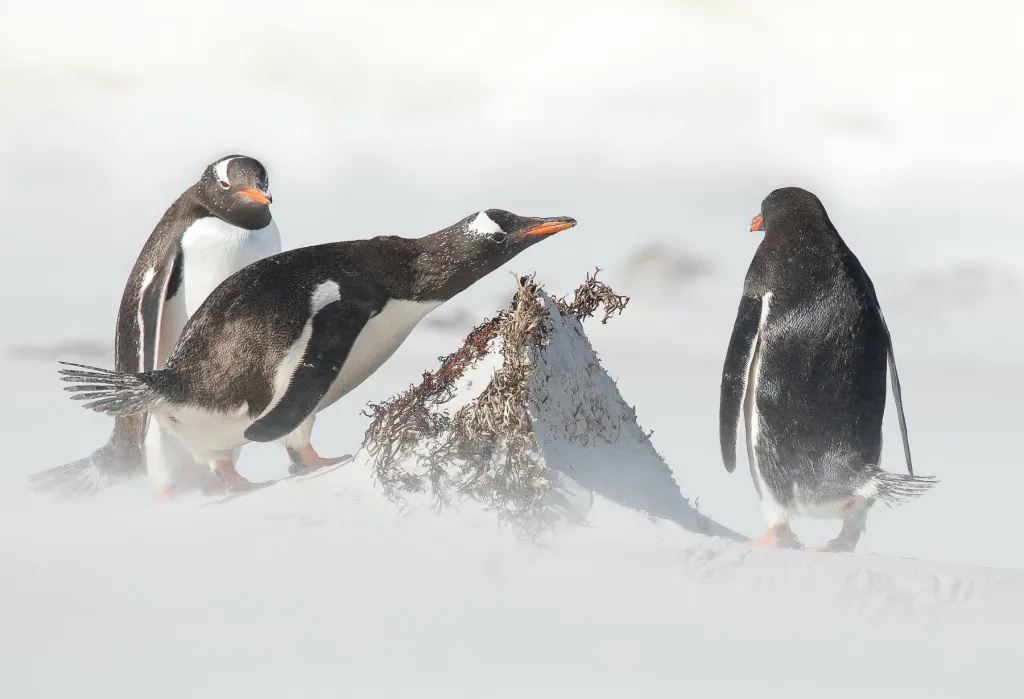
The penguins of Antarctica
These seven are well suited to the cold. Their oily feathers give them a sleek look and keep the water out, and beneath the outer layer is a layer of fat that keeps them warm.
Flightless, they are built to swim, moving quickly through the water at up to 25 mph, and feeding mostly on krill, fish, squid and crabs. On land they are known for their awkward waddle and weak eyesight, but underwater their vision is sharp. Penguins are highly social, and their rookeries can exceed a million birds, usually gathered on rocky ground and beaches.
Here are the seven Antarctic penguins.
1. Emperor penguin
The emperor is the best-known penguin, and, for all it can look small from a distance, the largest of all. It stands around 4 feet tall and weighs at least 100 pounds, towering over the other species.
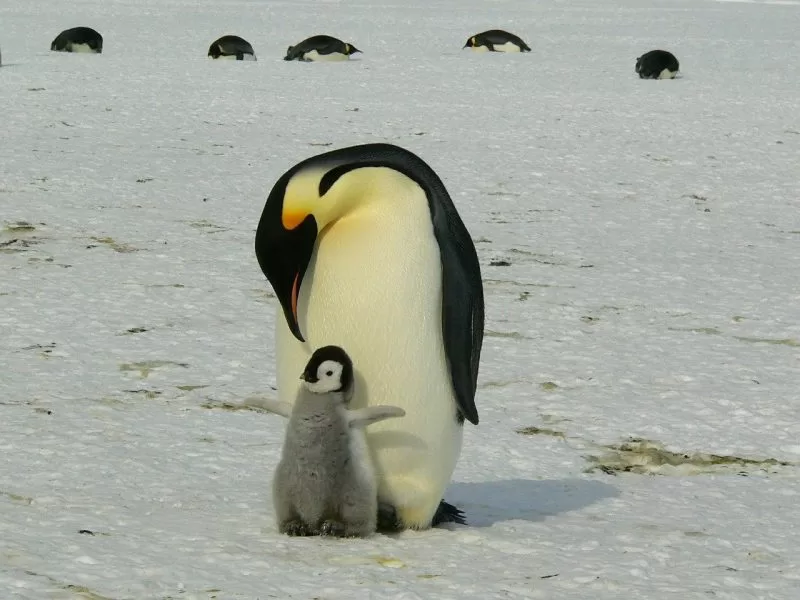
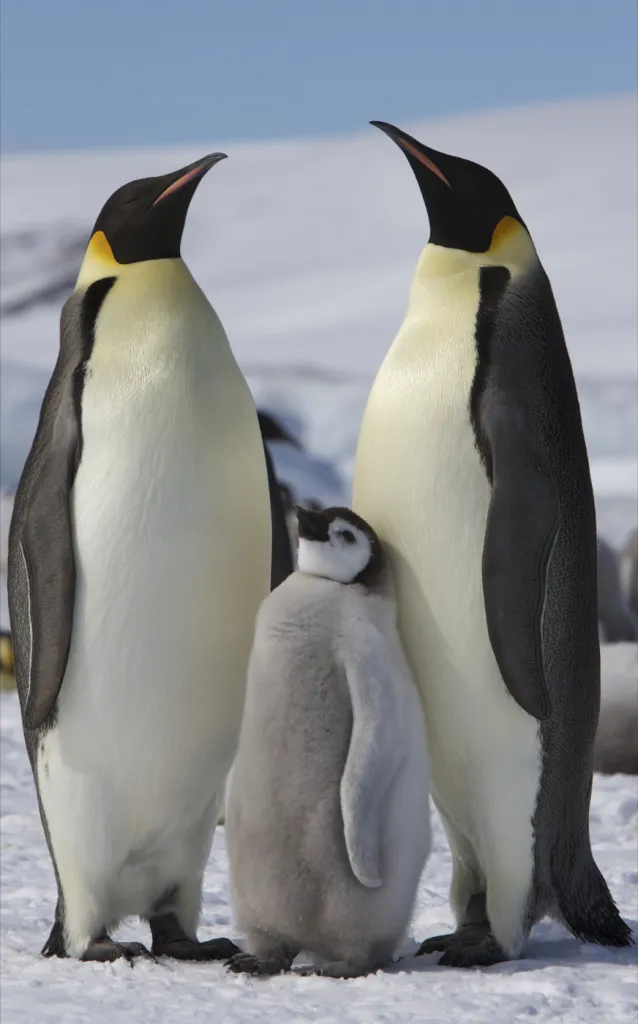
An Emperor penguin with a chick
It is easy to identify, with the usual black-and-white plumage set off by bright yellow and orange around the head, neck and chest. Emperors are found mainly in the Weddell region, especially on Snow Hill Island, and around the Ross Sea, rarely straying to sub-Antarctic waters. To get through the cold, they huddle together for warmth, taking turns to stand on the exposed edge.
The emperor is the only penguin to breed in the Antarctic winter. The female lays a single egg and passes it to the male to incubate while she goes to sea to feed; he fasts for about nine weeks, keeping the egg warm. When she returns, in August, it is his turn to feed, and then he helps rear the chick. The chicks hatch around late July or mid-August, but cannot go to sea until January. When the sea ice breaks up, the family heads for the water. The population is estimated at around 600,000.
2. Adelie penguin
The Adelie is one of the most widely distributed of the penguins, spending winter in the seas around Antarctica and the rest of the year on the coastal islands. At about 26 inches tall and 11 pounds, it is one of the smaller species, and it breeds in tightly packed colonies you can hear and smell long before you see them.
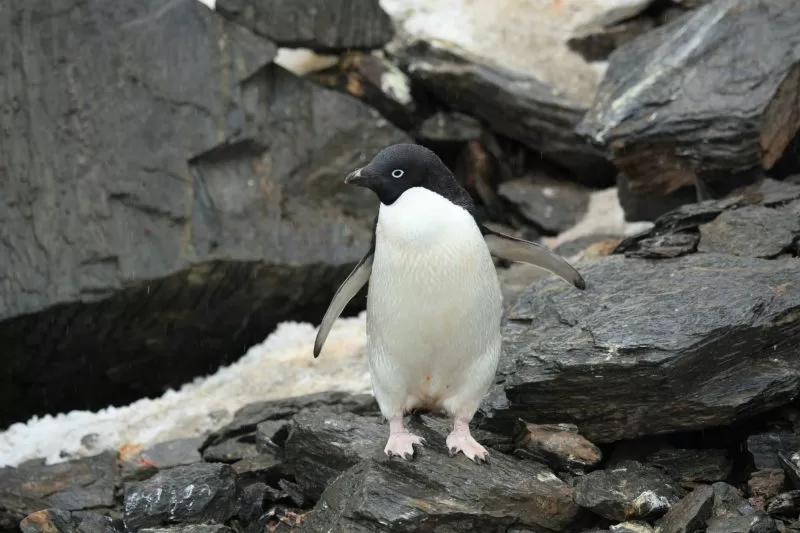
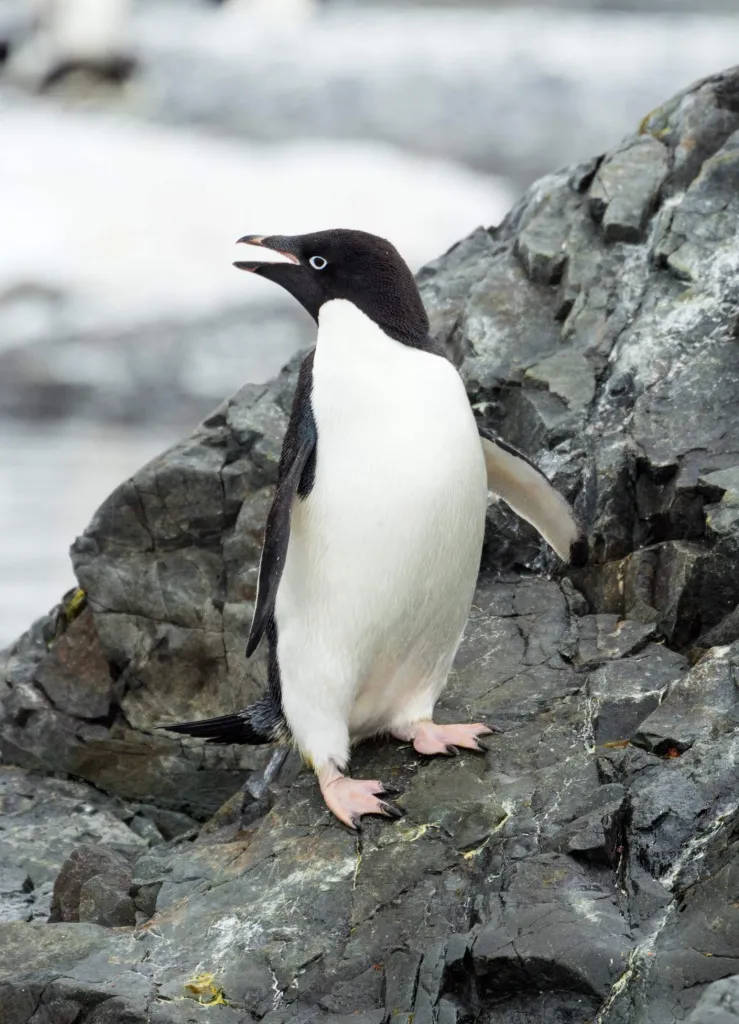
An Adelie penguin standing on a rock
When they move to the outlying ice in winter, the males arrive first and offer pebbles to the females to court them. The breeding season and courtship are both short. Adelies lay their eggs in mid-November, and both parents tend them; two or three weeks after hatching, the young join a creche before heading for open water. Mated pairs often stay together for five or six years. There are more than 4.5 million breeding Adelies in Antarctica.
3. Gentoo penguin
The gentoo is the most northerly penguin in the region, recognised by the white patch above its eyes. It is found on many sub-Antarctic islands, and on beaches as far down as the peninsula. Gentoos are fast swimmers, reaching about 22 mph, and grow to around 27 inches and 12 pounds.
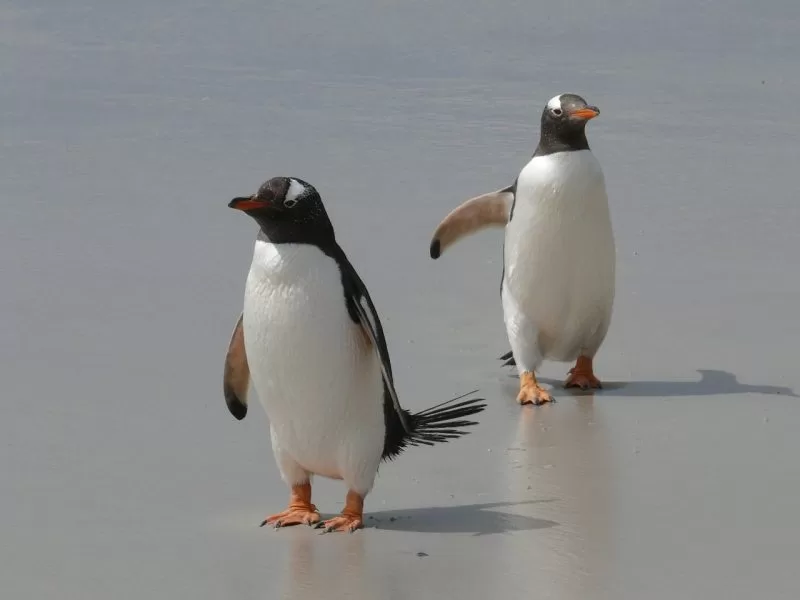
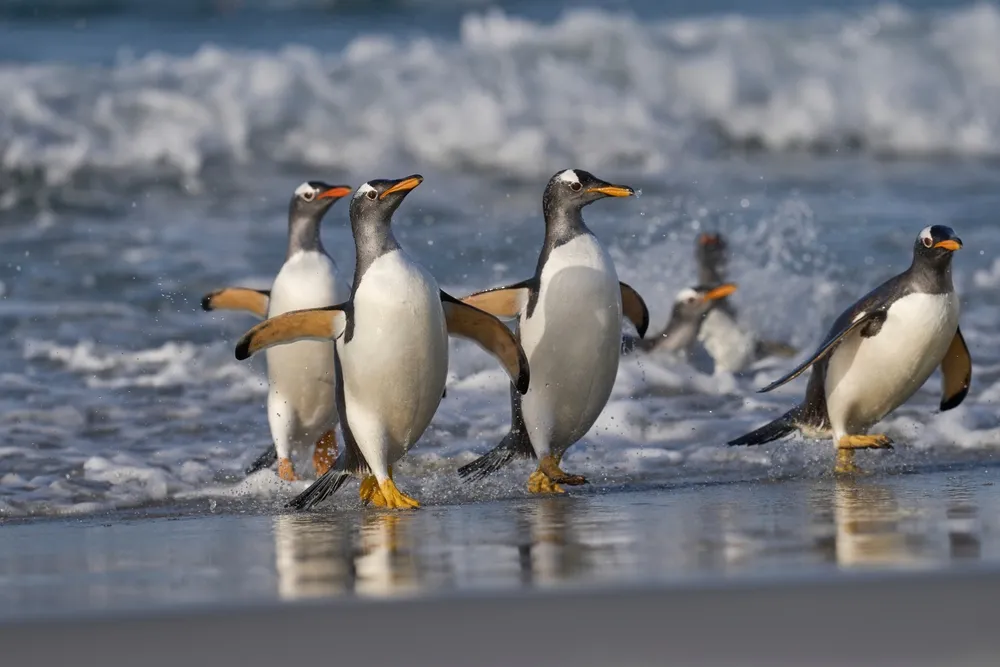
Gentoo penguins have a distinct white patch over their eyes
They breed in large colonies, nesting on beaches and in tussock grass, and defend their patch fiercely. Like the Adelie, the male offers stones to the female, and courts her by trumpeting skywards. Egg-laying can begin as early as June, later in colder areas. The female lays two eggs and shares incubation with the male; the eggs hatch after about 35 days, and it takes another month for a chick to fledge. With around 387,000 breeding pairs, the gentoo is the least numerous of these species.
4. Chinstrap penguin
The chinstrap looks as if it is wearing a helmet, with a band of black running from the top of its head under the chin, just like a chin strap. It prefers slightly warmer water, on the outlying islands of the Antarctic Peninsula; Deception Island, with a colony of a million, is the best place to see it. Chinstraps stand around 27 inches and weigh about 10 pounds.
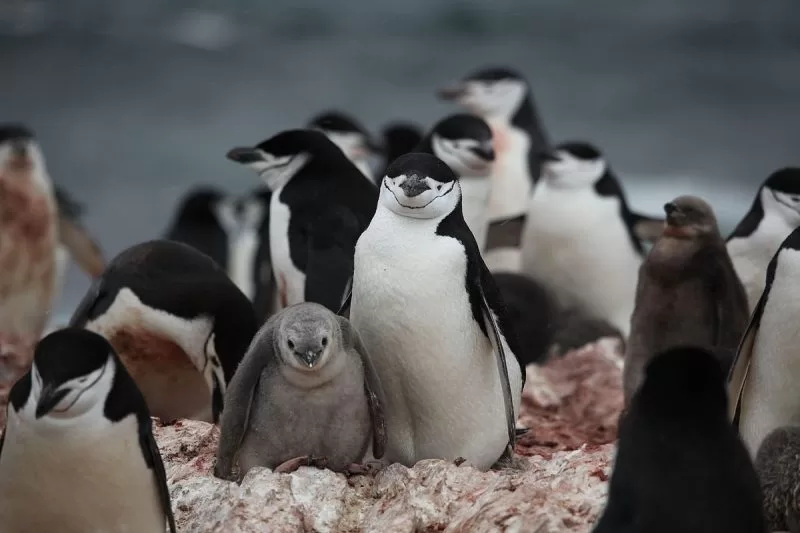
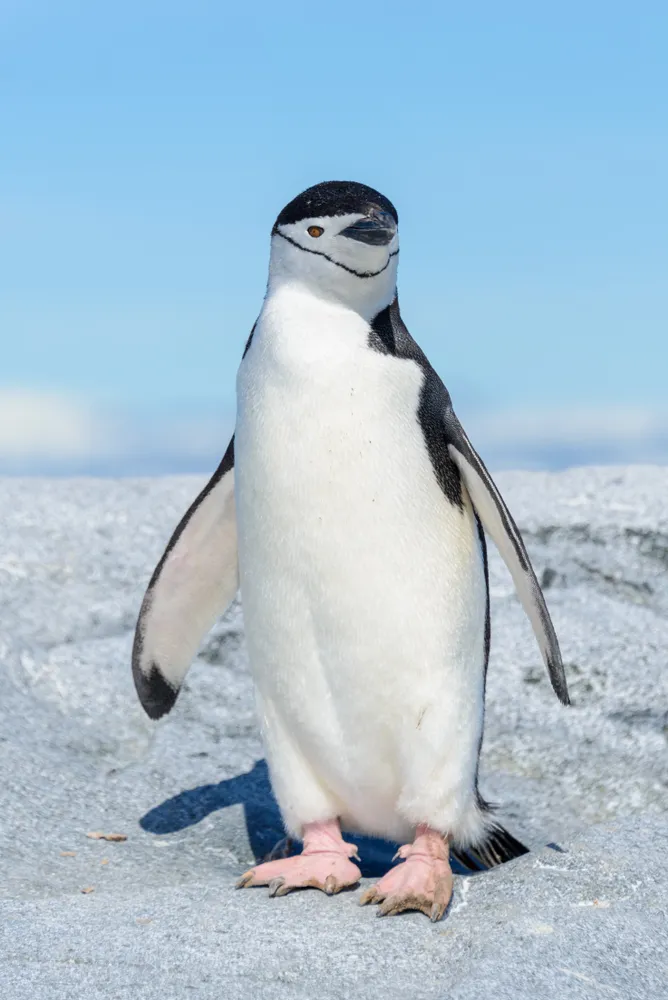
A Chinstrap penguin colony
They are among the noisiest and most aggressive penguins, and fights break out as males claim a spot. Their breeding is dramatic: the males arrive first and wait for the females, and if a partner has not appeared within about five days, a male may pair with another; if she then turns up, a fight may follow. Chinstraps are one of the most numerous penguins, at around 7.5 million.
5. Macaroni penguin
The macaroni is easily known by the yellow plumes above its eyes, its bright, spiky crests. The name comes from the 18th-century term “macaroni,” for a man who dressed flamboyantly. Macaronis are much like chinstraps in size, at around 28 inches and 12 pounds.
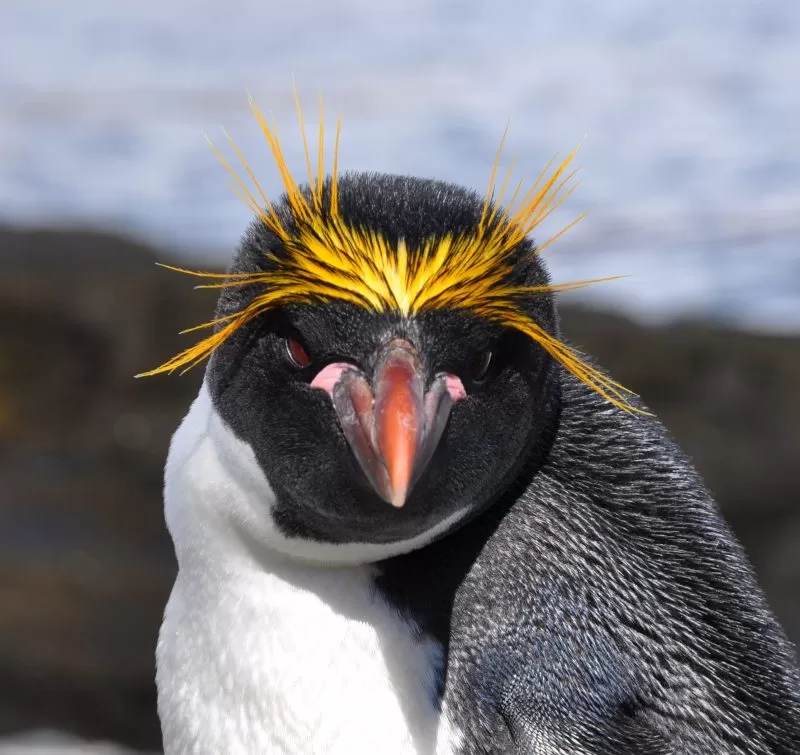
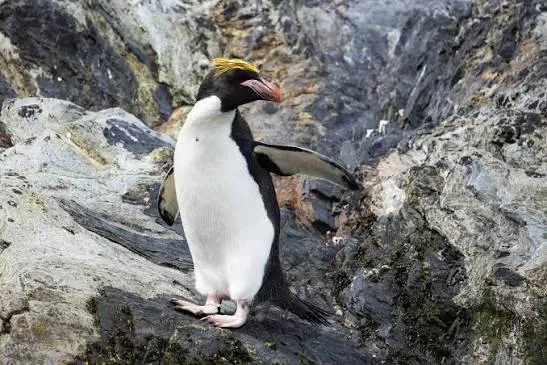
The eccentric Marconi penguin
They live near the Antarctic Convergence, forming huge colonies of hundreds or thousands on hillsides and rocky cliffs, but they do not stay in Antarctica year-round, wintering on warmer islands such as Heard Island and South Georgia. They arrive at South Georgia in October and lay about two weeks later. The female lays two eggs of different sizes, of which the smaller rarely hatches, and she does most of the hunting during incubation. The chicks are grown enough at about 10 weeks to leave and join the wider colony. With around 18 million, the macaroni is the most numerous penguin of all.
6. Rockhopper penguin
The rockhopper has a yellow eyebrow it uses to attract a mate; when it shakes its head quickly, the brow can look like a halo. It takes its name from the way it moves: preferring rocky ground, it cannot slide on its belly, so it hops from stone to stone.
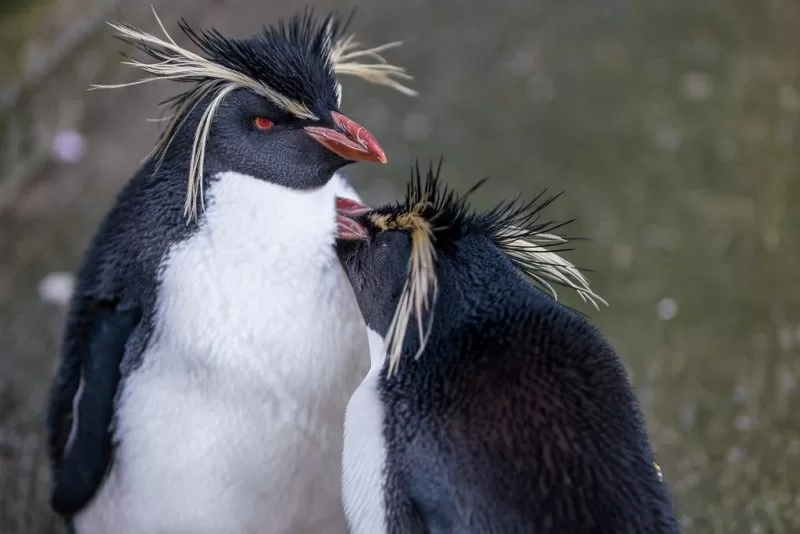
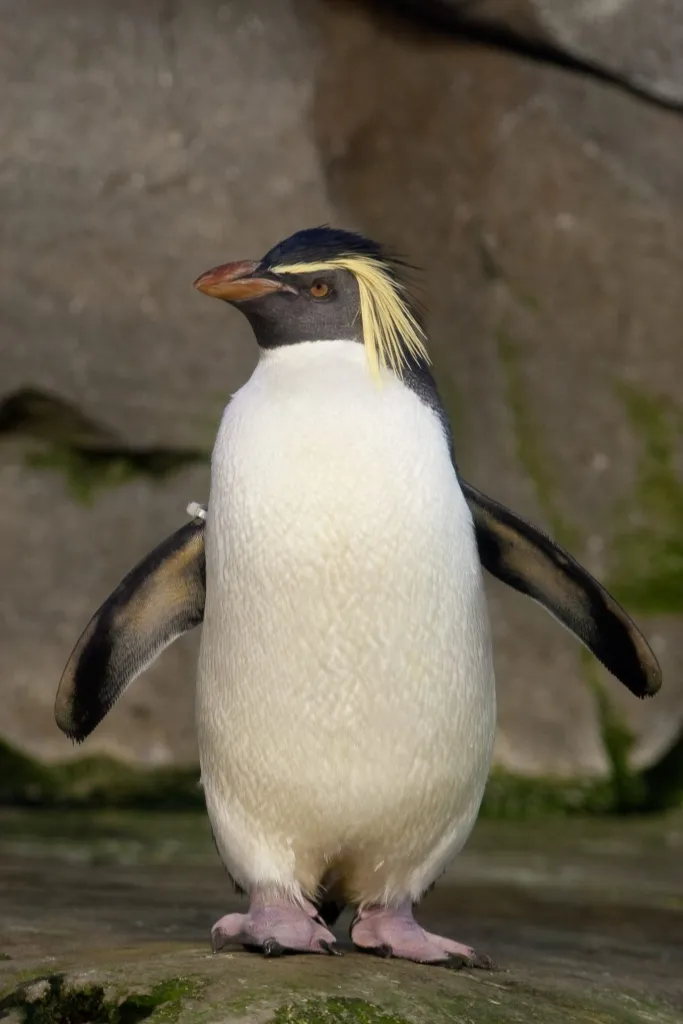
Northern Rockhopper penguins
There are three subspecies, the northern, southern and eastern rockhopper, and on an Antarctic voyage you mostly see the northern and southern. In the breeding season they gather in large, noisy colonies of hundreds or thousands, nesting in tall grass near the shore, and they return to the same site, nest and often the same mate each year. Their numbers, in the millions, are falling, and the northern rockhopper in particular is now endangered.
7. King penguin
After the emperor, the king is the second-largest penguin, and it looks much like the emperor, with colourful plumage on the head and neck, though its black is more a dark grey. Kings stand about 31 inches and weigh around 35 pounds when grown, living along the sub-Antarctic coasts and spending most of their time at sea.
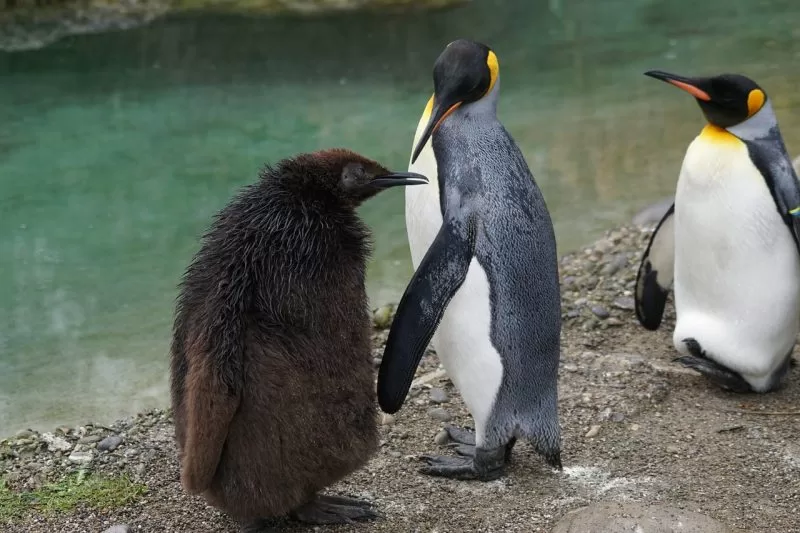
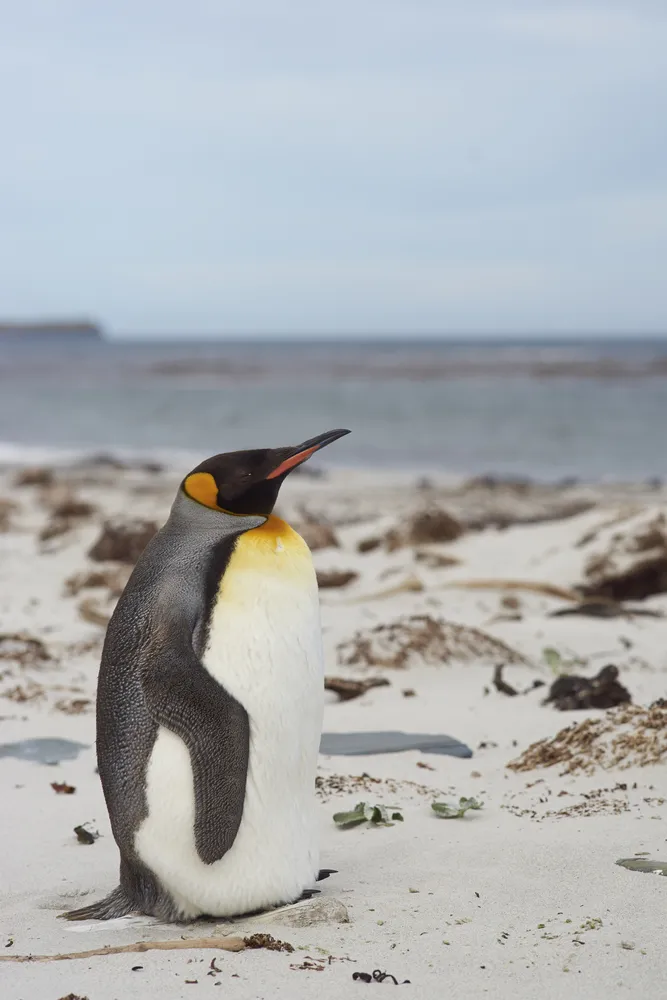
A King penguin with its chick
Scientists have found that king penguins nap in the afternoon, sleeping more deeply after their midday feed. Highly social, they gather in large colonies to breed, with an unusually long breeding cycle of about 14 months. They build no nest; instead the female lays a single greenish-white egg, which the parents carry on their feet for 50 to 60 days, swapping over so the free parent can feed. A king chick is often larger and fluffier than an adult. The population is around 2.23 million pairs.
Each of these Antarctic penguins has its own behaviour and way of breeding. Which of the seven interested you the most?
If you loved reading this story, then subscribe to our blog here (it will ask to verify your email) to get inspiring travel stories and trivia delivered to your email. Stories about wildlife trivia, cultural experiences, curated luxury hotel lists, underrated places to travel, polar journeys and much more.