Africa’s big cats are the animals most people hope to see on safari: the lion and the leopard among the Big Five, and the cheetah out on the plains. But the smaller cats are often forgotten.
These small, elusive cats are scattered across Africa, and because they are so rarely seen, researchers are still learning about them. They are every bit as interesting as the big cats, and most are under threat from habitat loss, illegal trade and hunting. Here are seven small cats found in Africa.
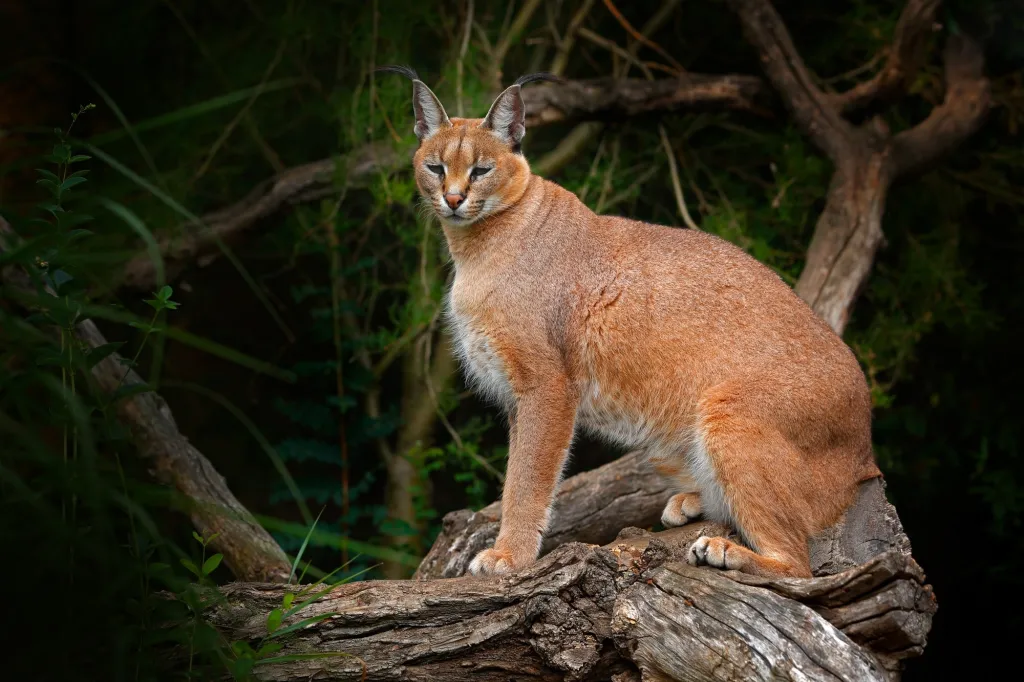
Caracal
The caracal is the largest of Africa’s small cats. Its Afrikaans name, rooikat, means “red cat.” It lives in dry woodland, semi-desert and savannah across sub-Saharan Africa, and is also found across the Middle East and the Indian subcontinent.
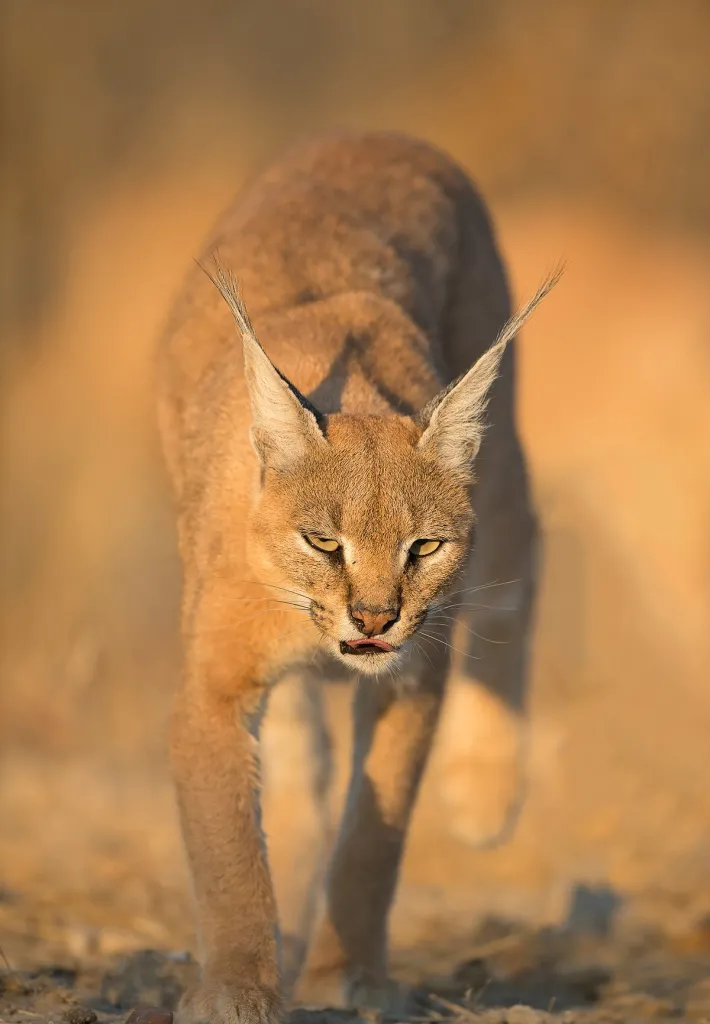
Caracal
It is often thought regal for its long black ear tufts, its most striking feature, and is one of the few cats with no stripes or spots, wearing instead a short, thick coat that ranges from pale reddish to brick red or sand. Powerfully built, at 11 to 20 kg, it can swim, climb trees and leap at least 3 metres to take birds in mid-air. It preys on rodents, birds and even small antelope, and is hard to spot, being mostly nocturnal.
Serval
The serval is a slender, long-legged cat, sometimes called the bush cat, about the size of a caracal. It favours habitats near water — riverine areas, long-grass savannah and open grassland — across sub-Saharan Africa, and is now rare in the far north.
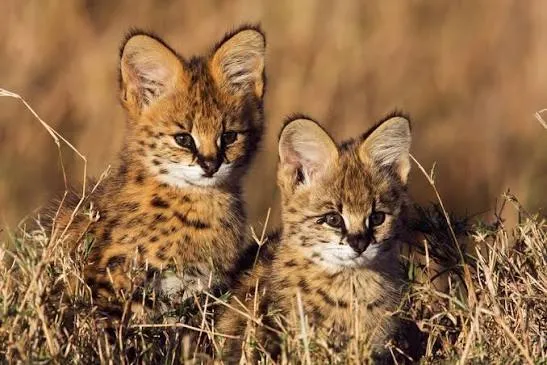
Serval kittens
Its spots give it a passing resemblance to a cheetah, though it is far smaller, at around 18 kg. Along with its stripes and spots, it has large, rounded ears that catch the faintest rustle in the grass, a short tail, and the longest legs relative to its body of any cat. It uses its hearing to hunt rodents, standing still to locate the sound before pouncing from over 2 metres. Active by day and night, it is relatively easy to see.
African wildcat
If you see an African wildcat in the wild, count yourself lucky, mostly because it looks so like a domestic cat. It is, in fact, the ancestor of the domestic cat, and so is easily overlooked. Sometimes called the desert cat, it is widespread across Africa, apart from the rainforest and the Sahara, and is also found in the Middle East.
It is a short-haired tabby with long legs and a thinner tail than a domestic cat, its coat ranging from light brown to grey depending on where it lives. It weighs about 2 to 6 kg and hunts small rodents, birds and reptiles, mostly at night. A pair of glowing eyes low to the ground on an evening drive is often a wildcat.
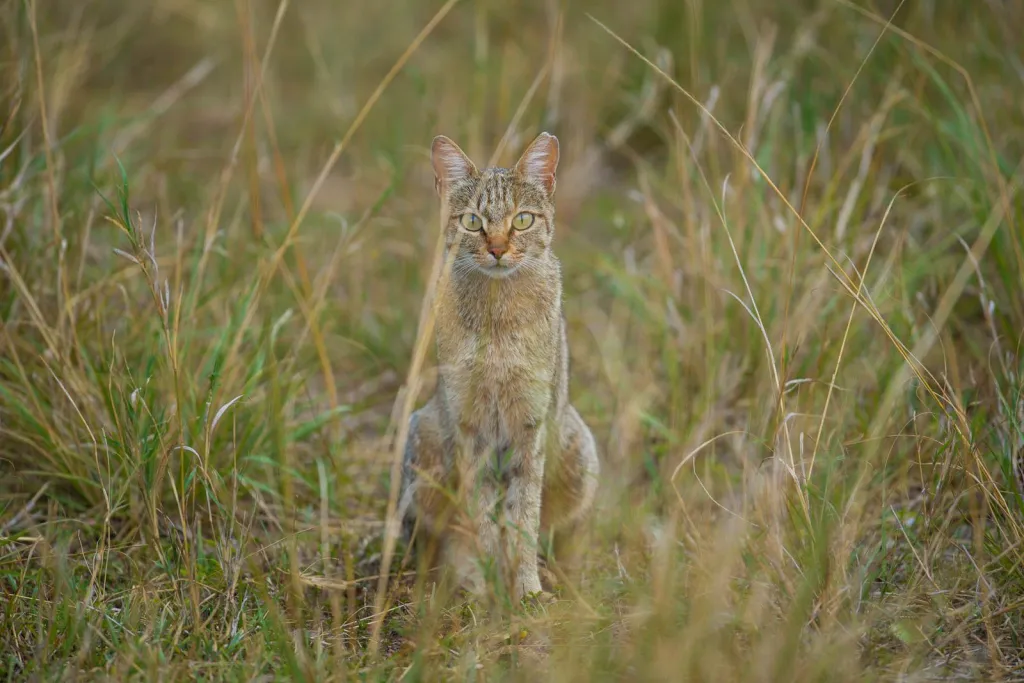
African wild cat
Though native to Africa, one of the biggest threats it faces is interbreeding with domestic cats, which dilutes its genetic integrity, so a pure-bred African wildcat is now rare.
African golden cat
Many people have never heard of the African golden cat, so secretive and elusive is it, and it is very hard to see in the wild. It lives in the rainforests of West and Central Africa.
A rare picture of the African Golden Cat
It has a short tail and a coat that ranges from reddish to grey, some cats spotted all over, others only on the belly and inner legs. Closely related to the serval and caracal, it is about twice the size of a domestic cat, and feeds on rodents and birds at dawn, dusk and night. Solitary, and threatened by deforestation and bushmeat hunting, it is listed as vulnerable by the IUCN.
Jungle cat
The jungle cat, also called the swamp or reed cat, despite its name avoids woodland and rainforest, preferring swamps, marshes and wetlands. It is widespread across South and South-East Asia and the Middle East, but in Africa it is found only in the wetter parts of Egypt, mostly around the Nile Delta.
It is about twice the size of a domestic cat, similar to the African wildcat but taller and larger, with long legs and pointed ears. Its short coat is plain, ranging from reddish and grey to sandy yellow, with pale stripes on the legs and a ring on the black-tipped tail. Kittens often have spots or stripes that fade as they grow. It hunts birds, hares, small rodents, reptiles and fish, and, being active by day, is more often seen.
Sand cat
The sand cat, also called the sand dune cat, is built for the extremes of the desert. It is found across South-West and Central Asia and North Africa, living in true desert and coping well with big swings in temperature and little water.
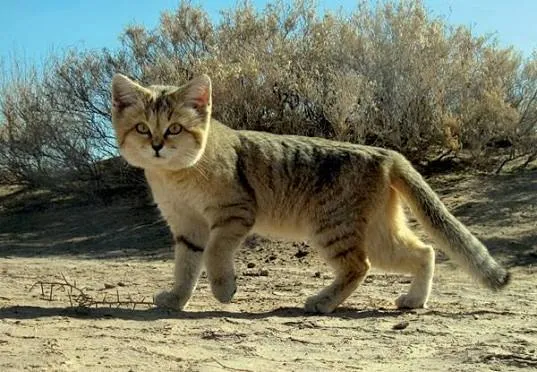
A sand cat looking right at the camera
It weighs up to about 3.4 kg, roughly the size of a small domestic cat, with short legs and a fairly long tail. Dense fur on its foot pads protects it from the burning sand and helps it walk on it, and its light-brown coat, with stripes on the legs, gives good camouflage. It feeds mainly on hares, insects, small desert rodents and birds, rarely drinking, as it gets its moisture from prey. Shy and secretive, it is seldom seen.
Black-footed cat
The black-footed cat is the smallest cat in Africa, and the smallest spotted cat in the world. It lives in the south-west of southern Africa, in grassland, savannah and semi-desert.
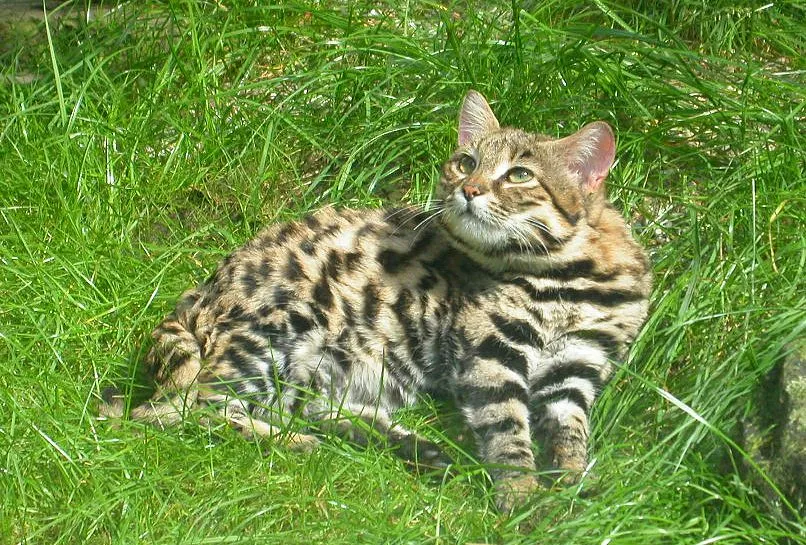
The little Black-footed cat
These tiny cats weigh at most about 2.5 kg. They have a stocky build, a spotted coat, large eyes and round ears, and, as the name says, black undersides to their feet. The face looks much like a domestic cat’s. For all their size, they are among the most successful hunters of any cat, taking rodents, rabbits and birds, and, like the sand cat, getting moisture from their food. The black-footed cat is listed as vulnerable by the IUCN, and being strictly nocturnal and solitary, it is rarely seen by people.
The small cats of Africa matter just as much as the big ones. On your next safari, keep an eye out for a few of them.
If you loved reading this story, then subscribe to our blog here (it will ask to verify your email) to get inspiring travel stories and trivia delivered to your email. Stories about wildlife trivia, cultural experiences, curated luxury hotel lists, underrated places to travel, polar journeys and much more.