India has one of the richest cat faunas anywhere, with around 15 wild cat species. When people picture Indian cats they think of the tiger, the leopard and the rare Asiatic lion, but the country is also home to a range of small, elusive cats that are just as important to their ecosystems.
Big cats and small cats sit in different subfamilies: the big cats in the Pantherinae, the small cats in the Felinae. The small cats are hard to study and little known, but they are widespread across the country. Here are six of them.
1. Caracal
The caracal lives in the semi-arid parts of Gujarat, Rajasthan, Madhya Pradesh, Haryana and Punjab. It looks a little like a lynx, with a short, sleek coat and long tufted ears that may help it locate prey. An adult weighs around 12 kg and can leap some three metres to take birds out of the air.
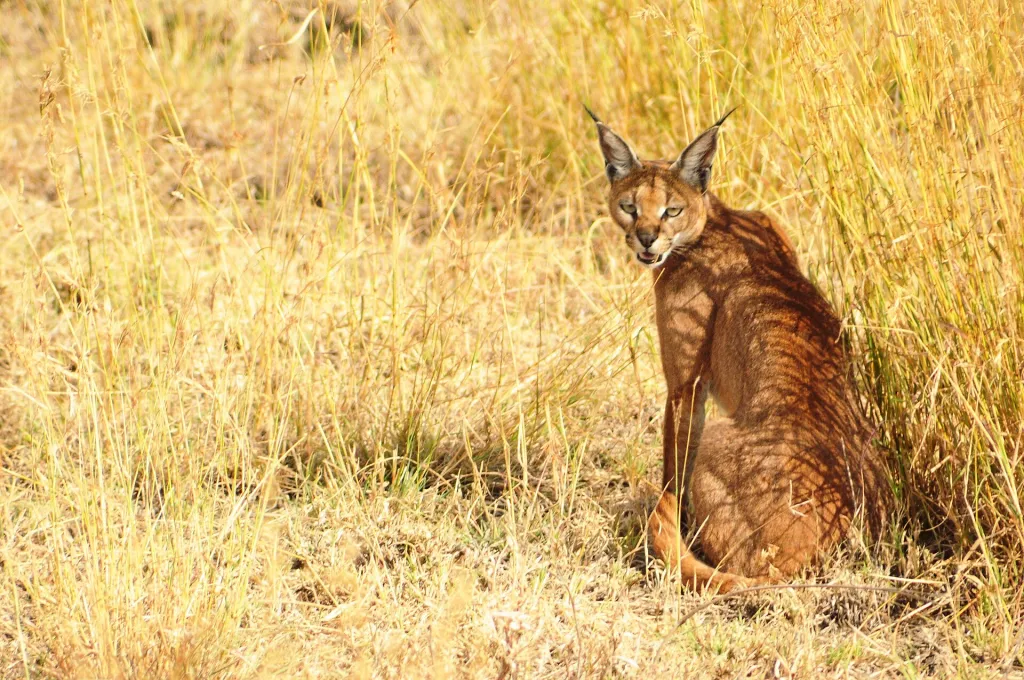
A caracal with its long tufted ears
It is fast and agile, hunts mainly at night, and takes hares, rodents, small antelope and birds. Caracals breed year-round.
- IUCN status: least concern
- Where to see one: rare sightings in central India and Ranthambhore, Rajasthan.
2. Asian golden cat
The Asian golden cat, like a small puma, has a golden coat and black-and-white face markings. It lives in the subtropical forests of north-east India, in Arunachal Pradesh, Assam and Sikkim.
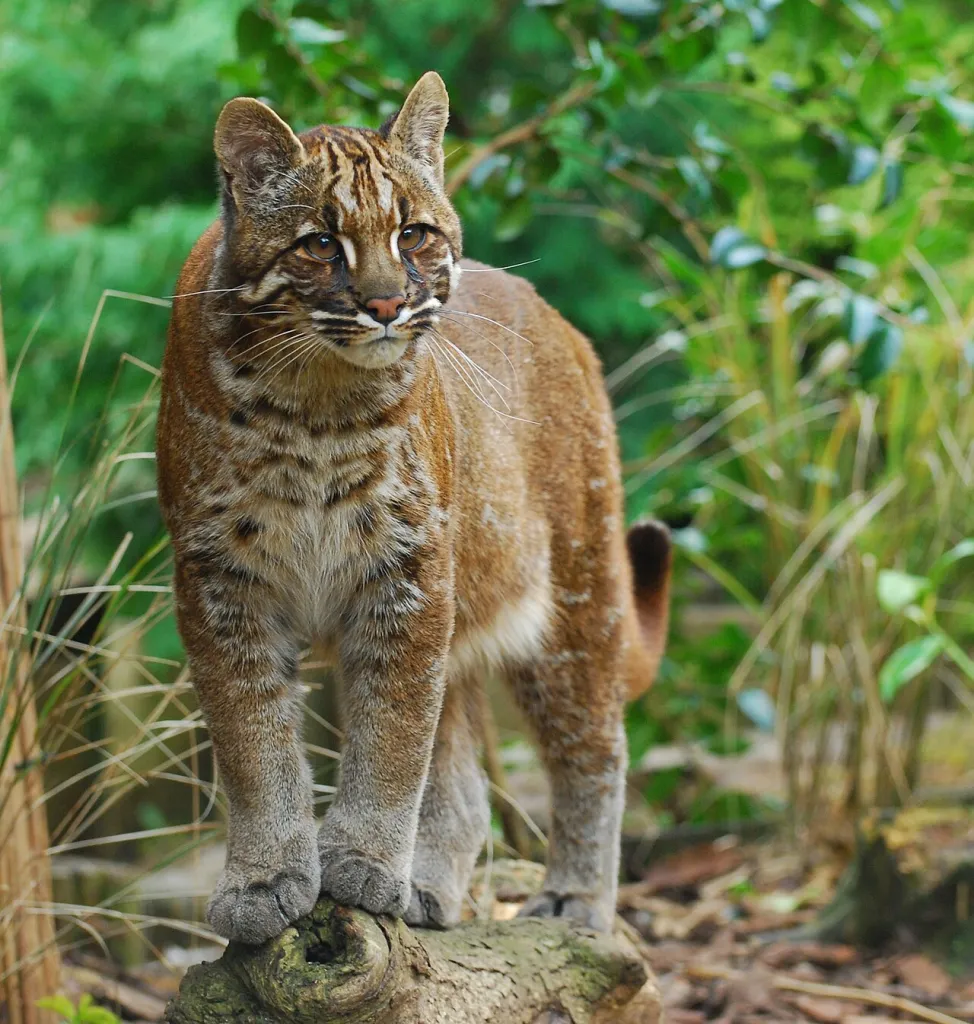
An Asian Golden Cat in the wild
Its facial markings earn it the nickname “fire cat”, and it is sometimes mistaken for a young leopard. Camera traps show its coat also comes in cinnamon, grey and melanistic forms. It weighs 8 to 15 kg and can take prey as large as goats and buffalo calves. It is so hard to observe that little is known of its breeding.
- IUCN status: near threatened
- Where to see one: possible in Manas National Park, Assam, and the Dibang Valley, Arunachal Pradesh.
3. Asiatic wildcat
The Asiatic wildcat is easily mistaken for a domestic cat, and is in fact a close wild relative of it. It has a sandy coat with white underparts and black spots, and markings on its cheeks and forelegs.
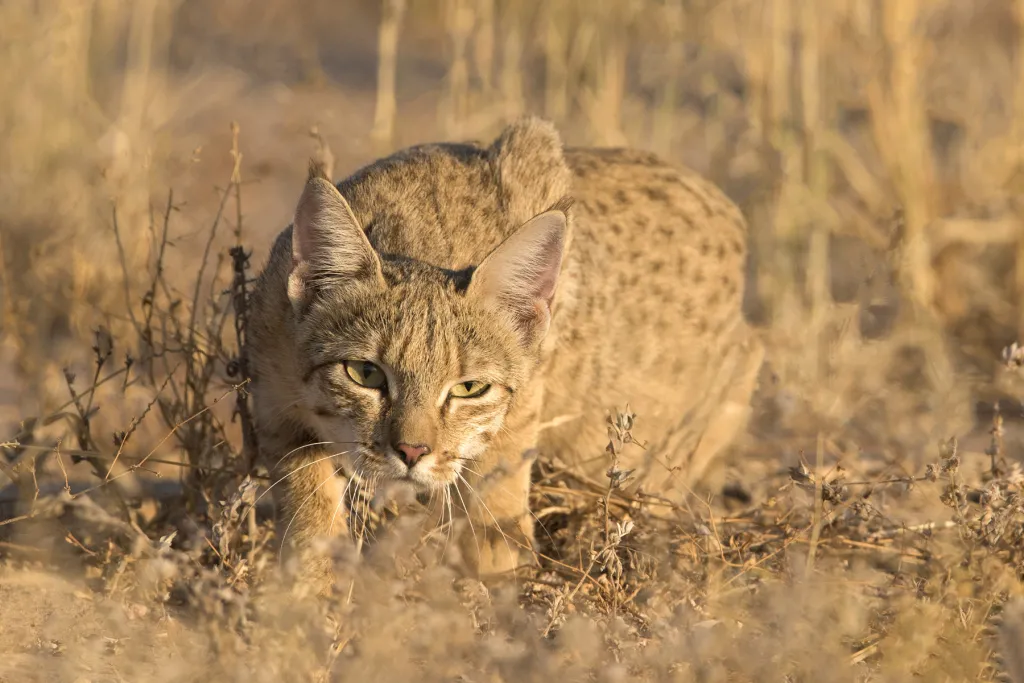
An Asiatic wildcat looking straight in the camera
It eats rodents, birds, reptiles, eggs and insects, and its furred feet help it cross hot, rocky ground. A desert animal and a good digger, it makes burrows and digs prey out of the ground. It lives in the dry parts of Gujarat, Madhya Pradesh and Maharashtra, and sometimes interbreeds with domestic cats.
- IUCN status: least concern
- Where to see one: the Thar desert and Desert National Park in Rajasthan.
4. Jungle cat
The jungle cat is one of India’s most widespread small cats, with four subspecies. It is slender, with a plain coat ranging from sandy to reddish, a ringed tail and faint leg stripes.
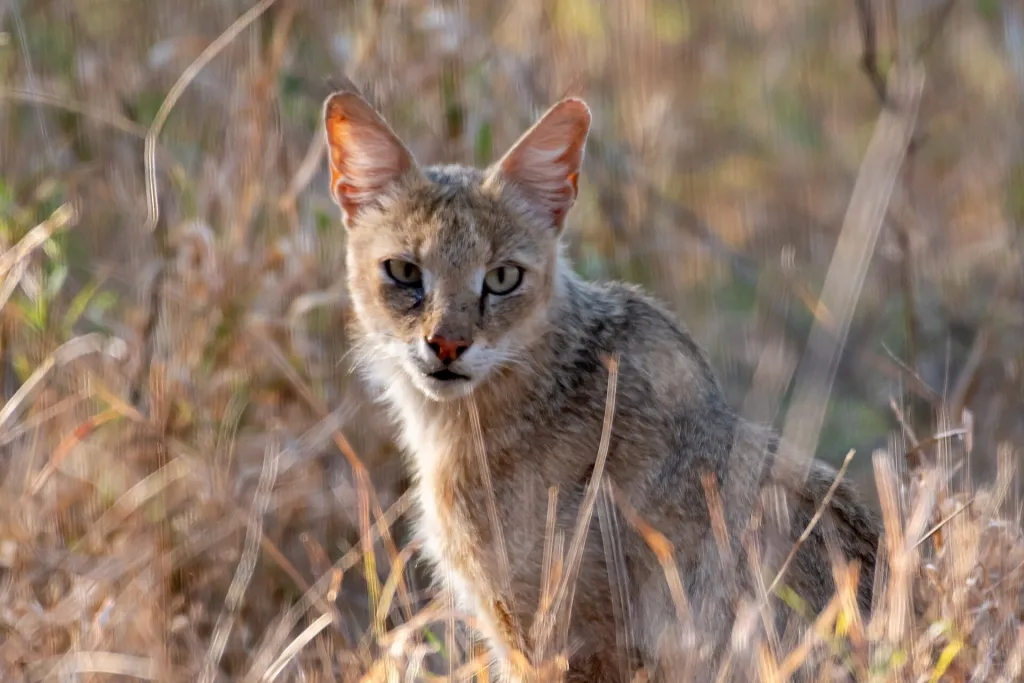
The common jungle cat of India
It favours wetlands, swamps and floodplains with dense cover. Unusually for a wild cat it is active by day, often morning and afternoon. It swims well, hunting fish or escaping danger in water, and takes snakes, lizards, rodents and frogs. It often shelters in the burrows of porcupines, foxes and badgers. Mating is usually January to March.
- IUCN status: least concern
- Where to see one: Ranthambhore, Satpura and Pench.
5. Rusty-spotted cat
The rusty-spotted cat is the smallest cat in the world, weighing about 1.6 kg, roughly the size of a small domestic cat. It has rusty spots on its head, back and sides.
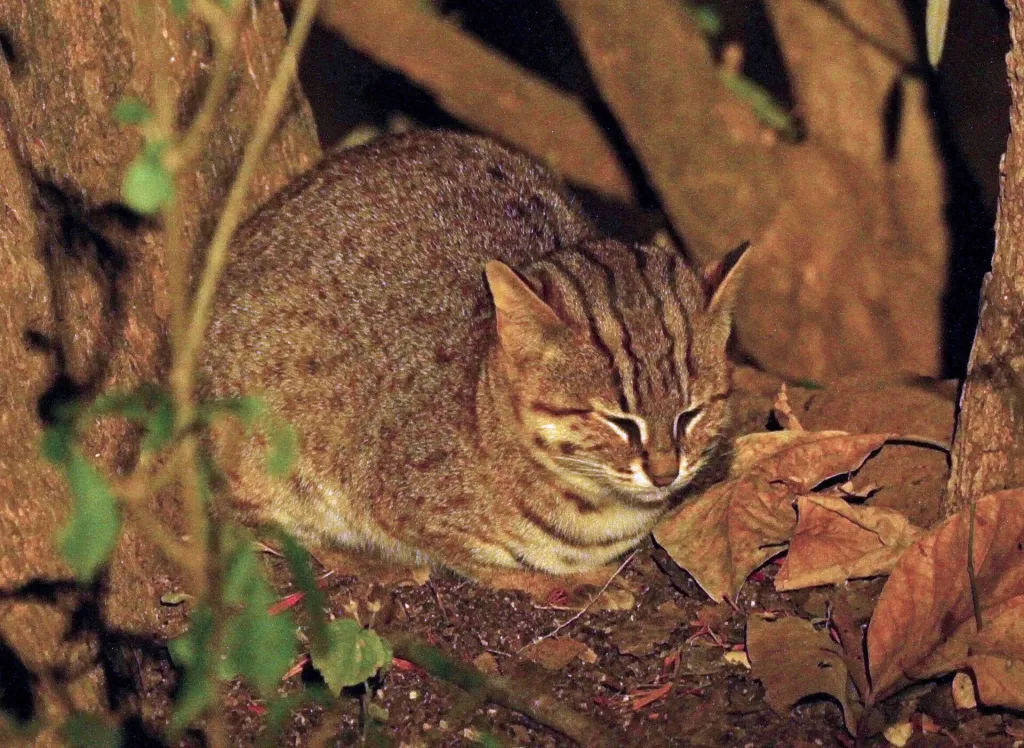
The smallest of the wildcats, rusty-spotted cat
Very elusive, it lives in rocky ground, open forest and scrub, sometimes near people, and is found in India, Sri Lanka and Nepal. Little is known of its habits, but camera traps show it is mainly nocturnal. It hunts rodents, birds, lizards, frogs and insects, and habitat loss is its main threat.
- IUCN status: near threatened
- Where to see one: Sariska, Gir and Tadoba.
6. Leopard cat
The leopard cat looks like a miniature leopard, but with solid black spots rather than rosettes. It weighs 3 to 4 kg.
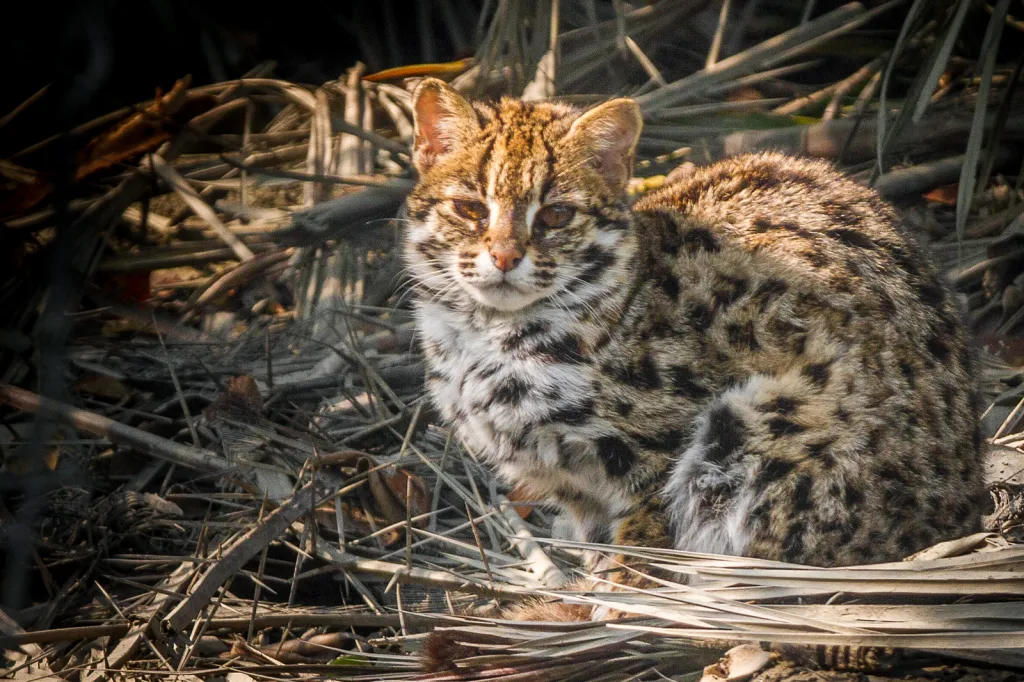
The miniature leopard cat
After the jungle cat it is India’s most common small cat, living in forest, scrub, grassland and farmland. A skilled climber, it hunts lizards, hares, amphibians and tree shrews, and is found in the Terai, the Himalayan foothills and parts of the Western Ghats. Its breeding season varies with climate.
- IUCN status: least concern
- Where to see one: Bhadra Tiger Reserve and Biligiri Rangaswamy (BR Hills).
These small cats are as fascinating as their famous relatives, and under just as much pressure. Habitat loss, poaching and illegal trade are all pushing their numbers down.
If you loved reading this story, then subscribe to our blog here (it will ask to verify your email) to get inspiring travel stories and trivia delivered to your email. Stories about wildlife trivia, cultural experiences, curated luxury hotel lists, underrated places to travel, polar journeys and much more.