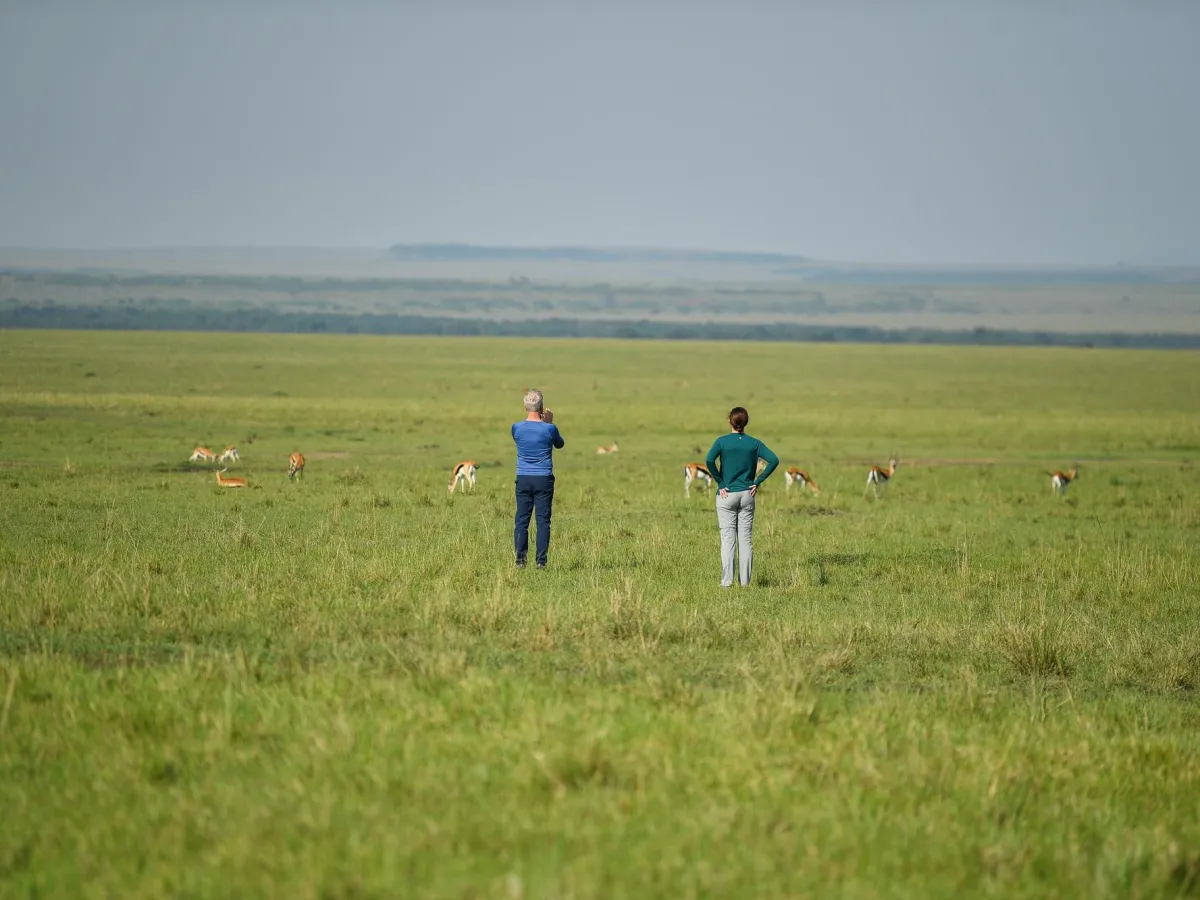
A trip to Kenya is not complete without a visit to the Masai Mara. In the south-west of the country, the Masai Mara National Reserve is full of wildlife and open plains.
The reserve is best known for the great wildebeest migration and for its big cats. Leopards, lions and cheetahs are all seen regularly, and cheetahs, well suited to the Mara’s flat plains, are often easy to spot.
The Mara is also known for its five cheetah brothers, who hunt together. What is so special about them, and why are they such a draw?
Before their story, a look at the cheetahs of the reserve.
Cheetahs of Masai Mara
Among the lions and leopards of the Mara lives the world’s fastest land animal. Cheetahs are not as heavily built as leopards or as imposing as lions, but they are fast, clocked at up to about 100 km/h. The Masai Mara is one of the best places in the world to see them in the wild.
They are often perched on a termite mound, a fallen tree, or even a vehicle bonnet, scanning the savannah for prey. Their hunting method is their own: they stalk close, pick their moment, then sprint after the prey and bring it down, seizing it by the throat to suffocate it.
As sprinters, cheetahs cannot keep up the pace for long. If they have not caught their prey within a few hundred metres, they usually give up the chase.
Cheetahs eat only fresh meat, so if a hyena or vulture moves in on a kill, they back off and look for other prey.
Cheetahs and coalitions
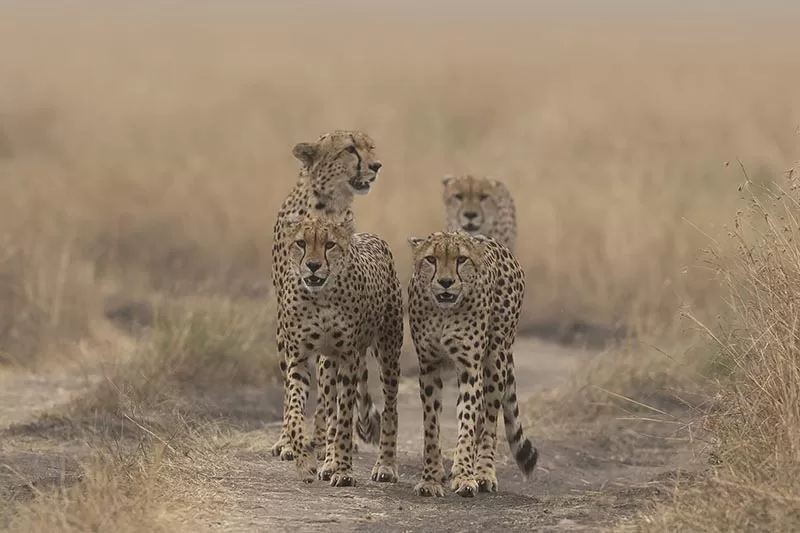
Cheetahs usually hunt alone, unless they are in a group. Such groups, called coalitions, are normally formed by brothers from the same litter. They rarely team up with unrelated cheetahs, and when they do it is usually because a male has grown up without brothers.
Males hunt in groups to take down larger prey. Females, by contrast, hunt alone, except when raising cubs.
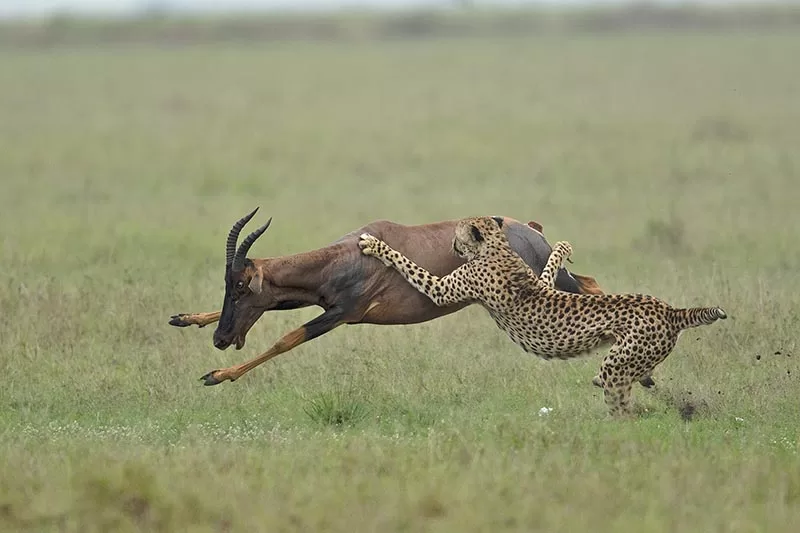
A female leaves her cubs at around 18 to 20 months old, though the siblings stay together for months more. Once they reach maturity, the males and females go their separate ways.
A male may then become a solitary hunter or join with other males in a coalition.
The five brothers of Masai Mara
So what makes the five brothers of the Mara so famous?
The group of five young males was first seen in 2016 in the Masai Mara. At the time it was noticed that they fell into two groups: according to Africa Geographic, two were larger and the other three smaller.
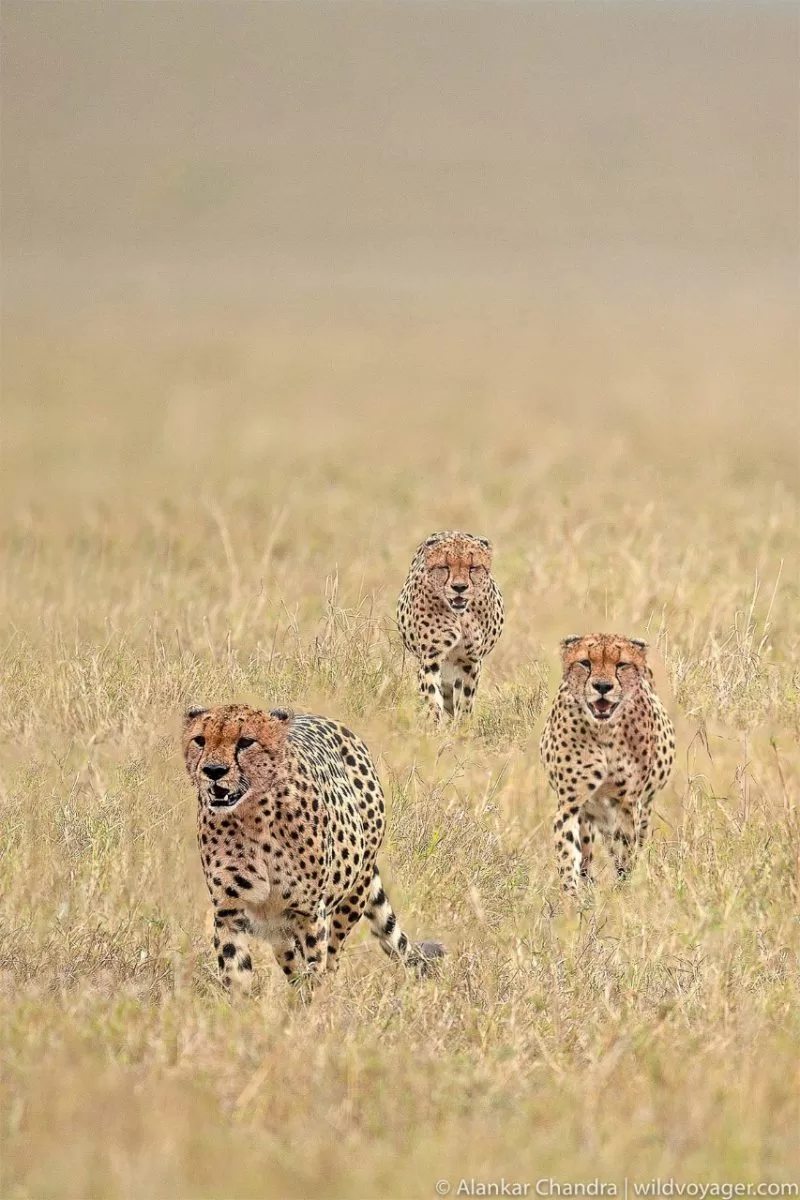
Three of the five cheetah brothers roaming the Mara reserve
The coalition was named Tano Bora, meaning “the magnificent five” in the local Maa language. Each male was also given a name:
- Olpadan — the “great shooter” in Maa
- Olarishani — the “judge” in Maa
- Leboo — “one who is always within the group” in Maa
- Winda — “hunter” in Kiswahili
- Olonyok — “the one who works hard for better results” in Maa
The group drew attention not just in Africa but worldwide. A coalition brings real advantages: a bigger territory, better access to habitat and prey, shared patrol and lookout duties, and a stronger defence against rivals.
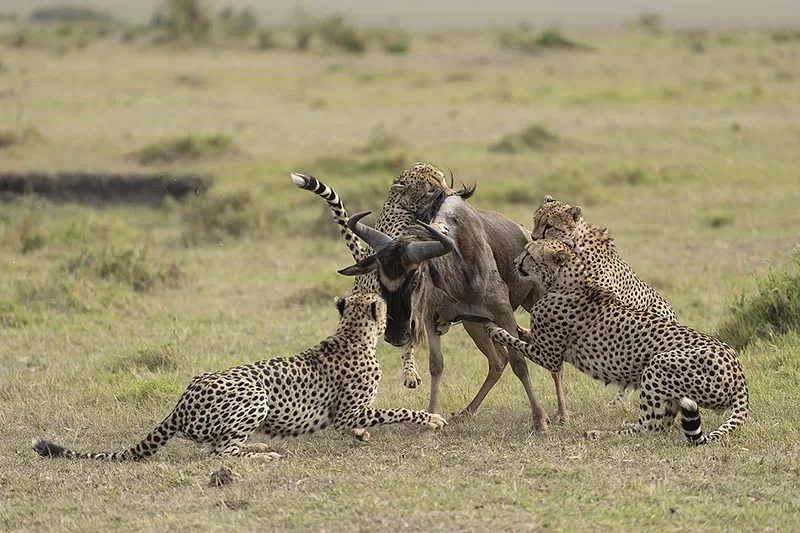
The five brothers were no exception.
The leader
Within a few months of leaving his sister, Olpadan grew into the dominant male of Tano Bora. He often led the group and proved an excellent hunter.
By mid-2017, Olarishani had become co-leader, and the two took turns deciding where to go and how to approach prey.
Olpadan’s reign did not last. He was badly injured by two of his own coalition mates and fell from the top rank to the bottom, while Olarishani and Winda took over as the dominant males.
By mid-2019, Olpadan was trying to join another coalition. He attempted to team up with a younger pair of cheetahs, but it came to nothing.
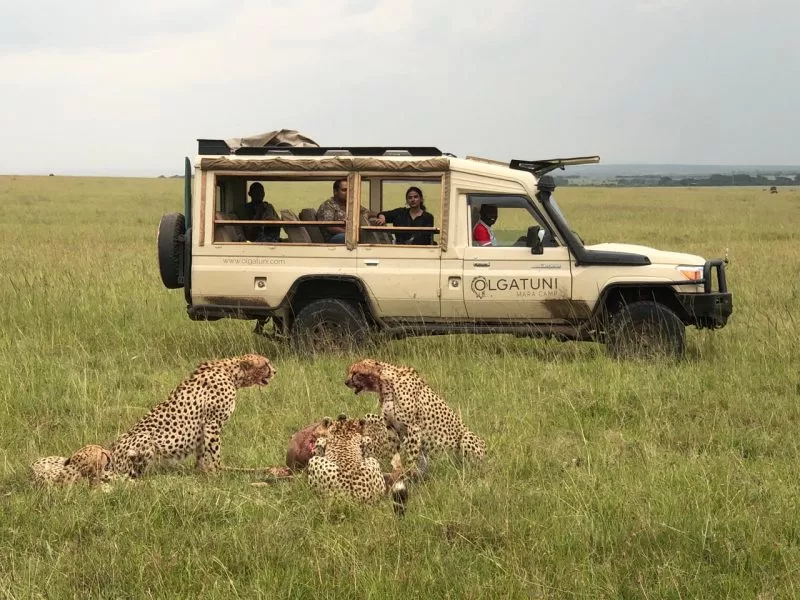
The cheetah brothers preying on a topi
The next day he gave up the attempt when his three coalition mates, Leboo, Winda and Olonyok, reappeared. They accepted him back, and the group set off to hunt together again.
Olpadan was the last to rejoin all the group’s activities. Interestingly, Olonyok, whom Olpadan had often bullied as leader, was the one who put up with him and even groomed him.
A remarkable coalition
At the time of writing, the Tano Bora coalition had been together about four years, its members around five years old and still moving as a group, their relationships shifting over time.
Seeing the famous five in the Masai Mara is a bit like spotting celebrities. On your next visit, try not to miss the Tano Bora brothers.
If you loved reading this story, then subscribe to our blog here (it will ask to verify your email) to get inspiring travel stories and trivia delivered to your email. Stories about wildlife trivia, cultural experiences, curated luxury hotel lists, underrated places to travel, polar journeys and much more.