Russia’s Siberia is home to about 500 Siberian tigers, also called Amur tigers. The Sikhote-Alin Biosphere Reserve, a protected area of some 4,000 square kilometres, holds around 30 of them. With numbers this low and conservation laws this strict, tracking these animals is hard, though rewarding. In truth you are unlikely to come face to face with a Siberian tiger; the reward is in the tracking itself, in finding their trails and signs. Siberian tigers stand more than a metre at the shoulder, run to about 3 metres in length and weigh 200 to 300 kg. They can leap around six metres in a single bound and cover 100 metres in a few seconds. They rely on surprise, creeping up behind their prey. With sharp claws and powerful jaws, they are formidable predators, so tracking them calls for real caution.
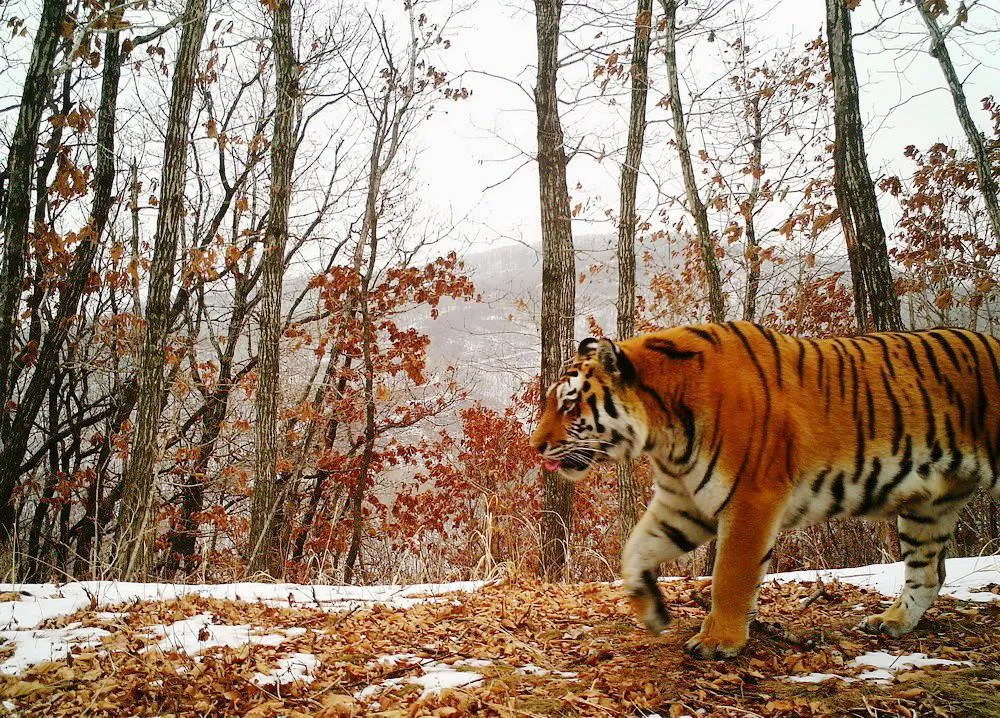
Camera trap of Siberian Tiger
Amur tigers are endangered and sit at the centre of some of the world’s strictest conservation efforts. Through the mid-20th century they were hunted relentlessly for their fur and body parts, which were shipped to China for use in traditional medicine. Deforestation and industrialisation have also destroyed much of their habitat. In recent years, though, tough anti-poaching laws have banned hunting. The Siberian Tiger Project uses radio-tracking to study their diet, movements, social structure, breeding, mortality and relations with other species, including people. With teams working on research and conservation, the population has begun to recover.
Tracking
Various tours track these tigers through the frozen forests of Siberia. Temperatures fall well below zero, and with poor visibility and rough terrain, the tracking is demanding. The reserve where the tigers live is remote, with small huts for basic accommodation. Local guides and experts go with you through the forest, and the best way to travel this country is by snowmobile. On a 10 to 12 day trip, your chances of actually seeing a Siberian tiger are slim. But travelling to this remote land, following the pugmarks of the most elusive of tigers and hearing its stories from local people is an experience in itself. And if you are one of the lucky few to spot one, you join a small club indeed. The surest way to record them is to set camera traps and wait for them to pass.
Along the way you lay carefully placed camera traps with night vision. Tigers move mostly at night, so you need motion-triggered cameras. A tiger typically circuits its home range about once every ten days, so placing the traps well, or using an observation post in the same area, improves your odds. You can also visit the rehabilitation reserve, where sick and injured tigers are cared for and cubs are raised.
The forested slopes are home to many other animals too: musk deer, Siberian roe deer, red deer, sika deer, badgers, foxes, otters and raccoon dogs. You are likely to meet one of these while looking for the tiger. Beyond wildlife, you can visit local villages and the huts of hunters and fishermen, whose hospitality gives you a real sense of their lives.
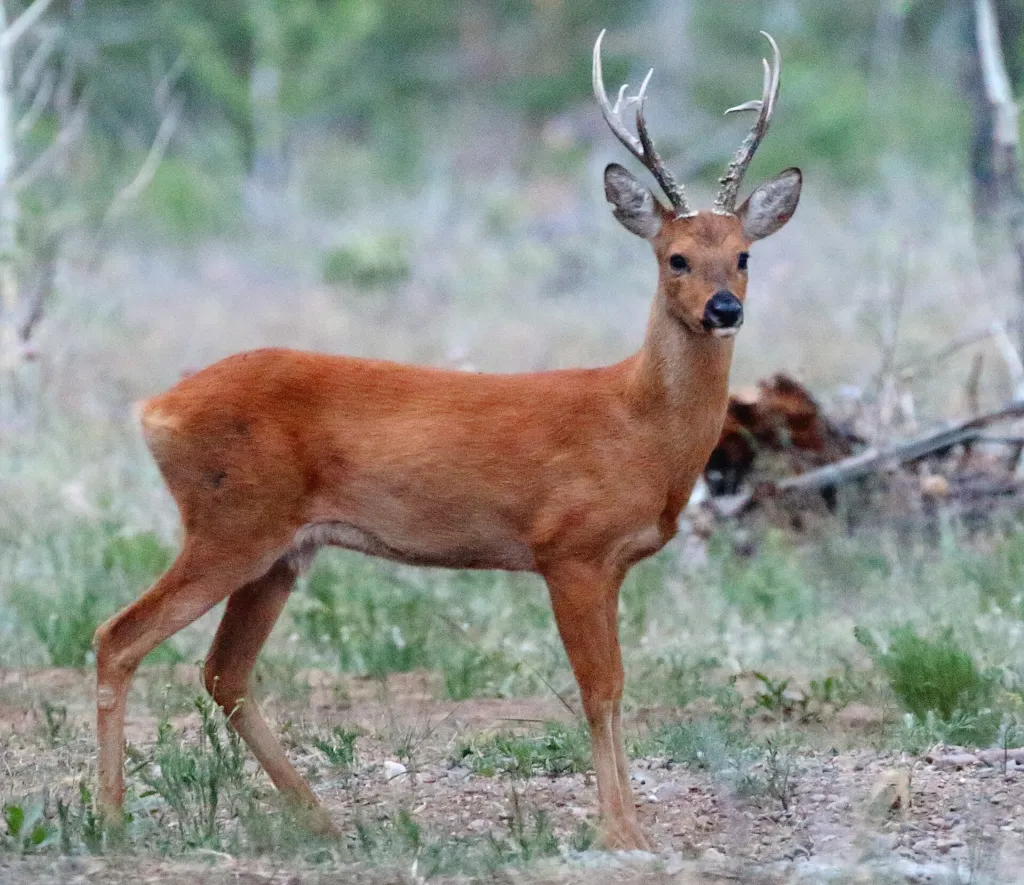
Siberian roe deer
If you loved reading this story, then subscribe to our blog here (it will ask to verify your email) to get inspiring travel stories and trivia delivered to your email. Stories about wildlife trivia, cultural experiences, curated luxury hotel lists, underrated places to travel, polar journeys and much more.