If you are planning a honeymoon and the usual shortlist leaves you cold, consider the Masai Mara. Kenya’s best-known reserve is built for the two things a honeymoon actually needs: time alone, and something worth remembering. Game at close range, dinner under open sky, and a camp where you may not see another guest all day.
Here is why it works.
Wildlife you will not have to look hard for
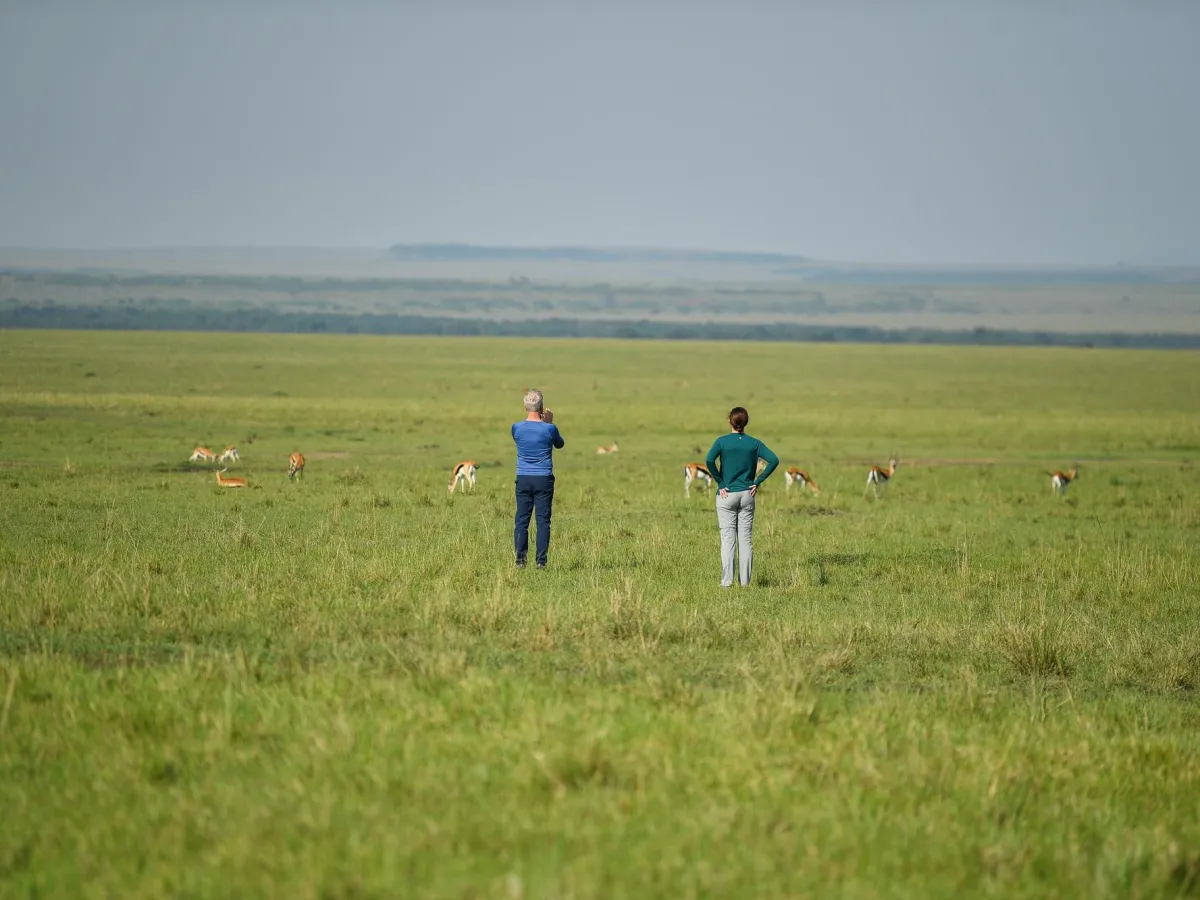
The Mara holds around 95 species of mammal, including lion, leopard, elephant, black rhino and buffalo. Add the smaller cats, the antelope, hippo and giraffe, and there is rarely a quiet drive. On a private vehicle you set the pace — you can sit with one leopard for an hour rather than moving on because someone else is bored.

Between roughly July and October, the wildebeest migration reaches the Mara. More than a million wildebeest move north with zebra and gazelle, followed the whole way by predators. The Mara River crossings are the part everyone comes for: crocodile in the water, a bank too steep to climb, and no way to know in advance when a herd will go. Nobody can promise you a crossing. What we can do is put you in the right place at the right time of year and tell you honestly what the odds are.
Landscape that does the work for you
The Mara is open savannah broken by riverine forest, rolling grassland and the Oloololo escarpment. It photographs well at almost any hour, and the light in the half hour after sunrise is the reason photographers keep coming back. If you want photographs of the two of you that do not look like everyone else’s, this is the backdrop.

Where you stay
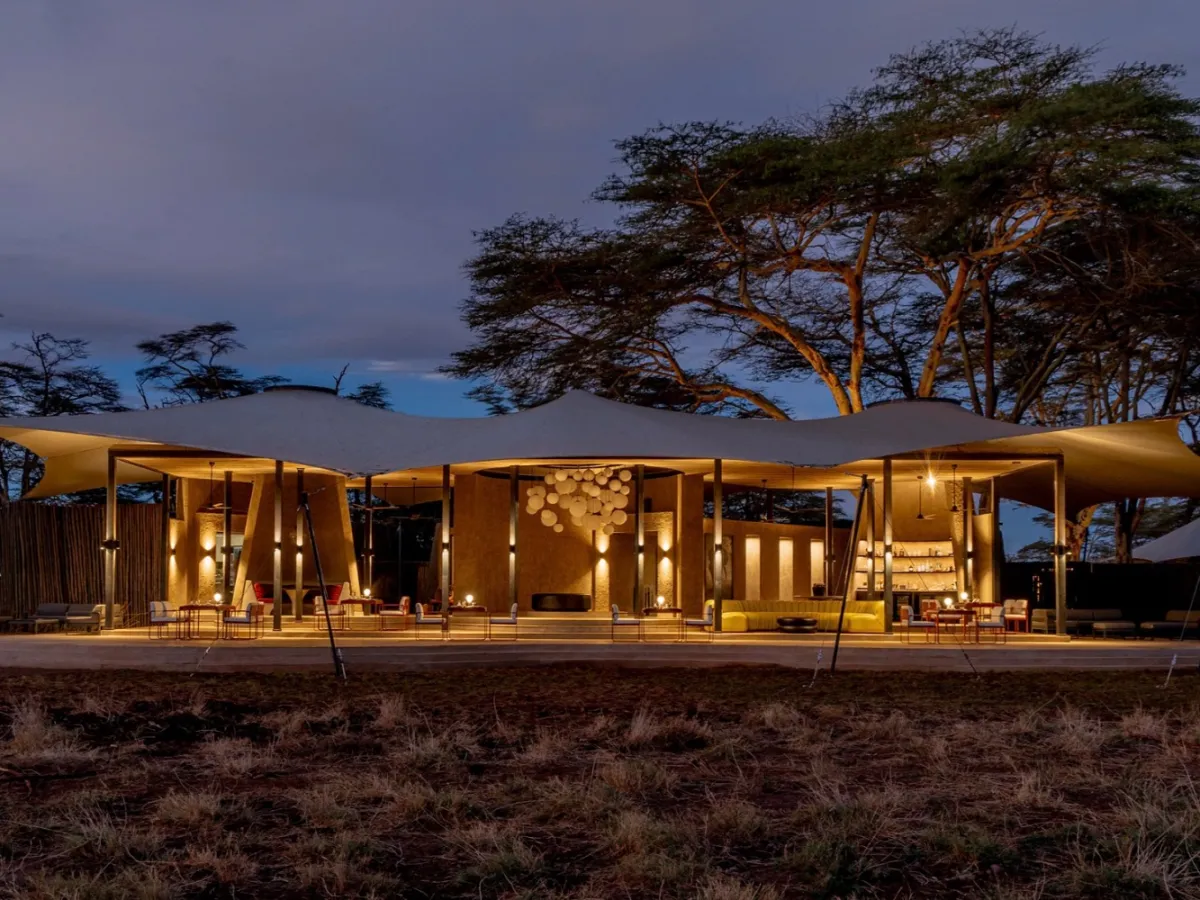
Accommodation runs from small tented camps to larger lodges and private villas. The camps worth booking are the ones built with distance between the tents — a private veranda, a plunge pool, and no sightline to your neighbour. Several will lay on a butler, a spa treatment in your tent, or a private vehicle for the length of your stay. Ask specifically about tent spacing and sole-use options; the difference between camps is bigger than the brochures suggest.

What else there is to do
Game drives are the backbone, but they are not the whole trip. Stay in one of the private conservancies bordering the reserve and you can add night drives and walking safaris, neither of which is permitted inside the main reserve. A night drive puts you with the animals that are invisible by day. A walk puts you on the ground, which changes how big everything feels.
Balloon flights lift off before first light and drift over the plains at grazing height. It is the one way to see the shape of the ecosystem rather than just its inhabitants.
Then there is the eating. Bush breakfasts after a long morning drive, lunches cooked in front of you, sundowners on a rise while the light goes. A candlelit dinner in the open, with the camp staff hanging lanterns in the thorn trees, is the meal most couples describe afterwards.

Meeting the Maasai
The Mara takes its name from the Maasai, who still live on and around the reserve. A visit to a manyatta, done properly and not as a staged photo stop, is worth the afternoon. Ask your camp to arrange it through a community they actually work with.
You may be invited to join the adumu, the jumping dance performed to a chanted rhythm rather than drums. There is usually the chance to try throwing a spear, to sit with the elders while they talk, or to watch beadwork being made.
When to go
Every month in the Mara has something. What changes is the crowd and the price.
July to October is the dry season: short grass, easy visibility, comfortable weather, and the best odds on the migration. It is also the busiest, and rates are at their highest.
November to March is warmer and greener, with short rains, excellent birding, and cats with young cubs. Camps are quieter and rates are lower. For a honeymoon that is not built around the crossings, it is often the better trip.
April and May bring the long rains. Fewest vehicles, lowest rates, and the landscape at its greenest. Game viewing stays strong; the roads get harder.
Whichever season you pick, book through an operator who knows the individual camps rather than a list of them. On a honeymoon, the difference between a good camp and the right one is the whole trip.