Desert wildlife is a study in how species survive in harsh conditions. Part of the Thar Desert ecosystem, the Desert National Park near Jaisalmer is a good example of just how much life the desert holds.
People often assume the camel is about all you will find in a desert. In fact, the Desert National Park is home to a wide range of animals and birds. The Great Indian bustard, an endangered species found almost only in India, holds on here in one of its last strongholds.
At more than 3,000 square kilometres, the park is one of the largest in India. Its fragile ecosystem has adapted well to the terrain and climate of the desert.
About 55 km from Jaisalmer, a city known for its history, architecture and culture, the Desert National Park is a good destination for nature and wildlife lovers, and especially for birders. It records around 115 bird species, including migratory birds.
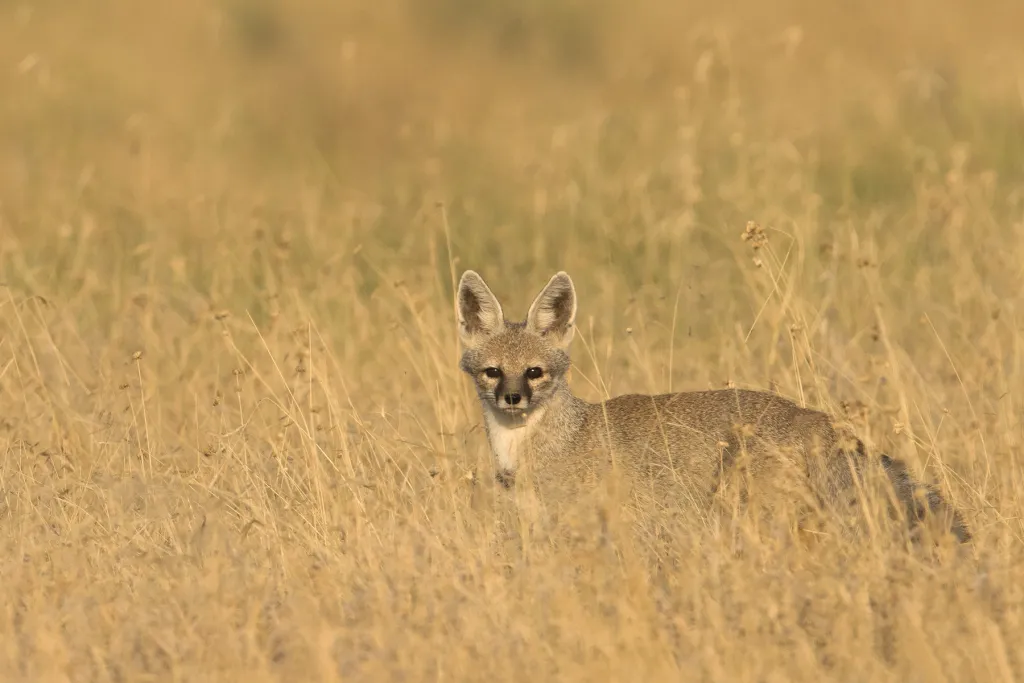
Indian Fox
Desert terrain
Much of the park is covered by sand dunes and the hard salt beds of dried-out lakes. The western part is mainly sandy, while gravel and rock make up much of the rest, with sparse, scattered vegetation and thorny scrub. With about 60 per cent of the area classed as semi-arid desert, it is no surprise that most animal and bird sightings happen around the waterholes. The waterhole at Sudasari is one of the best places to see wildlife in the park.
The wildlife
The Desert National Park is rich in flora and fauna and an important area for biodiversity.
Mammals:
Desert-adapted mammals here include blackbuck, desert fox, Bengal fox, chinkara, desert cat, hedgehog, jungle cat, wolf and nilgai, among others.
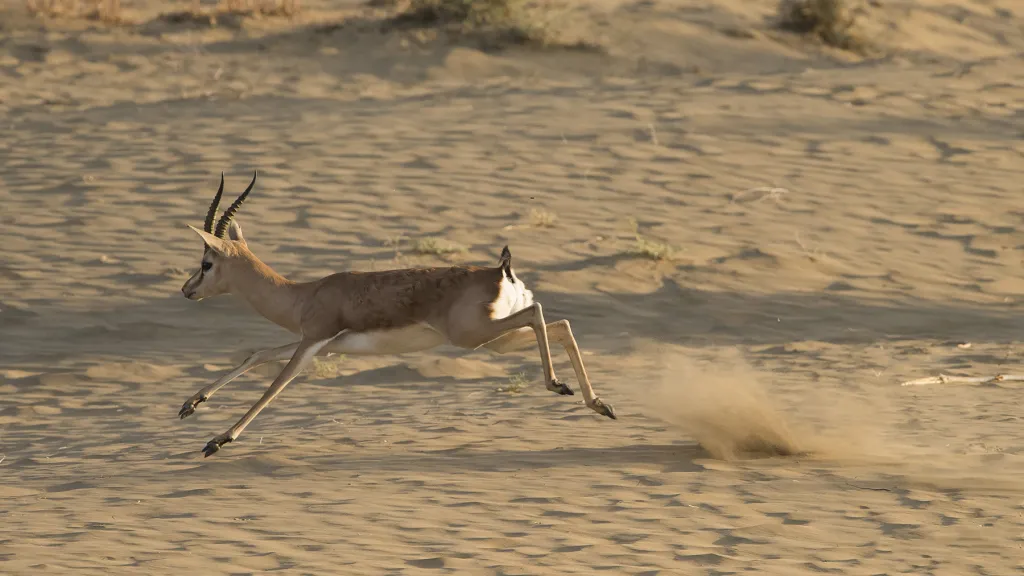
Chinkara
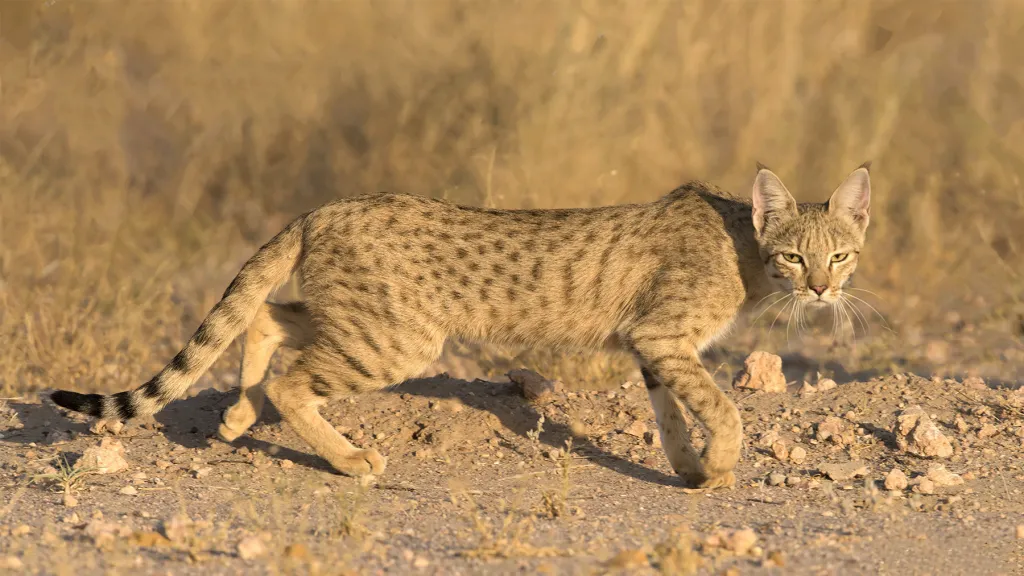
Desert Cat
Reptiles:
Reptiles include the monitor lizard, spiny-tailed lizard, common krait, Russell’s viper, saw-scaled viper and geckos.
Birds:
Birds are the main draw. Besides the Great Indian bustard, you may see falcons, eagles, harriers, tawny eagles, kestrels, Indian vultures, short-toed eagles, spotted and painted sandgrouse, honey buzzards, babblers, kites, MacQueen’s bustard, larks, partridges, bee-eaters, black-winged stilts, little ringed plovers, red-wattled lapwings, Indian peafowl, rock doves, laughing doves, red-collared doves, European nightjars, green sandpipers, Indian coursers, griffon vultures, rock eagle-owls, spotted owlets, common hoopoes, black-rumped woodpeckers, Indian rollers, merlins, black drongos and demoiselle cranes.
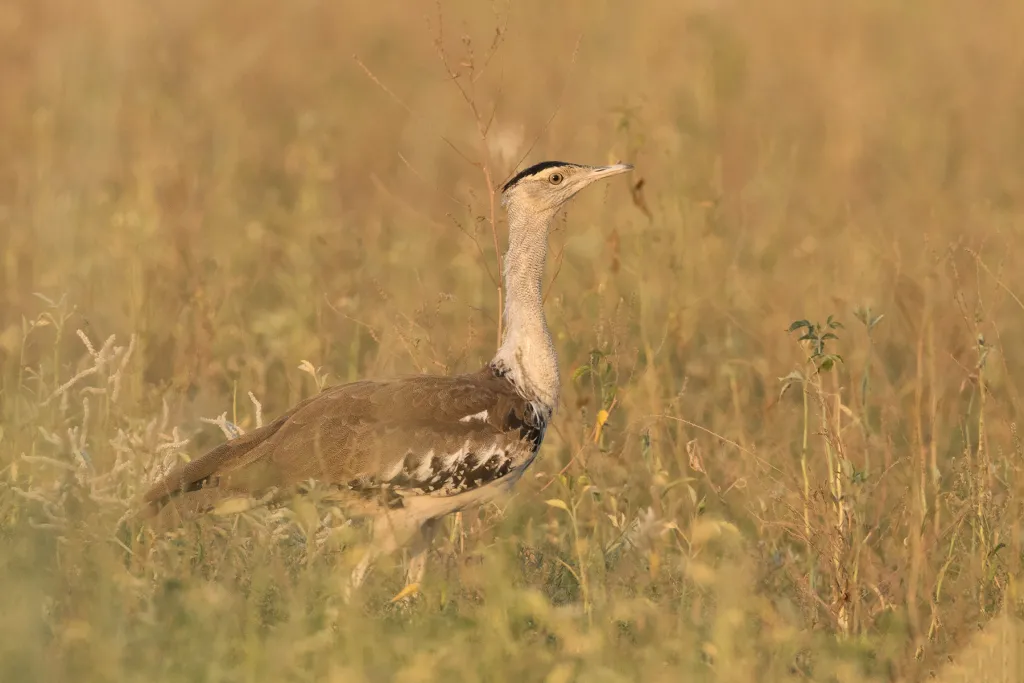
The Great Indian Bustard
The park is not only about living wildlife. It is also known for its Fossil Park, where petrified tree fossils date back around 180 million years, a reminder that life has thrived in this region for a very long time.
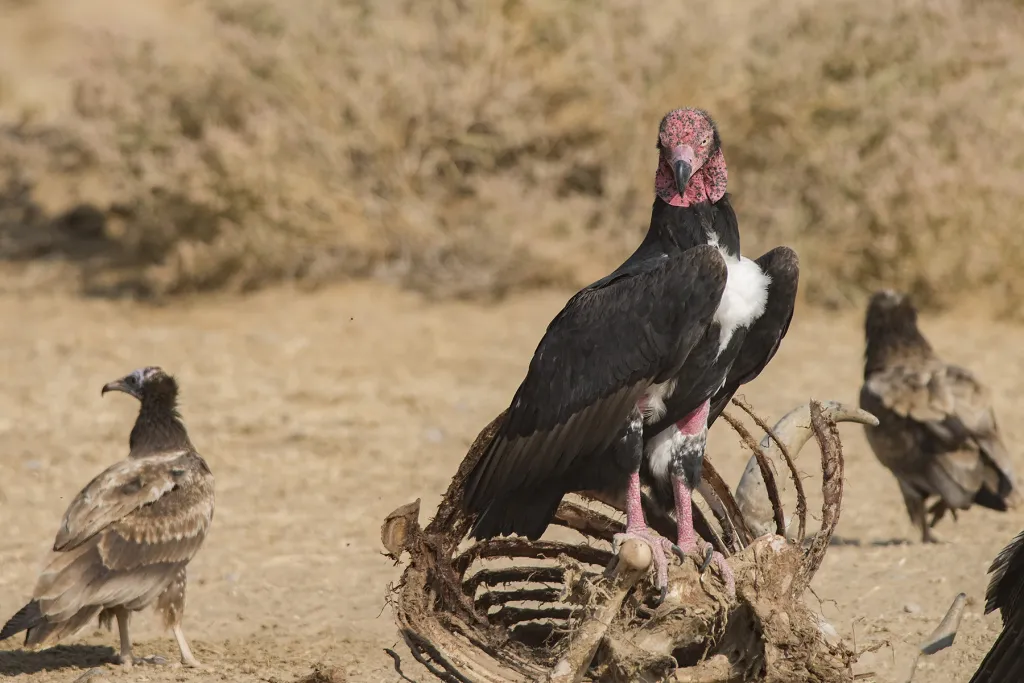
King Vulture
The desert comes alive
Deserts are often described as harsh and dramatic at once. The scale of the dunes takes you by surprise, and just when you least expect it, something shifts in the distance and turns out to be a chinkara or a fox. There are around 72 villages within the park, and some fenced waterholes have been made for the wildlife alone, kept clear of people and livestock. Popular villages include Sam and Khuri, both close to Jaisalmer. Desert safaris by jeep, camel or on foot bring you close to this diverse life.
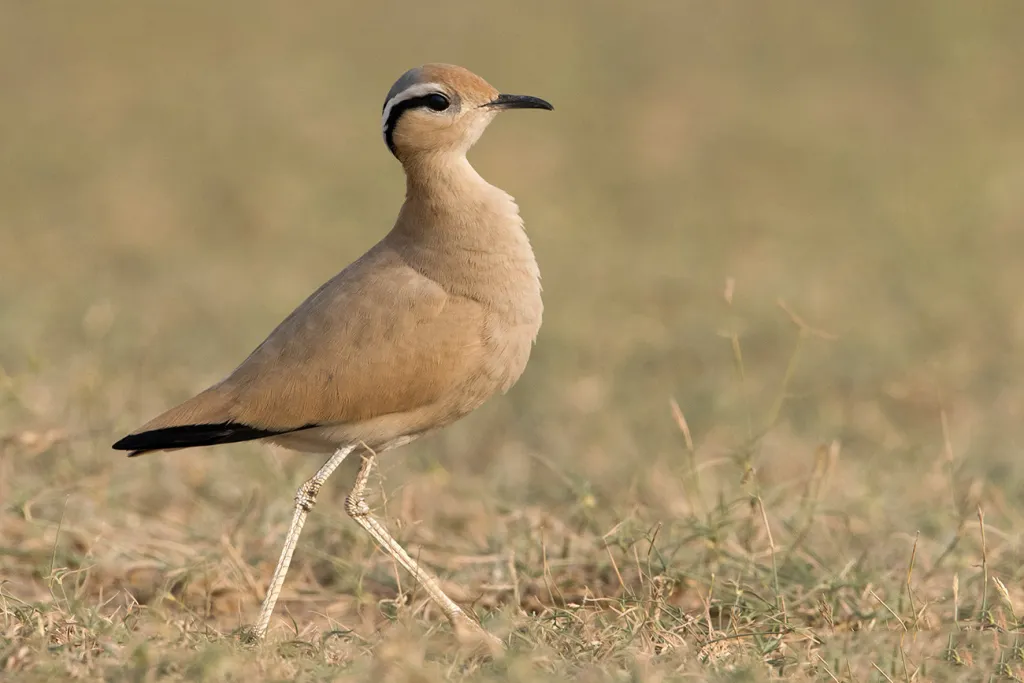
Cream colored courser
The park is open all year, but it is best visited before the fierce summer arrives; October to February is the ideal window.
The Desert National Park is an unusual ecosystem making its mark in a hard, arid land. Its terrain and climate give it a character all its own, and for a wildlife enthusiast it is well worth the trip.