The Okavango, in north-western Botswana, is the world’s largest inland delta. One of the few major inland deltas that do not reach the sea, it is made up of permanent marsh and seasonally flooded plains. Each year the Okavango River pours upwards of 11 cubic kilometres of water into the delta, and it arrives during the dry season. Because of this unusual timing, the plants and animals here have tuned their life cycles to the flooding and the rains. Largely unaltered by people, the delta remains close to its natural state. It became the 1,000th site added to UNESCO’s World Heritage list in 2014, and is also one of the Seven Natural Wonders of Africa.
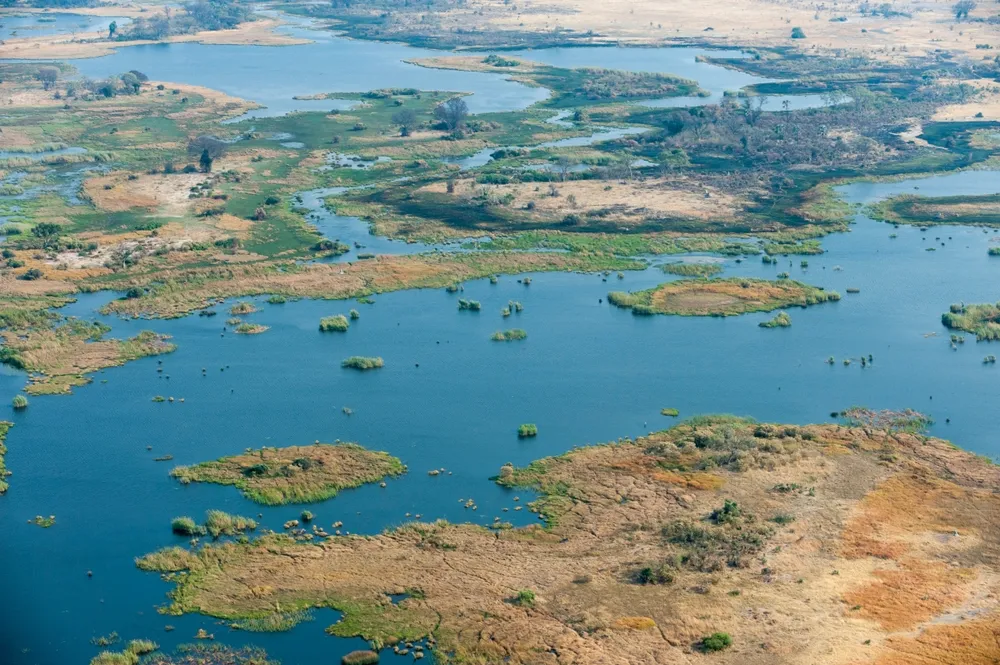
Okavango from space
Permanent swamp covers a large area of the delta. When the floodwaters recede, water lingers in riverbeds, channels and larger lagoons, which draw in animals. Well-known lagoons include Dombo Hippo Pool, Gcodikwe, Guma, Moanachira and Shinde. This living wetland in the otherwise dry Kalahari is a remarkable sight.
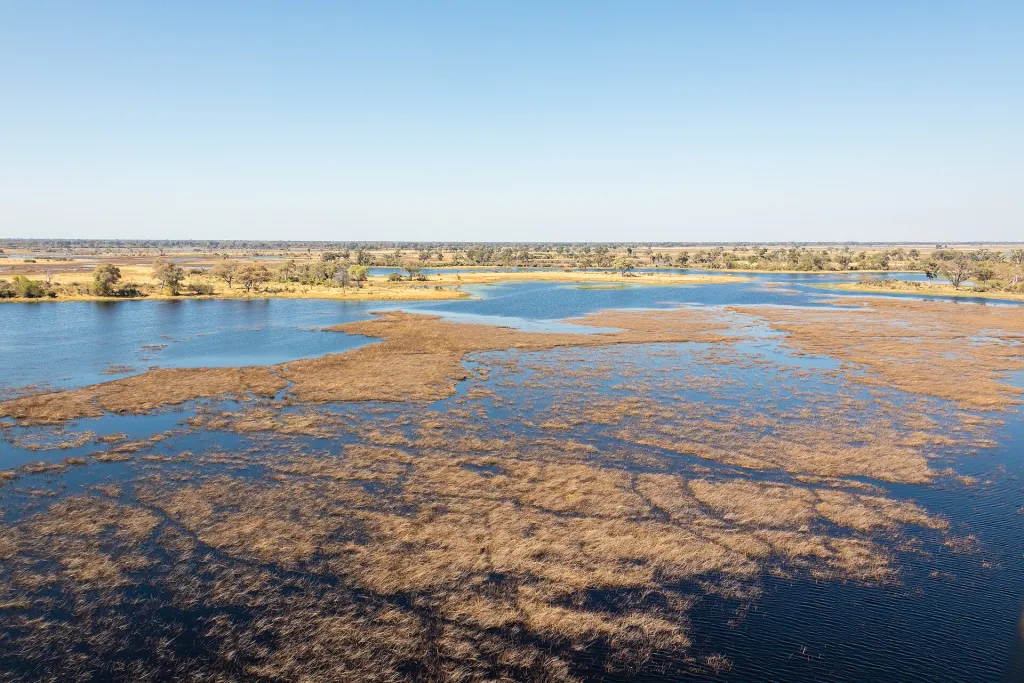
Swamps of Okavango
Plants
Papyrus and reed rafts make up much of the Okavango’s vegetation. During the flood season they float above the riverbeds with their roots trailing in the water, and crocodiles use the gaps beneath as cover. The banks of the Okavango are mostly sand, with little mud, which makes them prone to erosion; the plants bind the sand together and help hold the system in balance.
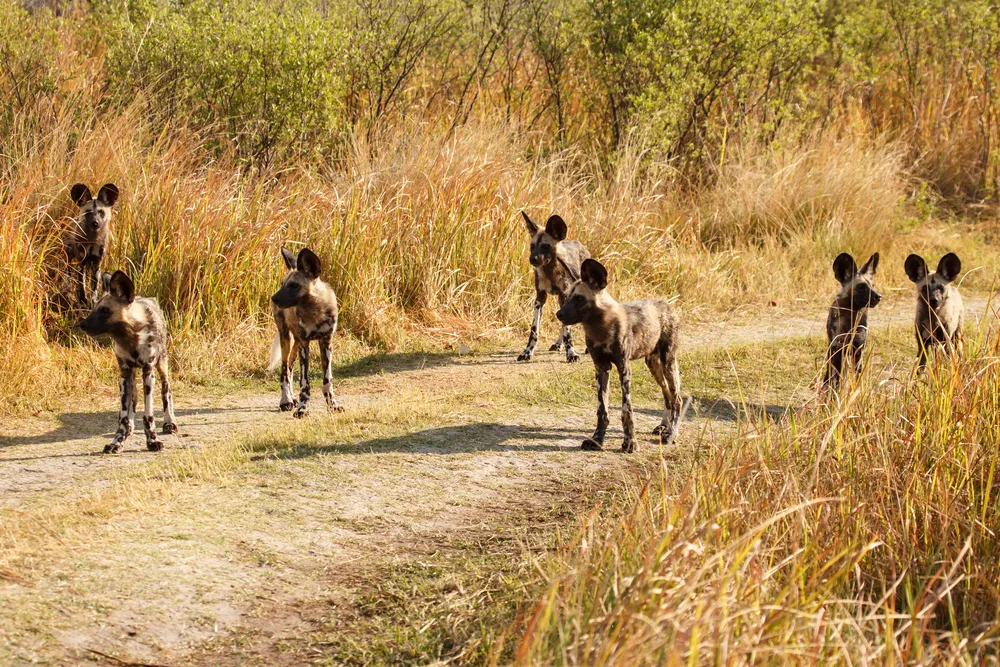
Wildlife of Okavango
Wildlife of the Okavango
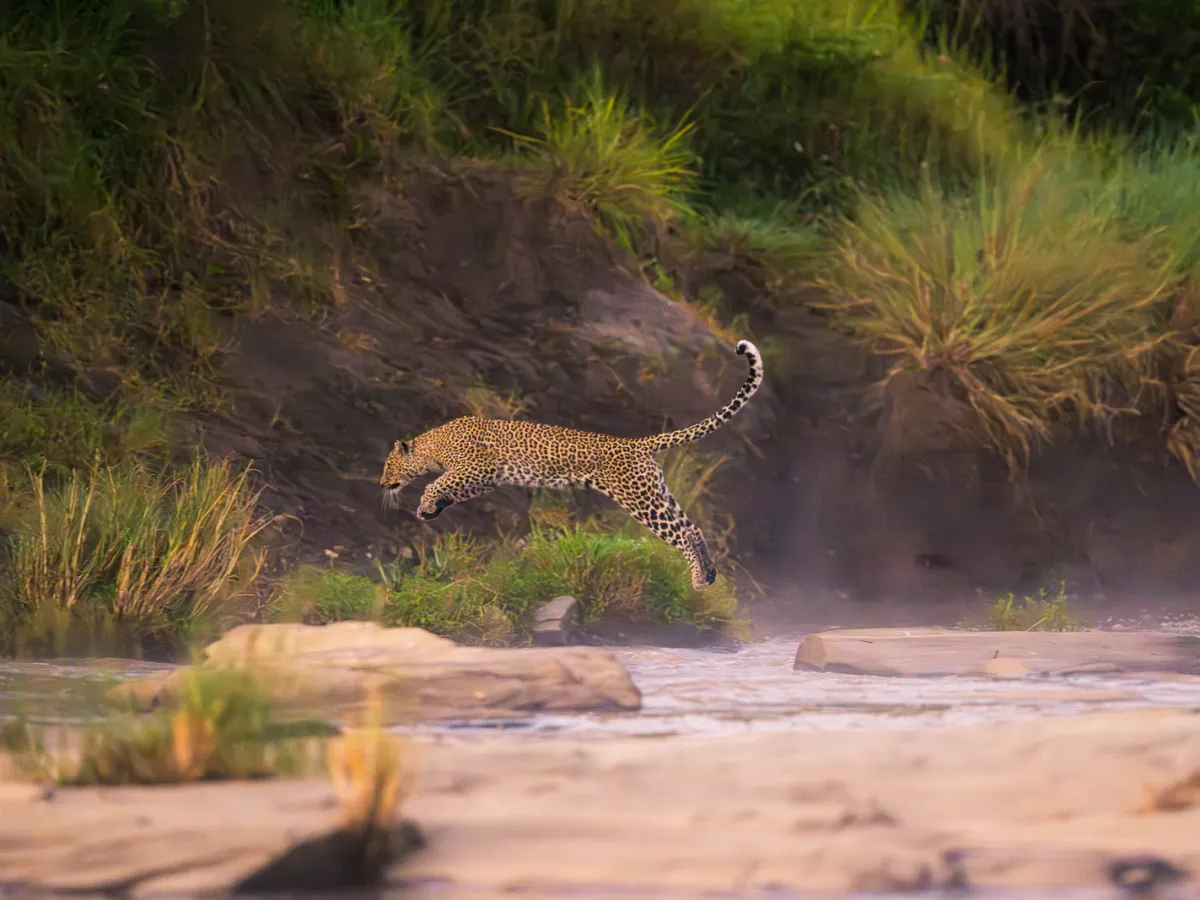
The clear water and rich land support a remarkable range of species. The delta is home to some of Africa’s most endangered animals, including the white and black rhinoceros, lion and cheetah. Also common here are the African bush elephant, serval, caracal, sitatunga, blue wildebeest, common eland, springbok, steenbok, gemsbok, greater kudu, impala, Sharpe’s grysbok, Thomson’s gazelle, South African giraffe, African buffalo, zebra, Nile crocodile and chacma baboon.
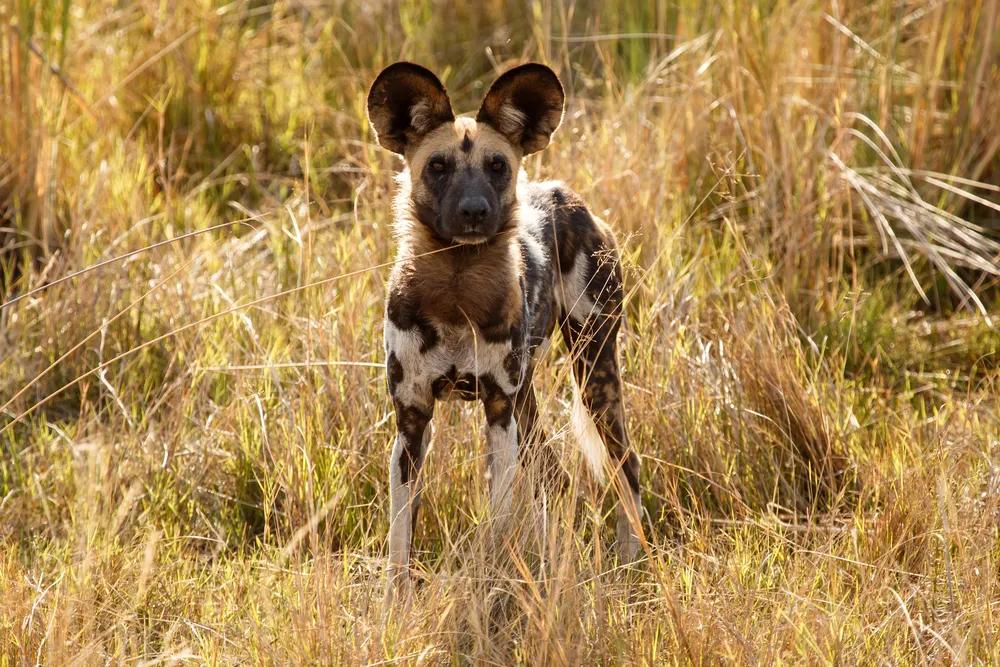
African wild dog
Less common antelope live here too, such as sable, roan and tsessebe, and the African wild dog is seen fairly easily. The most typical swamp animal is the red lechwe, well suited to life in and out of water; the delta holds more than 88,000 of them by recent estimates. A little larger than an impala, it has elongated hooves and water-repellent legs that help it move through water.
More than 400 bird species live in the Okavango. Among the notable ones are the South African shelduck, Pel’s fishing owl, helmeted guineafowl, Egyptian goose, African fish eagle, marabou stork, African jacana, African spoonbill, grey crowned crane, hornbill, African darter and common ostrich.
Fish are plentiful too, with more than 71 species, from the 3.2 cm sickle barb to the 1.4-metre African sharptooth catfish. Others include tigerfish, tilapia and various catfish.
Where to stay
Tourism in the inner delta is limited to certain areas, which helps keep it in good condition. About 40 per cent of it is protected within the Moremi Game Reserve, and 18 wildlife management areas across the delta give further legal protection, with hunting prohibited.
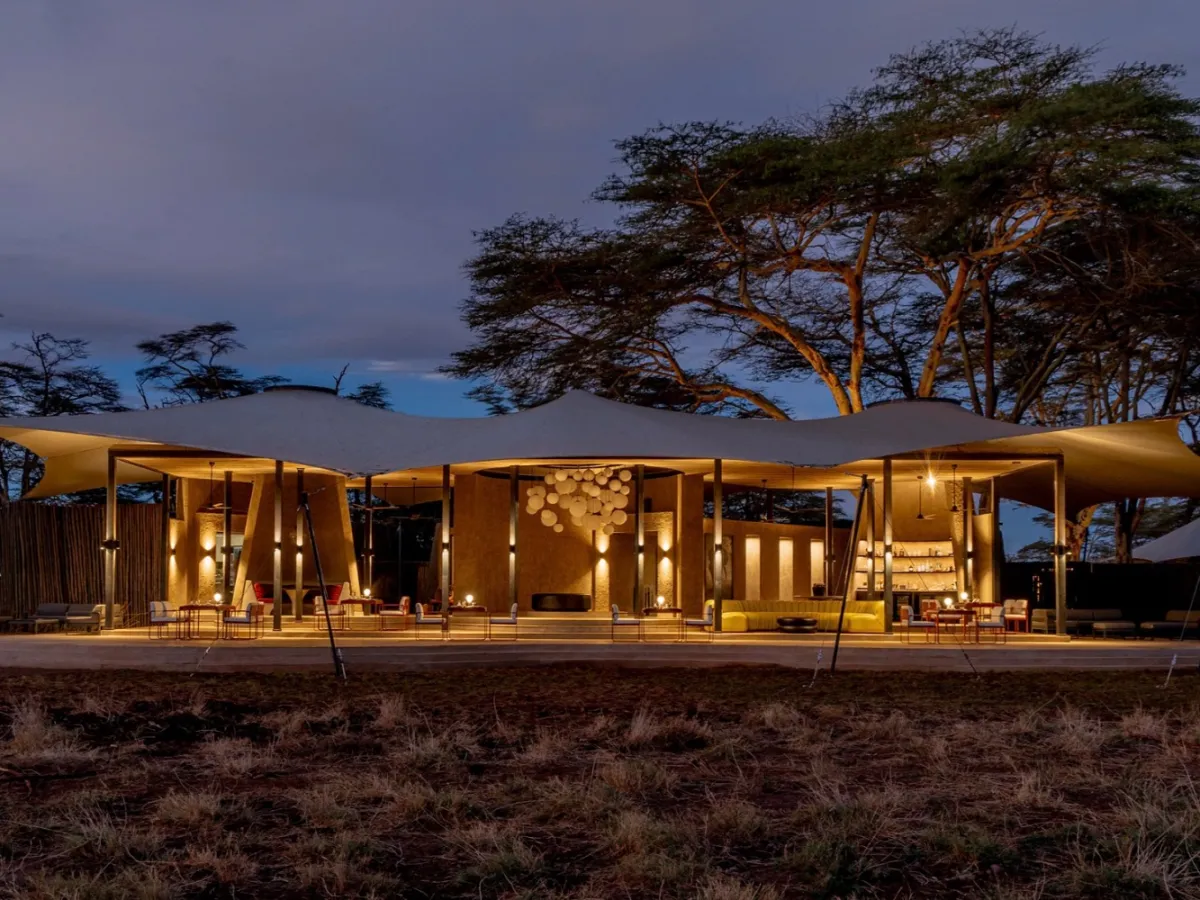
There are three broad types of camp. Water camps, set on the delta itself, are best for exploring the waterways and their birds and aquatic life. Land-based camps sit on the dry islands that draw animals in search of food and shelter. Mixed-use camps offer a bit of both.
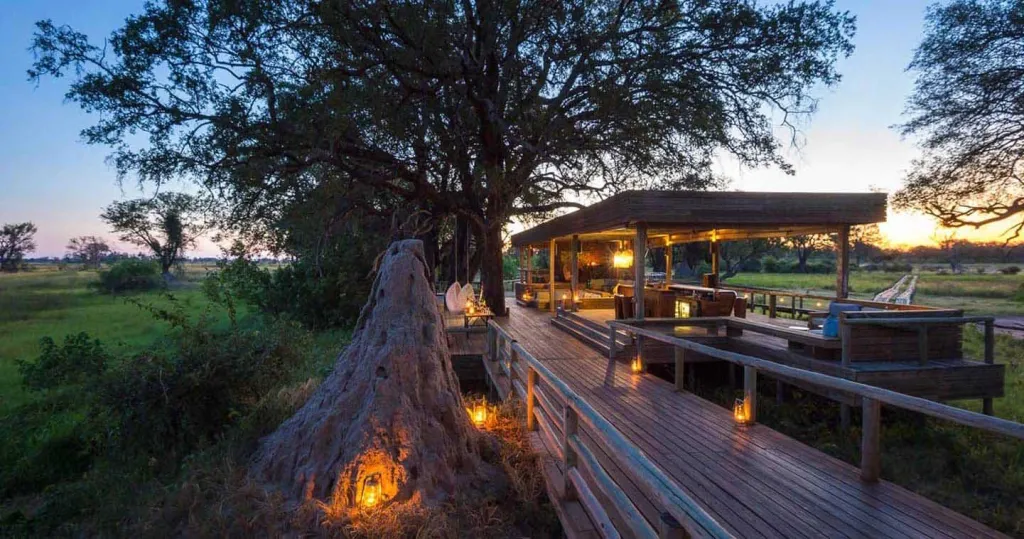
Luxury stay in Okavango
Vumbura Plains Camp, split into North and South, has 14 rooms in all and offers a full range of delta safaris, with day and night game drives as well as boat and mokoro trips on the nearby water.
Camp Okavango, on the remote Nxaragha Island, offers a water-wilderness experience, with walking safaris and mokoro and motorboat trips.
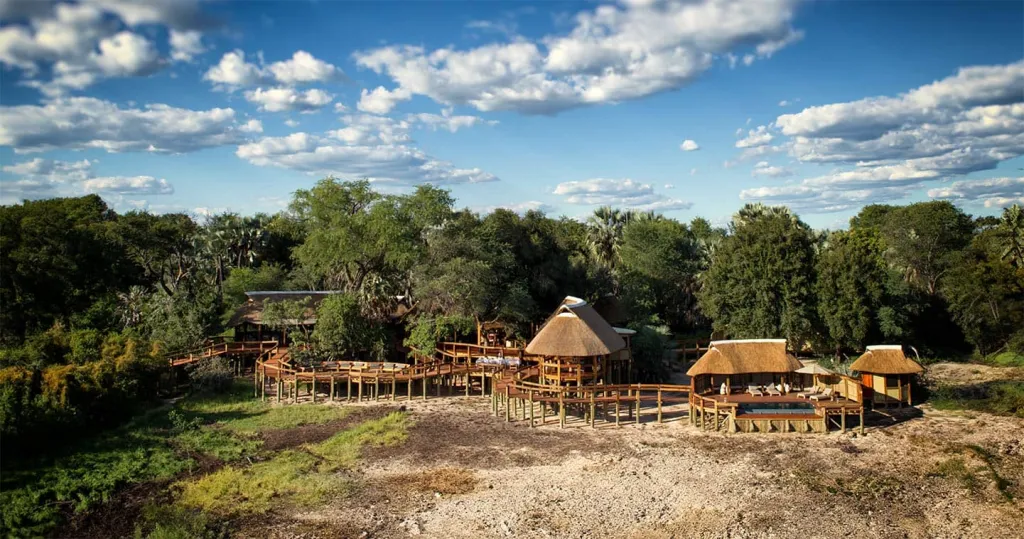
Camp in Okavango
Little Mombo sits in one of the delta’s best game-viewing areas, known for its concentrations of both general game and predators.
Things to do
Activities in the Okavango include walking safaris, horseback safaris, boat and mokoro trips, fishing, scenic helicopter flights over the delta and game drives.
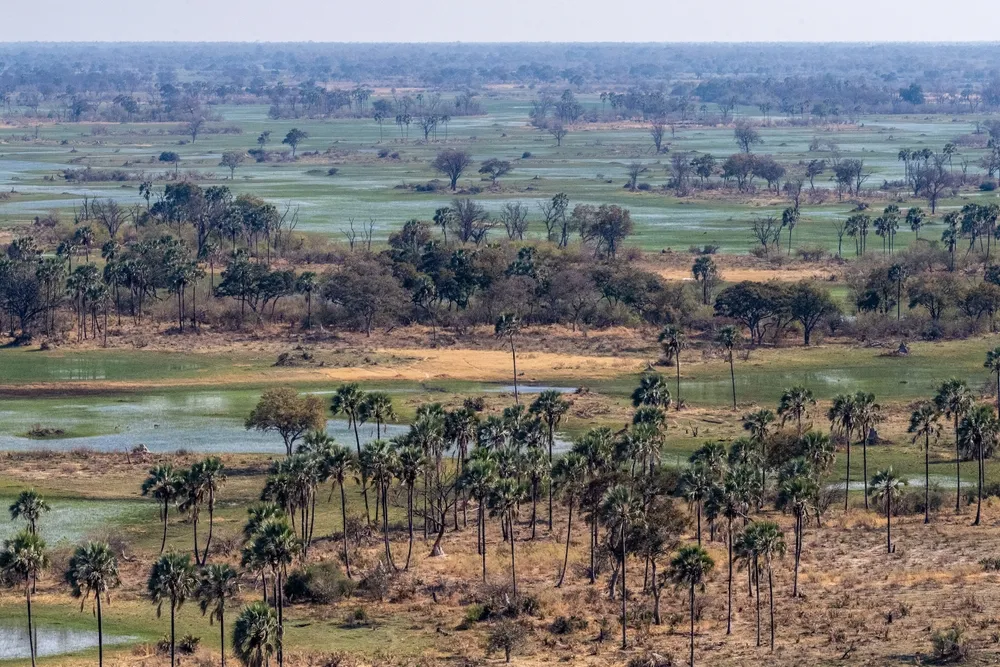
Aerial view of Okavango from helicopter
If you loved reading this story, then subscribe to our blog here (it will ask to verify your email) to get inspiring travel stories and trivia delivered to your email. Stories about wildlife trivia, cultural experiences, curated luxury hotel lists, underrated places to travel, polar journeys and much more.