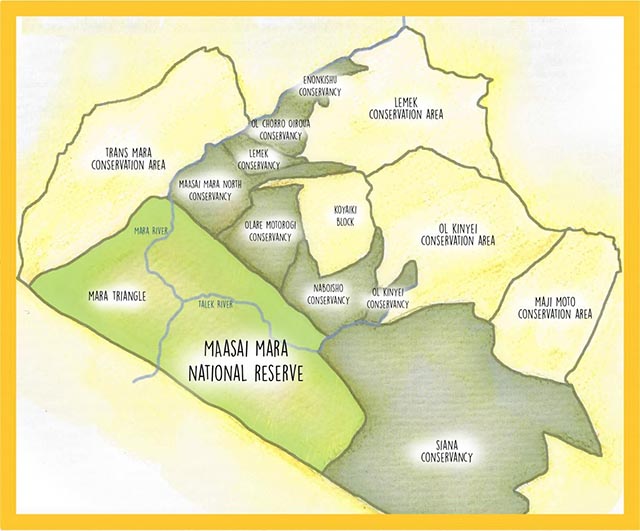
Most people who say “Masai Mara” mean the National Reserve — 1,510 square kilometres of government-owned land in southwestern Kenya. That reserve is the northern end of the Mara–Serengeti ecosystem, which runs unbroken across the border into Serengeti National Park in Tanzania and covers roughly 25,000 square kilometres in total.
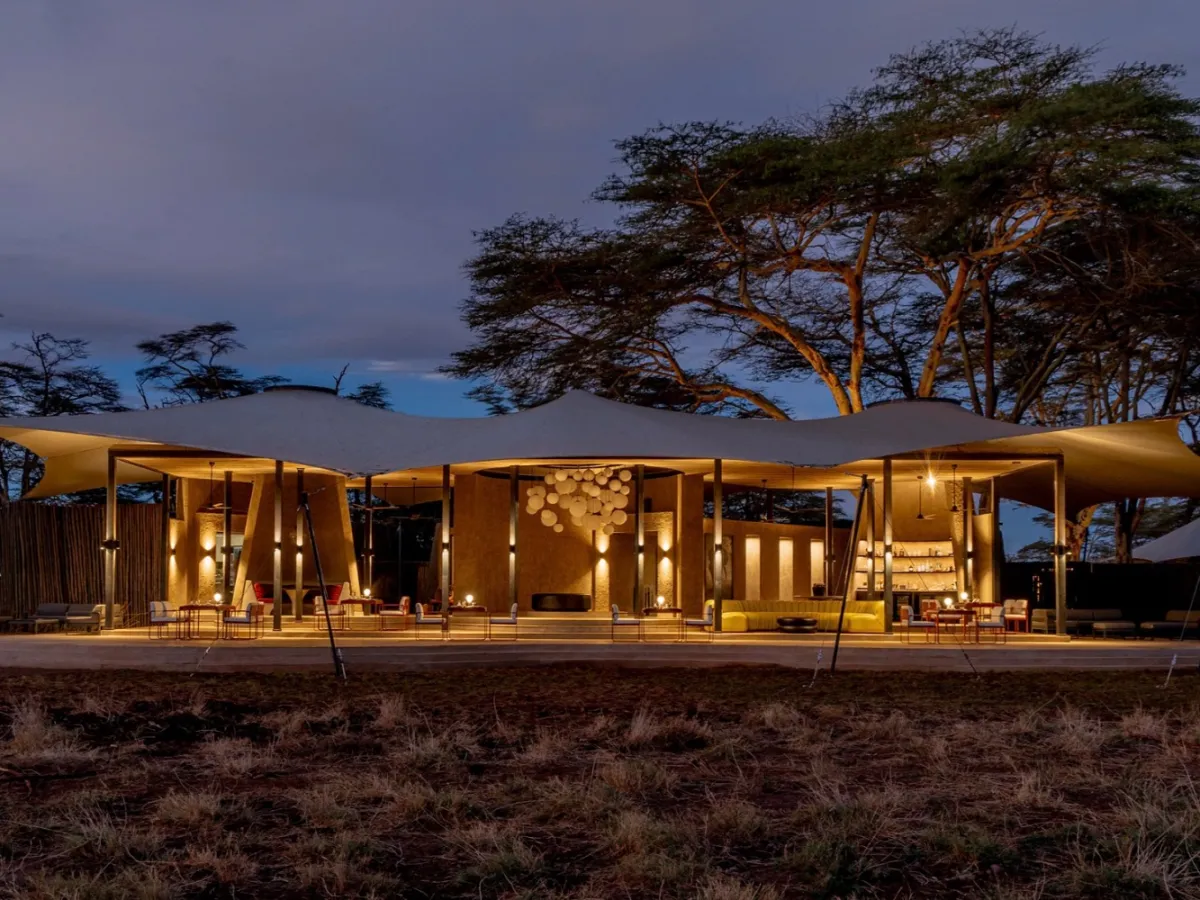
But the reserve is only part of the story. Wrapped around it is a ring of conservancies: Maasai community-owned land leased to a small number of camps, on terms that cap the number of beds and pay the landowners directly. They hold the same wildlife as the reserve, a fraction of the vehicles, and most of the best camps in the greater Mara.
They also permit two things the National Reserve does not: night drives and walking safaris.
This is a guide to each conservancy, the wildlife, and where you can stay.
WHY THE CONSERVANCY MODEL MATTERS
The arithmetic is the whole point. Inside the reserve there is no cap on how many vehicles reach a sighting. In a conservancy the lease sets a bed limit — often one room per several hundred acres — so the camp has a commercial reason to keep numbers down. Landowners are paid a monthly lease fee whether or not tourists come, which is what makes keeping land open for wildlife rational rather than charitable.
That is why conservancy camps cost more, and why the extra buys you something real.
NORTH MASAI MARA
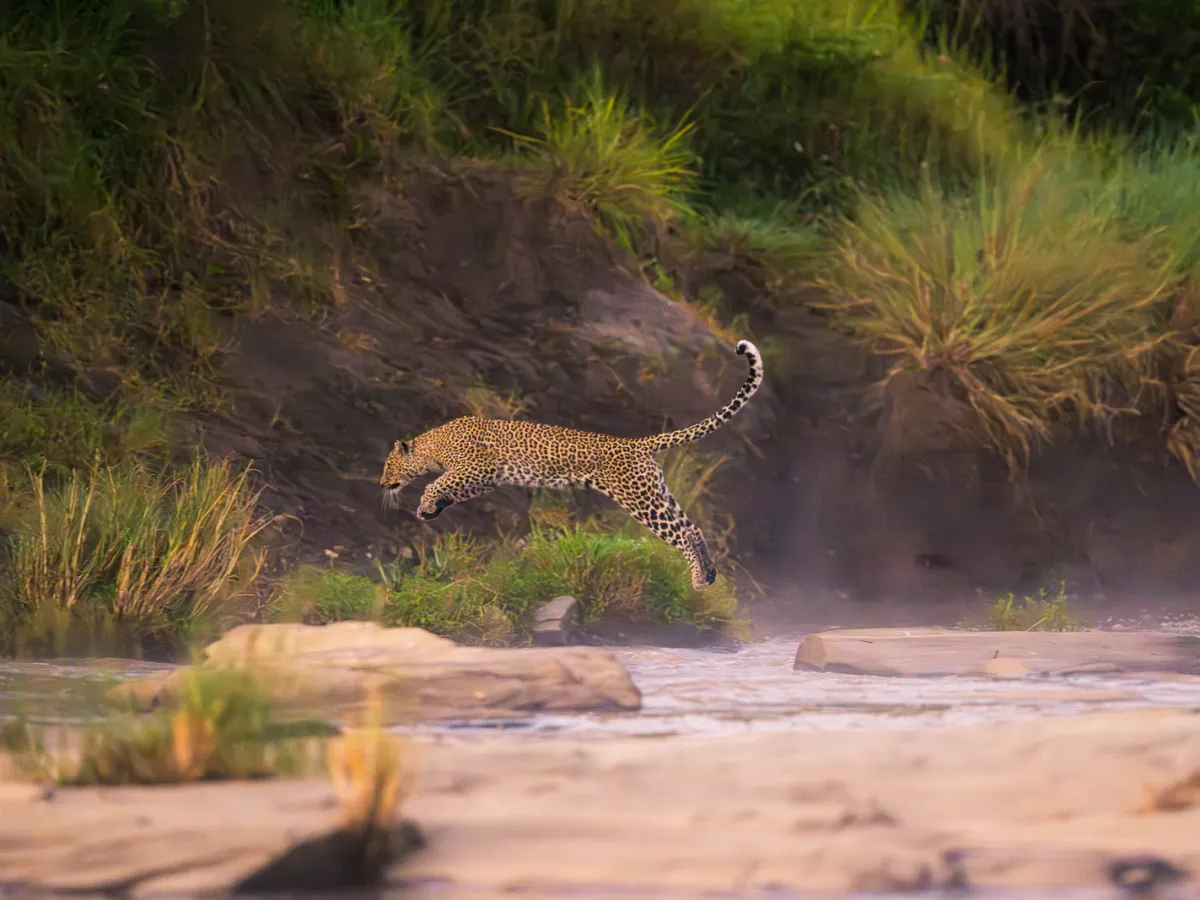
- Mara Naboisho: 50,000 acres bordering the National Reserve, and one of the strongest conservancies for predators. Alongside the usual plains game — gazelle, zebra, giraffe, impala, hippo — Naboisho holds high densities of lion, leopard and cheetah, and it is one of the better places in the Mara for the animals most visitors never see: honey badger, caracal, aardvark and aardwolf. Birders should look for pygmy falcon, northern white-crowned shrike, white-headed buffalo-weaver and Von der Decken’s hornbill. Vehicle numbers are strictly capped. More than 500 Maasai landowners draw income from the lease, and conservancy fees fund healthcare, water and schools. Camps: Encounter Mara, Naboisho Camp, Kicheche Valley Camp, Basecamp Eagle View, Ol Seki Mara Camp and Basecamp Wilderness.
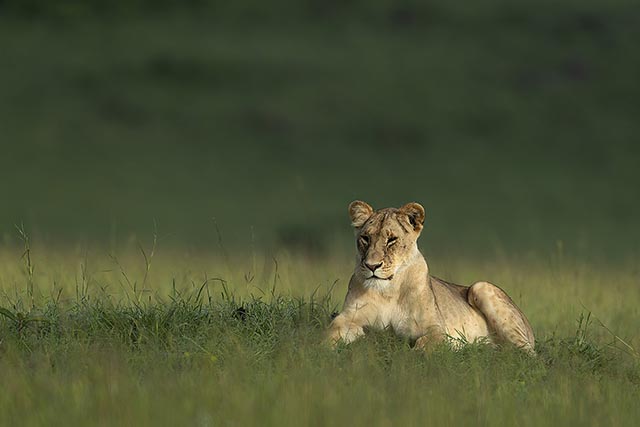
- Mara North: Formerly the Koiyaki-Lemek Conservation Area, Mara North is a not-for-profit partnership between more than 800 landowners and twelve member camps. At 70,000 acres it adds around 21% to the protected area of the National Reserve, and it is a key dispersal zone during the migration. Lion, leopard, elephant and buffalo are all resident; rhino are occasional rather than reliable. The lease works out at roughly one guest room per 700 acres, which is the number that matters more than the camp list. Night drives and bush walks are permitted. Camps: Kicheche Mara Camp, Mara Acacia Bush House, Mara Rianta Camp, Mara Bush House, Karen Blixen Camp, Offbeat Mara Camp, Royal Mara Safari Lodge, Elephant Pepper Camp, Saruni Mara, Ngare Serian, Saruni Wild and Serian.
- Olare Motorogi: 35,000 acres formed by merging the Olare Orok and Motorogi conservancies, sharing a border with the National Reserve. It covers the lower Ntiakitiak and Orok river valleys and a 12-kilometre escarpment, and includes wildebeest migration corridors. Several lion prides are resident, elephant are common, and both wild dog and rhino appear. Olare Motorogi is the conservancy others copied: 52 rooms across 35,000 acres, or one room per 673 acres, which is among the lowest tourist densities anywhere in the Mara. Camps: Mahali Mzuri, Porini Lion Camp, Mara Plains Camp, Olare Mara Kempinski, Mara Expedition Camp and Kicheche Bush Camp.
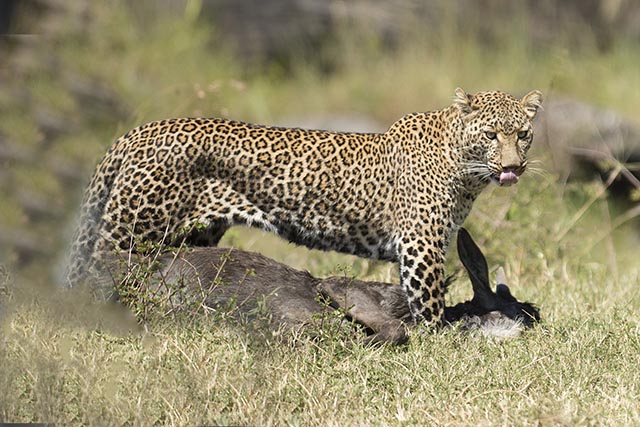
- Ol Kinyei: 18,700 acres of streams, rolling valleys and broken country — the most scenic of the northern conservancies, and the emptiest. Lion, leopard, cheetah, giraffe, elephant and Cape buffalo are all present, and the migration passes through. Livestock exclusion zones agreed by the landowners have let the grassland recover. Around 90% of the staff are landowners themselves, paid both for employment and for the lease. There are 15 rooms in the entire conservancy — one per 1,250 acres. Camps: Ol Kinyei Gamewatchers Adventure Camp and Porini Bush Camp.
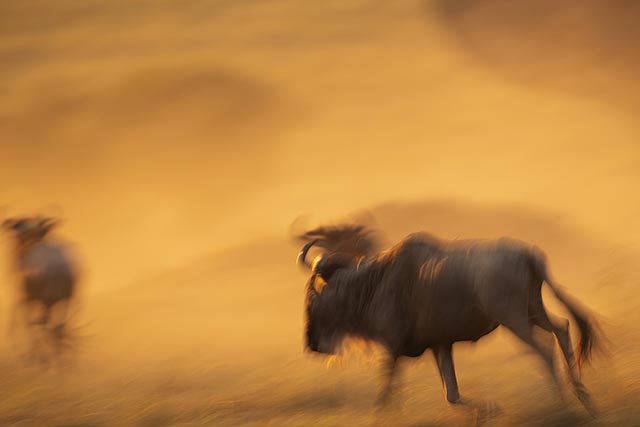
- Ol Chorro Oiroua: 17,000 acres in the north of the greater Mara, managed by Seiya Limited. Elephant move through constantly and lion are seen regularly. The conservancy runs a recycling programme that turns waste into handicraft, jewellery and sculpture — income for the community and less rubbish in the ecosystem, which is a better outcome than most camp sustainability statements describe. Tourism revenue funds anti-poaching, infrastructure and Enkerende Primary School, built for local Maasai children. 65 rooms, one per 260 acres. Camps: Richard’s Forest Camp, Fairmont Mara Safari Club and Ngerende Island Lodge.
- Lemek: Around 19,000 acres, and some of the best open game-viewing ground in the greater Mara. Part of Lemek was merged into Mara North, which reduced its area. Sprawling grassland dotted with trees; leopard and wildebeest are the species most reliably seen. Game drives, night drives and off-road safaris are all permitted. Lemek carries higher pressure than its neighbours — 87 rooms, one per 220 acres — and encroachment on wildlife habitat is a live issue the local authorities are still working through. Camps: Mara River Lodge and Enkerende Tented Camp.
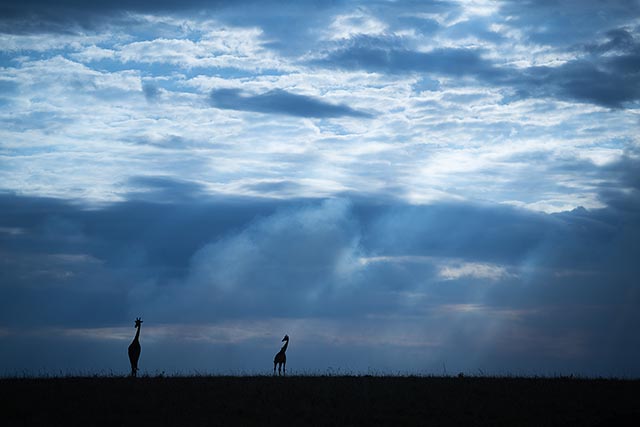
SOUTH MASAI MARA
Olderikesi: 24,700 acres between the National Reserve and the Loita Hills, and a critical wildlife corridor. Riverine valleys, grassland, woodland and forest hold elephant, rhino, giraffe, gazelle, bushbuck, impala, wildebeest and wild dog. A “no-cattle” zone protects the migration corridor from overgrazing. The Cottar’s Wildlife Conservation Trust funds schools, medical facilities, security posts, cattle water troughs and a radio network, and employs rangers and a canine anti-poaching unit. Twenty rooms across the whole conservancy — one per 1,235 acres, the lowest density in the Mara. Camps: Cottar’s Private Homestead and Enkewara Mara Camp.
EAST MASAI MARA
Mara Siana: 29,000 acres, the newest of the conservancies and still building, backed by an investment of 300 million Kenyan shillings. Far quieter than the reserve. Buffalo, giraffe, gazelle, zebra, eland, elephant and hartebeest, with lion, cheetah, hyena and leopard all resident. Wildebeest calve here in January and February — the only place in the Mara where you can see calving without crossing into Tanzania. The Mara Predator Conservation Programme runs lion, cheetah and wild dog research on this ground. Camps: Siana Springs Tented Camp, Mara Bushtops and Leleshwa Camp, with more planned.
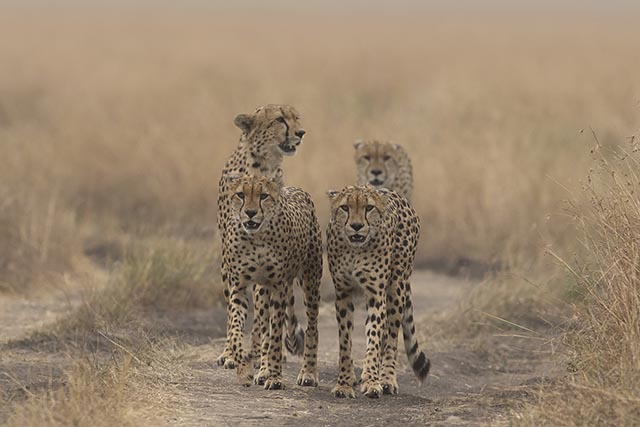
WEST MASAI MARA
Mara Triangle: Strictly speaking this is not a conservancy but the western third of the National Reserve itself — 126,000 acres bounded by the Serengeti border, the Mara River and the Oloololo Escarpment. What makes it different is the management: it is run by the Mara Conservancy, a not-for-profit, on behalf of Narok County, and it is visibly better managed than the eastern side. Fewer vehicles, enforced off-road rules, and functioning anti-poaching. The river acts as a natural boundary, and the Triangle is a main entry and exit point for the migration. Balloon flights launch from here. Lion, hippo, crocodile, cheetah, jackal, waterbuck and Thomson’s gazelle are all common, and the Mara’s black rhino are concentrated on this ground. Camps on the escarpment and periphery: Mara Angama Wilderness Lodge, Kichwa Tembo, Bateleur Camp, Angama Mara, Kilima Camp, Mpata Safari Club and Sanctuary Olonana.
SO WHICH ONE?
If you want the crossings, stay in or beside the reserve — the conservancies are north and east of the river action. If you want space, night drives and walking, stay in a conservancy: Olare Motorogi, Ol Kinyei and Olderikesi have the lowest densities, Naboisho and Mara North the strongest all-round game. Many trips do three nights of each, which is the arrangement we recommend most often.
To plan a Mara safari, write to our travel experience designers at letstalk@wildvoyager.com.
If you enjoyed this, our destination brochures go into more detail — you can download them here.