A Mara note
The crossings draw the crowds — but the Mara’s finest hours are often the quiet early mornings off the river, when a leopard moves through the long grass and yours is the only vehicle there.
Thousands of wildebeest mass on the bank, hesitating, turning back, massing again. It can take hours.
One animal commits and the herd follows in a torrent — dust, noise and panic in seconds.
Giant Nile crocodiles wait in the current for this one feast of the year.
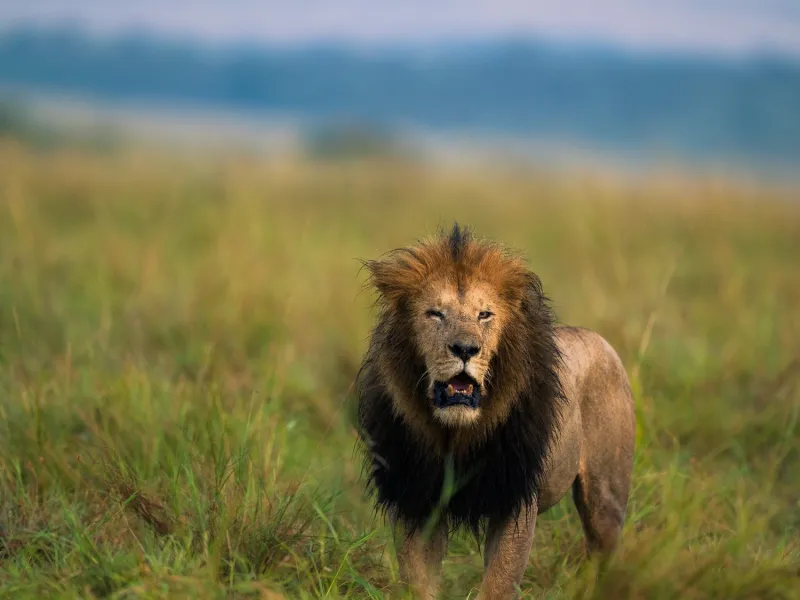
Lion and cheetah work the confusion on the far bank. The drama doesn’t end at the water.
No one can promise a crossing on your dates. The reward is that it’s real, not staged.
The crossings draw the crowds — but the Mara’s finest hours are often the quiet early mornings off the river, when a leopard moves through the long grass and yours is the only vehicle there.
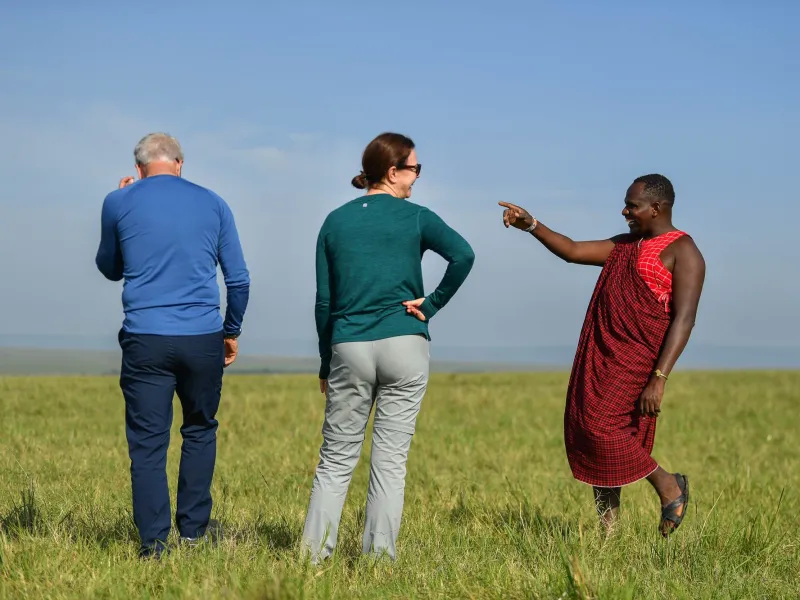
The reserve is named for the Maasai, whose grazing lands these were and largely still are. On the conservancies, Maasai families lease their land for wildlife instead of fencing it for cattle — which is the quiet mechanism keeping the Mara wild.
Time with a Maasai community here — arranged through people we know, not a staged roadside stop — is the difference between watching a culture and meeting one. It also funds the choice to keep the land open.
We’ve skipped the gazette dates and boundary politics. They don’t change your morning. The Maasai’s role in keeping this land unfenced does.
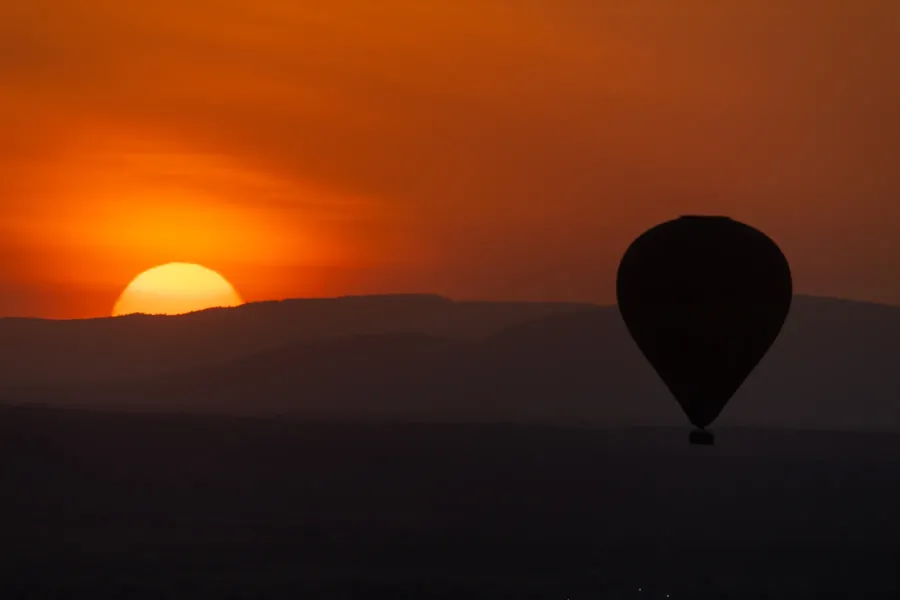
A dawn flight over the grassland with the herds moving beneath you — the one place the cliché is worth it.
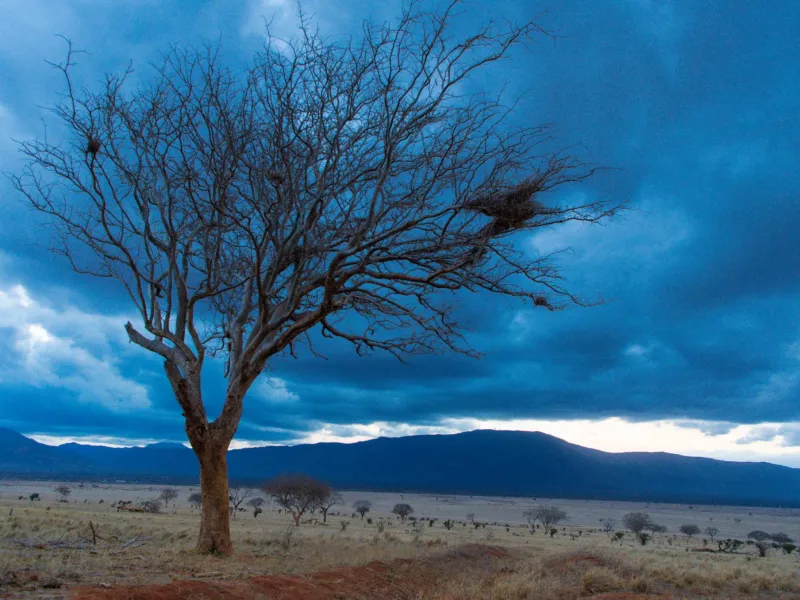
On foot with an armed guide, reading tracks and dung — the Mara at ground level, including inside the reserve where few can take you walking.
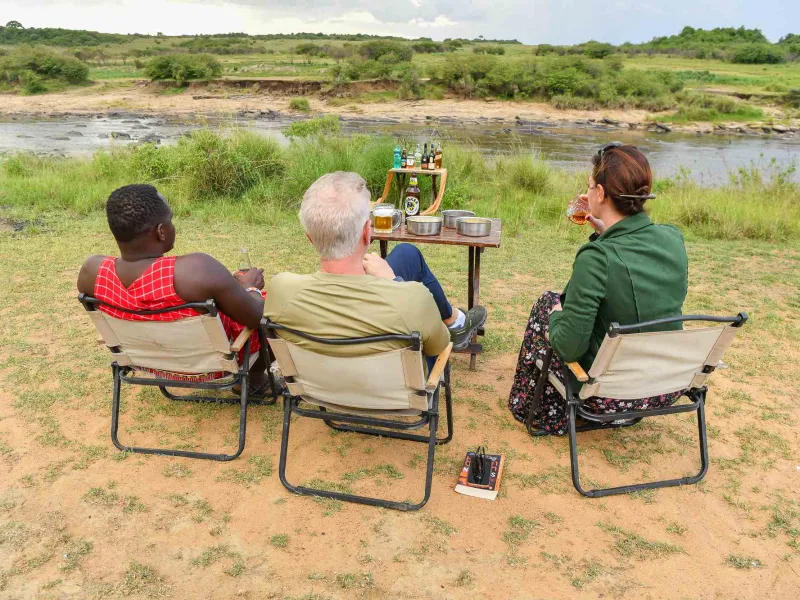
Drinks on a rock outcrop as the light goes and the plains empty into night.
The guiding and the timing are ours, so we answer for whether you’re in the right place at the right hour — not a stranger hoping it works out.
The core of the reserve holds the highest densities and the river crossings. We put you in the thick of it, not only on the quieter edges.
The ground-level walking most people think is conservancy-only, we arrange within the reserve itself — the Mara on foot, without giving up the density.
An intimate, design-led tented retreat in the heart of the Mara, built around quiet luxury and private guiding.
Glass-fronted suites suspended on the Oloololo Escarpment, with one of the most cinematic views in Africa.
A tiny, conservation-driven Great Plains camp in the Olare Motorogi Conservancy — copper, canvas and real exclusivity.
Richard Branson's striking twelve-tent camp in Olare Motorogi, with low vehicle numbers and big-cat country at the door.
Vintage safari romance on a private conservancy, run by one of Kenya's oldest safari families.
A remote, stylish camp at the reserve's southern tip — first to meet the migration as it crosses from the Serengeti.
A small Great Plains camp on a private conservancy, intimate and contemporary with first-class guiding.
1920s-styled luxury tents on the Sand River, with front-row access to the migration crossings.
A classic riverside camp in the heart of the reserve — one of the Mara's oldest and best-loved addresses.
Two intimate camps beneath the Oloololo Escarpment, with old-world safari elegance and forest seclusion.
A comfortable mid-tier camp with easy reserve access — sound value for a first safari.
A well-run, family-friendly tented lodge with dependable comforts and a central location.
A landmark lodge high on a rise in the Mara Triangle, with sweeping plains views and reliable service.
The Mara’s plains and a northern reserve like Samburu make the strongest week in the country. We route it so the wildlife never repeats.
Plan a Masai Mara safari