Much of Africa’s cultural richness lies in the tribes that still live in the traditional way. The continent has some 3,000 different ethnic groups, each with its own language and customs.
In Kenya, the best-known is the Maasai, seen across much of East Africa. But the north-central part of the country is home to the Samburu.
The Samburu are closely related to the Maasai and keep a traditional way of life. Their beliefs, rituals and dress remain largely untouched by Western influence. Here is what to know about them.
The Samburu people
The Samburu live in Samburu County, just north of the Equator, and in and around Samburu National Park. They are an indigenous people of north-central Kenya.
Like the Maasai, they are semi-nomadic pastoralists, and they hold closely to their old customs. Their life revolves around their livestock: cattle, along with sheep, goats and camels.
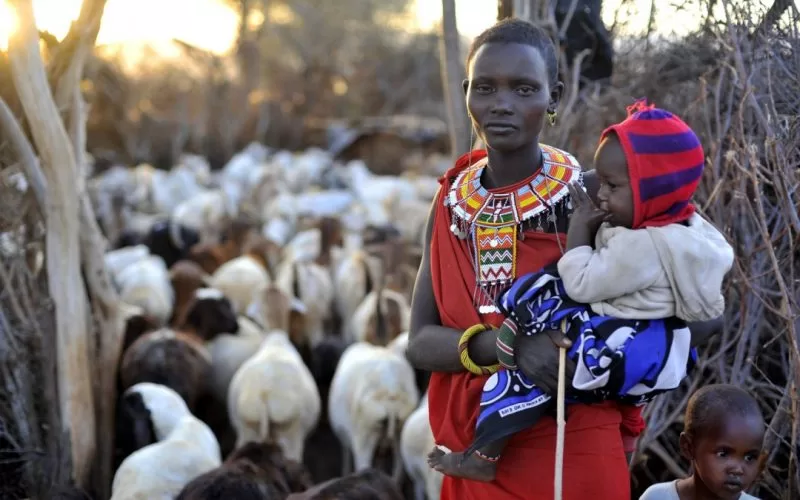
The tribe depends on its livestock for both food and culture. Their diet is mainly milk, with blood from the cattle now and then, and meat only on special occasions. To take the blood, a small cut is made in a cow’s jugular and the blood is drained into a cup, after which the wound is sealed with hot ash. They also eat roots, vegetables and tubers, often as a soup.
The land here is dry, so villages move regularly to find grazing, roughly every five to six weeks. A Samburu hut is built of mud, hide and grass mats over a frame of poles, with a thorn fence around the settlement to keep out wild animals. These settlements are called manyattas, and the huts are made so they can be taken apart and carried when the group moves on.
Family and traditions
The Samburu usually live in groups of five to ten. The men look after the cattle and protect the group; regarded as warriors, they defend it against both animals and people.
They also take part in raids to seize cattle from rival Samburu clans. Boys learn to tend cattle, and to hunt, from a young age. An initiation, marked by circumcision, marks a boy’s passage into manhood.
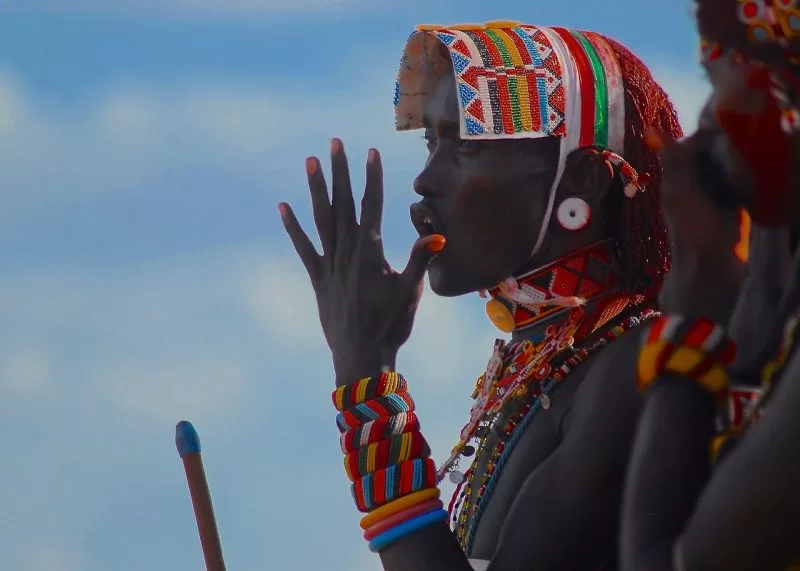
Men and women could traditionally only marry once circumcised; before that they were considered children.
Once a boy is circumcised, he is a moran, or warrior. The men then move through a series of age grades, from child to moran, then junior elder and finally elder.
A woman’s role centres on gathering vegetables, collecting water, caring for children and running the home. Girls have traditionally undergone female circumcision to mark their passage into womanhood, a practice now banned in Kenya.
The Samburu are a gerontocracy, largely ruled by the elders, who decide on matters such as weddings and initiations.
Dress and dance
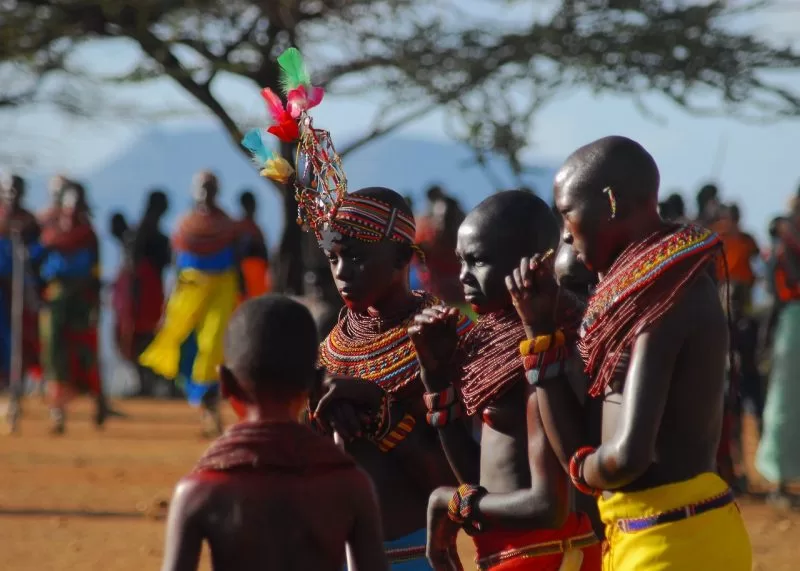
The Samburu wrap a bright red cloth, the shuka, around themselves like a skirt, set off with a white sash and colourful beaded earrings, necklaces and bracelets made by the women.
Each piece of jewellery signals the wearer’s status, and both men and women wear it.
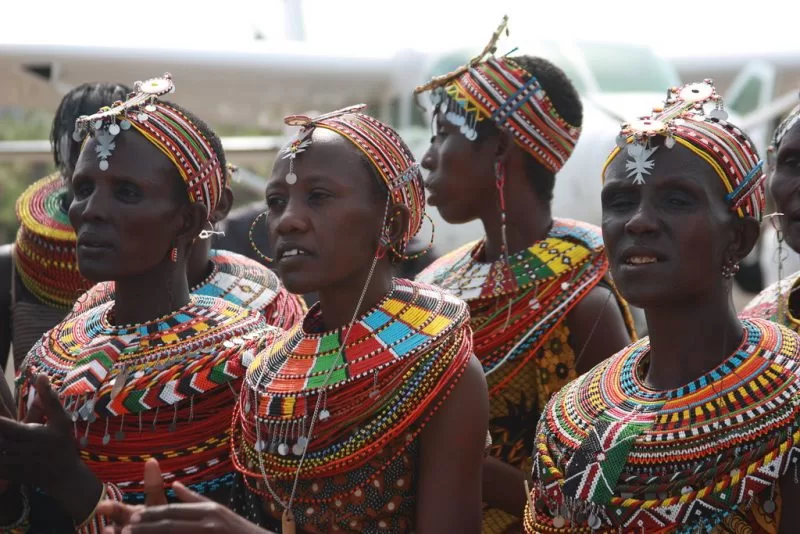
They also paint their faces in distinctive patterns to set off their features, admired by neighbouring tribes.
Dance is central to Samburu culture. Like the Maasai, the men dance in a circle and leap high from a standing position, usually without instruments to accompany the singing.
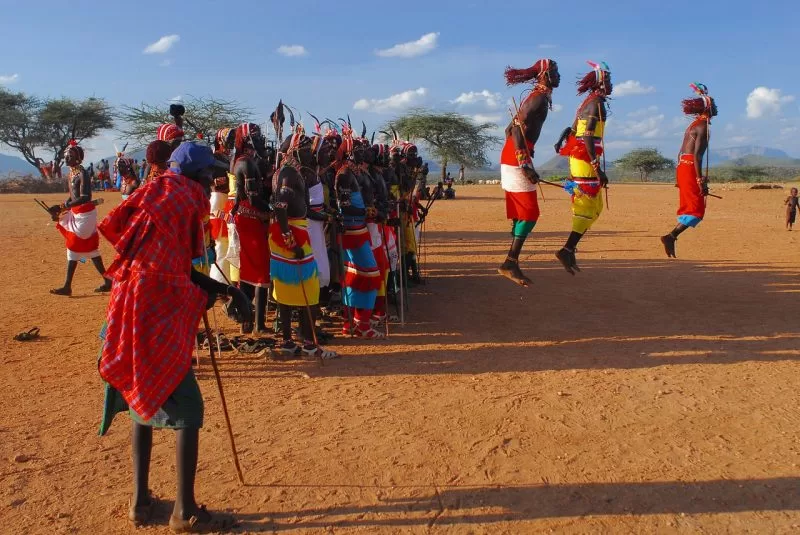
Men and women do not dance in the same circle, but they coordinate their dances.
The Samburu today
Like many traditional peoples, the Samburu are under pressure to settle in permanent villages, which they have resisted, as it would disrupt their way of life.
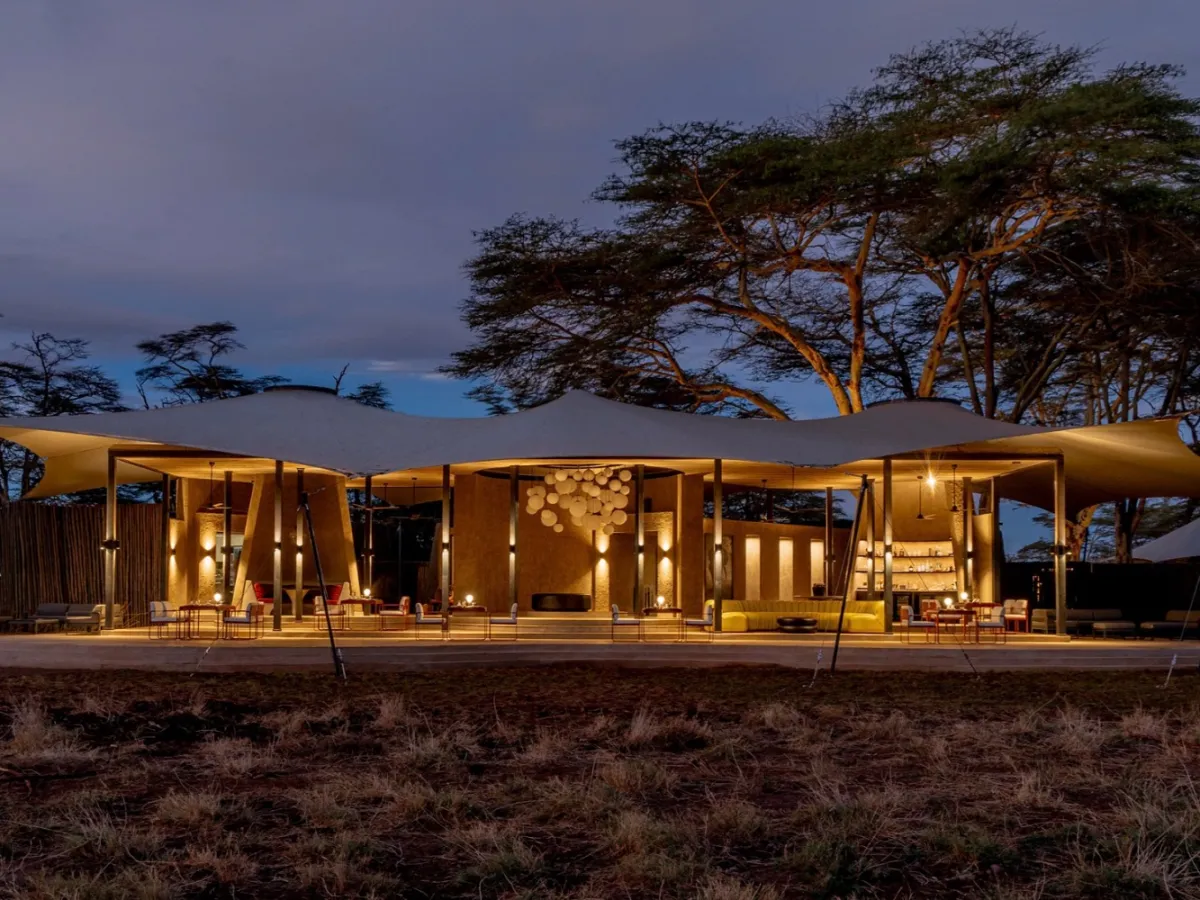
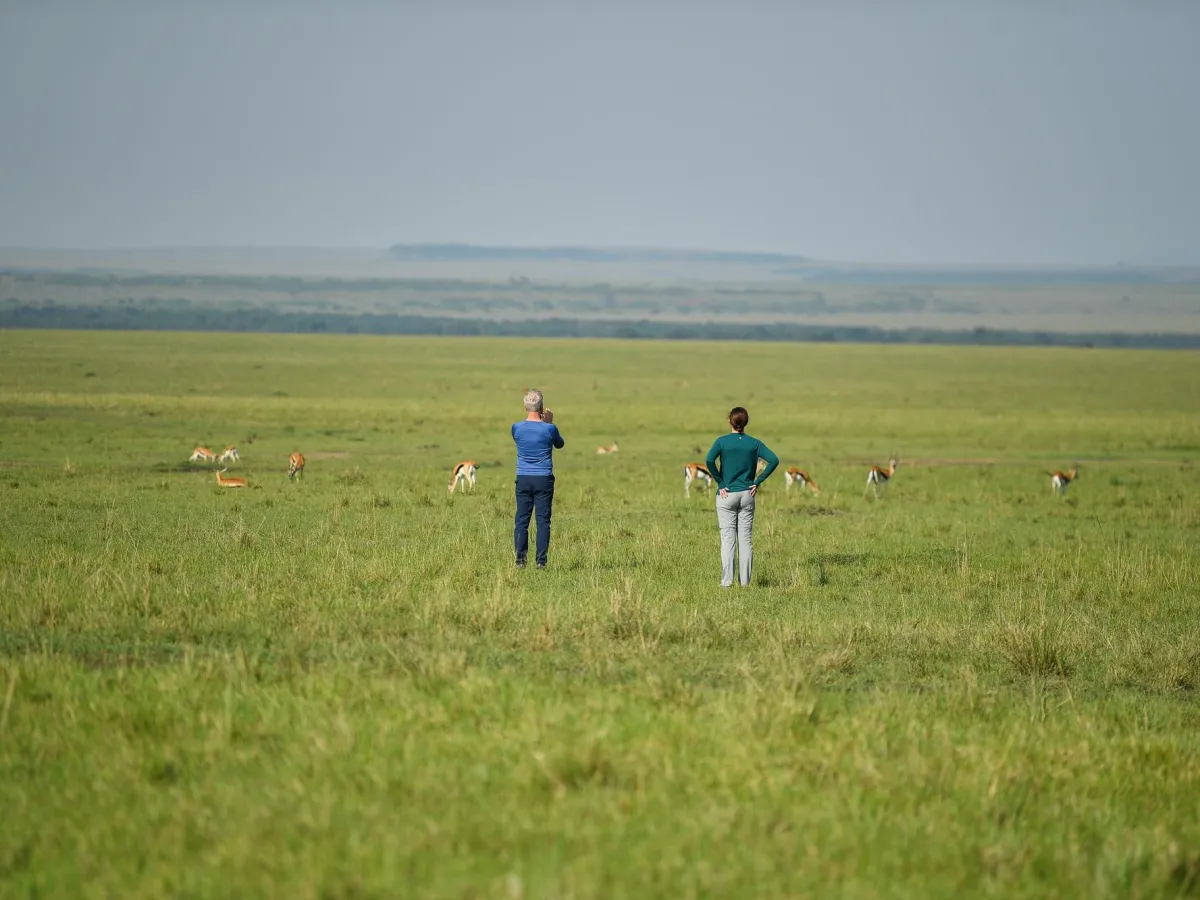
Today they live in a part of Kenya rich in wildlife. The land is protected, and community projects have built eco-friendly lodges run jointly with the Samburu. As a visitor, you can support the tribe by staying at these lodges and touring Samburu National Park.
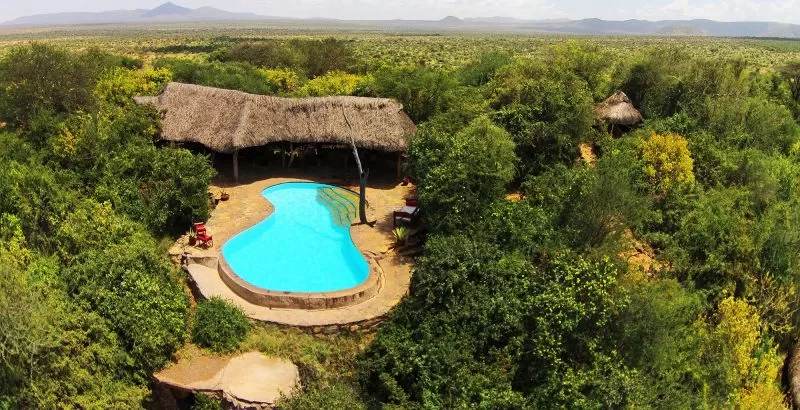
For a closer exchange, you can stay at the camps and lodges below:
- Il Ngwesi Lodge: an award-winning eco-lodge run by the local community, built of local materials, with six cottages. You can explore on foot, by camel or by safari vehicle.
- Sarara Tented Camp: a tented camp overlooking a waterhole that draws a range of animals. The local Samburu help run it and benefit directly.
- Maralal Camp: in the middle of Samburu land, offering a seven-day camel safari led by Samburu warriors, for a first-hand feel of the tribe’s life.
- Koija Starbeds Lodge: also run by the local Samburu, with walking safaris and visits to Maasai and Samburu communities.
The Samburu are a fascinating people and a part of Africa’s cultural richness. On your next trip to Kenya, consider staying at one of these lodges run by the tribe.
If you loved reading this story, then subscribe to our blog here (it will ask to verify your email) to get inspiring travel stories and trivia delivered to your email. Stories about wildlife trivia, cultural experiences, curated luxury hotel lists, underrated places to travel, polar journeys and much more.