There is a famous quote: ‘If the earth is a mother, rivers are her veins’. For centuries up until the present, humans and animals have continued to rely on this naturally flowing watercourse.
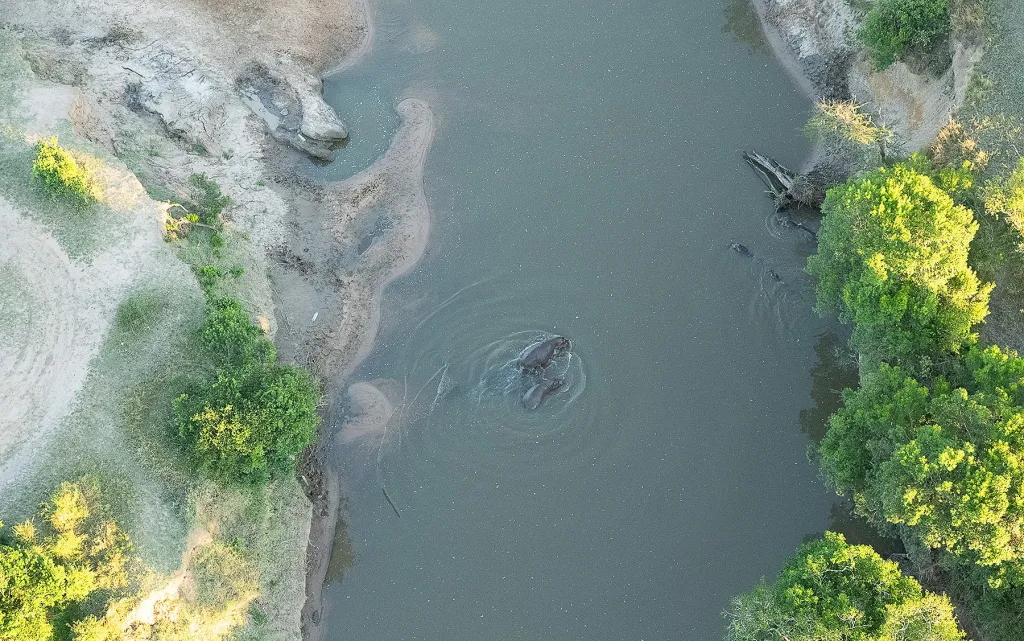
Rivers are an integral part of geographical features
Africa is one of the continents that is blessed to have rivers flowing over all its territories. It remains the livelihood of millions of people and wildlife. African rivers are used for food, fresh water, and transportation. Africa would be nothing but a wasteland if its rivers did not support its incredible ecology.
In certain national parks in Africa, a river safari or cruise is an enjoyable activity. These rivers create free-flowing pathways through the arid land. Moreover, they also attract animals and birds, who mainly depend on them for food and water sources. These safaris offer a unique perspective on wildlife as well as the African landscape.
Here are five of the most famous rivers in Africa that deserve to be visited at least once.
1. Nile River
The Nile is one of the longest rivers not only in Africa but also worldwide. It measures 6,650 km in length. Undoubtedly, it is the most popular river in Africa and is historically the longest river to ever exist.
The Nile flows northward from Burundi through Rwanda. It then travels to Uganda, South Sudan, Ethiopia, and Egypt before finally making its way to the Mediterranean Sea. It has three major tributaries: the Blue Nile, the White Nile, and the Atbara.
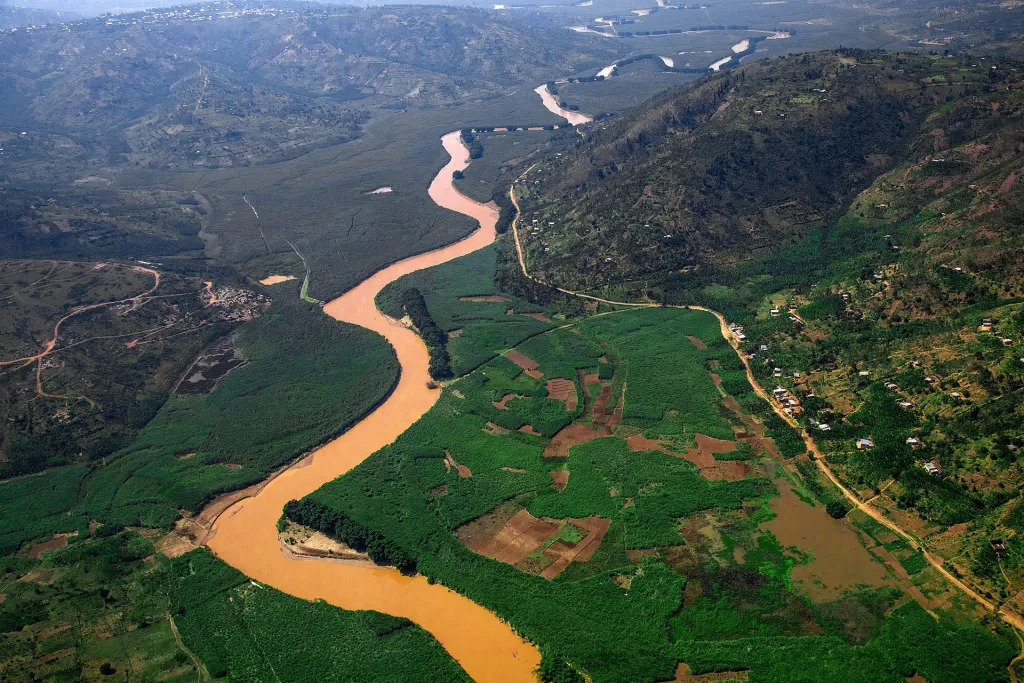
The Nile River flows through Uganda
This river is significant as the earliest civilisation began near the Nile. Today, over 160 million people depend on the fresh waters of the Nile River. Moreover, it links North and East Africa together and brings life to the African desert.
Many fish species, including tilapia, are found in the waters of the Nile. Several wildlife species, including crocodiles and snakes, reside in the river. It also supports a variety of vegetation, including papyrus, plume thistle, blue Egyptian water lilies, and more.
Although it is the longest river in the world, the navigable stretch of the Nile is only 1,545 km.
2. River Congo
The River Congo is the second-longest river in Africa and the world’s deepest river, recorded at 720 feet deep. The Congo River passes through the untrodden rainforests of Central Africa.
The river winds between Angola, Cameroon, the Central African Republic, and the Democratic Republic of the Congo. The sources of the river are found in the highlands and mountains of the East African Rift. Lake Mweru and Lake Tanganyika feed the river’s waters as well.
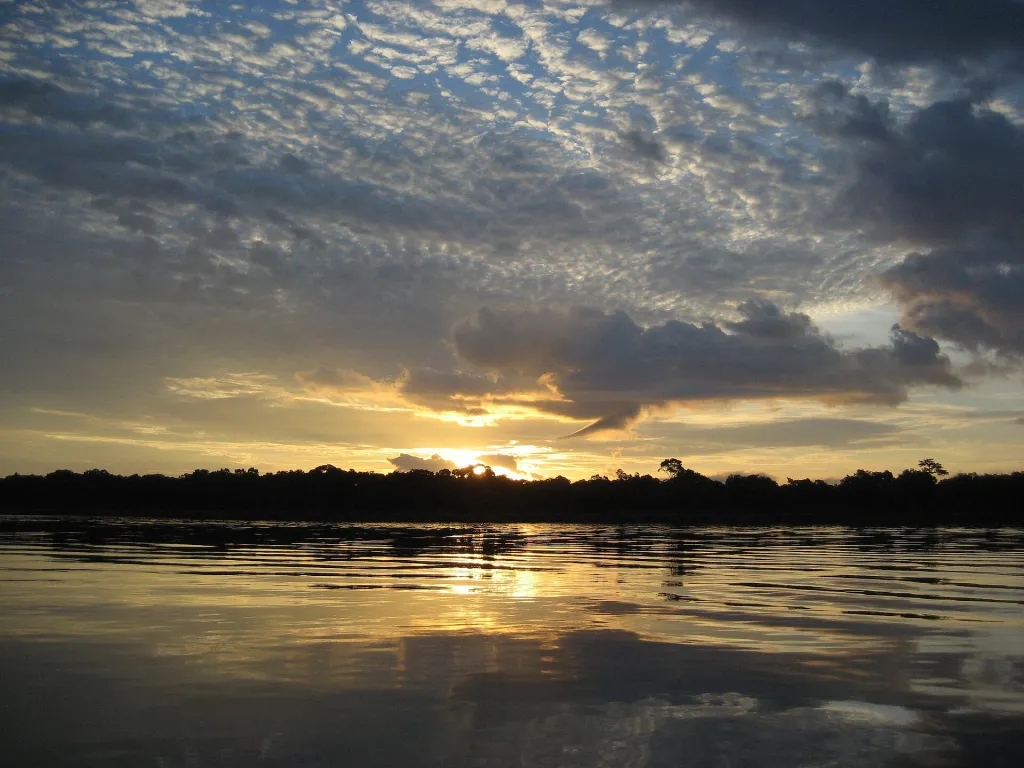
The River Congo crosses the equator twice during its journey from Southern DRC to its end-stop, the Atlantic Ocean. It has become an attractive tourist spot as the river flows through Salonga National Park.
The entire Congo region and the basin have been considered critical to the ecosystem. The river as well as the rainforest have diverse wildlife. The Congo River is an important source of water for rainforest animals. It is home to around 400 mammal species, more than 700 birds, 900 butterflies and 280 reptiles.
Moreover, the river has a significant place in myths and legends that are often associated with the Congo. In literature, author Joseph Conrad’s novella referred to this river as the ‘heart of darkness’ owing to its dark history.
3. Mara River
The Mara River belongs to Narok County in Kenya and the Mara Region in Tanzania. It stretches for a length of 395 km, wherein 65% of it lies in Kenya and the remaining 35% in Tanzania.
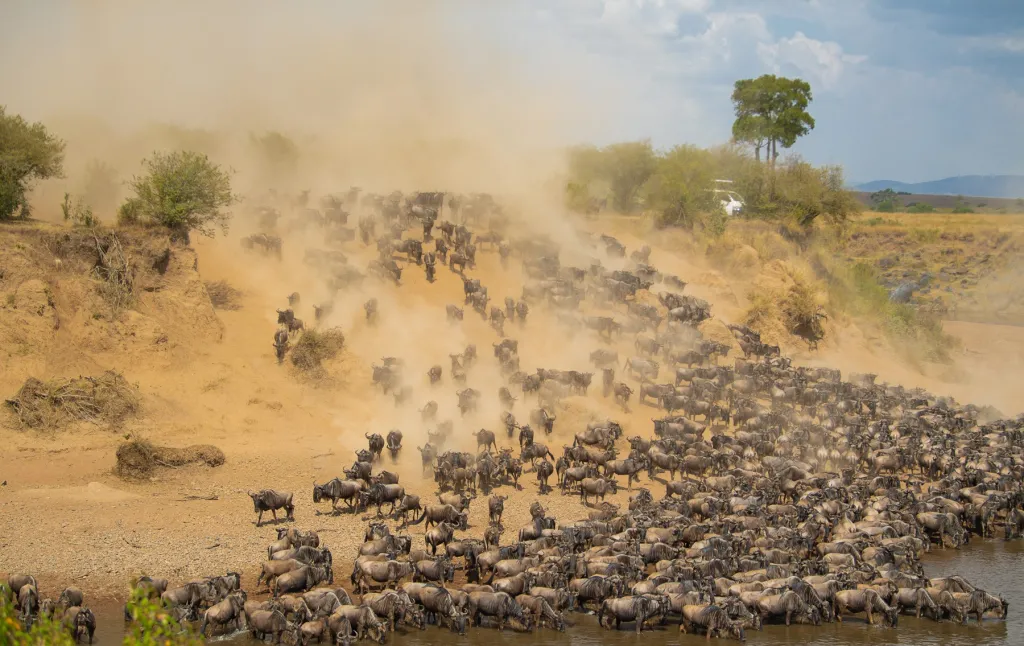
Wildebeest crossing the Mara River
The river originates from the Mara Escarpment and gets its sources from the Kenyan highlands before ending up in Lake Victoria. The Mara has four regions through which the river passes. One of them includes protected areas. The river flows into this region and becomes part of the popular Masai Mara National Reserve. It further makes its way to Tanzania’s Serengeti National Park and joins all four of its tributaries.
The Mara River is a fantastic place to witness the amazing wildlife of Kenya and Tanzania. It is also a vital source of food for the grazing animals living in the reserve.
On the banks of the Mara River, you can even become a witness to the natural phenomenon of the Great Migration. Close to 1.5 million wildebeest, zebras, and gazelles cross the Mara River annually throughout the Serengeti and Mara ecosystems.
This dramatic migration is at its peak when the animals crossing the Mara are met with predators like crocodiles. The river is full of life and shows the Great Migration in a way that cannot be seen anywhere else in the world.
4. The Chobe River
This river is known as the Cuando River in south-central Africa, the Linyanti River below the Linyanti Swamp, before finally becoming the Chobe River in the farther east. The river flows from Angola and Namibia’s Caprivi Strip into the Linyanti Swamp. The river ends up flowing into the Zambezi River.
The Chobe River measures 731 km in length as it passes through Botswana and Namibia. The river also forms a green belt through the African bush, which in turn draws a high concentration of wildlife.
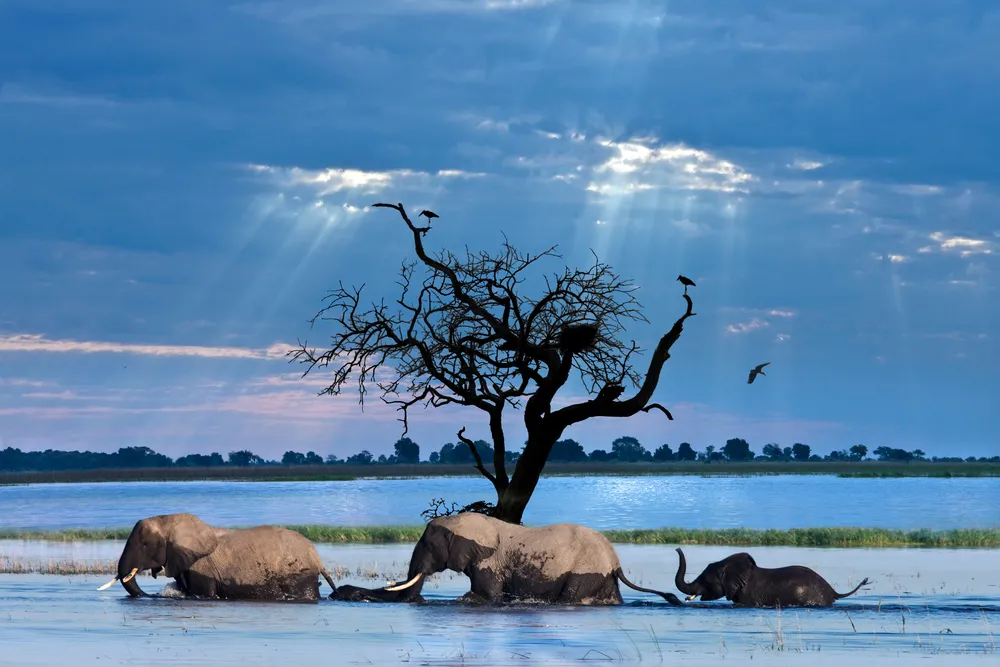
A herd of elephants on the banks of River Chobe
This river passes by the famous Chobe National Park in Botswana and is the only source for animals during the dry months. This river provides the ultimate river cruise or safari for tourists, as wildlife sightings are excellent.
Here, you can find herds of elephants, giraffes, lechwe, lions, leopards, different species of fish, reptiles like monitor lizards, and a variety of birds.
5. The Limpopo River
The Limpopo is one of the longest rivers in Africa, with a length of 1,800 km. It is the second-largest river in southern Africa, after the Zambezi.
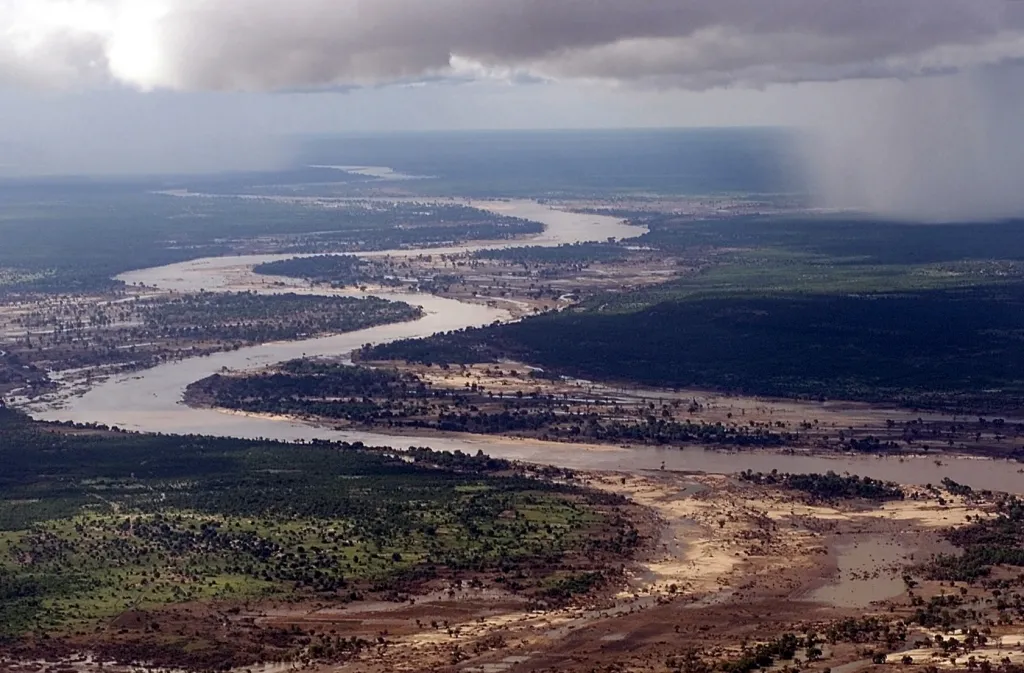
The Limpopo River from an aerial view
Aerial view, extreme long shot, looking down as the Limpopo River winds its way through Southern Mozambique, where it recently crested its banks and sent floodwaters rushing through towns and farmland, forcing people from their homes and wreaking havoc with the countries infrastructure. Even though waters have receded over the past week, heavy rains seen in the distance, continue to threaten the region with more flooding. C-130 aircraft (not shown), assigned to the 37th Airlift Squadron at Ramstein Air Base, Germany, fly daily Keen Sage aerial surveillance missions over Mozambique to help find stranded flood victims and survey flood levels and damage caused by the flooding in Southern Africa. The 37th Airlift Squadron C-130 aircraft, are deployed to Hoedspruit Air Force Base, South Africa, as part of the United States Operation Atlas Response, humanitarian relief efforts.
The Limpopo starts in southern Africa, in South Africa, and further flows to Botswana, Mozambique, and Zimbabwe. In the end, it empties into the Indian Ocean. This river is significant as the water serves as a border. It separates three countries from one another: South Africa, Botswana, and Zimbabwe.
The Limpopo passes through the northernmost area of Kruger National Park and offers an impressive view of Southern Africa’s landscapes. The natural wildlife habitat in this region includes hippos, elephants, and over 600 species of birds. This river is known for its calm and shows the varied landscape of southern Africa.
Aside from mountains and forests, these rivers have an integral role to play in Africa’s ecosystem. The five rivers listed in Africa are not only famous but also provide a unique perspective of the continent.
Each river is characterised by special features and a wide range of wildlife and is associated with cultural significance. These rivers offer an experience that cannot be had anywhere else in the world.
If you loved reading this story, then subscribe to our blog here (it will ask to verify your email) to get inspiring travel stories and trivia delivered to your email. Stories about wildlife trivia, cultural experiences, curated luxury hotel lists, underrated places to travel, polar journeys and much more.