The Great Migration is the largest overland movement of animals on earth. Every year more than a million wildebeest, together with hundreds of thousands of zebra and gazelle, loop through the Serengeti-Mara ecosystem in search of grass and water. It is a continuous, year-round cycle rather than a single event, and it is the main reason people plan a safari to Kenya and Tanzania.
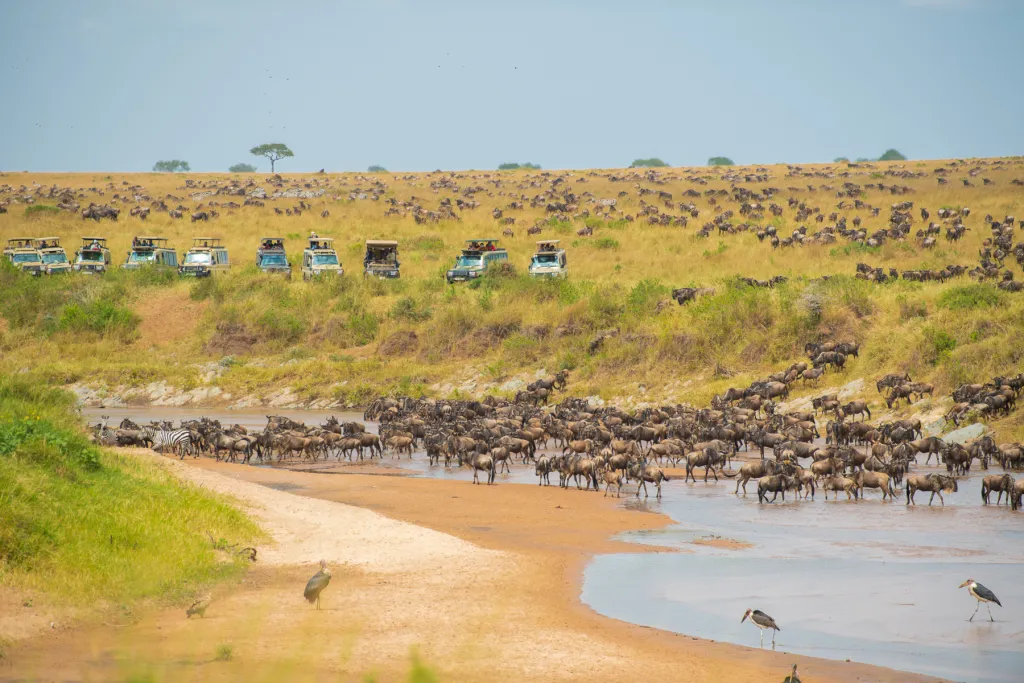
Annual cycle of migration
The herds do not move as one tidy column. They spread across the plains in scattered megaherds: calving in the south, pushing north and west as the grass dries, crossing rivers where crocodiles wait, and circling back when the rains return. Lion, leopard, cheetah, hyena and wild dog follow them the whole way.
What is the Great Migration?
The migration involves around 1.2 million wildebeest and roughly 400,000 zebra, along with gazelle, eland and topi, moving together through the Serengeti-Mara ecosystem. The loop runs between the southern Serengeti National Park in Tanzania and the Masai Mara in Kenya. Each animal covers roughly 800 to 1,000 km over the course of a year.
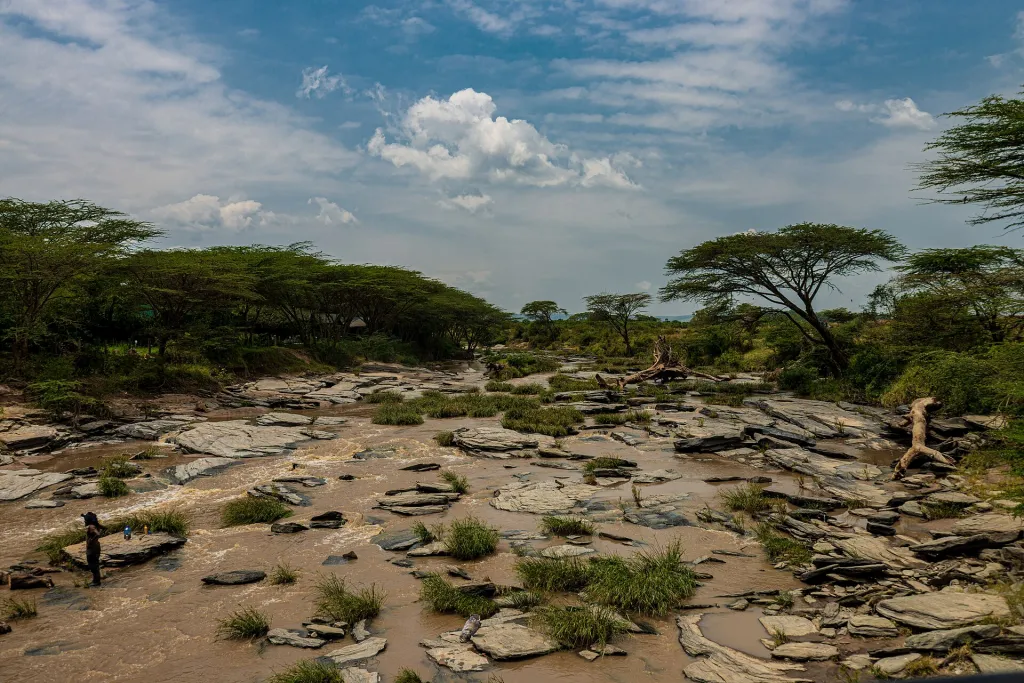
Talek river from top
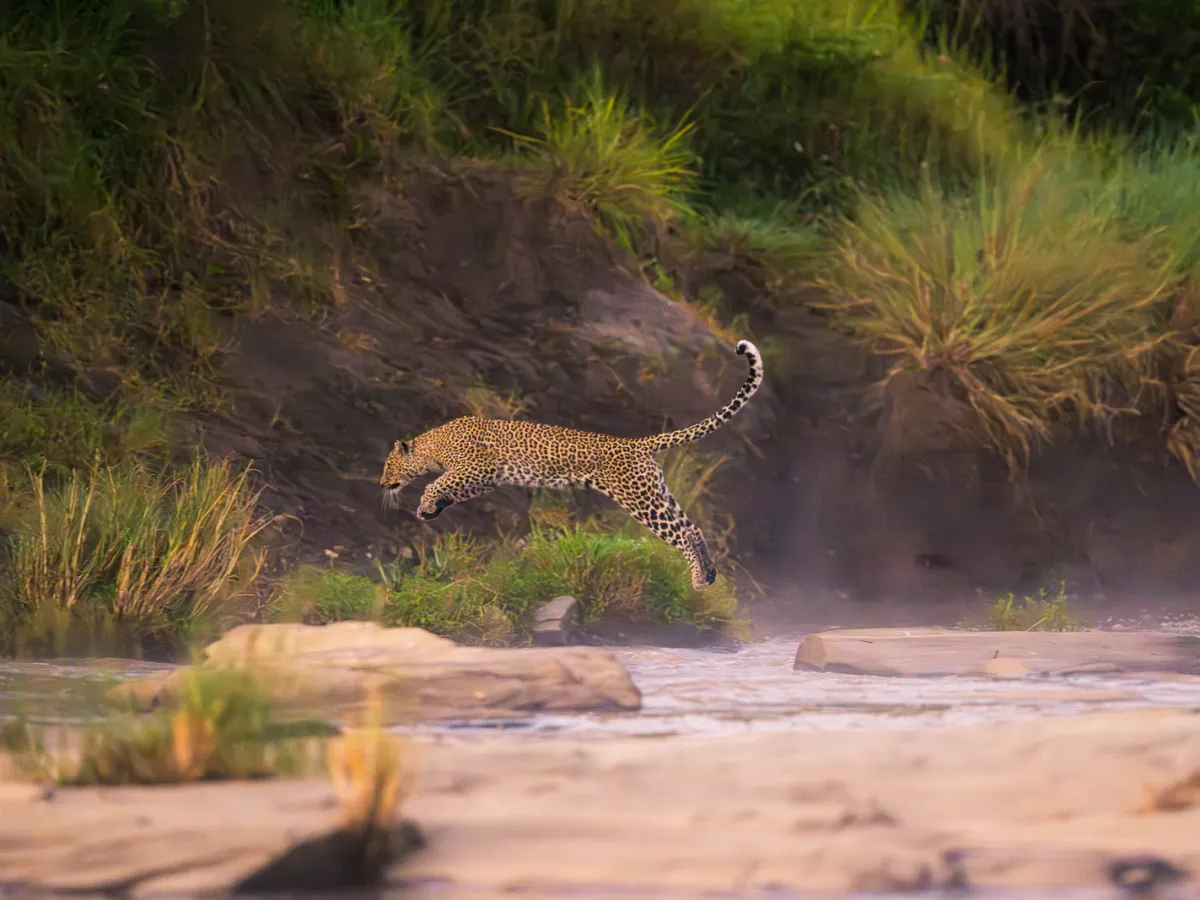
The journey is a hard one. On land, lions, leopards, cheetahs, hyenas and wild dogs shadow the herds and pick off the weak. At the rivers, large crocodiles wait in the water. In a typical year an estimated 250,000 wildebeest and around 30,000 zebra die along the way, from predation, exhaustion, starvation or disease.
Calves travel with the herds, which draws still more predators, since the young are the easiest targets. What sets the whole movement off is rain. No one is certain how the wildebeest choose their direction, but they appear to sense storms and rainfall from many kilometres away and move towards the fresh grass that follows.
Why does it happen?
The reason is simple: food and water. The herds spend much of the year on the southern plains of the Serengeti, where the rains bring lush grass and the wildebeest gather to calve. When that grass and water run down, they head north and west through the Western Corridor. They reach the Masai Mara in the second half of the year, stay for roughly two months, then turn south again as the southern plains recover.
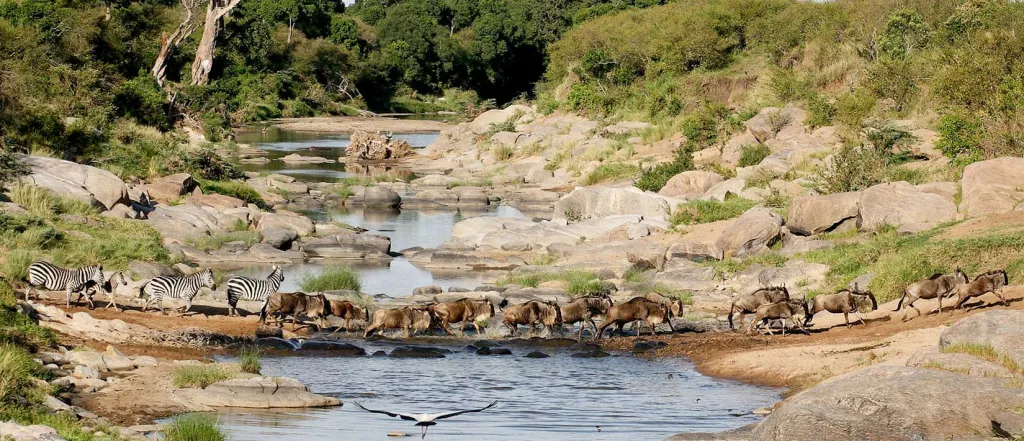
Crossing on Olare Orok river
The Great Migration: a timeline
The timing follows the rains, and the rains are not fixed. The short and long rains in Kenya and Tanzania shift from year to year, so the calendar below is a guide, not a guarantee. It is also why a migration safari is worth planning over a week or more, rather than two or three days.
January
The herds are on the southern Serengeti near Lake Ndutu. The two million or so animals are not one herd; they break into megaherds of hundreds or thousands.
February to March
This is the heart of the calving season, though the first births come in late January. At the peak, females give birth to as many as 8,000 calves a day, and the newborns start learning to keep up almost at once. Many are taken by predators. Lion prides do most of the hunting, but you may also see leopard, cheetah, jackal, hyena and wild dog on the chase.
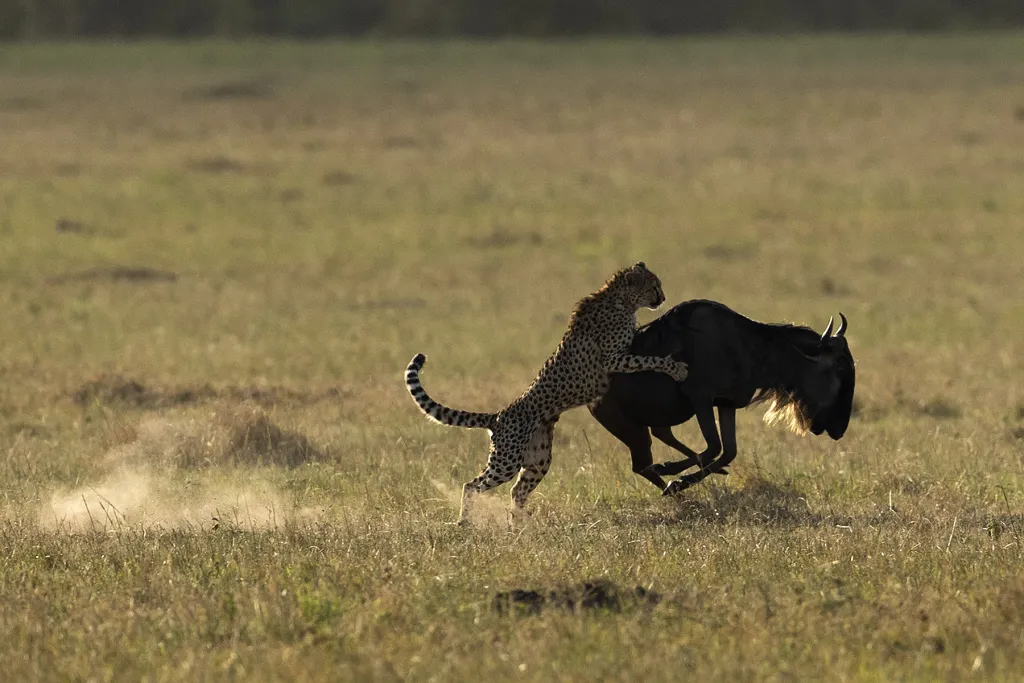
A cheetah hunting them down
As the rains arrive in March, the herds stop working the short-grass plains and begin moving west.
April to May
The long rains fall, and flooding can make the herds harder to find. They drift north-west towards the Simba Kopjes and Moru. This is also the rut, when males compete for mates. By May the herds reach the central Serengeti and pick up pace as the calves strengthen.
June to mid-July
The animals push through the Seronera Valley and into the Western Corridor. Here comes the first big test: the Grumeti River, where large crocodiles wait. The herds mass on the bank and cross in a rush.
Late July to October
The herds cross the northern Serengeti and enter the Masai Mara. The Mara River is the hardest crossing of all, crocodile-infested and often the scene of heavy losses.
It is a raw sight. Animals that have come this far can still be lost to injury or predation at the water. Those that make it find good grazing on the far side, in country rich with other wildlife.
November to December
Short rains green the Mara, and the herds spread out across the southern plains, Ndutu, Ngorongoro and Loliondo. Once the Mara grass is spent, they turn back towards the recovering Serengeti. The survivors will calve again in the new year and begin the whole circuit once more.
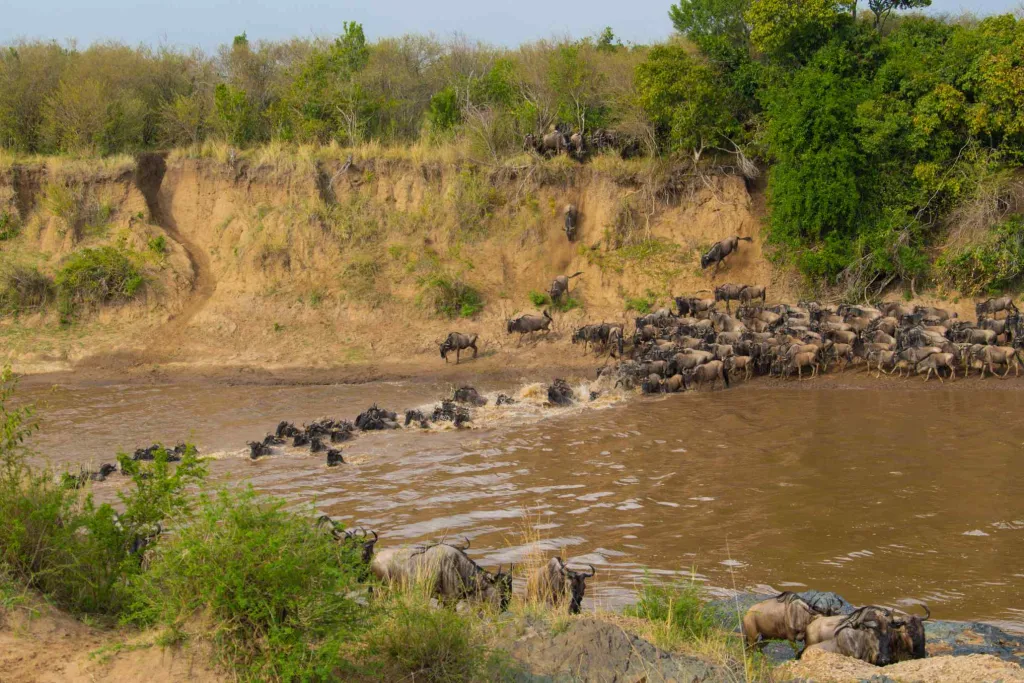
Great river crossing
Masai Mara or Serengeti: where to watch
The herds pass through both, so Kenya and Tanzania are both valid choices. Each offers a different experience.
Serengeti National Park
The Serengeti is less accessible than the Mara. In heavy rain the roads can flood and the herds get hard to reach. But it suits travellers who want a genuine camping trip, and because it is more remote it sees fewer vehicles. A river crossing here can be a quiet, almost private thing, shared with only a handful of other people.
Masai Mara
The Mara is the more reliable place to see the migration and the river crossings, because the herds funnel through a more concentrated area, and it is easy to reach from Nairobi. It is good country for the rest of the game too: lion, elephant and giraffe are common, and black rhino are here, though scarce and never a certainty.
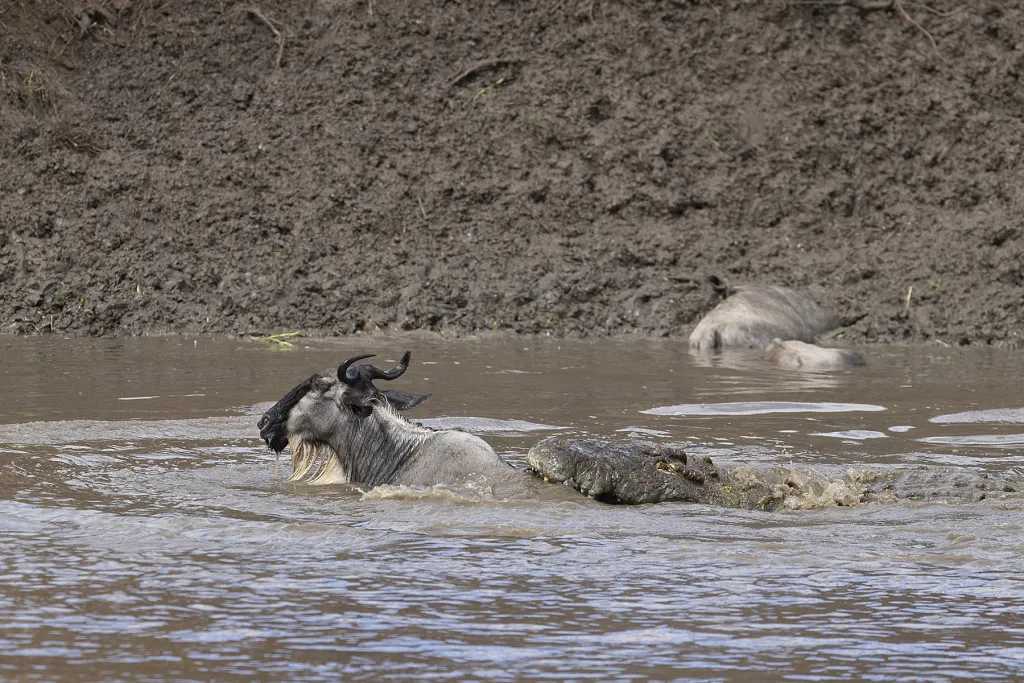
Wildebeest trapped by crocodiles
The Mara River crossing
The Mara River crossing is the moment most visitors come for. The river runs along the Kenya-Tanzania border, and the herds must get across it. Crocodiles lie hidden in the water, so the tension builds as the animals gather. When they finally plunge in, some are taken.
The wildebeest know the danger. They may stand on the bank for days, waiting for one animal to jump before the rest follow, or give up and move to another spot. A crossing is never guaranteed on any given day. With a good local guide, though, you can be in position early, before the crowds of vehicles arrive.
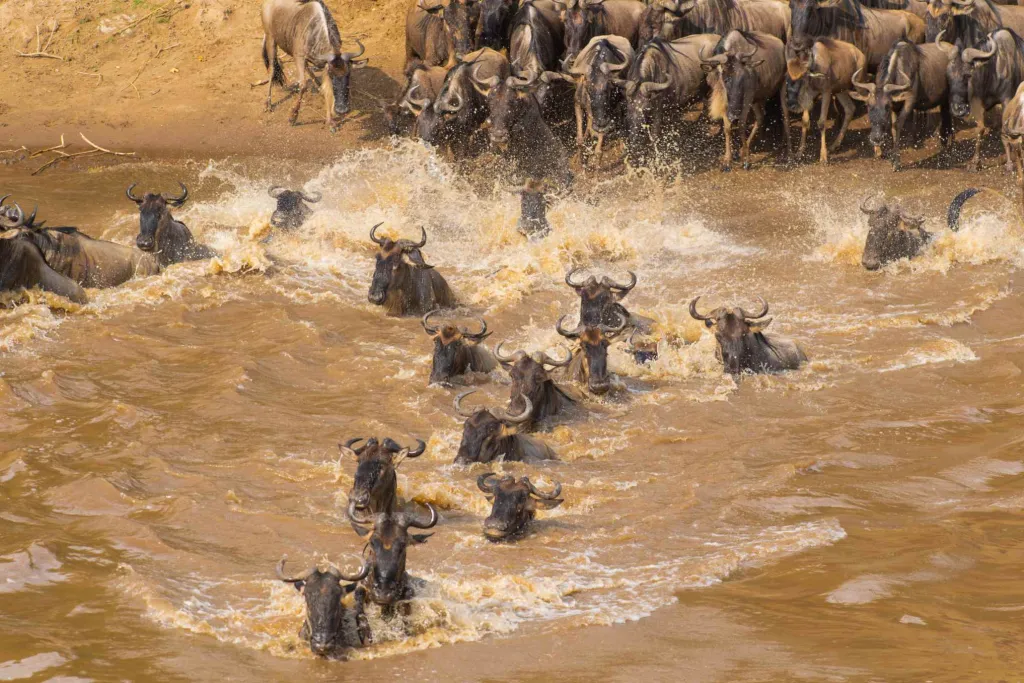
Another day, another crossing
When is the best time?
Because the migration is a year-round loop, there is always something happening somewhere. The peak for most visitors is July to October, when the herds move between the Serengeti and the Mara and the river crossings take place. Calving in the south runs from late January into March. Neither window is exact, so build in some flexibility.
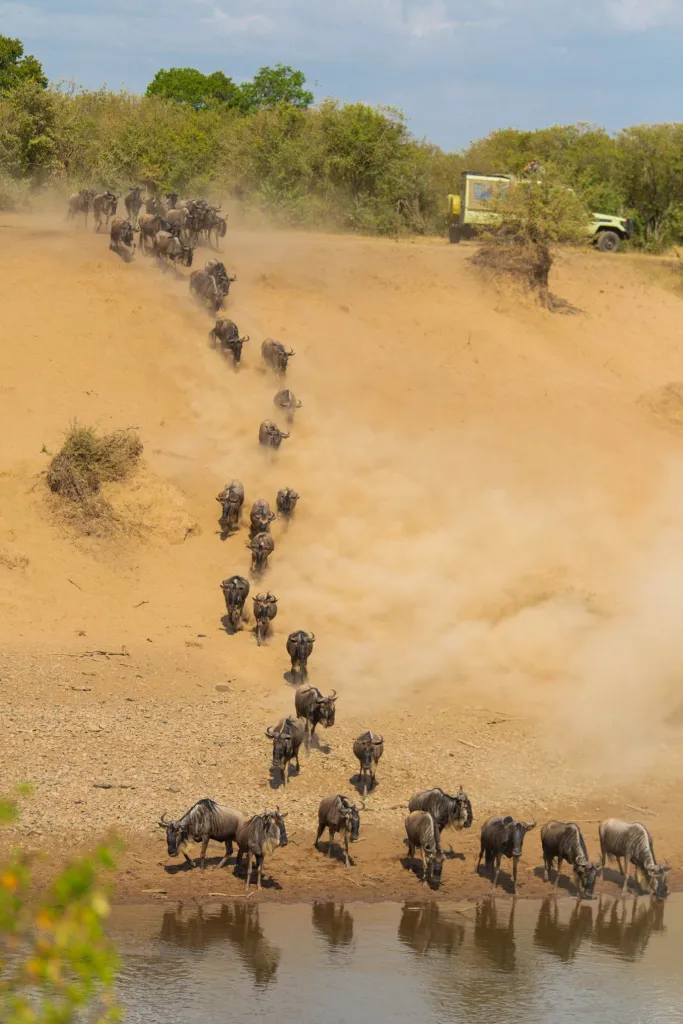
Herds about to cross
How to make the most of it
A few things help:
- Use an operator with a real presence on the ground in Kenya, like Wild Voyager, who track the herds daily and know where and when the crossings tend to happen.
- Book early. Peak season runs June to October and the best camps fill fast, often eight months to a year ahead.
- Plan around what you most want to see. The migration turns on the rains, so decide whether calving, the rut or the river crossings matters most to you.
- The migration hotspots get busy. Choose camps that also offer good general game viewing, so a quiet migration day is still a good day.
- Consider combining the Mara and the Serengeti, and adding parks such as Amboseli, Ngorongoro Crater, Laikipia and Tarangire.
Here is a 60-second explainer with simple infographics:
If you loved reading this story, then subscribe to our blog here (it will ask to verify your email) to get inspiring travel stories and trivia delivered to your email. Stories about wildlife trivia, cultural experiences, curated luxury hotel lists, underrated places to travel, polar journeys and much more.