Olduvai Gorge is one of the world’s most important palaeoanthropological sites. Also spelled Oldupai Gorge, it lies in Tanzania, between the Ngorongoro Crater and Serengeti National Park, and it has done much to advance our understanding of human evolution.
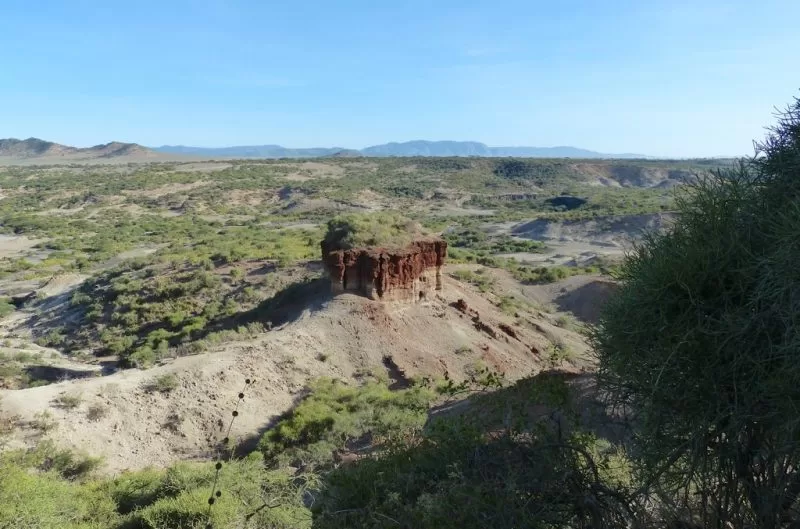
The Olduvai Gorge
On a trip to Tanzania, Olduvai Gorge makes for a fascinating stop. It offers a window into the story of our ancestors, an informative museum and fine views over the country.
The shape of the gorge
Olduvai Gorge, cut over time by geological activity and streams, is a steep-sided ravine. It has two branches, together about 30 miles (48 kilometres) long, and is around 295 feet (90 metres) deep. For all its depth, it is not large enough to count as a canyon.
A river has cut down through several layers to form four distinct beds, the oldest thought to be about 2 million years old. In each of these beds, palaeoanthropologists have made important discoveries.
Why the gorge matters
Olduvai takes its name from the Maasai word oldupai, meaning “the place of the wild sisal,” after the East African wild sisal that grows across the area.
The gorge holds some of the earliest evidence of our ancestors. The first early human species to live here, palaeoanthropologists suggest, was Homo habilis, around 1.9 million years ago. Our own species, Homo sapiens, is thought to have emerged roughly 300,000 years ago, and seems to have lived in the gorge at least 17,000 years ago.
Palaeoanthropologists have found stone tools and hundreds of fossil bones here dating back millions of years, which led them to conclude that humans evolved in Africa. The deposits on the sides of the gorge span from about 2.1 million to 15,000 years ago and have yielded the remains of more than 60 members of the human lineage, or hominins.
The site also shows the growing development and social complexity of these early hominins. Even before stone tools appear, there is evidence of hunting and scavenging, and of social interaction and community life that points to growing cognitive ability.
Discovery and research
In 1911, the German physician Wilhelm Kattwinkel visited Olduvai while in East Africa to study sleeping sickness, and noticed the fossil bones of an extinct three-toed horse.
The German geologist Hans Reck, taken with Kattwinkel’s find, led a team to Olduvai in 1913 and found hominin remains, later dated to about 17,000 years ago.
Further expeditions were planned but cut short by the First World War. Louis and Mary Leakey, British palaeoanthropologists, visited Reck in Berlin and saw the Olduvai fossils. The Leakeys became convinced the gorge could hold stone tools, and Louis Leakey thought the remains were of a similar age to those at the Kariandusi site in Kenya.
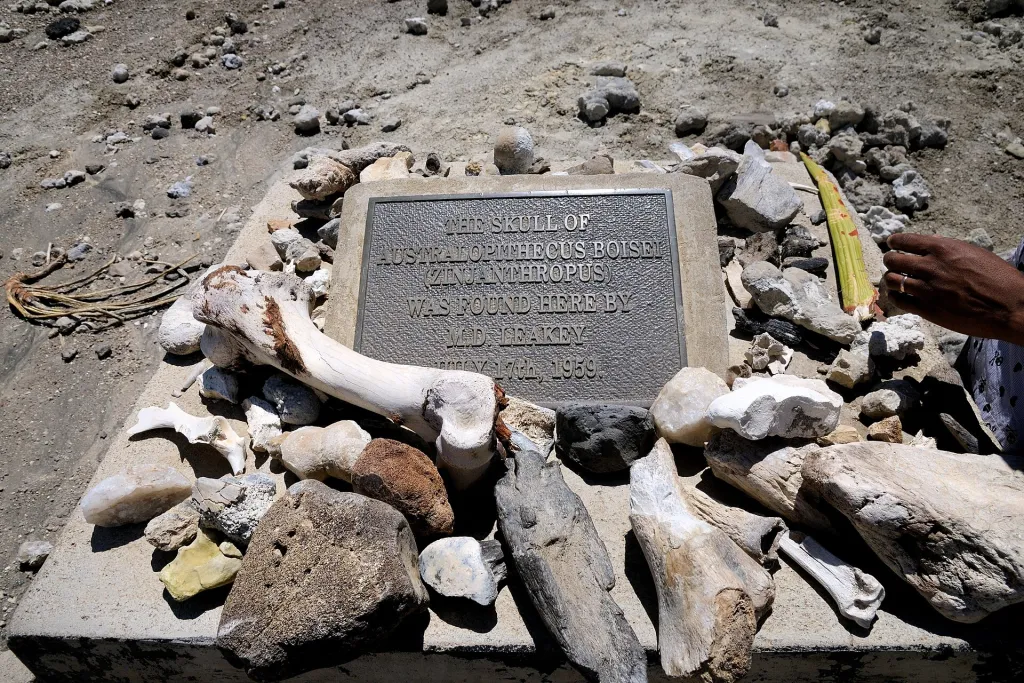
A plaque marking the discovery of Australopithecus
In the 1930s, the Leakeys found stone tools at Olduvai and elsewhere. Their finds included several extinct vertebrates, among them an early fossil ape skull, Proconsul, around 18 million years old.
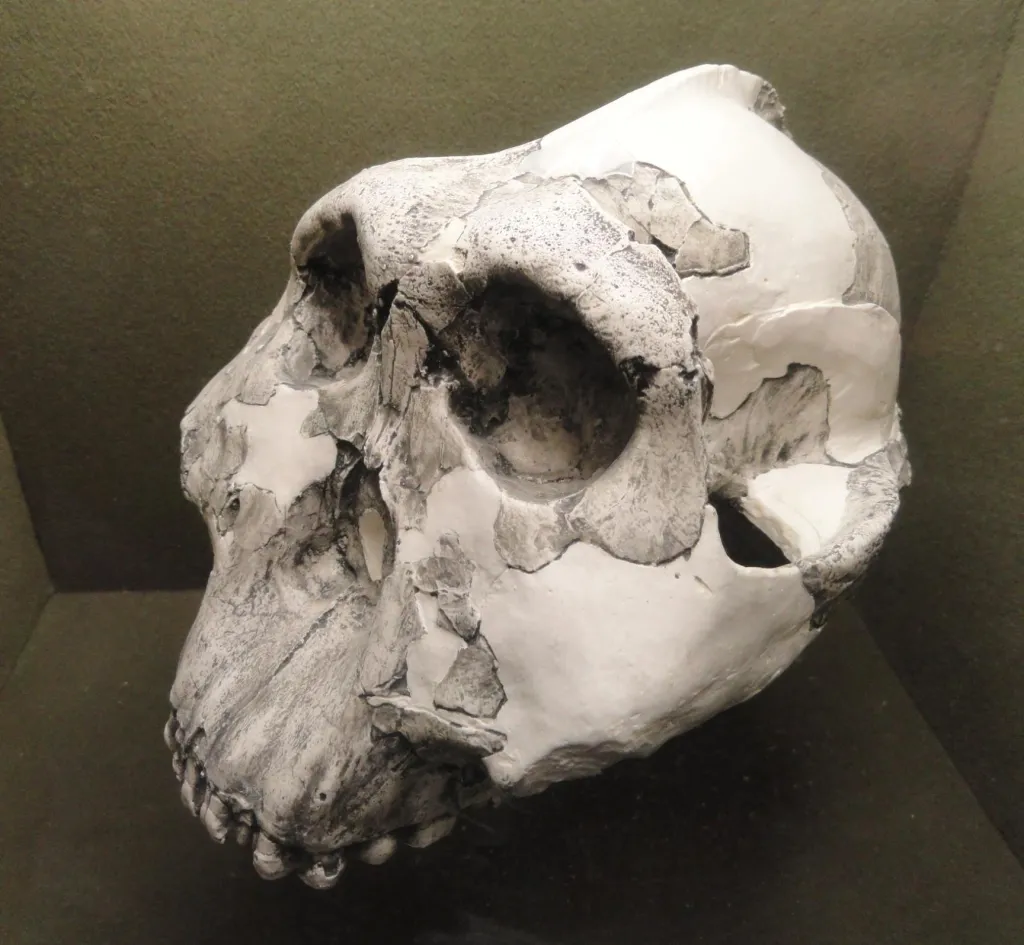
Paranthropus boisei fossil hominid
In the late 1950s, the Leakeys found 400 pieces of a nearly complete skull. Dated to about 1.75 million years ago, it was the oldest hominin discovered up to that point.
In 1960, the Leakeys found a well-preserved fossil foot with arches, supporting the idea that hominins walked upright. Mary Leakey and her son Jonathan uncovered another, smaller hominin, Homo habilis, the “handy human,” so called because it seemed able to use tools.
The Leakeys are credited with most of the excavations and discoveries at Olduvai.
Other discoveries
A 1.8-million-year-old skull was found at Olduvai by Peter Nzube, part of the Leakeys’ team, in 1968. Because it had to be reconstructed from a flattened state, it was named Twiggy.
One of the most significant finds came in 1986, when a team of American and Tanzanian archaeologists unearthed more than 300 bones and teeth of a female who lived about 1.8 million years ago.
The museum and monument
Many of the excavation sites are still worked today. In 2019, the Olduvai Gorge Monument was built at the turn-off to the gorge, both to mark the site and to draw visitors to the gorge and museum.
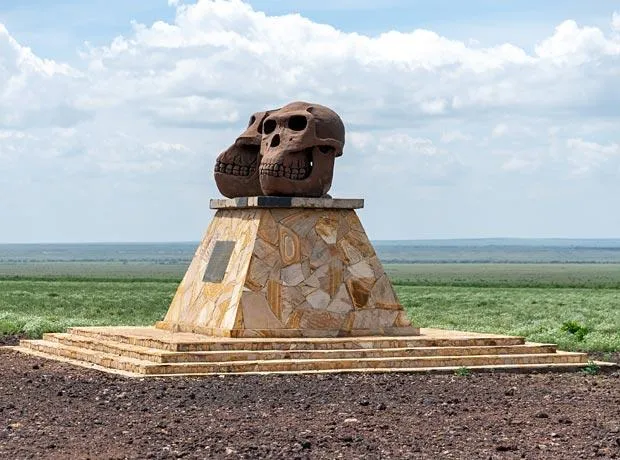
The Olduvai Gorge monument
The monument has two large models of fossil skulls by the Tanzanian artist Festo Kijo, showing the two species first found here, Homo habilis and Paranthropus boisei.
Official guides can take you through the gorge and its history, and 5 km beyond the monument is the Olduvai Gorge Museum, with exhibits on the site and its finds.
Olduvai Gorge has a long history and has contributed enormously to the study of human evolution. It is a must for anyone travelling in northern Tanzania.
If you loved reading this story, then subscribe to our blog here (it will ask to verify your email) to get inspiring travel stories and trivia delivered to your email. Stories about wildlife trivia, cultural experiences, curated luxury hotel lists, underrated places to travel, polar journeys and much more.