Wildebeest calving is the birth pulse that opens the great migration. Every year, from about late January into March, more than a million wildebeest give birth on the Ndutu plains in the southern Serengeti, in Tanzania. Births peak in February, when the short-grass plains fill with calves, and with the predators that follow them. It is the largest gathering of grazing animals anywhere on earth, and it is the first stage of a year-long cycle. Calving is easiest to understand once you know that cycle, so start there.
The Great Migration
The great migration is a year-round loop. Around two million wildebeest, zebra and gazelle move through the Mara-Serengeti ecosystem, always following fresh grass and rain. No one fully explains how they know where to go; the herds simply track the greener pasture. The rough calendar looks like this:
January to March: calving on the Ndutu Plains in the southern Serengeti.
April to May: the herds move west and north as the short-grass plains dry out.
June to July: they cross the Grumeti River in the western Serengeti.
July to October: they cross the Sand and Mara rivers into the Masai Mara in Kenya, with the biggest river crossings in August and September.
November to December: they drift back south into the Serengeti through the eastern corridor, reaching Ndutu again by year’s end.
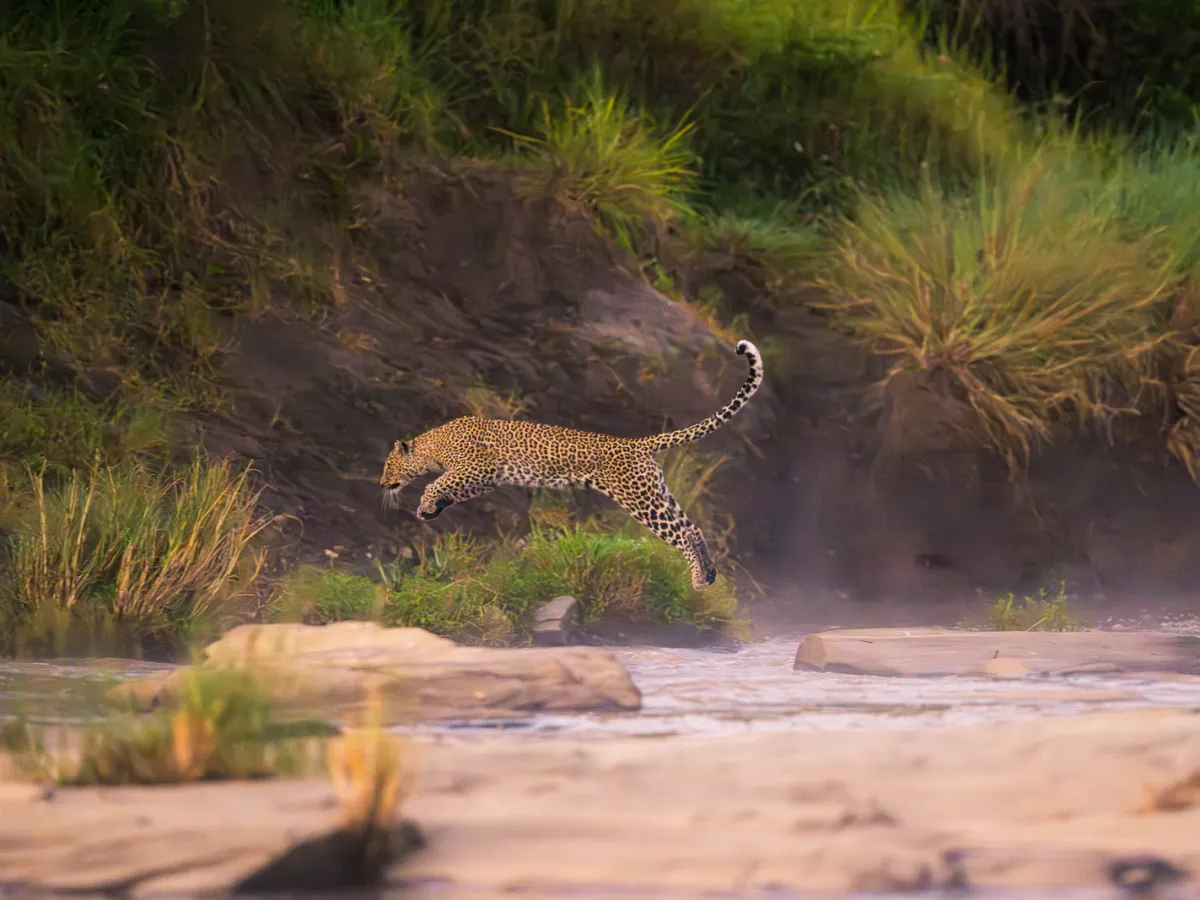
The journey is dangerous. Crocodiles wait at the river crossings, and lion and leopard hunt along the banks. The herds cross anyway, year after year.
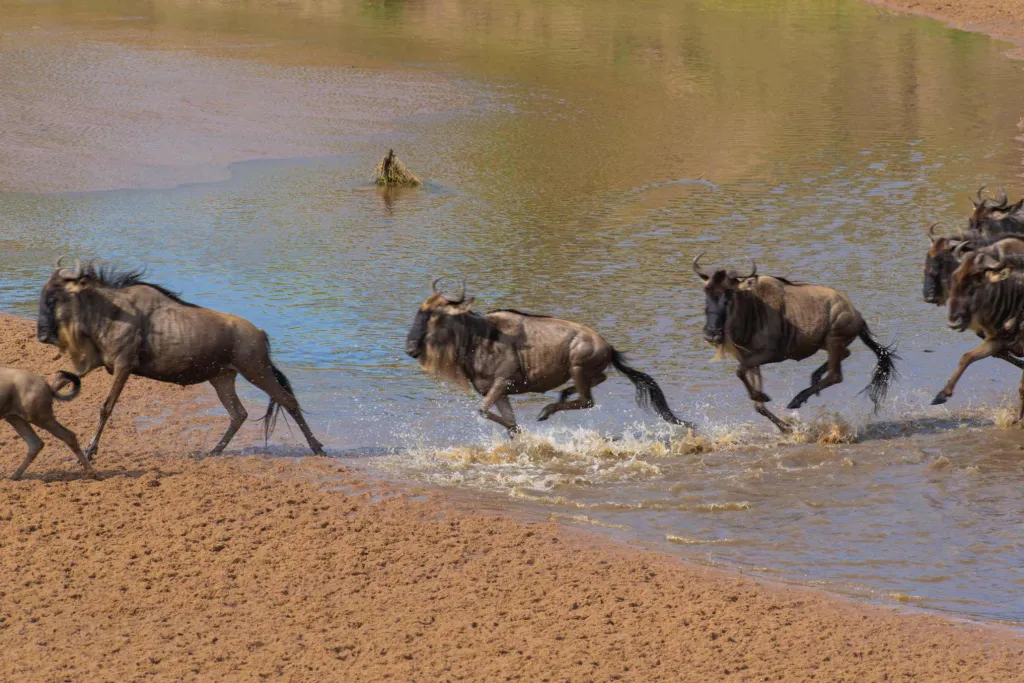
Migration animation
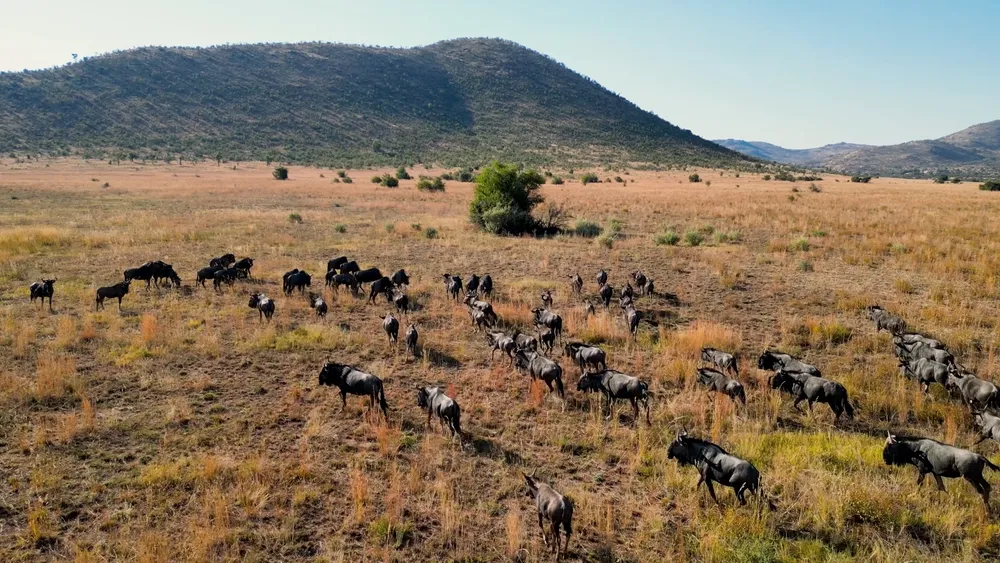
The herds of Ndutu
Ndutu Plains & Calving
The Ndutu plains sit where the Ngorongoro Conservation Area meets Serengeti National Park. After the short rains they turn green, and that fresh grass is what draws the herds down to give birth. At the peak, around 8,000 calves are born a day. The season runs from late January into March, with most births in February.
Ndutu is the best place to take in the scale of the migration. Zebra, Thomson’s gazelle and eland graze alongside the wildebeest, taking the coarser grass the calves leave behind. In all, close to two million animals gather here. Lake Ndutu is the prime vantage point: herds pack the surrounding plains to graze and calve, and where the calves go, the big cats follow.
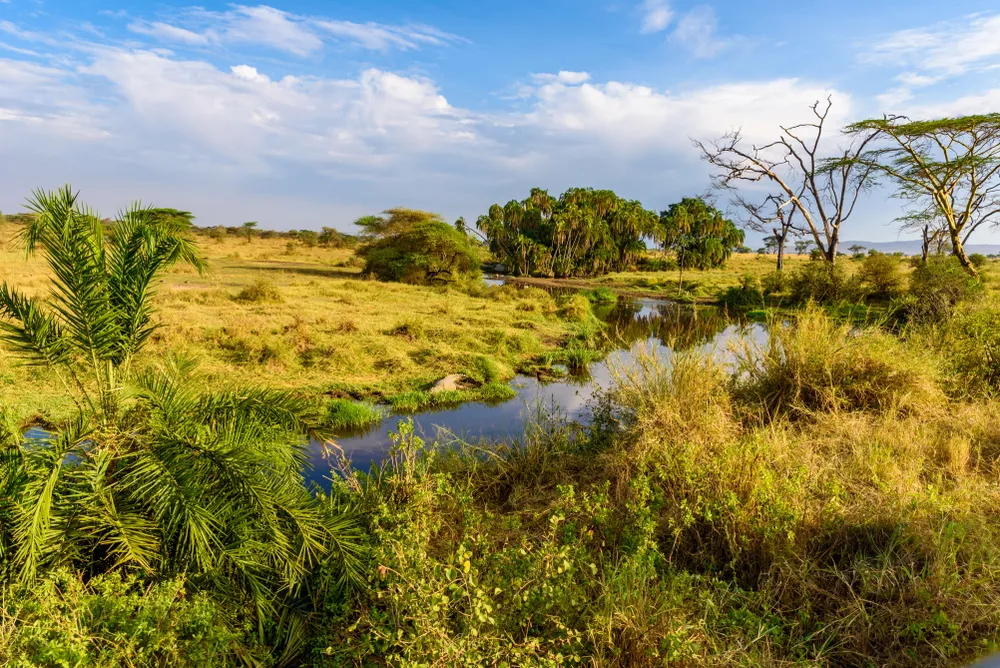
Plains of Ndutu
Predators
Calving season concentrates predators. Lions, cheetahs, caracal, serval and hyena all move in to target the calves. The wildebeest have defences of their own. Females often gather on the short-grass plains and close ranks around the birthing mothers and newborns. A calf can stand within minutes and keep pace with the herd within a day, far quicker than most prey animals, and that speed is what carries most of them through.
For visitors, this is the most active time to be on the plains. Predator and prey have evolved to breed in the same short window, so chases and kills are common, and the open ground and clear light make it strong for photography.
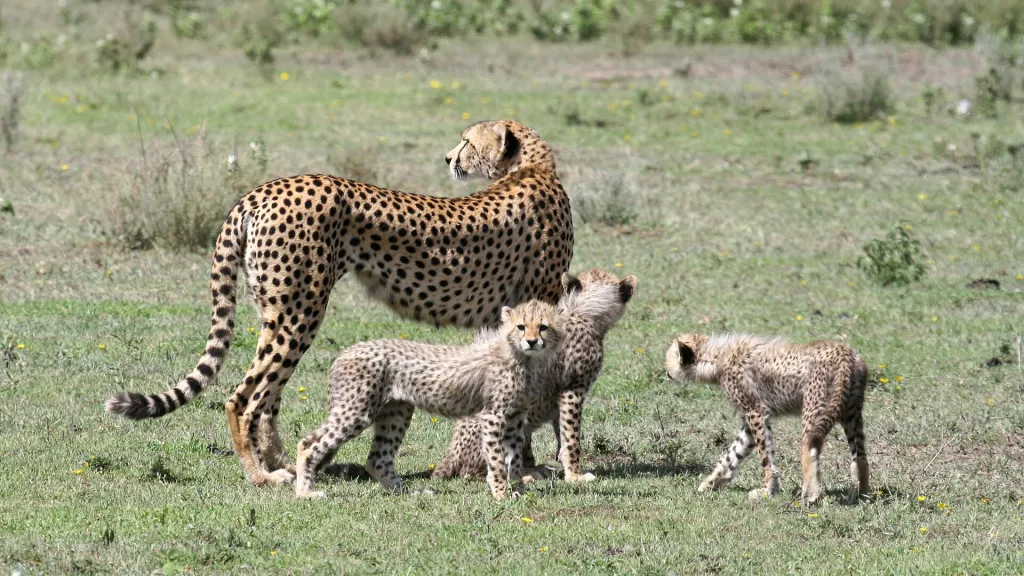
Cheetah family in Ndutu
Accommodation
Ndutu is part of the Ngorongoro Conservation Area, not to be confused with the Ngorongoro Crater itself. It is about a six-hour drive from Arusha, or a short flight to the airstrip by Lake Ndutu.
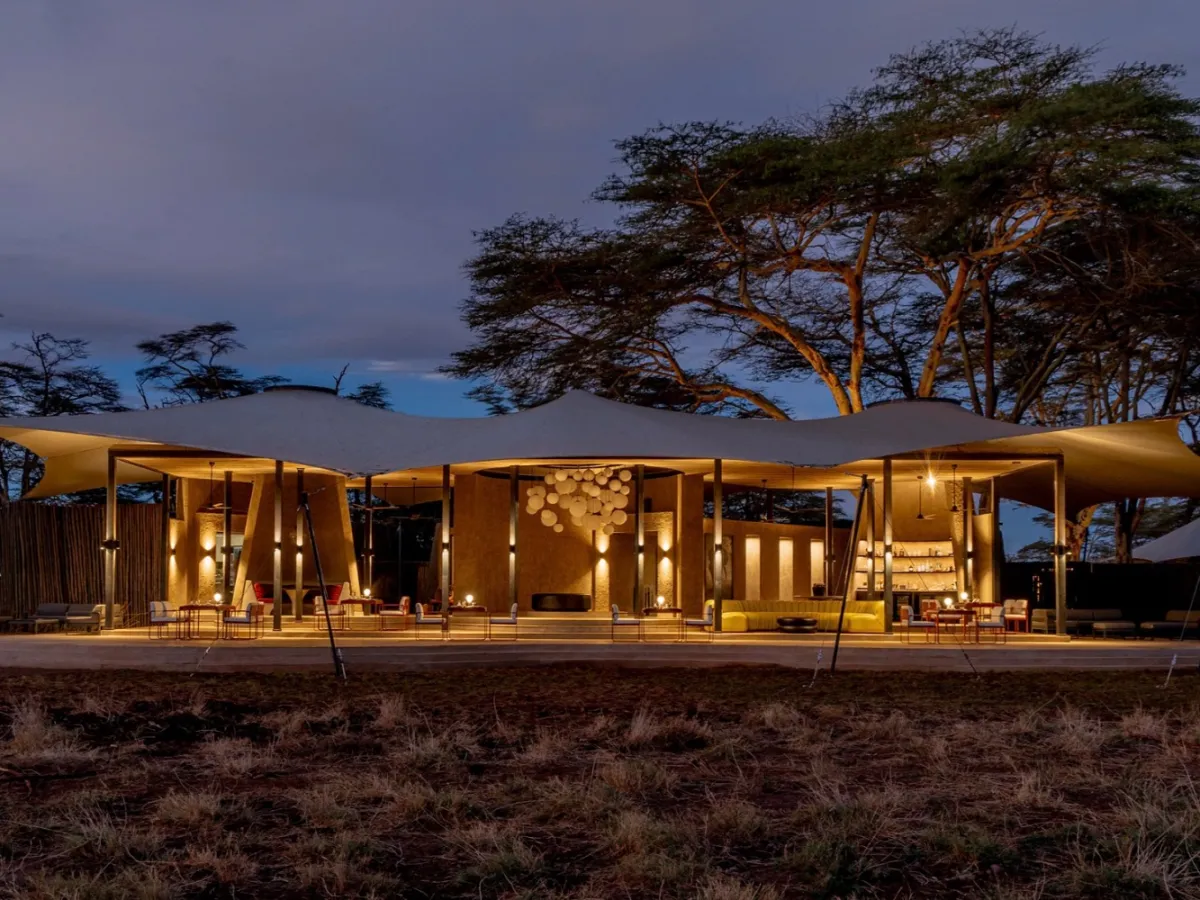
Because calving moves with the grass, mobile tented camps are the usual choice: canvas-and-wood tents that shift with the herds. Camps such as Olakira and Ubuntu run seasonal migration setups near the conservation area, with en-suite guest tents and private verandas. For a permanent base, Mwiba Lodge in the Mwiba Wildlife Reserve, in the southern Serengeti, has suites with large private decks over the plains. To plan the trip, see our wildebeest calving group tour, or ask us to arrange a private version.
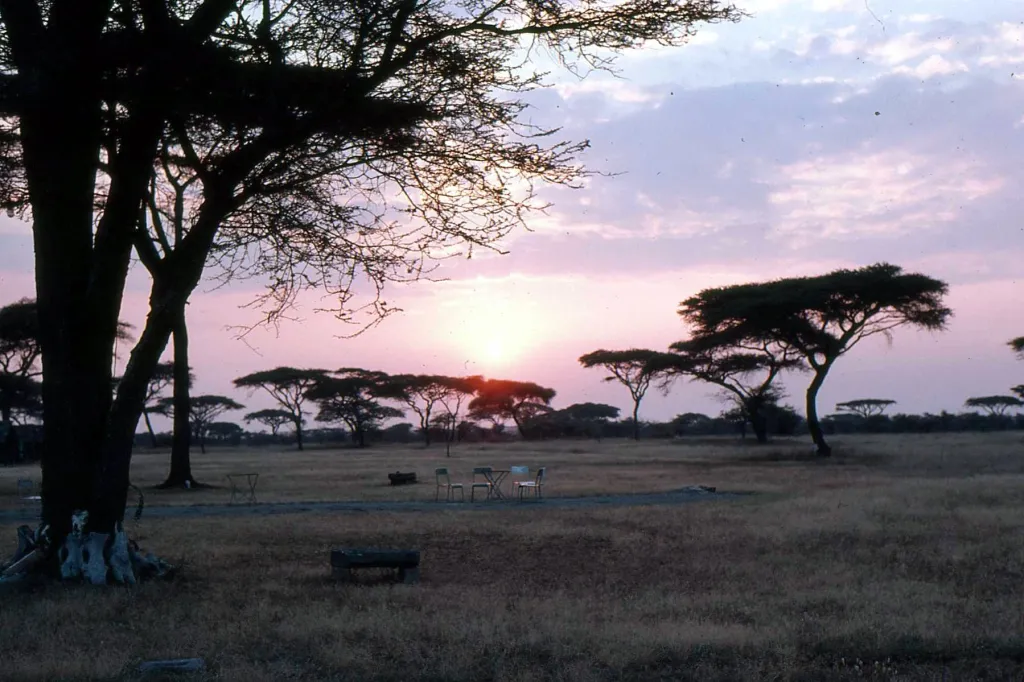
Views from Ndutu lodge
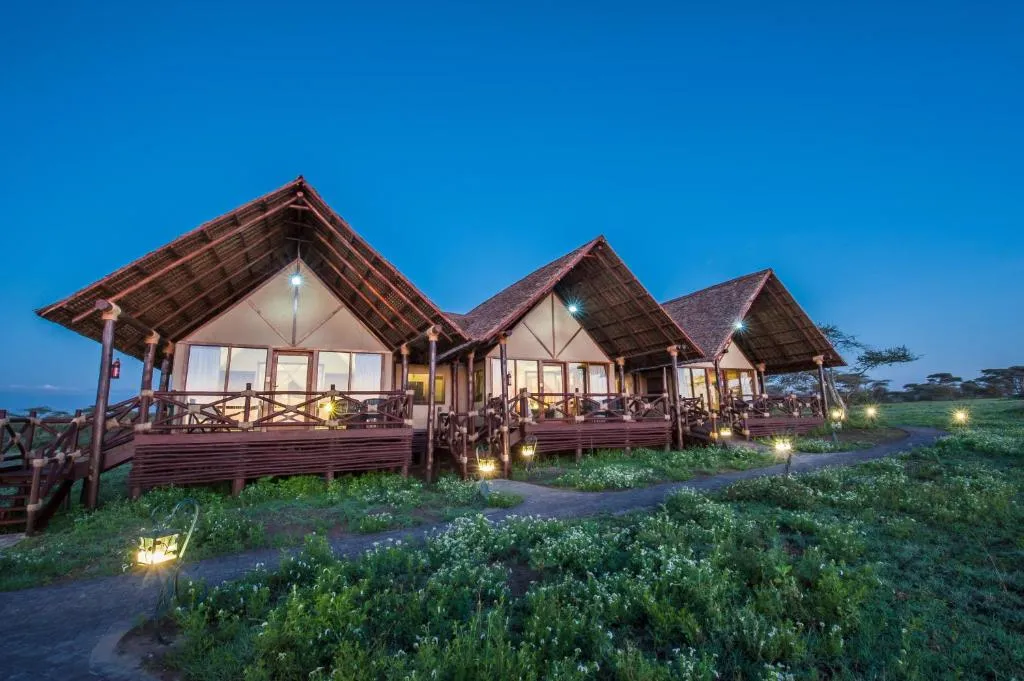
Lodge in Ndutu
Activities
Game drives are the core activity, usually in open-sided 4×4 vehicles, with a morning and an afternoon run each day. You can also walk with Tanzanian park rangers for a closer look at the smaller details, or visit a Maasai community with a guide to learn about local life. Central Serengeti, about ninety minutes away, offers hot-air balloon flights over the plains. Nearby Olduvai Gorge, one of the most important palaeoanthropological sites in the world, where some of the earliest human-ancestor fossils were found, makes a good half-day out, with its ravine, small museum and the volcanic-ash dunes known as the Shifting Sands.
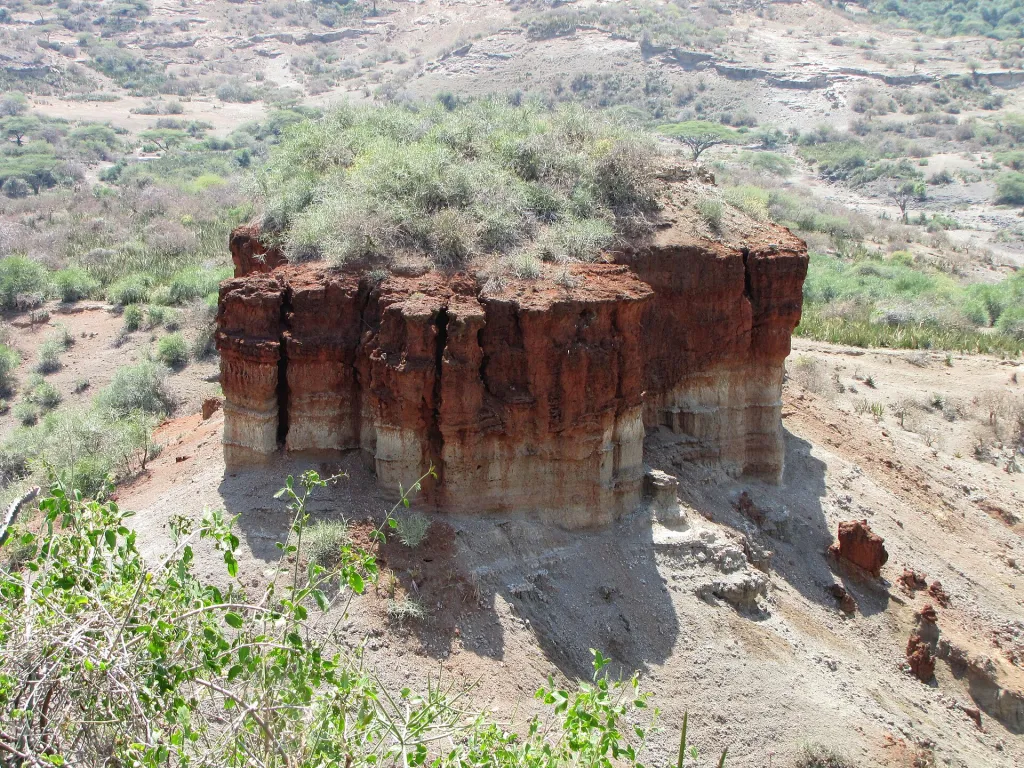
Olduvai Gorge
If you loved reading this story, then subscribe to our blog here (it will ask to verify your email) to get inspiring travel stories and trivia delivered to your email. Stories about wildlife trivia, cultural experiences, curated luxury hotel lists, underrated places to travel, polar journeys, and much more.