The great migration moves through both Kenya’s Masai Mara and Tanzania’s Serengeti, so the real question is which side to watch it from, and when. Each gives a different experience. This guide covers the timing, the best parks and a few practical tips. If you would rather we handled it, our Kenya migration group tour is built around the season. For the full month-by-month cycle, see The Great Migration Explained.
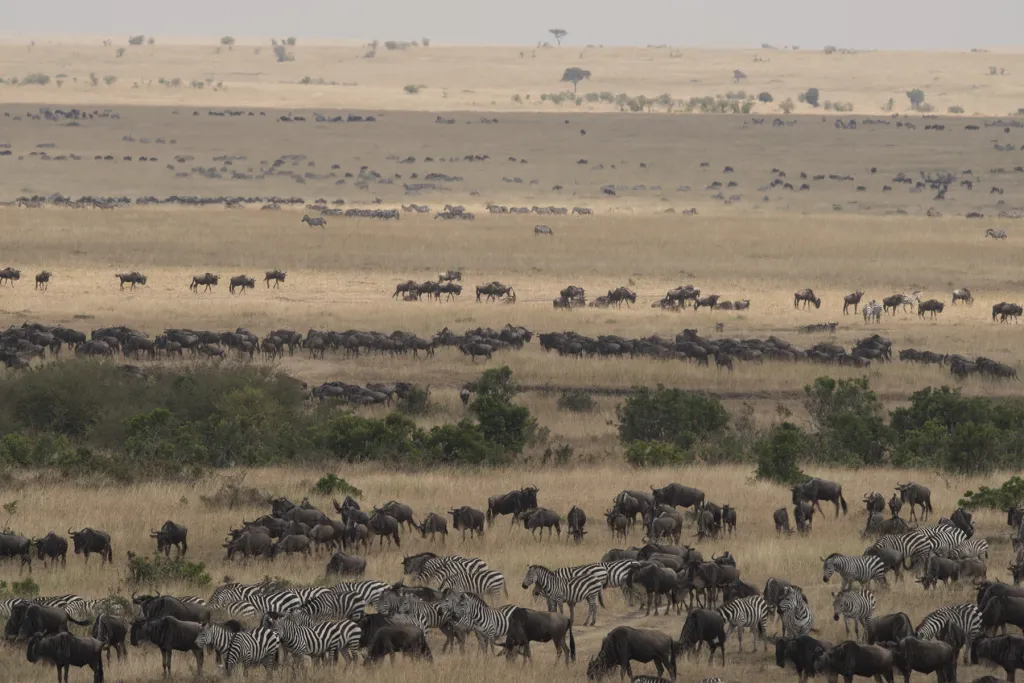
Wildebeest and zebra on the move during the migration
Watching the migration in Kenya
Best time: July to October
In Kenya the migration is in the Masai Mara from about July to October, and this is when the Mara River crossings happen. It is also the busiest stretch of the year, with a lot of vehicles at the crossings.
Where: the Masai Mara
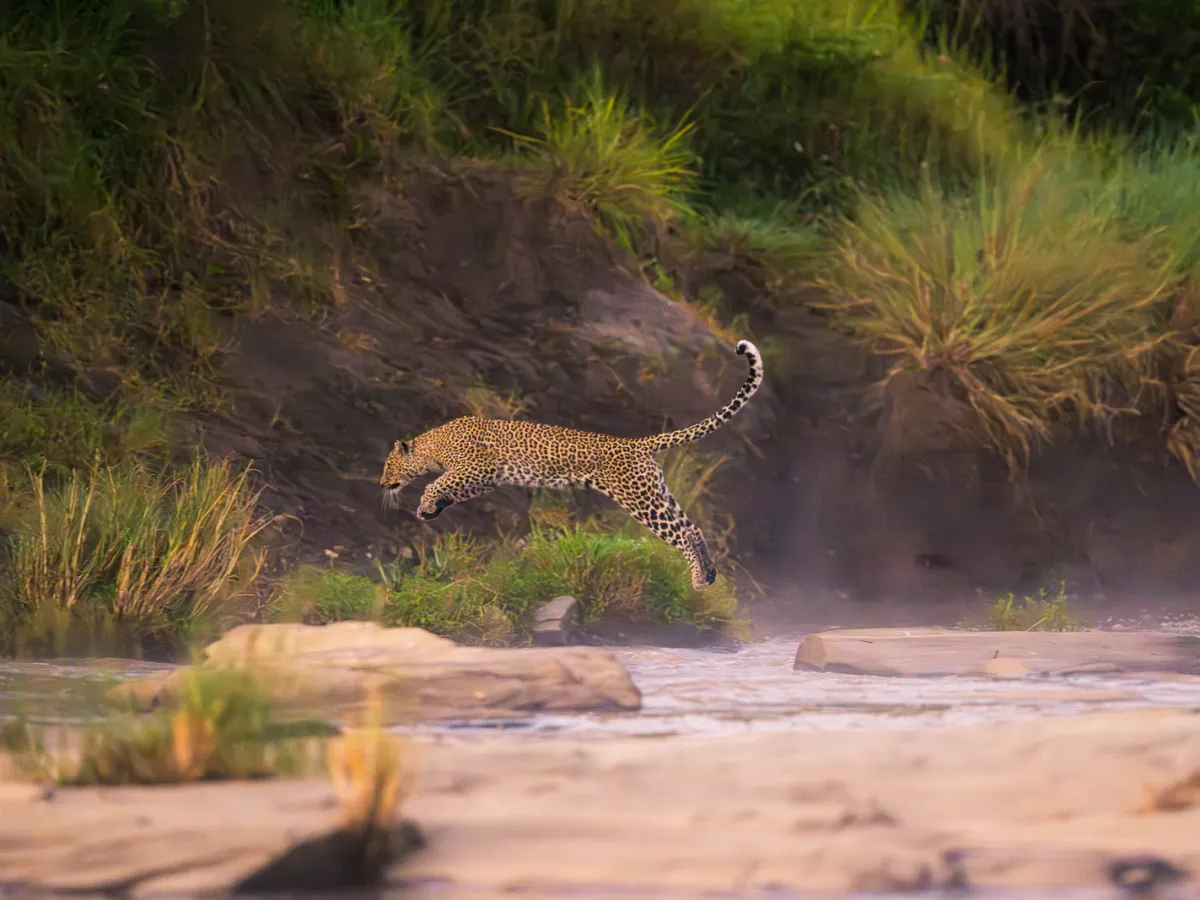
The Mara is the more reliable place to catch the migration and the crossings, because the herds funnel through a concentrated area, and it is easy to reach from Nairobi. It is strong for the rest of the game too: lion, leopard, elephant and buffalo, with black rhino present but scarce.
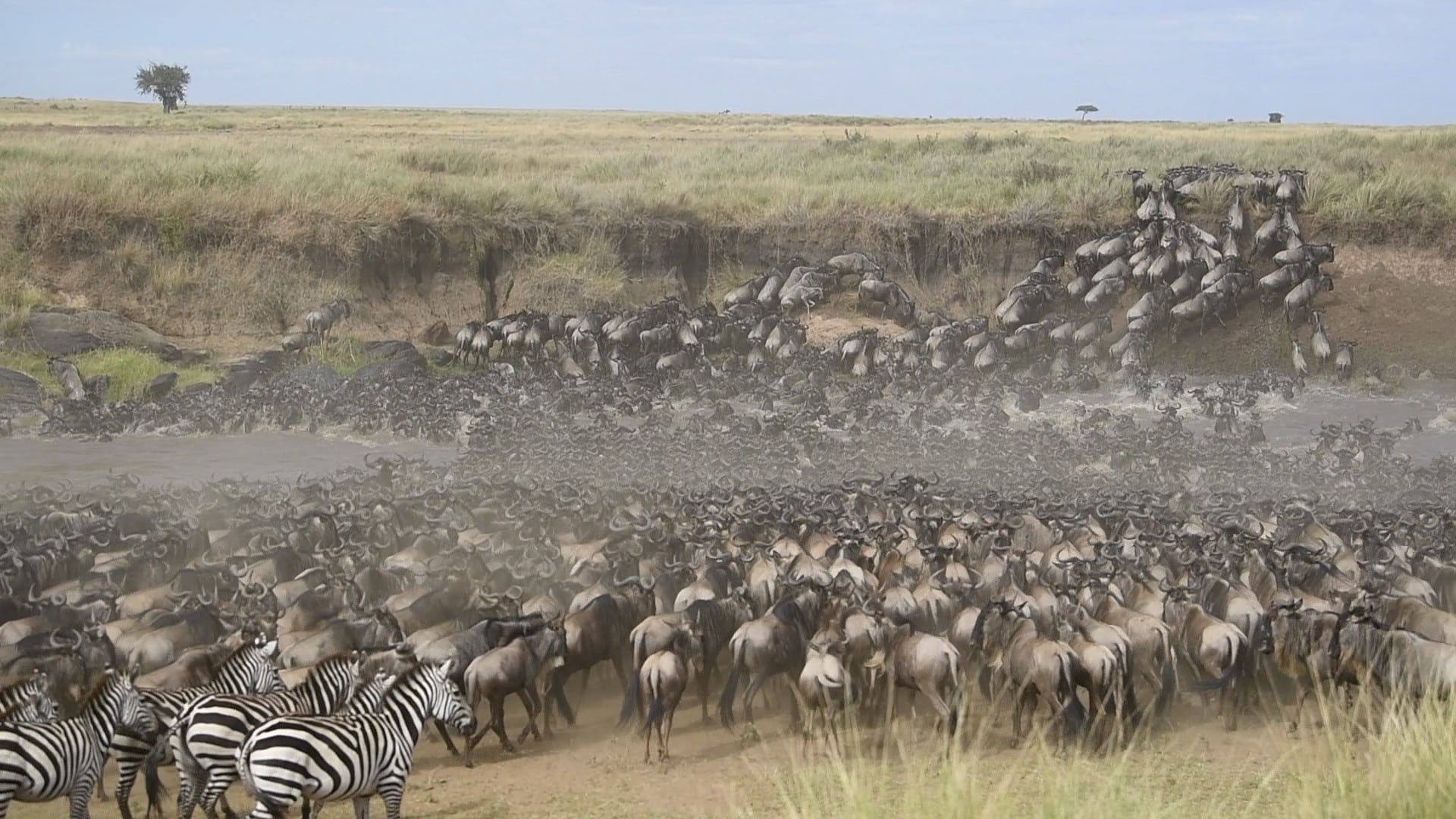
The Mara River crossing
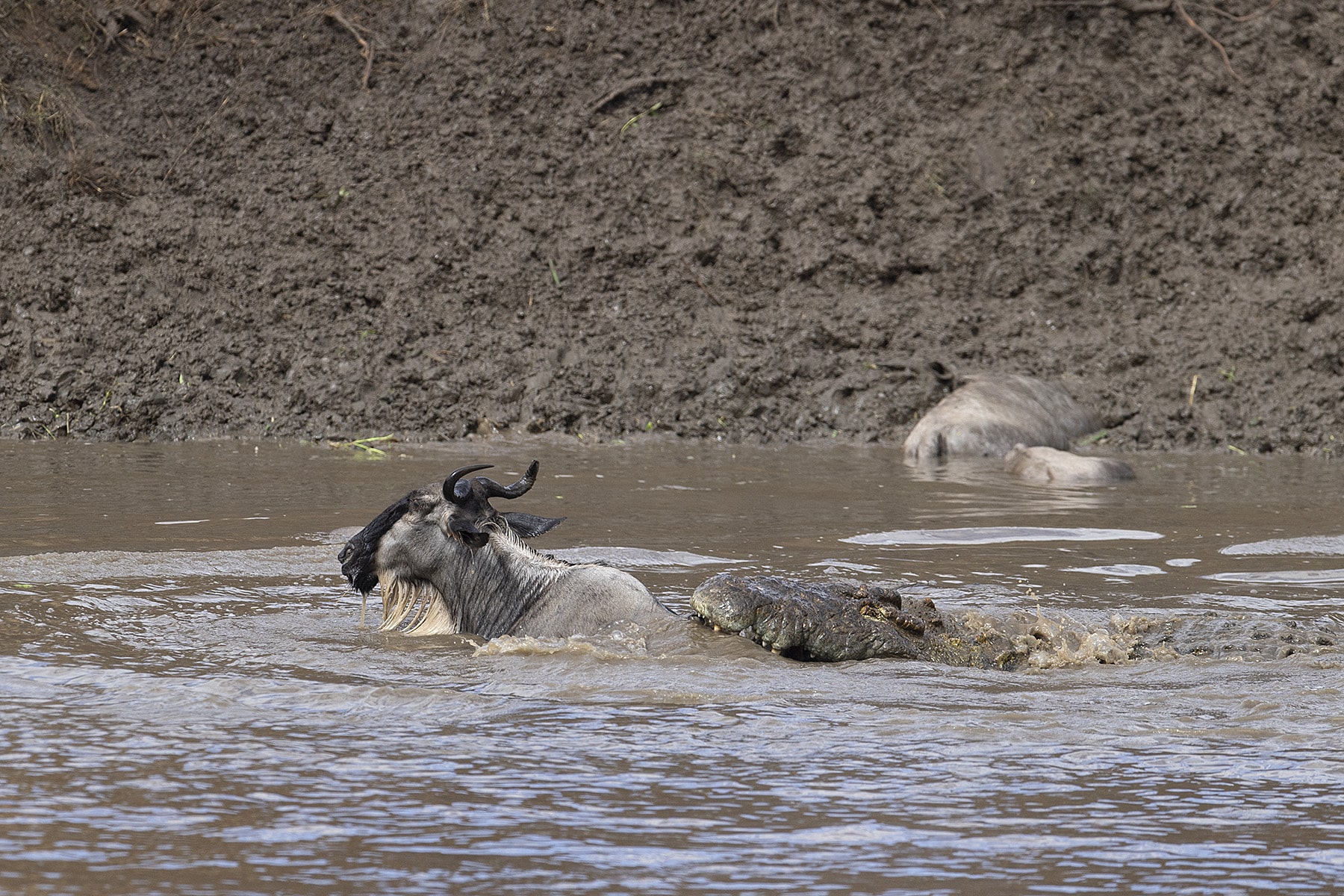
The crossing is the moment most people come for. Crocodiles wait hidden in the water and predators on the far bank. But it is never guaranteed on a given day: the herds may gather for hours and not move, or cross somewhere else. The rough window is August to October. A good local guide gets you in position early, before the crowds.
Guides
Our local guides follow the herds’ movements and know the crossing points, which is the difference between waiting in the wrong place and being set up in the right one.
Watching the migration in Tanzania
Month by month
Tanzania holds the herds for most of the year, so timing depends on what you want to see:
- January to March: calving on the southern Serengeti plains.
- April to May: the herds move north and west as the plains dry.
- June to July: the Grumeti River crossings in the western Serengeti.
- July to October: the northern Serengeti and the Mara River crossings.
- November to December: the herds drift back south toward the calving grounds.
Where: the Serengeti
The Serengeti is less accessible than the Mara, and heavy rain can flood the roads. But it suits travellers who want a genuine camping trip, and because it is more remote it sees fewer vehicles. A crossing here can be a quiet, almost private thing.
Where to stay
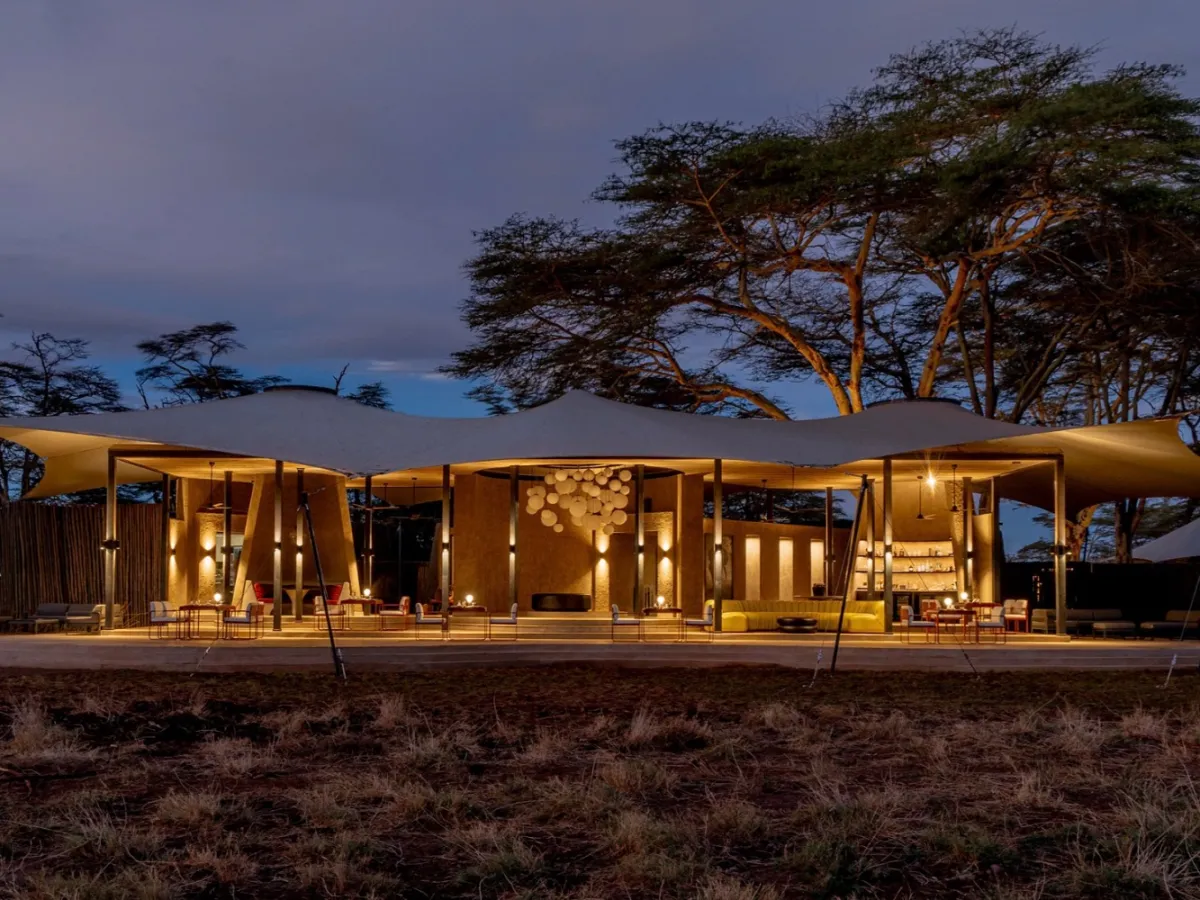
We match the camp to where the herds are, from comfortable lodges to simple bush camps close to the action. Two examples:
Sentrim Elementaita sits on the shore of Lake Elementaita, with cottages from standard to family, each en-suite.
Sentrim Mara Camp is about 3 km from the Sekenani Gate of the Masai Mara, spread over 100 acres, with 64 en-suite tents and rooms, hot showers, in-room safes and solar power.
Ask us and we will match a camp to your dates and budget.
Safari packages
Our all-inclusive migration packages cover the logistics end to end, and we tailor them to what you most want to see, whether that is the crossings, the calving or general game. Get in touch to shape one.
What you will see
Wildebeest on the move
Wildebeest move in huge herds for safety in numbers, day and night, following the rain and the grass. Zebra and Thomson’s gazelle travel with them, and predators follow.
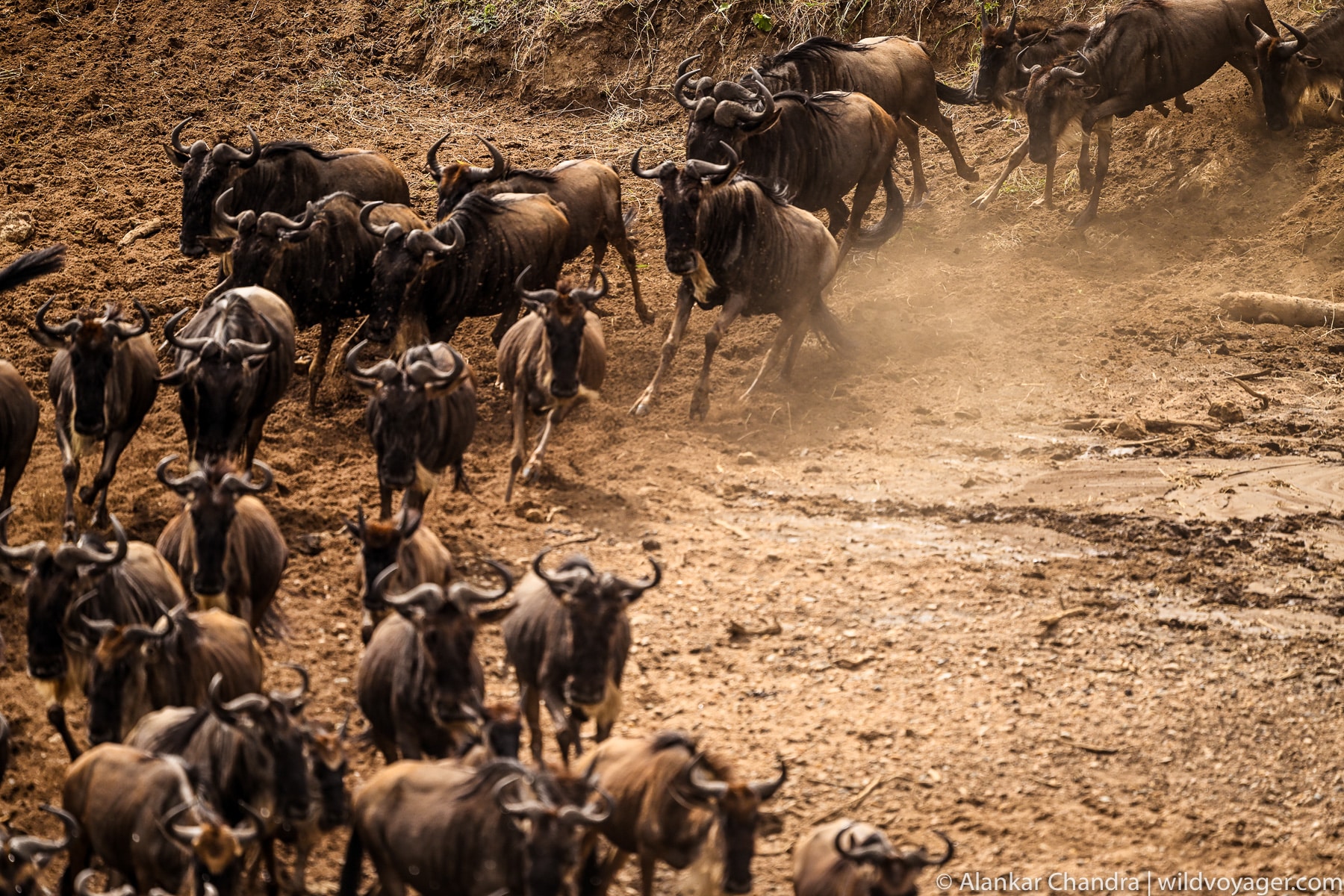
The river crossings are the tense high point, but the calving in the southern Serengeti, from January to March, is the other half of the story.
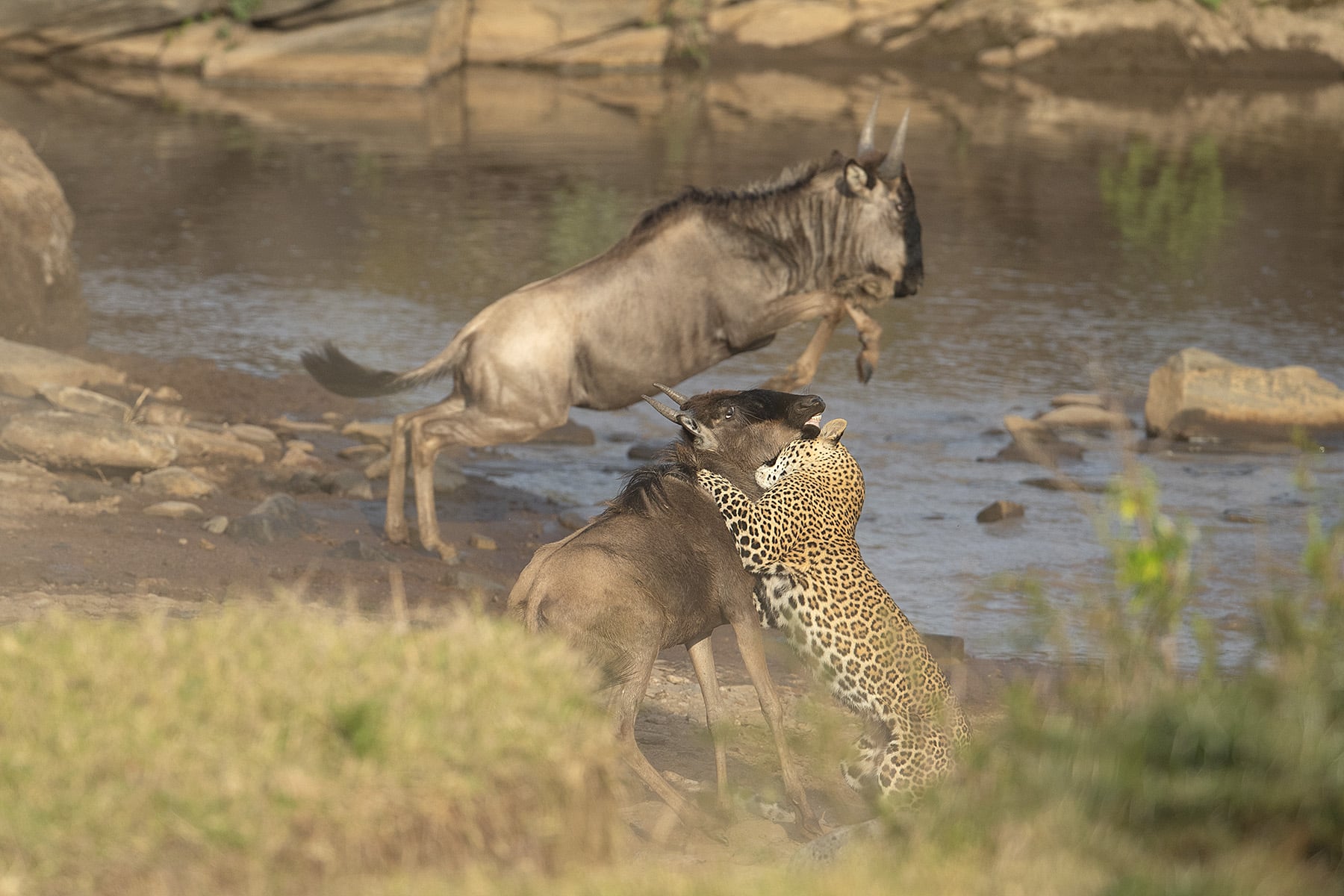
Predators
The migration draws predators: lion and cheetah on the plains, crocodile in the rivers, and vultures and eagles overhead. Elephant and giraffe fill out the scene.
Birds
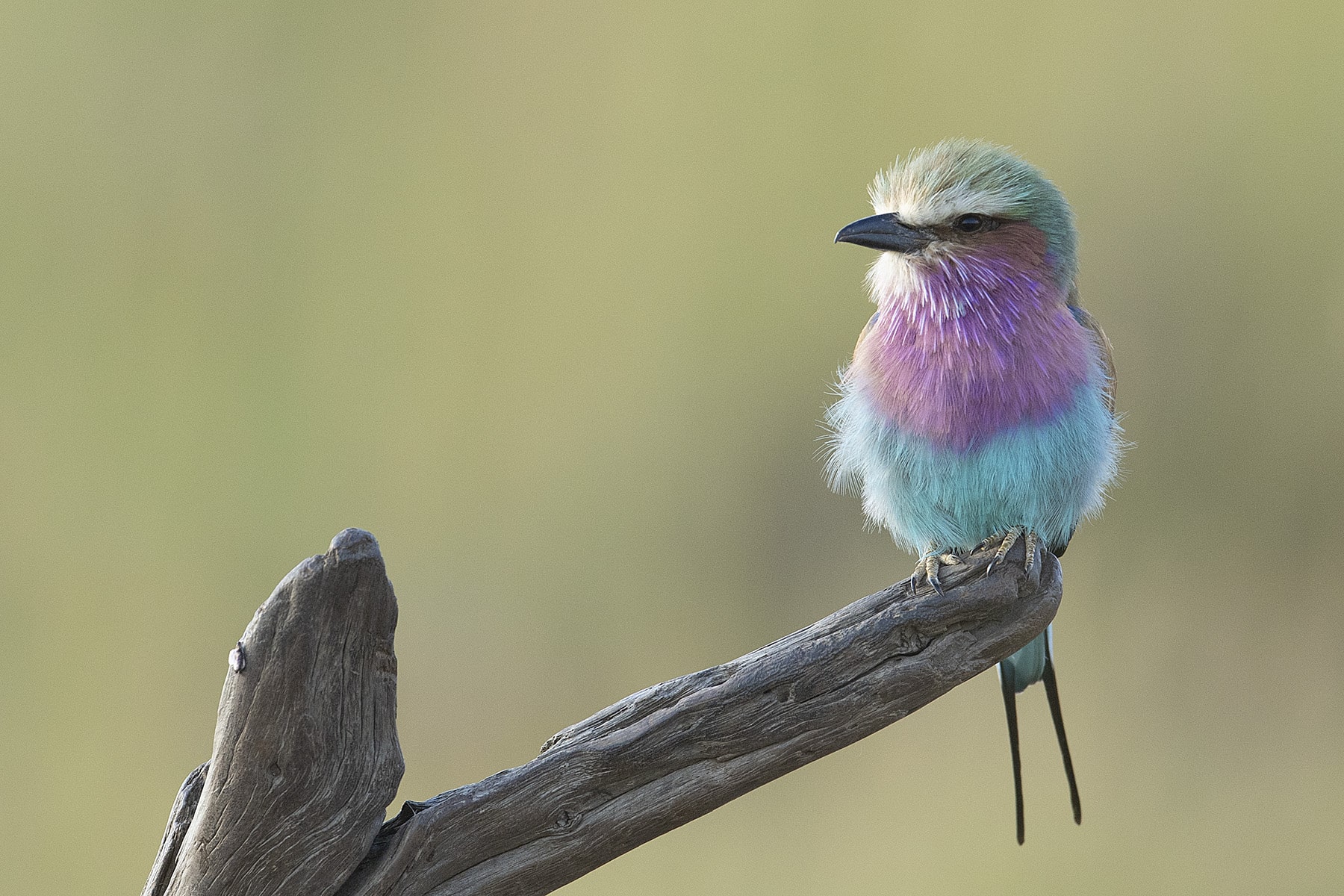
The birding is good alongside the game: secretary bird, lilac-breasted roller, martial eagle, crowned crane, superb starling and African fish eagle among many others.
Conservation
Groups such as the Mara Conservancy in Kenya, and conservation bodies in the Serengeti, work on anti-poaching, habitat and community programmes. We try to tread lightly: low-impact vehicles, eco-minded camps and support for local projects.
Whether you watch from the Mara or the Serengeti, the migration is worth building a trip around. Tell us your dates and what you want to see, and we will plan it.
Wildebeest and zebras in herd during Migration Period