Introduction
The tiger is the largest of the big cats, recognisable by the dark vertical stripes on its reddish-orange coat and pale underside. Historically there were nine subspecies: Bengal, Indochinese, Siberian (Amur), Sumatran, Malayan, South China, Caspian, Javan and Bali. Three are now extinct — the Caspian, Javan and Bali — and the South China tiger survives only in captivity, effectively extinct in the wild. The rest are endangered.
What tigers eat
Tigers mainly hunt sambar deer, spotted deer and other hoofed prey. Old or injured tigers sometimes turn to livestock, and rarely to people.
How many tigers are left
A century ago perhaps 100,000 tigers ranged across Asia. Today fewer than 5,000 remain in the wild. India holds well over half of them; its 2022 census counted more than 3,600, which makes it the stronghold of the species. The Sumatran, Malayan and South China tigers are in a far more precarious state, with the Malayan now critically endangered and only a couple of hundred left at most.
Where tigers live
Tigers once ranged from Turkey across South and South-East Asia to the Russian Far East. Today they survive only in parts of India, China, South and South-East Asia and the Russian Far East.
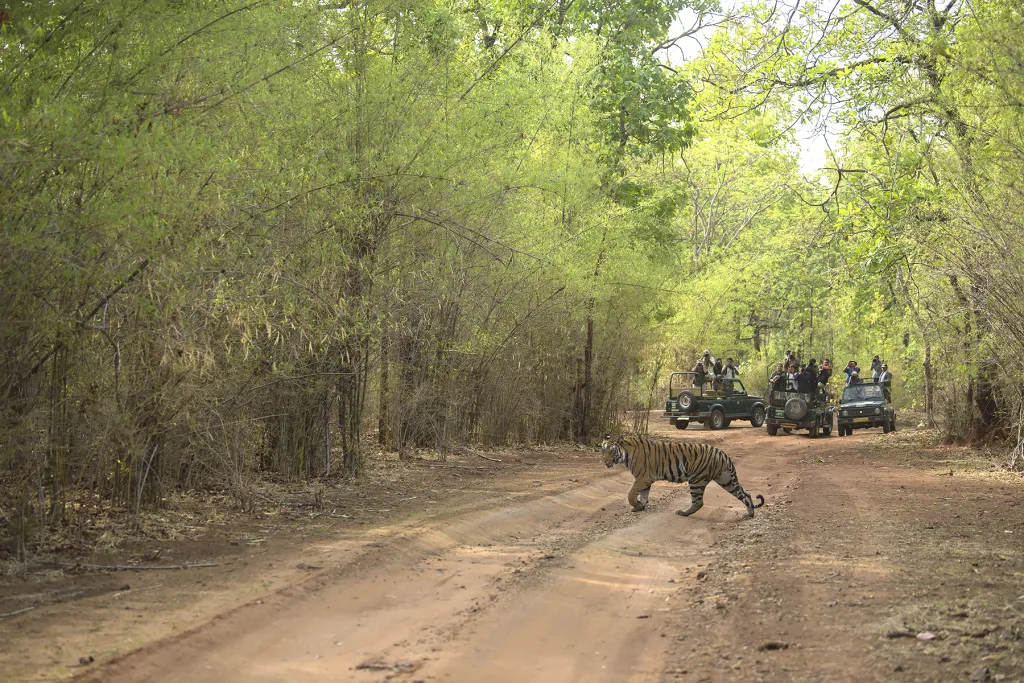
Tigers in Bandhavgarh National Park
Breeding
Mating depends on climate: mostly November to April in the tropics, and in winter in cooler regions. Gestation is about 103 days, and a litter is usually three or four cubs. Cubs are born blind and helpless, weighing 700 to 1,400 g. The mother raises them alone; males take no part, and a wandering male may kill cubs to bring the female back into breeding condition. Cubs become independent at around 18 months and usually leave to find their own territory at about two and a half years.
How tigers live
- Tigers live in a wide range of habitats — tropical and evergreen forest, woodland, mangrove, grassland and rocky country — wherever there is cover, water and enough prey.
- They are mostly solitary, coming together only to mate or when a female has cubs, and communicate through scent marks, calls and other signals.
- They are mainly nocturnal ambush hunters, using their stripes as camouflage.
- A tiger uses its weight to bring down prey and kills with a bite to the neck.
- They are strong swimmers and will even take prey in the water.
- They are strongly territorial, and territory size depends on prey. Where prey is dense, as in Ranthambhore, a male’s range may be only a few square kilometres; in Siberia, where prey is thin, it can run to 800 to 1,200 sq km.
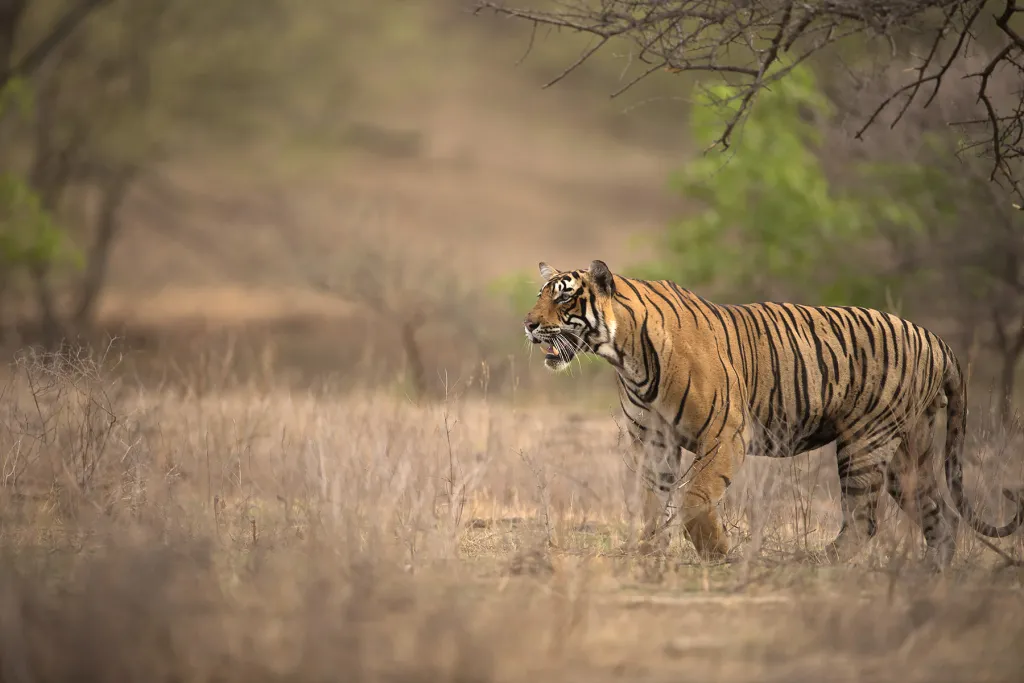
Tiger of Ranthambhore National Park
Territories
- Males hold larger territories than females, overlapping several female ranges; females are the resource males compete over.
- Aggression between males rises where tigers are dense, or when a territory changes hands after a resident male dies. Such upheaval can unsettle females too.
- A tigress holds a smaller range, focused on what she needs to raise cubs.
- Tigresses often settle next to their mothers, or take over part of another female’s range.
Daily life
Tigers are most active at night and rest through the midday heat, though this shifts with prey and season. Grooming is part of the routine: a tiger cleans its coat with its rough tongue, which spreads oils that keep the fur in condition.
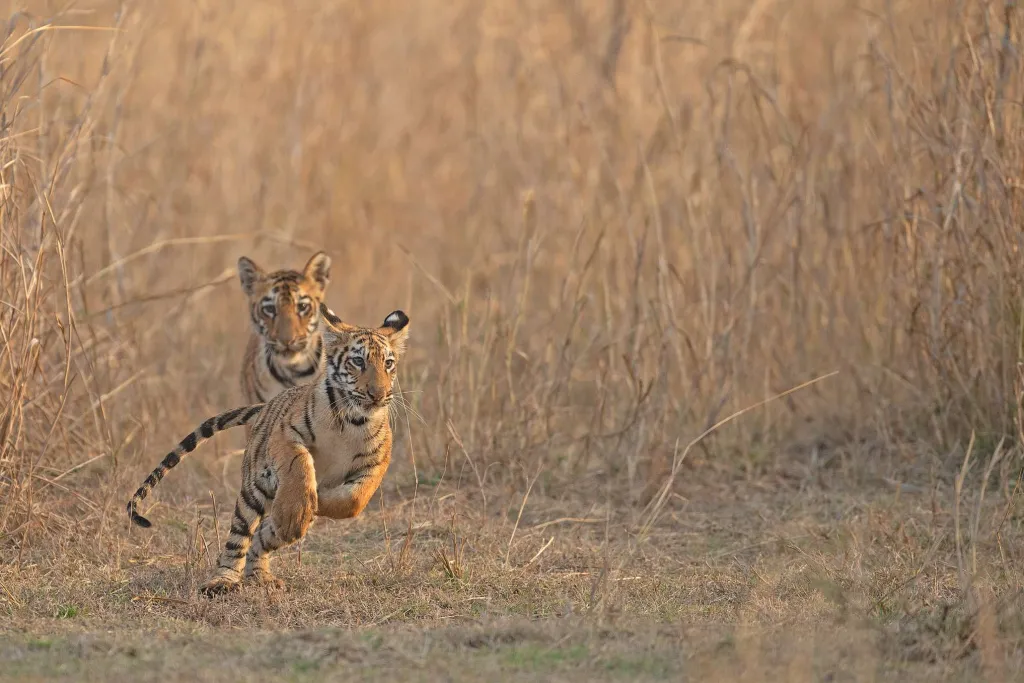
Tigress of Tadoba Andhari Tiger Reserve
With other animals
Across their range tigers share ground with other predators — the dhole (Asiatic wild dog), leopard, brown bear and wolf — though direct interaction is rarely recorded.
Tiger reserves in India
North India
Central India
East and North-East India
South India
Kabini Nagarhole Tiger Reserve
If you loved reading this story, then subscribe to our blog here (it will ask to verify your email) to get inspiring travel stories and trivia delivered to your email. Stories about wildlife trivia, cultural experiences, curated luxury hotel lists, underrated places to travel, polar journeys and much more.